
Verwandte Artikel zu Octopus: Sam Israel, the Secret Market, and Wall Street'...
Inhaltsangabe
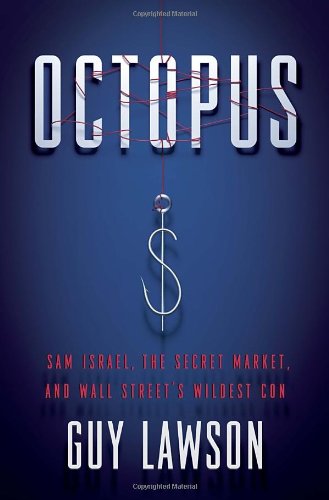
Octopus is a real-life thriller that tells the inside story of an audacious hedge fund fraud and the wild search, by a colorful cast of rogues and schemers, for a “secret market” beneath the financial market we all know.
Sam Israel was a man who seemed to have it all – until the hedge fund he ran, Bayou, imploded and he became the target of a nationwide manhunt. Born into one of America’s most illustrious trading families, Israel was determined to strike out on his own. So after apprenticing with one of the greatest hedge fund traders of the 1980’s, Sam founded his own fund and promised his investors guaranteed profits. With the proprietary computer program he’d created, he claimed to be able to predict the future.
But his future was already beginning to unravel.
After suffering devastating losses and fabricating fake returns, Israel knew it was only a matter of time before his real performance would be discovered, so when a former black-ops intelligence operative told him about a “secret market” run by the Fed, Israel bet his last $150 million on a chance to make billions. Thus began his year-long adventure in “the Upperworld” -- a society populated by clandestine bankers, shady European nobility, and spooks issuing cryptic warnings about a mysterious cabal known as the Octopus.
Whether the “secret market” was real or a con, Israel was all in – and as the pressures mounted and increasingly sinister violence crept into his life, he struggled to break free of the Octopus’ tentacles.
Die Inhaltsangabe kann sich auf eine andere Ausgabe dieses Titels beziehen.
Über die Autorin bzw. den Autor
GUY LAWSON has traveled the world reporting on war, crime, politics, and sports. His work has appeared in many national publications, including the New York Times, Harper's, GQ, and Rolling Stone, and he previously coauthored The Brotherhoods. He and his family make their home in upstate New York.
Auszug. © Genehmigter Nachdruck. Alle Rechte vorbehalten.
Chapter One
Trust
All Sam Israel ever wanted to be was a Wall Street trader. For generations, the men of the Israel family had been prominent and hugely successful commodities traders. For nearly a century they and their cousins the Arons had been major players trading in coffee, sugar, cocoa, rubber, soy, precious metals-the substance of modern American life. Along the way, the family became fantastically wealthy. Long before the term was coined, the Israels were real-life Masters of the Universe.
But it was Wall Street that attracted Sam, not the commodities market. As a boy growing up in New Orleans he'd sat on the lap of his legendary grandfather, Samuel Israel Jr., watching the ticker tape from the New York Stock Exchange and imagining what life was like in that distant place. When the Israels moved to New York and his father took a senior position in the family business, which had grown into a multi-billion-dollar multinational conglomerate named ACLI, Sam dreamed about trading stock in the skyscrapers of Lower Manhattan.
In the summer of 1978, at the age of eighteen, Sam got the chance to try his luck. At the time, he was a newly minted graduate of Hackley, an elite prep school outside New York City. Although the Israels were very rich, Sam was expected to earn his own pocket money. Thus he was spending the summer working odd jobs and training to try out for the freshman football team at Tulane University, alma mater of his father and grandfather. In the Israel family it was assumed that Sam would go to work for ACLI when he finished college. He was smart, charming, athletic, extremely likable. But Sam had a propensity for lying. In his mind, they were harmless lies, teenage lies, about girls, sports, deeds of derring-do. It was his way to be liked, to be funny, to get attention, to make himself feel good.
Sam had been blessed with all the good fortune any young man could hope for. But he didn't want to follow in the footsteps of his illustrious ancestors. He didn't want to be the beneficiary of nepotism, with all of its attendant resentments and insecurities. Despite the Israel family's outward appearance of perfection, Sam's relationship with his father was deeply troubled. Sam wanted to be his own man, shaping his own destiny, proving his own worth.
"My father asked me if I wanted to come into the family business," Israel recalled. "But I said no. I didn't want to be like my father in any way. I was only a kid, but I could see what was going on. My father had gone into the business, and his father had treated him poorly. My grandfather was always on my father about one thing or another. Nothing could ever please my grandfather. My father was doomed to that life. He was never going to break away and be on his own. It would've been the same for me.
"If I became a Wall Street trader, I wouldn't be working for my father. I'd be trading stocks instead of commodities. It may seem like a small distinction, but it was huge to me. At my father's business I'd be the kid who had been born into the right family. On Wall Street I'd be on my own. I was always told that the New York Stock Exchange was the greatest place on earth. It was where the smartest people went. It was the hardest place to get ahead. Wall Street traders lived by their wits. It wouldn't matter that my last name was Israel. It wouldn't matter who my father and grandfather were. On Wall Street, anybody could make it-if they were tough enough and smart enough."
One fine June afternoon in his eighteenth year, Sam was working as a bartender at a garden party in his uncle's backyard. The crowd was middle-aged, well dressed, seemingly unremarkable-pretty wives and pale-faced men with paunches and high blood pressure, drinking too much, smoking too much. But Sam knew that beneath the milquetoast appearances, these men were Wall Street's ruling class.
Standing behind the bar, Sam was approached by a heavyset man in search of a cocktail. The man was just under six feet tall, weighed more than two hundred pounds, and had an unruly mane of brown hair and a ruddy complexion. He was wearing expensive clothes, but he was slightly disheveled and had the twinkle in his eye of a prankster. Sam instantly recognized him. Standing before Sam was the famous Freddy Graber-the man they called "the King" on Wall Street. Sam had heard his father and uncles talk about Graber's exploits. Still only in his early thirties, Graber was already famous for his unbelievable ability to trade stocks.
Instead of accepting a partnership offer at Lehman Brothers, Graber had started something called a "hedge fund." In the seventies, hedge funds were exceptionally rare and mysterious, a secret realm run by the high priests of high finance. Only the wealthiest people even knew of the existence of hedge funds. Only the greatest traders gained entrée to the select society. Freddy Graber was in that number. His hedge fund acted as a broker for major investment banks, clipping a few pennies in commission for executing trades on the floor of the New York Stock Exchange for companies like Goldman Sachs and Morgan Stanley.
But Graber's true genius was the way he traded his own money. Unlike most Wall Street traders, Graber didn't bet with other people's money. This was a dare within a dare. Normally traders who "ran" money invested funds given to them by banks, insurance companies, pension funds, high-net worth individuals. Not Graber. He traded for himself exclusively. His stake in the early seventies had been $400,000. In less than a decade he'd turned it into $23 million. Cash. It was the kind of feat that had made the Israel men famous. In 1898 Sam's great-uncle Leon Israel had started with $10,000, and by 1920 he had $25 million-the equivalent of $500 million today.
Graber carried himself with confidence that bordered on arrogance. But at the same time he was unpretentious, quick to grin, instantly likable. He was also a serious drinker. Graber asked the young Israel for a vodka and cranberry juice on the rocks, with a chunk of lime. Israel handed over the drink and introduced himself-knowing his last name would be recognized. But Graber didn't take much notice of the eager teenager.
When Graber returned for another drink a few minutes later, though, Sam was ready. "Vodka and cranberry on the rocks," Sam said, mixing the cocktail before Graber could order. "With a chunk of lime."
"You have a good memory, kid," Graber said. "You any good with numbers?"
"I'm very good with numbers," Israel said.
"You could make a living doing what I do," Graber said.
"I'd love to see what you do, Mr. Graber," Israel said.
"Come up and see me anytime," Graber said, handing over his card. "The door is always open."
From Graber's offhand manner, Israel knew it was an empty invitation. But Sam wasn't going to let this opportunity pass him by. The next Monday morning, he dressed in his best suit and caught the early train to Manhattan.
"When I walked up the subway stairs into the sunlight at the corner of Wall Street and Broadway for the first time it was like I was entering a new universe," Israel remembered. "The streets were teeming with action. Secretaries hustled by. Shoe shine guys, newsstand boys, hot dog vendors, everyone was on the make. To me it was the most incredible place on earth. It was like a giant casino. It was pure glamour. It was everything I'd dreamt about."
Frederic J. Graber and Company operated on the thirtieth floor of 1 New York Plaza, a fifty-story skyscraper that housed Goldman Sachs, Morgan Stanley, and powerful law firms. Graber's trading room was in a suite of offices with a dozen or so other independent hedge funds. At the time there were only a few hundred funds running perhaps a few billion dollars, compared with the trillion-dollar industry that would emerge in...
„Über diesen Titel“ kann sich auf eine andere Ausgabe dieses Titels beziehen.
Suchergebnisse für Octopus: Sam Israel, the Secret Market, and Wall Street'...

Beispielbild für diese ISBN
Octopus Sam Israel the Secret
Anbieter: World of Books (was SecondSale), Montgomery, IL, USA
Verkäuferbewertung 5 von 5 Sternen

Zustand: Very Good. Item in very good condition! Textbooks may not include supplemental items i.e. CDs, access codes etc. Bestandsnummer des Verkäufers 00107085988
Gebraucht kaufen
EUR 4,12
Versand gratis
Versand innerhalb von USA
Versand innerhalb von USA
Anzahl: 1 verfügbar
Beispielbild für diese ISBN
Octopus Sam Israel the Secret
Anbieter: World of Books (was SecondSale), Montgomery, IL, USA
Verkäuferbewertung 5 von 5 Sternen
Zustand: Acceptable. Item in acceptable condition! Textbooks may not include supplemental items i.e. CDs, access codes etc. Bestandsnummer des Verkäufers 00104299408
Gebraucht kaufen
EUR 4,12
Versand gratis
Versand innerhalb von USA
Versand innerhalb von USA
Anzahl: 1 verfügbar
Beispielbild für diese ISBN
Octopus Sam Israel the Secret
Anbieter: World of Books (was SecondSale), Montgomery, IL, USA
Verkäuferbewertung 5 von 5 Sternen
Zustand: Good. Good condition ex-library book with usual library markings and stickers. Bestandsnummer des Verkäufers 00100170050
Gebraucht kaufen
EUR 4,12
Versand gratis
Versand innerhalb von USA
Versand innerhalb von USA
Anzahl: 2 verfügbar
Foto des Verkäufers
Octopus: Sam Israel, the Secret Market, and Wall Street's Wildest Con
Anbieter: Zoom Books Company, Lynden, WA, USA
Verkäuferbewertung 5 von 5 Sternen
Zustand: very_good. Book is in very good condition and may include minimal underlining highlighting. The book can also include "From the library of" labels. May not contain miscellaneous items toys, dvds, etc. . We offer 100% money back guarantee and 24 7 customer service. Bestandsnummer des Verkäufers ZBV.0307716074.VG
Gebraucht kaufen
EUR 4,13
Versand gratis
Versand innerhalb von USA
Versand innerhalb von USA
Anzahl: 1 verfügbar
Beispielbild für diese ISBN
Octopus Sam Israel the Secret
Anbieter: World of Books (was SecondSale), Montgomery, IL, USA
Verkäuferbewertung 5 von 5 Sternen
Zustand: Good. Item in good condition. Textbooks may not include supplemental items i.e. CDs, access codes etc. Bestandsnummer des Verkäufers 00106127848
Gebraucht kaufen
EUR 4,75
Versand gratis
Versand innerhalb von USA
Versand innerhalb von USA
Anzahl: 1 verfügbar
Foto des Verkäufers
Octopus: Sam Israel, the Secret Market, and Wall Street's Wildest Con
Anbieter: Greenworld Books, Arlington, TX, USA
Verkäuferbewertung 5 von 5 Sternen
Zustand: good. Fast Free Shipping â" Good condition. It may show normal signs of use, such as light writing, highlighting, or library markings, but all pages are intact and the book is fully readable. A solid, complete copy that's ready to enjoy. Bestandsnummer des Verkäufers GWV.0307716074.G
Gebraucht kaufen
EUR 5,07
Versand gratis
Versand innerhalb von USA
Versand innerhalb von USA
Anzahl: 1 verfügbar
Beispielbild für diese ISBN
Octopus: Sam Israel, the Secret Market, and Wall Street's Wildest Con
Anbieter: ThriftBooks-Dallas, Dallas, TX, USA
Verkäuferbewertung 5 von 5 Sternen
Hardcover. Zustand: Very Good. No Jacket. Missing dust jacket; May have limited writing in cover pages. Pages are unmarked. ~ ThriftBooks: Read More, Spend Less. Bestandsnummer des Verkäufers G0307716074I4N01
Gebraucht kaufen
EUR 5,74
Versand gratis
Versand innerhalb von USA
Versand innerhalb von USA
Anzahl: 1 verfügbar
Beispielbild für diese ISBN
Octopus: Sam Israel, the Secret Market, and Wall Street's Wildest Con
Anbieter: ThriftBooks-Reno, Reno, NV, USA
Verkäuferbewertung 5 von 5 Sternen
Hardcover. Zustand: Good. No Jacket. Former library book; Pages can have notes/highlighting. Spine may show signs of wear. ~ ThriftBooks: Read More, Spend Less. Bestandsnummer des Verkäufers G0307716074I3N10
Gebraucht kaufen
EUR 5,74
Versand gratis
Versand innerhalb von USA
Versand innerhalb von USA
Anzahl: 1 verfügbar
Beispielbild für diese ISBN
Octopus: Sam Israel, the Secret Market, and Wall Street's Wildest Con
Anbieter: ThriftBooks-Reno, Reno, NV, USA
Verkäuferbewertung 5 von 5 Sternen
Hardcover. Zustand: Very Good. No Jacket. Missing dust jacket; May have limited writing in cover pages. Pages are unmarked. ~ ThriftBooks: Read More, Spend Less. Bestandsnummer des Verkäufers G0307716074I4N01
Gebraucht kaufen
EUR 5,74
Versand gratis
Versand innerhalb von USA
Versand innerhalb von USA
Anzahl: 1 verfügbar
Beispielbild für diese ISBN
Octopus: Sam Israel, the Secret Market, and Wall Street's Wildest Con
Anbieter: ThriftBooks-Atlanta, AUSTELL, GA, USA
Verkäuferbewertung 5 von 5 Sternen
Hardcover. Zustand: Very Good. No Jacket. Missing dust jacket; May have limited writing in cover pages. Pages are unmarked. ~ ThriftBooks: Read More, Spend Less. Bestandsnummer des Verkäufers G0307716074I4N01
Gebraucht kaufen
EUR 5,74
Versand gratis
Versand innerhalb von USA
Versand innerhalb von USA
Anzahl: 1 verfügbar