Inhaltsangabe
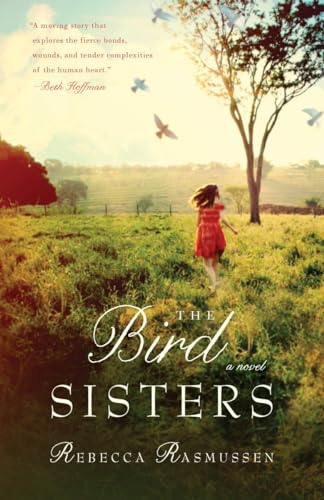
In Spring Green, Wisconsin, spinster sisters Milly and Twiss have spent their lives listening to heartbeats and heartaches, nursing birds and the people who bring them back to health.
Back in the summer of 1947, Milly and Twiss knew nothing about trying to mend what had been accidentally broken. Milly was known as a great beauty with emerald eyes and Twiss was a brazen wild child who never wore a dress or did what she was told. That was the summer their golf pro father had an accident that cost him both his swing and his charm, and their mother, the daughter of a wealthy jeweler, finally admitted that their hardscrabble lives wouldn't change. It was the summer their priest, Father Rice, announced that God didn't exist and ran off to Mexico, and a boy named Asa finally caught Milly's eye. Most unforgettably, it was also the summer their cousin Bett came down from a town called Deadwater and changed the course of their lives forever.
Rebecca Rasmussen's masterful debut novel is full of hope and beauty, heartbreak and sacrifice, love and the power of sisterhood, offering wonderful surprises at every turn.
Die Inhaltsangabe kann sich auf eine andere Ausgabe dieses Titels beziehen.
Über die Autorin bzw. den Autor
REBECCA RASMUSSEN is the author of the novels Evergreen and The Bird Sisters. Her stories have appeared in or won prizes from TriQuarterly, Narrative Magazine, Glimmer Train, The Mid-American Review, among other journals. She was born and raised in the Midwest. Currently, she lives in Los Angeles with her husband and daughter and teaches writing at UCLA. Visit her at RebeccaRasmussen.com.
Auszug. © Genehmigter Nachdruck. Alle Rechte vorbehalten.
1
Used to be when a bird flew into a window, Milly and Twiss got a visit. Milly would put a kettle on and set out whatever culinary adventure she'd gone on that day. For morning arrivals, she offered her famous vanilla drop biscuits and raspberry jam. Twiss would get the medicine bag from the hall closet and sterilize the tools she needed, depending on the seriousness of the injury. A wounded limb was one thing. A wounded crop was another.
People used to come from as far away as Reedsburg and Wilton. Milly would sit with them while Twiss patched up the poor old robin or the sweet little meadowlark. Over the years, the number of visitors had dwindled. Now that the grocery store sold readybake biscuits and jelly in all the colors of the rainbow, people didn't bother as much about birds.
On a particularly low morning, while the two sisters were having tea and going over their chore lists, Milly pulled back the curtains when she heard an engine straining on one of the nearby hillsides. When all she saw was the empty gravel drive, the hawkweed poking up along the edges, she let go of them.
"We should be glad," she said. "Maybe the birds are getting smarter."
Twiss brought the breakfast dishes to the sink. They were down to toast and butter now, sometimes a hardboiled egg from the night before. "How can you stand to be so positive?"
"We're old," Milly said. "What else can we do?"
But even she missed the sound of strangers in the house, the way the pine floors creaked under new weight. Had it really been a month since a person other than Twiss had spoken to her? Time had a funny way of moving when you didn't want it to and standing still when you did. Milly didn't bother to wind the cuckoo clock above the sink anymore; there was something sadistic about the way it popped out of its miniature door so cheerfully every quarter hour. But the visitors! Though she and Twiss had devoted their lives to saving birds, not wishing for them to be injured, the last few years Milly had perked up whenever a car turned into their driveway instead of continuing up the road. Most of the time, the people would be looking for directions back to town. They'd spread out their laminated touring maps with expressions of shame because "just in case," the words they'd used to justify buying the maps in the first place, meant they were lost, and there were no noble ways to say that. The men would look up at the sky, trying one last time to discern east from west, and the women would look down at the ground because their husbands had failed to understand a simple map. Milly would put the couples at ease by admitting that she missed a turn every once in a while, even though there wasn't one to miss. She'd point to the blank space between the hills and the river.
This is where you are.
When the sound of the engine grew louder, unlike all of the others during the last month, Milly pulled back the curtains again. This time, a green minivan was barreling down the driveway, kicking up dust that did not quickly settle.
"I knew this one was for us," she said.
"Better get ready," Twiss said, leaving her cup of tea and going for the medicine bag in the hall closet. "People who drive minivans usually know where they are."
And the driver of the green minivan did, although the country wasn't where she was supposed to be at eight thirty in the morning. On her way to drop her children off at the elementary school in town, the woman had run over a goldfinch, and her daughter had cried enough to make her do something about it. The minivan's tires, rutted monstrosities that belonged on a tractor, had severed one of the goldfinch's wings and crushed the other one. The goldfinch was also missing his left eye, which the little girl said she'd looked for on the road but couldn't find among the crumble of loose blacktop.
"Poor thing," Twiss said, which meant the goldfinch wouldn't live. Twiss had spent her life saving birds; all she had to do was glance at one to know if it would recover or not. And all Milly had to do was glance at Twiss, who'd never been especially skilled at hiding what she saw.
Twiss kissed the goldfinch's tawny beak.
"Yes, you are a poor thing," Milly said, kissing it too.
Twiss took the goldfinch, the medicine bag, and the little girl to the bathroom off the kitchen. After she laid out her instruments on a towel, Twiss would pick up Dr. Greene's old stethoscope. If she heard even a faint heartbeat, she'd patch up what she could and splint whatever she couldn't with strips of balsa wood from the old model airplane in the attic. She'd offer the goldfinch a teaspoon of millet and peanut butter and hold him up to the window so he could see the sky. Once a bird had lost his ability to fly, not much else could be done in the way of mending him. Losing a wing was a little like losing a leg and the freedom of movement, of spirit, it granted you; most people could live without the former but not the latter.
Milly steered the mother, a woman with the frame of a thin person but the flesh of one who'd had too many children and worries to keep her figure, to the kitchen. Instead of taking the seat Milly offered her, the mother paced across the linoleum, pausing to examine the surroundings now and then. She paid particular attention to Milly's collection of ceramic saltandpepper shakers lined up like avian soldiers, orange beak to orange beak, hummingbirds to owls, on the shelf above the stove, and to the damask wallpaper Milly and Twiss had helped their mother put up when they were girls, which had bubbled at the outset because they'd applied the glue too liberally. Over the years, the wallpaper had peeled back little by little so that now it clung to the wall desperately when it clung at all.
The mother seemed the most interested in the milkglass lamp in the far corner of the kitchen and the WC stenciled in blue paint on the bathroom door. Like many other visitors before her, she seemed surprised to find the house equipped with indoor plumbing and modern electricity. Milly expected the mother to say what everyone from her generation said: We used to have that exact shade in our kitchen! What they didn't say but what Milly had gleaned from their collective tone, and the decorating magazines in the general store, was that they'd replaced the opaque milkglass fixtures with track lighting the moment they could afford it. And the moment they could afford track lighting, they could afford to be sentimental.
Oh? Milly would say, wondering why anyone would want the equivalent of a runway on his or her ceiling. But the mother didn't say anything about track lighting.
"I kept telling her a bird's nothing to cry about," she said about her daughter. "When you've had your heart broken, you'll run over a person and you won't even notice."
The mother finally took the seat Milly had offered her, which pleased Milly since she was used to people sitting down and telling her things, seeking from her a kind of emotional support only strangers could offer while Twiss patched up the birds in the bathroom; that kind of listening made Milly feel useful when most of the time now she felt useless.
The rest of the woman's children, three gangly boys, were standing on the front porch daring one another to jump off the steps into the mud puddle that had formed beside Milly's freshly watered flower beds.
"Would you like a biscuit and jam?" Milly said, mentally hauling out the mixing bowl and the sack of flour from the pantry. There had to be a jar of jam left in the cellar that mold didn't inhabit. Another stick of butter, too.
"I have to stay away from things I enjoy," the mother said, pulling her T-shirt over the part of her stomach that had become exposed in the process of sitting down. "This book I'm reading says if you want to be as thin as a stalk of...
„Über diesen Titel“ kann sich auf eine andere Ausgabe dieses Titels beziehen.
Weitere beliebte Ausgaben desselben Titels

Suchergebnisse für The Bird Sisters: A Novel

Beispielbild für diese ISBN
The Bird Sisters: A Novel
Anbieter: World of Books (was SecondSale), Montgomery, IL, USA
Verkäuferbewertung 5 von 5 Sternen

Zustand: Acceptable. Item in good condition. Textbooks may not include supplemental items i.e. CDs, access codes etc. Bestandsnummer des Verkäufers 00054879575
Gebraucht kaufen
EUR 3,08
Versand gratis
Versand innerhalb von USA
Versand innerhalb von USA
Anzahl: 1 verfügbar
Beispielbild für diese ISBN
The Bird Sisters: A Novel
Anbieter: World of Books (was SecondSale), Montgomery, IL, USA
Verkäuferbewertung 5 von 5 Sternen
Zustand: Good. Item in good condition. Textbooks may not include supplemental items i.e. CDs, access codes etc. Bestandsnummer des Verkäufers 00063487153
Gebraucht kaufen
EUR 3,08
Versand gratis
Versand innerhalb von USA
Versand innerhalb von USA
Anzahl: 1 verfügbar
Beispielbild für diese ISBN
The Bird Sisters: A Novel
Anbieter: World of Books (was SecondSale), Montgomery, IL, USA
Verkäuferbewertung 5 von 5 Sternen
Zustand: Very Good. Item in good condition. Textbooks may not include supplemental items i.e. CDs, access codes etc. Bestandsnummer des Verkäufers 00062539564
Gebraucht kaufen
EUR 3,08
Versand gratis
Versand innerhalb von USA
Versand innerhalb von USA
Anzahl: 1 verfügbar
Beispielbild für diese ISBN
The Bird Sisters: A Novel
Anbieter: More Than Words, Waltham, MA, USA
Verkäuferbewertung 5 von 5 Sternen
Zustand: Very Good. A bright, square, and overall a nice copy. Bestandsnummer des Verkäufers BOS-B-03c-02025
Gebraucht kaufen
EUR 0,88
EUR 3,41 shipping
Versand innerhalb von USA
Versand innerhalb von USA
Anzahl: 1 verfügbar
Beispielbild für diese ISBN
The Bird Sisters: A Novel
Anbieter: BooksRun, Philadelphia, PA, USA
Verkäuferbewertung 5 von 5 Sternen
Paperback. Zustand: Fair. The item might be beaten up but readable. May contain markings or highlighting, as well as stains, bent corners, or any other major defect, but the text is not obscured in any way. Bestandsnummer des Verkäufers 0307717976-7-1
Gebraucht kaufen
EUR 4,85
Versand gratis
Versand innerhalb von USA
Versand innerhalb von USA
Anzahl: 1 verfügbar
Beispielbild für diese ISBN
The Bird Sisters : A Novel
Verlag:
Crown Publishing Group, The, 2011
ISBN 10: 0307717976
ISBN 13: 9780307717979
Gebraucht
Softcover
Anbieter: Better World Books: West, Reno, NV, USA
Verkäuferbewertung 5 von 5 Sternen
Zustand: Good. Former library book; may include library markings. Used book that is in clean, average condition without any missing pages. Bestandsnummer des Verkäufers 3174745-6
Gebraucht kaufen
EUR 5,69
Versand gratis
Versand innerhalb von USA
Versand innerhalb von USA
Anzahl: 1 verfügbar
Beispielbild für diese ISBN
The Bird Sisters : A Novel
Verlag:
Crown Publishing Group, The, 2011
ISBN 10: 0307717976
ISBN 13: 9780307717979
Gebraucht
Softcover
Anbieter: Better World Books, Mishawaka, IN, USA
Verkäuferbewertung 5 von 5 Sternen
Zustand: Good. Former library book; may include library markings. Used book that is in clean, average condition without any missing pages. Bestandsnummer des Verkäufers 3174745-6
Gebraucht kaufen
EUR 5,69
Versand gratis
Versand innerhalb von USA
Versand innerhalb von USA
Anzahl: 1 verfügbar
Foto des Verkäufers
The Bird Sisters: A Novel
Anbieter: Goodwill Books, Hillsboro, OR, USA
Verkäuferbewertung 5 von 5 Sternen
Zustand: good. Signs of wear and consistent use. Bestandsnummer des Verkäufers GICWV.0307717976.G
Gebraucht kaufen
EUR 2,58
EUR 3,41 shipping
Versand innerhalb von USA
Versand innerhalb von USA
Anzahl: 1 verfügbar
Beispielbild für diese ISBN
The Bird Sisters
Verlag:
Crown Publishing Group (NY), 2011
ISBN 10: 0307717976
ISBN 13: 9780307717979
Gebraucht
Paperback
Anbieter: ThriftBooks-Reno, Reno, NV, USA
Verkäuferbewertung 5 von 5 Sternen
Paperback. Zustand: Very Good. No Jacket. May have limited writing in cover pages. Pages are unmarked. ~ ThriftBooks: Read More, Spend Less. Bestandsnummer des Verkäufers G0307717976I4N00
Gebraucht kaufen
EUR 6,07
Versand gratis
Versand innerhalb von USA
Versand innerhalb von USA
Anzahl: 1 verfügbar
Beispielbild für diese ISBN
The Bird Sisters
Verlag:
Crown Publishing Group (NY), 2011
ISBN 10: 0307717976
ISBN 13: 9780307717979
Gebraucht
Paperback
Anbieter: ThriftBooks-Dallas, Dallas, TX, USA
Verkäuferbewertung 5 von 5 Sternen
Paperback. Zustand: Very Good. No Jacket. May have limited writing in cover pages. Pages are unmarked. ~ ThriftBooks: Read More, Spend Less. Bestandsnummer des Verkäufers G0307717976I4N00
Gebraucht kaufen
EUR 6,08
Versand gratis
Versand innerhalb von USA
Versand innerhalb von USA
Anzahl: 1 verfügbar