
Verwandte Artikel zu Sexy Little Numbers: How to Grow Your Business Using...
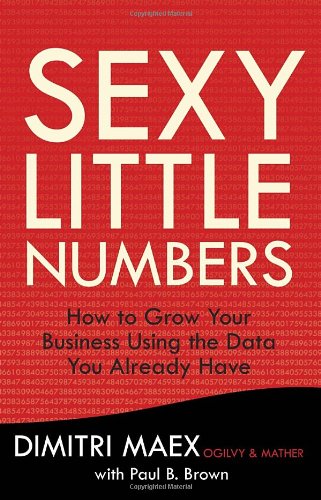
Inhaltsangabe
Imagine if you could identify your business’s most profitable customers, craft a better marketing strategy to communicate with them, and inspire them to buy more?
Well now you can. And the best part is that you can do it using the data you already have.
Today, everything we do creates data, and the volumes are enormous. Virtually every time someone views something online, enters search on Google, or even surfs the web on a smart phone, another chunk gets added – in real time - to the multibillion gigabyte (and growing) trove of data that can help us better understand and predict consumer behavior. We no longer need expertise in math or statistics or even expensive modeling software to get the most out of all these revealing consumer insights. A revolution in data analysis is underway, and the methods and tools for aggregating and analyzing this “data deluge” are suddenly far simpler, less expensive, and more precise than they were.
In this book – the first of its kind – Dimitri Maex, Managing Director of global advertising agency OgilvyOne New York and the engine behind the agency’s global analytics practice, reveals how to turn your data - those sexy little numbers that can mean more profit for your business – into actionable strategies that drive real growth and revenues. And he can show you how to do it at virtually no cost. In his clear, easy-to-understand style, he explains how to:
• Allocate your marketing assets in the best possible way and pinpoint the outlays that will generate the highest possible returns.
• Figure out precisely which communication or media brought a customer to your company’s web site and what that customer will do once she arrives.
• Predict which products or services customers will want in the future.
• Learn which customers are preparing to defect to the competition and how to stop them.
• Determine which customers buy your product because it is perfect for their needs, which ones purchase because they liked your ad, which ones chose you because of an appealing price, and which ones came to you through word-of-mouth…or some combination of all these factors.
• Drill your geographic targeting down to the regional, zip code, and even neighborhood level.
• Optimize your web presence to get the maximum return from search.
A must read for marketers striving to get the biggest ROI on their advertising dollars, small business owners eager to grow faster, researchers needing a consumer in mind for whom to create new products or services, those in finance responsible for growing the bottom line, and even creatives looking for feedback to help them improve their output,Sexy Little Numbers is THE essential tool not just for math nerds and number crunchers, but for anyone wishing to use the data at their fingertips to grow their business and increase their profits dramatically.
http://sellorelse.ogilvy.com/sexy-little-numbers
Die Inhaltsangabe kann sich auf eine andere Ausgabe dieses Titels beziehen.
Über die Autorin bzw. den Autor
DIMITRI MAEX is Managing Director of OgilvyOne New York, Ogilvy & Mather’s Direct and Digital operations. He also serves as the head of the company's Global Data Practice, a team that has been recognized by Forrester Research as being number one in the industry. Renowned worldwide for the analytics solutions he’s developed, he has helped companies such as GlaxoSmithKline, IBM, Philips, Siemens, Sears, UPS, and many other global enterprisesemploy hugely profitable and radically new uses for their data and analysis.
PAUL B. BROWN, a long-time contributor to The New York Times, is a bestselling author who has collaborated on numerous business classics includingCustomers for Life (with Carl Sewell) and Your Marketing Sucks (with Mark Stevens).
Auszug. © Genehmigter Nachdruck. Alle Rechte vorbehalten.
chapter one
How This Book Will Help You Grow Your Business
I work in an industry known for reducing complicated ideas to a single thought. These tag lines—“Merrill Lynch is bullish on America,” “Finger lickin’ good,” and “Don’t Leave Home Without It”—were all created by my colleagues at Ogilvy & Mather.
And in my corner of the ad agency—I run Ogilvy’s analytics team—we operate on a single premise: The most successful companies today are those that are able to convert the “data deluge” we all face into insights that drive real growth.
Our job is to help our clients uncover those insights. To do that, we need to explain what we discover within their data in simple, straightforward terms. (While the CFO is probably comfortable when I talk about “logistic regressions,” the rest of the people in the C suite—the CEO, the chief marketing officer (CMO), and the others we present to—usually don’t speak math shorthand, and their eyes glaze over after ten or fifteen seconds when I do. So, I have learned to present my ideas the way the “creatives” do, in simple, hopefully memorable images such as “at sixty miles an hour, the loudest noise in this Rolls-Royce comes from the electric clock.” (That was another one of ours.) And I will try as much as possible to use this type of language in this book.
Simple language only enhances this powerful fact: There is now a proven way to increase dramatically both your company’s sales and its ROI using data you probably already have but may not be aware of.
How?
Well, if you think about it, there are really only two sides to every business: supply and demand. The supply side, how a company is going to fill orders—i.e., how they will fulfill their customers’ needs—is the one that a business controls. The company heads know, for example, how much productivity will increase if they buy a new machine.
The supply side is where most left-brainers—the logical, financial types—feel comfortable. For decades, they have increased the efficiencies of supply chains, streamlined processes, and developed measurements to track progress.
The demand side, on the other hand, is something companies don’t control; consumers do. Sure, you can try all kinds of things to reach customers, but ultimately it is the customer/consumer/client who decides if he is interested in what you have to offer. The demand side is the fuzzy place where cause and effect are not always clear. Did he buy because the product was perfect for his needs, because he liked your ad, because your price was appealing, because of word-of-mouth—or was it some combination of those factors and a hundred more?
Here finding out what happens when you turn the dials and push the buttons is a messy business. The customer bought immediately after clicking on your Internet ad; but was the banner ad the reason she bought? Figuring it all out is what I do on a daily basis. As you will see, I use the clean, tried-and-tested tools from the supply side and apply them to the messy demand side of the business.
These tools can help you, in the words of the book’s subtitle, grow your business in a way that increases both your sales and profits.
This is not only vitally important to those of you in the C suite—after all, the shareholders ultimately will judge you on how effectively you deploy their money—but to employees at all levels of the company. Marketers and people who run business units need to know which are the most profitable customers to target; researchers must have a (profitable) consumer in mind as they set off to create new products or services; those in customer service want to pay the most attention to the firm’s most valuable users/buyers; and, of course, the people in finance will always ask whether the company is going to make any money on its latest undertaking. By employing the ideas we are about to talk about, the return on your investment can be huge.
How huge? Here are two quick examples using the techniques I will be sharing with you:
• Caesars improved their return on online advertising spending by 15 percent to 30 percent by analyzing data generated from customer reviews about the hotels the company owned. There are software programs that not only search out every comment customers make on the web, but automatically sort those comments into scores of categories, and the company used those findings to change their offers and the language in their ads. For example, customers raved about the views from the hotel, and now those views are featured prominently in Caesars ads, while the price of the room is given less prominence.
• TD Ameritrade increased new account openings by 14 percent from the company website just by making very small changes to the copy, design, and images on the site, based on an incredibly thorough examination of its home page. Our team at Ogilvy tested every single word, color, and design element with customers to see what could be improved. It turned out that simply changing the signup language from “Apply online now” to “Get started” and altering the color of the button customers clicked from orange to green made a dramatic difference in the number of people who opened accounts.
As these examples show, the material in this book is not theoretical. It is already being used by companies to increase demand for their products. I am going to show you how you can do the same thing.
By looking differently at the existing data you have about your customers, you can improve:
Your strategy. You’ll learn how to fine-tune your overarching approach to both your customers and the competition based on the insights the numbers about your business can provide. For example, you will discover who your most profitable customers are, who is most likely to buy from you, and which customer segments are not worth targeting.
The tactics you use to carry out your strategy. Your data, when viewed correctly, will tell you how to approach and sell to your most profitable customers and the best ways to reach those who are likely to buy more from you.
The execution of your tactics. Your data will help you pinpoint where you will get the biggest returns and when would be the best time to implement your tactics.
There are two simple reasons why these improvements are possible: First, remarkable breakthroughs in technology allow us to sort through all the data about customer behavior to find discernible—and predictable—buying patterns. We have always had the data; but until now, companies could use it only in the crudest terms. Second, just about everything we do today generates data, giving us a much more complete picture of the people who do business with us, and the potential revenue companies are missing, as the following story shows.
On a recent business trip, I woke up in the Canary Wharf section of London and checked out of the Hilton. I took the subway to Paddington Station. From there, I hopped on the Heathrow Express, supposedly the most expensive train in the world, but still cheaper and faster than a cab (and it doesn’t make me carsick).
I checked in for my British Airways flight to JFK airport. Before boarding, I stopped at Boots, the largest drugstore in the UK, to get a four-pack of cucumber wet wipes. My wife, who is British, tells me they are the best in the world and she cannot find them in the United States (like Marmite...
„Über diesen Titel“ kann sich auf eine andere Ausgabe dieses Titels beziehen.
Suchergebnisse für Sexy Little Numbers: How to Grow Your Business Using...

Beispielbild für diese ISBN
Sexy Little Numbers: How to Grow Your Business Using the Data You Already Have
Verlag:
Crown Business (edition 1), 2012
ISBN 10: 0307888347
ISBN 13: 9780307888341
Gebraucht
Hardcover
Anbieter: BooksRun, Philadelphia, PA, USA
Verkäuferbewertung 5 von 5 Sternen

Hardcover. Zustand: Very Good. 1. It's a well-cared-for item that has seen limited use. The item may show minor signs of wear. All the text is legible, with all pages included. It may have slight markings and/or highlighting. Bestandsnummer des Verkäufers 0307888347-11-1
Gebraucht kaufen
EUR 5,17
Versand gratis
Versand innerhalb von USA
Versand innerhalb von USA
Anzahl: 1 verfügbar
Beispielbild für diese ISBN
Sexy Little Numbers: How to Grow Your Business Using the Data You Already Have
Anbieter: World of Books (was SecondSale), Montgomery, IL, USA
Verkäuferbewertung 5 von 5 Sternen
Zustand: Good. Item in good condition. Textbooks may not include supplemental items i.e. CDs, access codes etc. Bestandsnummer des Verkäufers 00105059749
Gebraucht kaufen
EUR 5,51
Versand gratis
Versand innerhalb von USA
Versand innerhalb von USA
Anzahl: 1 verfügbar
Beispielbild für diese ISBN
Sexy Little Numbers: How to Grow Your Business Using the Data You Already Have
Anbieter: Once Upon A Time Books, Siloam Springs, AR, USA
Verkäuferbewertung 4 von 5 Sternen

hardcover. Zustand: Acceptable. This is a used book. It may contain highlighting/underlining and/or the book may show heavier signs of wear . It may also be ex-library or without dustjacket. This is a used book. It may contain highlighting/underlining and/or the book may show heavier signs of wear . It may also be ex-library or without dustjacket. Bestandsnummer des Verkäufers mon0001235710
Gebraucht kaufen
EUR 2,07
EUR 3,53 Versand
Versand innerhalb von USA
Versand innerhalb von USA
Anzahl: 1 verfügbar
Beispielbild für diese ISBN
Sexy Little Numbers: How to Grow Your Business Using the Data You Already Have
Anbieter: ThriftBooks-Dallas, Dallas, TX, USA
Verkäuferbewertung 5 von 5 Sternen
Hardcover. Zustand: Very Good. No Jacket. May have limited writing in cover pages. Pages are unmarked. ~ ThriftBooks: Read More, Spend Less. Bestandsnummer des Verkäufers G0307888347I4N00
Gebraucht kaufen
EUR 6,13
Versand gratis
Versand innerhalb von USA
Versand innerhalb von USA
Anzahl: 1 verfügbar
Beispielbild für diese ISBN
Sexy Little Numbers: How to Grow Your Business Using the Data You Already Have
Anbieter: ThriftBooks-Dallas, Dallas, TX, USA
Verkäuferbewertung 5 von 5 Sternen
Hardcover. Zustand: Good. No Jacket. Pages can have notes/highlighting. Spine may show signs of wear. ~ ThriftBooks: Read More, Spend Less. Bestandsnummer des Verkäufers G0307888347I3N00
Gebraucht kaufen
EUR 6,13
Versand gratis
Versand innerhalb von USA
Versand innerhalb von USA
Anzahl: 1 verfügbar
Beispielbild für diese ISBN
Sexy Little Numbers : How to Grow Your Business Using the Data You Already Have
Verlag:
Crown Publishing Group, The, 2012
ISBN 10: 0307888347
ISBN 13: 9780307888341
Gebraucht
Hardcover
Erstausgabe
Anbieter: Better World Books, Mishawaka, IN, USA
Verkäuferbewertung 5 von 5 Sternen
Zustand: Good. 1st Edition. Former library copy. Pages intact with minimal writing/highlighting. The binding may be loose and creased. Dust jackets/supplements are not included. Includes library markings. Stock photo provided. Product includes identifying sticker. Better World Books: Buy Books. Do Good. Bestandsnummer des Verkäufers 4292977-6
Gebraucht kaufen
EUR 6,19
Versand gratis
Versand innerhalb von USA
Versand innerhalb von USA
Anzahl: 3 verfügbar
Beispielbild für diese ISBN
Sexy Little Numbers : How to Grow Your Business Using the Data You Already Have
Verlag:
Crown Publishing Group, The, 2012
ISBN 10: 0307888347
ISBN 13: 9780307888341
Gebraucht
Hardcover
Erstausgabe
Anbieter: Better World Books: West, Reno, NV, USA
Verkäuferbewertung 5 von 5 Sternen
Zustand: Very Good. 1st Edition. Former library copy. Pages intact with possible writing/highlighting. Binding strong with minor wear. Dust jackets/supplements may not be included. Includes library markings. Stock photo provided. Product includes identifying sticker. Better World Books: Buy Books. Do Good. Bestandsnummer des Verkäufers 4242536-75
Gebraucht kaufen
EUR 6,19
Versand gratis
Versand innerhalb von USA
Versand innerhalb von USA
Anzahl: 1 verfügbar
Beispielbild für diese ISBN
Sexy Little Numbers: How to Grow Your Business Using the Data You Already Have
Anbieter: MusicMagpie, Stockport, Vereinigtes Königreich
Verkäuferbewertung 5 von 5 Sternen
Zustand: Very Good. 1760607872. 10/16/2025 9:44:32 AM. Bestandsnummer des Verkäufers U9780307888341
Gebraucht kaufen
EUR 4,50
EUR 6,56 Versand
Versand von Vereinigtes Königreich nach USA
Versand von Vereinigtes Königreich nach USA
Anzahl: 1 verfügbar
Beispielbild für diese ISBN
Sexy Little Numbers: How to Grow Your Business Using the Data You Already Have
Anbieter: HPB-Emerald, Dallas, TX, USA
Verkäuferbewertung 5 von 5 Sternen
Hardcover. Zustand: Very Good. Connecting readers with great books since 1972! Used books may not include companion materials, and may have some shelf wear or limited writing. We ship orders daily and Customer Service is our top priority! Bestandsnummer des Verkäufers S_484917006
Gebraucht kaufen
EUR 12,64
EUR 3,35 Versand
Versand innerhalb von USA
Versand innerhalb von USA
Anzahl: 1 verfügbar
Beispielbild für diese ISBN
Sexy Little Numbers: How to Use the Data You Have to Increase Sales and Grow Your Business at Virtually No Cost
Verlag:
Crown Publishing Group, Division of Random House Inc, 2012
ISBN 10: 0307888347
ISBN 13: 9780307888341
Gebraucht
Hardcover
Anbieter: Greener Books, London, Vereinigtes Königreich
Verkäuferbewertung 4 von 5 Sternen
Hardcover. Zustand: Used; Very Good. **SHIPPED FROM UK** We believe you will be completely satisfied with our quick and reliable service. All orders are dispatched as swiftly as possible! Buy with confidence! Greener Books. Bestandsnummer des Verkäufers 5046171
Gebraucht kaufen
EUR 4,51
EUR 23,88 Versand
Versand von Vereinigtes Königreich nach USA
Versand von Vereinigtes Königreich nach USA
Anzahl: 1 verfügbar