
Verwandte Artikel zu A Star for Mrs. Blake
Inhaltsangabe
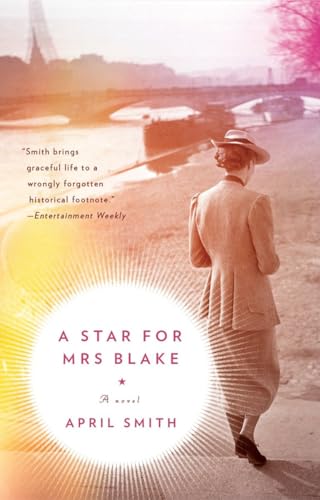
An emotionally charged historical novel based on the Gold Star Mothers.
Cora Blake never dreamed she’d go to Paris. She’s hardly ever left the small fishing village where she grew up. Yet in the summer of 1931, she is invited to travel to France with hundreds of other Gold Star Mothers, courtesy of the U.S. government, to say goodbye to their fallen sons, American casualties of World War I who were buried overseas.
Chaperoned by a dashing West Point officer, Cora’s group includes the wife of an immigrant chicken farmer; a housemaid; a socialite; a former tennis star in precarious mental health; and dozens of other women from all over the country. Along the way, the women will forge lifelong friendships as they face a death, a scandal, and a secret revealed.
Die Inhaltsangabe kann sich auf eine andere Ausgabe dieses Titels beziehen.
Über die Autorin bzw. den Autor
April Smith is the author of the successful novels featuring FBI Special Agent Ana Grey as the central character. She is also an Emmy-nominated television writer and producer. In her research for A Star for Mrs. Blake, she traveled to Maine, New York City, Paris, Verdun, and the Meuse-Argonne American Cemetery. Her home base is Santa Monica, California, where she lives with her husband.
Auszug. © Genehmigter Nachdruck. Alle Rechte vorbehalten.
Excerpted from the hardcover edition
1
February
Cora Blake was certainly not planning on going to Paris that spring. Or ever in her lifetime. She was the librarian in a small town on the tip of an island off the coast of Maine, which didn’t mean she’d never traveled. She did spend two years at Colby College in Waterville and visited family in Portland, went to Arizona once, and if you counted yachting, knew most of the New England coast. Her mother had been the great adventurer, married to a sea captain who’d taken her all around the world. Cora was born off the coast of Rio de Janeiro, which might account for her venturesome spirit, but now she roamed only in books. Summer people from North Carolina and Boston would stop by the quaint old library building to chat, and wonder how she could stand to live in such a tiny place with those terrible winters.
“I have everything I want right on the island,” she’d say. “We’re so off the beaten path, you’ve got to be satisfied with the way it is.”
Since the crash of ’twenty-nine the county had stopped paying her salary, but Cora kept on librarying anyway, two days and one morning a week, for free. She did it for the sociability and out of duty to her readers, but she was as hard up for cash as anybody. That’s why when the whistle started blowing at the break of dawn out at Healy’s cannery, it sounded to Cora Blake like Gabriel himself swinging out on the horn.
It was 5:00 a.m. in the pit of February. The cannery had been silent for more than two weeks, but now the whistle was loud and clear, piercing the bleat of the foghorn. Wake up! it shrilled. There’s work! and throughout the village women rose up out of warm beds wondering how much work there would be and how long they might be gone doing it. The length of the job depended on the catch. Clams, as long as they’re watered down at night, will be fine until the next day—but fish has to be put up right away or it will spoil. They could end up packing twenty-four hours straight, which nobody would moan about at a time when the Great Depression had taken away so many jobs, but they had just thirty minutes to dress and put out food for the family before the second whistle started up, scolding them to get out the door. By then the worker-transportation bus would be leaving from in front of the post office, and if you missed it, well, good night and good luck.
In the top bedroom of one of the old stonecutter’s cottages facing the harbor—mustard-yellow, with squares for windows like a child would draw—Cora was rapidly calculating four meals ahead. Life had changed since she’d left Tide’s End Farm, a hundred acres that had been in the family since 1759. Five years ago, her mother, Luella, and older sister, Avis, had passed from cholera, and Cora moved to town in order to look after her nieces, Sarah, fourteen, Laura, twelve, and Kathleen, ten. Now the farm lay derelict and far from her mind. There were the three girls plus her brother-in-law to cook for, and all she had in quantity was beans.
Most people can’t tell the difference between one bean and another. Most don’t give a hoot. North of Ellsworth anyway, a lot of folks were making it through hard times on the Marafax beans supplied by the federal government, chewy amber-colored little things that prudent types cooked only with salt. Cora had gone up to the city and gotten some, along with margarine you had to mix by hand with yellow coloring, so it didn’t look like dental wax. They still had turnips and squash in the cellar hay mow.
She woke Sarah, who was sprawled beside her in a dead pile under the quilts, and gave her the lowdown. Aunt Cora was going on a pay streak and, as the oldest, Sarah would be in charge of the household, most of which was laid up with flu. Sarah didn’t move. She wasn’t sick, but her eyes remained shut on principle.
“Can I make biscuits?” she asked.
“I don’t want to see a speck of wasted flour when I get home,” Cora warned. “And no cigarettes. Don’t think I won’t know, because I can smell them on you.”
The girl uttered something befitting a half-asleep adolescent, but Cora was already across the frigid bedroom. It was impossible to keep warm without coal. Her brother-in-law, Big Ole Uncle Percy, had started cutting wood off someone else’s parcel, but what could you do? Rags stuffed under the doors did nothing to stop the glacial drafts that swept down from Nova Scotia. She looked to the window to gauge the day; the glass was scrolled with the roseate frost of dawn. Outside the snow was fresh and it was well below freezing, but Cora was cheered to see there would be sun.
She pulled a pair of woolen stockings from the cedar chest. They had been patched up so often they had acquired the combined character of the three generations who had worn them, which meant they belonged to nobody, and were seen by Cora not with sentiment, but as a handy something to be pulled over her shoes, followed by galoshes that had been resewn where the rubber split.
Entering the icy kitchen, Cora was grateful for the millionth time to her pragmatic mother. She had sailed through the Panama Canal as Captain Frederick Harding’s wife on the windjammer Lara Leigh, delivering molasses and timber and sometimes chartered for the pleasure of wealthy businessmen in Florida, but it was hardly as glamorous as it sounded. Her duties were to cook, sew, and clean the cabin, and to be pleasant company for the wives at the yacht clubs where they moored. When they returned to Tide’s End Farm, Luella raised Cora and her sister with the self-reliance she’d learned at sea. She taught them, for example, that no matter if you were tired and falling off your feet, you always got the stove ready before you went to bed. Mostly it was an island tradition for the man of the house to lay the fire, but Captain Harding would be gone on voyages for months, and so it became a mother-daughter ritual every night to whittle sticks of winter pine into clean-smelling curls.
“No need for kerosene a’tall,” her mother would say with satisfaction.
When she was little, it was Cora’s job to stack the kindling neatly in the fire box, a thing she loved to do, because once the iron door was latched, the day would come to a quiet close with the reassuring knowledge that Mother had taken care of today, tonight, and tomorrow. Every night she did the same for her nieces, using the sharp old jackknife to turn out perfect spirals before their captivated eyes. It still gave her a feeling of being in safekeeping. And in the morning the stove always lit with just one match.
She got the kettle steaming and this she poured into another kettle of those reliable beans. She lit a lantern on the oilcloth-covered table. The light fell on the lush jacket illustration of Treasure Island, which was sitting on top of the pile she’d brought home for the kids who were sick in bed. One thing about librarying is you can take home whatever you please off the shelves, and since she was the only one keeping the place open, Cora felt perfectly in the right doing so. Treasure Island was one of her favorites. She dragged her fingertips over the book as if to take it all in, even the feel of the type. She knew the story by heart—her father had read it out loud to her, she’d read it to her son, Sammy, and later on he’d read it back to Grandpa Harding—about young Jim Hawkins and his indomitable mother, who runs the Admiral Benbow Inn. One day a mysterious old sailor...
„Über diesen Titel“ kann sich auf eine andere Ausgabe dieses Titels beziehen.
Suchergebnisse für A Star for Mrs. Blake

Beispielbild für diese ISBN
A Star for Mrs. Blake
Anbieter: World of Books (was SecondSale), Montgomery, IL, USA
Verkäuferbewertung 5 von 5 Sternen

Paperback. Zustand: Very Good. An emotionally charged historical novel based on the Gold Star Mothers. Cora Blake never dreamed she'd go to Paris. She's hardly ever left the small fishing village where she grew up. Yet in the summer of 1931, she is invited to travel to France with hundreds of other Gold Star Mothers, courtesy of the U.S. government, to say goodbye to their fallen sons, American casualties of World War I who were buried overseas. Chaperoned by a dashing West Point officer, Cora's group includes the wife of an immigrant chicken farmer; a housemaid; a socialite; a former tennis star in precarious mental health; and dozens of other women from all over the country. Along the way, the women will forge lifelong friendships as they face a death, a scandal, and a secret revealed. Bestandsnummer des Verkäufers 00097362661
Gebraucht kaufen
EUR 3,72
Versand gratis
Versand innerhalb von USA
Versand innerhalb von USA
Anzahl: 3 verfügbar
Beispielbild für diese ISBN
A Star for Mrs. Blake
Anbieter: World of Books (was SecondSale), Montgomery, IL, USA
Verkäuferbewertung 5 von 5 Sternen
Paperback. Zustand: Fair. An emotionally charged historical novel based on the Gold Star Mothers. Cora Blake never dreamed she'd go to Paris. She's hardly ever left the small fishing village where she grew up. Yet in the summer of 1931, she is invited to travel to France with hundreds of other Gold Star Mothers, courtesy of the U.S. government, to say goodbye to their fallen sons, American casualties of World War I who were buried overseas. Chaperoned by a dashing West Point officer, Cora's group includes the wife of an immigrant chicken farmer; a housemaid; a socialite; a former tennis star in precarious mental health; and dozens of other women from all over the country. Along the way, the women will forge lifelong friendships as they face a death, a scandal, and a secret revealed. Bestandsnummer des Verkäufers 00065425665
Gebraucht kaufen
EUR 3,72
Versand gratis
Versand innerhalb von USA
Versand innerhalb von USA
Anzahl: 1 verfügbar
Beispielbild für diese ISBN
A Star for Mrs. Blake
Anbieter: World of Books (was SecondSale), Montgomery, IL, USA
Verkäuferbewertung 5 von 5 Sternen
Paperback. Zustand: Good. An emotionally charged historical novel based on the Gold Star Mothers. Cora Blake never dreamed she'd go to Paris. She's hardly ever left the small fishing village where she grew up. Yet in the summer of 1931, she is invited to travel to France with hundreds of other Gold Star Mothers, courtesy of the U.S. government, to say goodbye to their fallen sons, American casualties of World War I who were buried overseas. Chaperoned by a dashing West Point officer, Cora's group includes the wife of an immigrant chicken farmer; a housemaid; a socialite; a former tennis star in precarious mental health; and dozens of other women from all over the country. Along the way, the women will forge lifelong friendships as they face a death, a scandal, and a secret revealed. Bestandsnummer des Verkäufers 00090732753
Gebraucht kaufen
EUR 3,72
Versand gratis
Versand innerhalb von USA
Versand innerhalb von USA
Anzahl: 3 verfügbar
Beispielbild für diese ISBN
A Star for Mrs. Blake
Verlag:
Knopf Doubleday Publishing Group, 2014
ISBN 10: 0307948803
ISBN 13: 9780307948809
Gebraucht
paperback
Anbieter: Your Online Bookstore, Houston, TX, USA
Verkäuferbewertung 5 von 5 Sternen
paperback. Zustand: Very Good. Bestandsnummer des Verkäufers 0307948803-2-34816818
Gebraucht kaufen
EUR 3,73
Versand gratis
Versand innerhalb von USA
Versand innerhalb von USA
Anzahl: 1 verfügbar
Beispielbild für diese ISBN
A Star for Mrs. Blake
Verlag:
Knopf Doubleday Publishing Group, 2014
ISBN 10: 0307948803
ISBN 13: 9780307948809
Gebraucht
paperback
Anbieter: Orion Tech, Kingwood, TX, USA
Verkäuferbewertung 5 von 5 Sternen
paperback. Zustand: Fair. Bestandsnummer des Verkäufers 0307948803-4-37272701
Gebraucht kaufen
EUR 3,73
Versand gratis
Versand innerhalb von USA
Versand innerhalb von USA
Anzahl: 1 verfügbar
Beispielbild für diese ISBN
A Star for Mrs. Blake
Anbieter: Gulf Coast Books, Cypress, TX, USA
Verkäuferbewertung 5 von 5 Sternen
Paperback. Zustand: Very Good. Bestandsnummer des Verkäufers 0307948803-2-18466813
Gebraucht kaufen
EUR 3,73
Versand gratis
Versand innerhalb von USA
Versand innerhalb von USA
Anzahl: 1 verfügbar
Foto des Verkäufers
A Star for Mrs. Blake
Verlag:
Knopf Doubleday Publishing Group, 2014
ISBN 10: 0307948803
ISBN 13: 9780307948809
Gebraucht
Softcover
Anbieter: Zoom Books Company, Lynden, WA, USA
Verkäuferbewertung 5 von 5 Sternen
Zustand: very_good. Book is in very good condition and may include minimal underlining highlighting. The book can also include "From the library of" labels. May not contain miscellaneous items toys, dvds, etc. . We offer 100% money back guarantee and 24 7 customer service. Bestandsnummer des Verkäufers ZBV.0307948803.VG
Gebraucht kaufen
EUR 4,06
Versand gratis
Versand innerhalb von USA
Versand innerhalb von USA
Anzahl: 1 verfügbar
Foto des Verkäufers
A Star for Mrs. Blake
Verlag:
Knopf Doubleday Publishing Group, 2014
ISBN 10: 0307948803
ISBN 13: 9780307948809
Gebraucht
Softcover
Anbieter: Books for Life, LAUREL, MD, USA
Verkäuferbewertung 5 von 5 Sternen
Zustand: very_good. Book is in very good condition. Clean with little to no signs of wear or markings highlights. Bestandsnummer des Verkäufers LFM.8EC4
Gebraucht kaufen
EUR 4,41
Versand gratis
Versand innerhalb von USA
Versand innerhalb von USA
Anzahl: 1 verfügbar
Beispielbild für diese ISBN
A Star for Mrs. Blake
Anbieter: World of Books Inc, Montgomery, IL, USA
Verkäuferbewertung 4 von 5 Sternen

Paperback. Zustand: Fair. An emotionally charged historical novel based on the Gold Star Mothers. Cora Blake never dreamed she'd go to Paris. She's hardly ever left the small fishing village where she grew up. Yet in the summer of 1931, she is invited to travel to France with hundreds of other Gold Star Mothers, courtesy of the U.S. government, to say goodbye to their fallen sons, American casualties of World War I who were buried overseas. Chaperoned by a dashing West Point officer, Cora's group includes the wife of an immigrant chicken farmer; a housemaid; a socialite; a former tennis star in precarious mental health; and dozens of other women from all over the country. Along the way, the women will forge lifelong friendships as they face a death, a scandal, and a secret revealed. Bestandsnummer des Verkäufers CIN0307948803A
Gebraucht kaufen
EUR 5,55
Versand gratis
Versand innerhalb von USA
Versand innerhalb von USA
Anzahl: 1 verfügbar
Beispielbild für diese ISBN
A Star for Mrs. Blake
Anbieter: World of Books Inc, Montgomery, IL, USA
Verkäuferbewertung 4 von 5 Sternen
Paperback. Zustand: Good. An emotionally charged historical novel based on the Gold Star Mothers. Cora Blake never dreamed she'd go to Paris. She's hardly ever left the small fishing village where she grew up. Yet in the summer of 1931, she is invited to travel to France with hundreds of other Gold Star Mothers, courtesy of the U.S. government, to say goodbye to their fallen sons, American casualties of World War I who were buried overseas. Chaperoned by a dashing West Point officer, Cora's group includes the wife of an immigrant chicken farmer; a housemaid; a socialite; a former tennis star in precarious mental health; and dozens of other women from all over the country. Along the way, the women will forge lifelong friendships as they face a death, a scandal, and a secret revealed. Bestandsnummer des Verkäufers CIN0307948803G
Gebraucht kaufen
EUR 5,55
Versand gratis
Versand innerhalb von USA
Versand innerhalb von USA
Anzahl: 3 verfügbar