
Verwandte Artikel zu Elsewhere: A Memoir
Inhaltsangabe
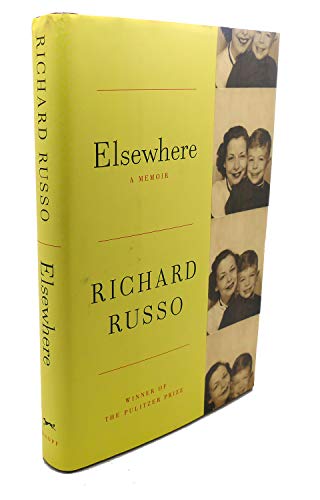
After eight commanding works of fiction, the Pulitzer Prize winner now turns to memoir in a hilarious, moving, and always surprising account of his life, his parents, and the upstate New York town they all struggled variously to escape.
Anyone familiar with Richard Russo's acclaimed novels will recognize Gloversville once famous for producing that eponymous product and anything else made of leather. This is where the author grew up, the only son of an aspirant mother and a charming, feckless father who were born into this close-knit community. But by the time of his childhood in the 1950s, prosperity was inexorably being replaced by poverty and illness (often tannery-related), with everyone barely scraping by under a very low horizon.
A world elsewhere was the dream his mother instilled in Rick, and strived for herself, and their subsequent adventures and tribulations in achieving that goal - beautifully recounted here - were to prove lifelong, as would Gloversville's fearsome grasp on them both. Fraught with the timeless dynamic of going home again, encompassing hopes and fears and the relentless tides of familial and individual complications, this story is arresting, comic, heartbreaking, and truly beautiful, an immediate classic.
Die Inhaltsangabe kann sich auf eine andere Ausgabe dieses Titels beziehen.
Über die Autorin bzw. den Autor
Richard Russo lives with his wife in Camden, Maine, and Boston. In 2002 he was awarded the Pulitzer Prize for Empire Falls.
Auszug. © Genehmigter Nachdruck. Alle Rechte vorbehalten.
Prologue
A few years ago, passing the sign on the New York State Thruway for the Central Leatherstocking Region, a friend of mine misread it as saying laughingstock and thought, That must be where Russo's from. She was right. I'm from Gloversville, just a few miles north in the foothills of the Adirondacks, a place that's easy to joke about unless you live there, as some of my family still do.
The town wasn't always a joke. In its heyday, nine out of ten dress gloves in the United States were manufactured there. By the end of the nineteenth century, craftsmen from all over Europe had flocked in, for decades producing gloves on a par with the finest made anywhere in the world. Back then glove-cutting was governed by a guild, and you typically apprenticed, as my maternal grandfather did, for two or three years. The primary tools of a trained glove-cutter's trade were his eye, his experience of animal skins, and his imagination. It was my grandfather who gave me my first lessons in art - though I doubt he would've worded it like that - when he explained the challenge of making something truly fine and beautiful from an imperfect hide. After they're tanned but before they go to the cutter, skins are rolled and brushed and finished to ensure smooth uniformity, but inevitably they retain some of nature's imperfections. The true craftsman, he gave me to understand, works around these flaws or figures out how to incorporate them into the glove's natural folds or stitching. Each skin posed problems whose resolution required creativity. The glove-cutter's job wasn't just to get as many gloves as possible out of a hide but to do so while minimizing its flaws.
Leather had been tanned in Fulton County, using the bark of hemlock trees, since before the American Revolution. Gloversville and neighboring Johnstown were home not only to gloves but to all things leather: shoes and coats and handbags and upholstery. My paternal grandfather, from Salerno, Italy, having heard about this place where so many artisans had gathered, journeyed to upstate New York in hopes of making a living there as a shoemaker. From New York City he took the train north to Albany, then west as far as the Barge Canal hamlet of Fonda, where he followed the freight tracks north up to Johnstown, where I was born decades later. Did he have any real idea of where he was headed, or what his new life would be like? You tell me. Among the few material possessions he brought with him from the old country was an opera cape.
Both men had wretched timing. My father's father soon learned that Fulton County wasn't Manhattan or even Salerno, and that few men in his new home would buy expensive custom-made shoes instead of cheaper machine-made ones, so he had little choice but to become a shoe repairman. And by the time my mother's father arrived in Gloversville from Vermont, the real craft of glove-cutting was already under assault. By the end of World War I, many gloves were being "pattern cut." (For a size 6 glove, a size 6 pattern was affixed to the skin and cut around with shears.) Once he returned from World War II, the process was largely mechanized by "clicker-cutting" machines that quickly stamped out presized gloves, requiring the operator only to position the tanned skin under the machine's lethal blades and pull down on its mechanical arm. I was born in 1949, by which time there wasn't much demand for handmade gloves or shoes, but both my grandfathers had long since made their big moves to Fulton County and staked their dubious claims. By then they had families, and so there they remained. It was also during the fi rst half of the twentieth century that chrome tanning, a chemical procedure that made leather more supple and water resistant, and dramati
„Über diesen Titel“ kann sich auf eine andere Ausgabe dieses Titels beziehen.
Suchergebnisse für Elsewhere: A Memoir

Beispielbild für diese ISBN
Elsewhere
Anbieter: World of Books (was SecondSale), Montgomery, IL, USA
Verkäuferbewertung 5 von 5 Sternen

Hardback. Zustand: Good. A Washington Post Notable Work of NonfictionAn NPR Best Book of 2012Pulitzer Prize-winning novelist Richard Russo turns to memoir in this hilarious and bittersweet account of his lifelong bond with his high-strung, spirited mother--and the small town she spent her life trying to escape. Anyone familiar with Russo's novels will recognize Gloversville--once famous for producing nine out of ten dress gloves in the United States. By the time Rick was born, ladies had stopped wearing gloves and Gloversville was on its way out. Jean Russo instilled in her son her dream of a better life elsewhere, a dream that prompted her to follow him across the country when he went to college. Their adventures and tribulations on that road trip were a preview of the hold his mother would continue to have on him as she kept trying desperately to change her life. Recounted with a clear-eyed mix of regret, nostalgia, and love, Elsewhere is a stirring tribute to the tenacious grip of the past. Bestandsnummer des Verkäufers 00107422690
Gebraucht kaufen
EUR 4,05
Versand gratis
Versand innerhalb von USA
Versand innerhalb von USA
Anzahl: 8 verfügbar
Foto des Verkäufers
Elsewhere: A memoir
Anbieter: Zoom Books East, Glendale Heights, IL, USA
Verkäuferbewertung 5 von 5 Sternen
Zustand: good. Book is in good condition and may include underlining highlighting and minimal wear. The book can also include "From the library of" labels. May not contain miscellaneous items toys, dvds, etc. . We offer 100% money back guarantee and 24 7 customer service. Bestandsnummer des Verkäufers ZEV.0307959538.G
Gebraucht kaufen
EUR 4,05
Versand gratis
Versand innerhalb von USA
Versand innerhalb von USA
Anzahl: 1 verfügbar
Foto des Verkäufers
Elsewhere: A memoir
Anbieter: Zoom Books East, Glendale Heights, IL, USA
Verkäuferbewertung 5 von 5 Sternen
Zustand: acceptable. Book is in acceptable condition and shows signs of wear. Book may also include underlining highlighting. The book can also include "From the library of" labels. May not contain miscellaneous items toys, dvds, etc. . We offer 100% money back guarantee and 24 7 customer service. Bestandsnummer des Verkäufers ZEV.0307959538.A
Gebraucht kaufen
EUR 4,05
Versand gratis
Versand innerhalb von USA
Versand innerhalb von USA
Anzahl: 1 verfügbar
Beispielbild für diese ISBN
Elsewhere: A memoir
Anbieter: BookHolders, Towson, MD, USA
Verkäuferbewertung 5 von 5 Sternen
Zustand: Good. [ No Hassle 30 Day Returns ][ Ships Daily ] [ Underlining/Highlighting: NONE ] [ Writing: NONE ] [ Edition: First ] Publisher: Knopf Pub Date: 10/30/2012 Binding: Hardcover Pages: 256 First edition. Bestandsnummer des Verkäufers 6955715
Gebraucht kaufen
EUR 4,15
Versand gratis
Versand innerhalb von USA
Versand innerhalb von USA
Anzahl: 1 verfügbar
Beispielbild für diese ISBN
Elsewhere: A memoir
Anbieter: New Legacy Books, Annandale, NJ, USA
Verkäuferbewertung 5 von 5 Sternen
hardcover. Zustand: Good. Fast shipping and order satisfaction guaranteed. A portion of your purchase benefits Non-Profit Organizations, First Aid and Fire Stations! Bestandsnummer des Verkäufers mon0000187895
Gebraucht kaufen
EUR 2,28
EUR 2,22 Versand
Versand innerhalb von USA
Versand innerhalb von USA
Anzahl: 1 verfügbar
Foto des Verkäufers
Elsewhere: A memoir
Anbieter: Greenworld Books, Arlington, TX, USA
Verkäuferbewertung 5 von 5 Sternen
Zustand: very_good. Fast Free Shipping â" Very Good condition book with a firm cover and clean pages. Shows normal use and some light wear or limited notes markings. A solid, nice copy to enjoy. Bestandsnummer des Verkäufers GWV.0307959538.VG
Gebraucht kaufen
EUR 5,16
Versand gratis
Versand innerhalb von USA
Versand innerhalb von USA
Anzahl: 2 verfügbar
Foto des Verkäufers
Elsewhere: A memoir
Anbieter: Greenworld Books, Arlington, TX, USA
Verkäuferbewertung 5 von 5 Sternen
Zustand: good. Fast Free Shipping â" Good condition. It may show normal signs of use, such as light writing, highlighting, or library markings, but all pages are intact and the book is fully readable. A solid, complete copy that's ready to enjoy. Bestandsnummer des Verkäufers GWV.0307959538.G
Gebraucht kaufen
EUR 5,26
Versand gratis
Versand innerhalb von USA
Versand innerhalb von USA
Anzahl: 1 verfügbar
Beispielbild für diese ISBN
Elsewhere: A memoir
Verlag:
Knopf (edition First Edition), 2012
ISBN 10: 0307959538
ISBN 13: 9780307959539
Gebraucht
Hardcover
Erstausgabe
Anbieter: BooksRun, Philadelphia, PA, USA
Verkäuferbewertung 5 von 5 Sternen
Hardcover. Zustand: Very Good. First Edition. With dust jacket. It's a well-cared-for item that has seen limited use. The item may show minor signs of wear. All the text is legible, with all pages included. It may have slight markings and/or highlighting. Bestandsnummer des Verkäufers 0307959538-11-1-29
Gebraucht kaufen
EUR 5,51
Versand gratis
Versand innerhalb von USA
Versand innerhalb von USA
Anzahl: 1 verfügbar
Beispielbild für diese ISBN
Elsewhere: A memoir
Anbieter: Half Price Books Inc., Dallas, TX, USA
Verkäuferbewertung 5 von 5 Sternen
hardcover. Zustand: Very Good. Connecting readers with great books since 1972! Used books may not include companion materials, and may have some shelf wear or limited writing. We ship orders daily and Customer Service is our top priority! Bestandsnummer des Verkäufers S_469380228
Gebraucht kaufen
EUR 2,38
EUR 3,34 Versand
Versand innerhalb von USA
Versand innerhalb von USA
Anzahl: 1 verfügbar
Beispielbild für diese ISBN
Elsewhere
Anbieter: World of Books Inc, Montgomery, IL, USA
Verkäuferbewertung 4 von 5 Sternen

Hardback. Zustand: Good. A Washington Post Notable Work of NonfictionAn NPR Best Book of 2012Pulitzer Prize-winning novelist Richard Russo turns to memoir in this hilarious and bittersweet account of his lifelong bond with his high-strung, spirited mother--and the small town she spent her life trying to escape. Anyone familiar with Russo's novels will recognize Gloversville--once famous for producing nine out of ten dress gloves in the United States. By the time Rick was born, ladies had stopped wearing gloves and Gloversville was on its way out. Jean Russo instilled in her son her dream of a better life elsewhere, a dream that prompted her to follow him across the country when he went to college. Their adventures and tribulations on that road trip were a preview of the hold his mother would continue to have on him as she kept trying desperately to change her life. Recounted with a clear-eyed mix of regret, nostalgia, and love, Elsewhere is a stirring tribute to the tenacious grip of the past. Bestandsnummer des Verkäufers CIN0307959538G
Gebraucht kaufen
EUR 5,88
Versand gratis
Versand innerhalb von USA
Versand innerhalb von USA
Anzahl: 8 verfügbar