
Verwandte Artikel zu Hoops
Inhaltsangabe
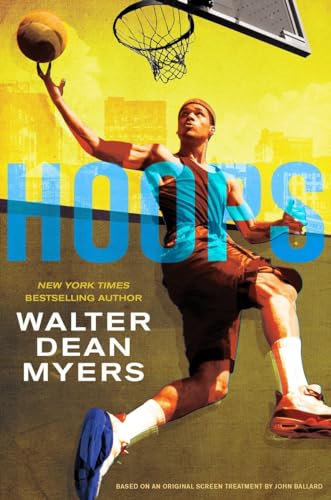
By the groundbreaking author of the award-winning Monster–a visionary who influenced and inspired a generation–this fast-paced and poignant story reveals the fierce underworld of sports.
All eyes are on seventeen-year-old Lonnie Jackson while he practices with his team for a city-wide basketball Tournament of Champions. His coach, Cal, knows Lonnie has what it takes to be a pro basketball player, but warns him about giving in to the pressure. Cal knows because he, too, once had the chance—but sold out.
As the tournament nears, Lonnie learns that some heavy bettors want Cal to keep him on the bench so that the team will lose the championship. As the last seconds of the game tick away, Lonnie and Cal must make a decision. Are they willing to blow the chance of a lifetime?
An ALA-YALSA Best Book for Young Adults
AWARDS FOR WALTER DEAN MYERS:
New York Times Bestselling Author
3-Time National Book Award Finalist
Michael L. Printz Award
5 Coretta Scott King Awards
2 Newbery Honors
National Ambassador for Young People’s Literature (2012-2013)
Margaret A. Edwards Award for Lifetime Achievement
Children’s Literature Legacy Award
Die Inhaltsangabe kann sich auf eine andere Ausgabe dieses Titels beziehen.
Über die Autorin bzw. den Autor
1937–2014
WALTER DEAN MYERS was one of the premier authors of children’s books. Random House Children’s Books is the publisher of many of his titles, including On a Clear Day, 145th Street: Short Stories, Hoops, The Outside Shot, and What They Found: Love on 145th Street. Among his many honors are Monster, the first Printz award winner and two Newbery Honor Books, Scorpions and Somewhere in the Darkness. He is also a two-time recipient of the Coretta Scott King Award, for Now Is Your Time! and Fallen Angels. In addition, Myers has received the Margaret A. Edwards Award for his contribution to young adult literature. Myers was also named the 2012-2013 National Ambassador for Young People’s Literature.
Auszug. © Genehmigter Nachdruck. Alle Rechte vorbehalten.
One of the things my father used to say was how his days were piling up on him. When I told him I didn’t know what that meant, he said one day I would.
“Right now,” he said, “you got your days filled up with playing and going to school. Then after a while you gonna start dreaming about this and that, and you gonna lay your days out in front of yourself like an imaginary road. That’s what I did.”
“Then what happened?” I asked.
“Then they started piling up on me,” he said. He looked away and didn’t say anything else, and I knew the conversation was over. When he looked away like that, there wasn’t any use to keep on talking.
After he split, I stayed around the house a lot. I did most of the things I was supposed to do, like making the school scene and helping out around the house. I got a little job at the Grant, a little run-down hotel, when I got to be sixteen. That was really okay. I could earn a few bucks, and I could crash there when my moms got on my back too much. By my senior year she was on my back just about all the time, too. Something had come up between us that put an edge on everything we did. It wasn’t anything I could really lay out and say, “Hey, there it is,” as much as it was a feeling. I’d be sitting in the kitchen eating and she’d come in and make some remark about how late I was staying out or something, and I just wouldn’t want to hear it. So I’d finish eating as soon as I could and then bust over to the Grant to spend the night there and cool out.
When I thought about it, I knew it wasn’t so much that I had changed, or even that she had changed, but the situation was different than it had been, and we couldn’t talk about it. When I was younger, I used to tell myself I was going to do this or do that and I believed it. Now I didn’t know. For a long time Moms hung on to that old stuff, about me going to college and making something of myself. When I would lay in bed at the Grant, waiting for the next day to roll around, I was also waiting for something to happen, something to change my life. It was like I was running in a marathon and suddenly forgot where the finish line was. But I knew I still had a place to get to, even if I couldn’t see it, and I knew I was scared to stop running.
All along, though, I had my game. My game was my fame, and I knew it was together. From the first time I played basketball in grade school I was good. I was good, but I was short then. Some of the older guys used to call me runt. “You got a sweet game for a kid, runt,” they’d say.
I was always on the court practicing, trying to get my game more together. I used to imagine being the shortest guy in the NBA and scoring the winning basket in the championship.
Then, when I got to be fifteen, I started to grow. When my seventeenth birthday came around, I was six three. Now, my game was sweet when I was short, but when I got taller, it was really nice. I played ball just about every day for about three years straight until near the end of my senior year. Then, all of a sudden, I began to go through a whole lot of changes. I was feeling okay, but I just didn’t want to do anything. I’d sit around and try to decide what I wanted to do, and that would take an hour or so, and then, when I decided what I wanted to do, I still might not do it because I just didn’t seem to have the energy. Then, to top things off, sometimes if I did really break out into a hustle and do something, it would get messed up. I wasn’t sure it was me or if things just weren’t going my way. The Scotch is a good example of what I mean.
I had had some words with my moms after I had left a tea bag in the sink.
“What’s the matter?” she said with her hands on her hips. “Your arm so bad off you can’t reach over there and put the tea bag in the garbage?”
I didn’t say nothing.
“You know that tea bag is going to leave a stain and you’re not going to clean it.”
“I'll put it in the garbage,” I said.
“Oh, no, Mr. Jackson,” she said in this high voice. “Please let your servant do it.”
Then she snatched up the tea bag and put it in the garbage.
“So why didn't you just do that in the first place?” I asked.
“Why didn't I do that in the first place?” She bent over from the waist and looked up at me. “Who do you think I am, boy? I'm your mother, not your servant!”
I listened to that until she got tired of running it; then I split on over to the Grant. I couldn't believe all that flap over a tea bag. I was pretty mad by the time 1 got to the hotel. I got the keys and went up into one of the empty rooms on the third floor and just sat in the window. I looked over towards the liquor store to see if I could see the clock. I couldn't, and I started to turn away. But something wasn't right. “When I looked again, I could see the guy that ran the store standing close up against the shelves, and the clerk was standing right next to him. It looked like there were two other guys in there, too. One of them was a guy who delivered liquor to the store, and the other guy I didn’t recognize, but I saw he had his hand in his jacket pocket. That’s when I realized the store was being held up. Now the truck with the booze to be delivered is outside in the street and the driver is inside being stuck up, which gave me an idea. I busted down the stairs and into the street. I look into the liquor store, and I see that the guy with his hand in his pocket and a third guy I hadn’t seen from the window are making everybody go into the back. I go over to the truck, open the back, and there’s a case of Johnnie Walker close enough to grab. I look around to see if anybody is checking me out, but the only people on the block are some kids. I cop the case of Scotch and hightail it back into the Grant and up to my room.
I figure I can get at least five dollars a bottle for the Scotch, and there are twelve bottles to a case. I’m feeling pretty good about the whole thing by the time I get the case under the bed. I go back to the window. There’s this young brother up on the truck, and I figure he’s going to cop, too. But instead of copping a case of something like I did, he takes a padlock off the truck and throws it to another kid. This kid runs up to the liquor store and puts the padlock on the door.
One of the guys inside the store sees what is going on and runs over to the door, but it’s too late. The kid has locked them all inside. Then about four or five other kids start unloading the truck. Mean while, the guys inside the store are banging on the window and hopping up and down and stuff. By this time it seems that half of Harlem is in on the action. One wino opens a bottle and is in the middle of the street, directing traffic. It takes about ten minutes to unload the truck. The whole block turns into a big party. Finally the cats inside the store shoot out the window just as a police car comes around the corner. There are a few shots fired, but nobody gets hurt, and soon everything is back to normal except for the glass on the street.
It was funny to watch, but then I realized that everybody on the block had Scotch and everything else now, and I wouldn’t get nothing for mine. Still, I figured I could lay with it until everybody had drank theirs up. But that was the way my luck was running-even things that looked sweet weren’t working out right for me.
I got depressed about the whole thing. I sat in the window and watched the people down in the street having a...
„Über diesen Titel“ kann sich auf eine andere Ausgabe dieses Titels beziehen.
Suchergebnisse für Hoops

Beispielbild für diese ISBN
Hoops
Anbieter: World of Books (was SecondSale), Montgomery, IL, USA
Verkäuferbewertung 5 von 5 Sternen

Paperback. Zustand: Fair. By the groundbreaking author of the award-winning Monster-a visionary who influenced and inspired a generation-this fast-paced and poignant story reveals the fierce underworld of sports. All eyes are on seventeen-year-old Lonnie Jackson while he practices with his team for a city-wide basketball Tournament of Champions. His coach, Cal, knows Lonnie has what it takes to be aprobasketballplayer, but warns him about giving in to the pressure. Cal knows because he, too, once had the chance-but sold out. As thetournament nears, Lonnie learns that some heavy bettors want Cal to keep him on the bench so that the team will lose the championship. As the last seconds of the game tick away, Lonnie and Cal must make a decision. Are they willing to blow the chance of a lifetime? An ALA-YALSA Best Book for Young Adults AWARDS FOR WALTER DEAN MYERS: New York Times Bestselling Author 3-Time National Book Award Finalist Michael L. Printz Award 5 Coretta Scott King Awards 2 Newbery Honors National Ambassador for Young People's Literature (2012-2013) Margaret A. Edwards Award for Lifetime Achievement Children's Literature Legacy Award. Bestandsnummer des Verkäufers 00063208489
Gebraucht kaufen
EUR 3,98
Versand gratis
Versand innerhalb von USA
Versand innerhalb von USA
Anzahl: 7 verfügbar
Beispielbild für diese ISBN
Hoops
Anbieter: World of Books (was SecondSale), Montgomery, IL, USA
Verkäuferbewertung 5 von 5 Sternen
Paperback. Zustand: Very Good. By the groundbreaking author of the award-winning Monster-a visionary who influenced and inspired a generation-this fast-paced and poignant story reveals the fierce underworld of sports. All eyes are on seventeen-year-old Lonnie Jackson while he practices with his team for a city-wide basketball Tournament of Champions. His coach, Cal, knows Lonnie has what it takes to be aprobasketballplayer, but warns him about giving in to the pressure. Cal knows because he, too, once had the chance-but sold out. As thetournament nears, Lonnie learns that some heavy bettors want Cal to keep him on the bench so that the team will lose the championship. As the last seconds of the game tick away, Lonnie and Cal must make a decision. Are they willing to blow the chance of a lifetime? An ALA-YALSA Best Book for Young Adults AWARDS FOR WALTER DEAN MYERS: New York Times Bestselling Author 3-Time National Book Award Finalist Michael L. Printz Award 5 Coretta Scott King Awards 2 Newbery Honors National Ambassador for Young People's Literature (2012-2013) Margaret A. Edwards Award for Lifetime Achievement Children's Literature Legacy Award. Bestandsnummer des Verkäufers 00107440049
Gebraucht kaufen
EUR 3,98
Versand gratis
Versand innerhalb von USA
Versand innerhalb von USA
Anzahl: 7 verfügbar
Beispielbild für diese ISBN
Hoops
Anbieter: World of Books (was SecondSale), Montgomery, IL, USA
Verkäuferbewertung 5 von 5 Sternen
Paperback. Zustand: Good. By the groundbreaking author of the award-winning Monster-a visionary who influenced and inspired a generation-this fast-paced and poignant story reveals the fierce underworld of sports. All eyes are on seventeen-year-old Lonnie Jackson while he practices with his team for a city-wide basketball Tournament of Champions. His coach, Cal, knows Lonnie has what it takes to be aprobasketballplayer, but warns him about giving in to the pressure. Cal knows because he, too, once had the chance-but sold out. As thetournament nears, Lonnie learns that some heavy bettors want Cal to keep him on the bench so that the team will lose the championship. As the last seconds of the game tick away, Lonnie and Cal must make a decision. Are they willing to blow the chance of a lifetime? An ALA-YALSA Best Book for Young Adults AWARDS FOR WALTER DEAN MYERS: New York Times Bestselling Author 3-Time National Book Award Finalist Michael L. Printz Award 5 Coretta Scott King Awards 2 Newbery Honors National Ambassador for Young People's Literature (2012-2013) Margaret A. Edwards Award for Lifetime Achievement Children's Literature Legacy Award. Bestandsnummer des Verkäufers 00101708217
Gebraucht kaufen
EUR 3,98
Versand gratis
Versand innerhalb von USA
Versand innerhalb von USA
Anzahl: 16 verfügbar
Beispielbild für diese ISBN
Hoops
Anbieter: Orion Tech, Kingwood, TX, USA
Verkäuferbewertung 5 von 5 Sternen
paperback. Zustand: Very Good. Bestandsnummer des Verkäufers 0307976114-2-35054544
Gebraucht kaufen
EUR 3,99
Versand gratis
Versand innerhalb von USA
Versand innerhalb von USA
Anzahl: 1 verfügbar
Beispielbild für diese ISBN
Hoops
Anbieter: Your Online Bookstore, Houston, TX, USA
Verkäuferbewertung 5 von 5 Sternen
paperback. Zustand: Very Good. Bestandsnummer des Verkäufers 0307976114-2-36455368
Gebraucht kaufen
EUR 3,99
Versand gratis
Versand innerhalb von USA
Versand innerhalb von USA
Anzahl: 1 verfügbar
Beispielbild für diese ISBN
Hoops
Anbieter: Orion Tech, Kingwood, TX, USA
Verkäuferbewertung 5 von 5 Sternen
paperback. Zustand: Fair. Bestandsnummer des Verkäufers 0307976114-4-27012975
Gebraucht kaufen
EUR 3,99
Versand gratis
Versand innerhalb von USA
Versand innerhalb von USA
Anzahl: 1 verfügbar
Foto des Verkäufers
Hoops
Anbieter: Zoom Books East, Glendale Heights, IL, USA
Verkäuferbewertung 5 von 5 Sternen
Zustand: good. Book is in good condition and may include underlining highlighting and minimal wear. The book can also include "From the library of" labels. May not contain miscellaneous items toys, dvds, etc. . We offer 100% money back guarantee and 24 7 customer service. Bestandsnummer des Verkäufers ZEV.0307976114.G
Gebraucht kaufen
EUR 4,05
Versand gratis
Versand innerhalb von USA
Versand innerhalb von USA
Anzahl: 3 verfügbar
Foto des Verkäufers
Hoops
Anbieter: ZBK Books, Carlstadt, NJ, USA
Verkäuferbewertung 5 von 5 Sternen
Zustand: good. Fast & Free Shipping â" Good condition. It may show normal signs of use, such as light writing, highlighting, or library markings, but all pages are intact and the book is fully readable. A solid, complete copy that's ready to enjoy. Bestandsnummer des Verkäufers ZWV.0307976114.G
Gebraucht kaufen
EUR 4,51
Versand gratis
Versand innerhalb von USA
Versand innerhalb von USA
Anzahl: 1 verfügbar
Foto des Verkäufers
Hoops
Anbieter: Greenworld Books, Arlington, TX, USA
Verkäuferbewertung 5 von 5 Sternen
Zustand: good. Fast Free Shipping â" Good condition. It may show normal signs of use, such as light writing, highlighting, or library markings, but all pages are intact and the book is fully readable. A solid, complete copy that's ready to enjoy. Bestandsnummer des Verkäufers GWV.0307976114.G
Gebraucht kaufen
EUR 4,51
Versand gratis
Versand innerhalb von USA
Versand innerhalb von USA
Anzahl: 4 verfügbar
Beispielbild für diese ISBN
Hoops
Verlag:
Ember (edition Reprint), 2012
ISBN 10: 0307976114
ISBN 13: 9780307976116
Gebraucht
Paperback
Anbieter: BooksRun, Philadelphia, PA, USA
Verkäuferbewertung 5 von 5 Sternen
Paperback. Zustand: Very Good. Reprint. It's a well-cared-for item that has seen limited use. The item may show minor signs of wear. All the text is legible, with all pages included. It may have slight markings and/or highlighting. Bestandsnummer des Verkäufers 0307976114-11-1
Gebraucht kaufen
EUR 4,72
Versand gratis
Versand innerhalb von USA
Versand innerhalb von USA
Anzahl: 1 verfügbar