
Inhaltsangabe
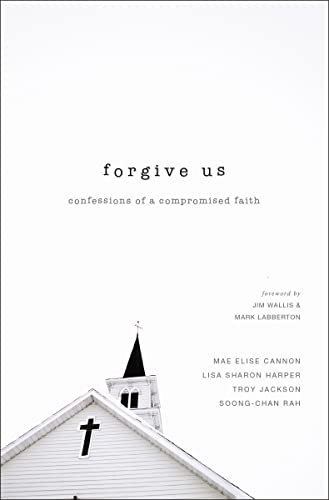
Many people have become angry and frustrated with organized religion and evangelical Christianity, in particular. Too often the church has proven to be a source of pain rather than a place of hope. Forgive Us acknowledges the legitimacy of much of the anger toward the church. In truth, Christianity in America has significant brokenness in its history that demands recognition and repentance. Only by this path can the church move forward with its message of forgiveness, reconciliation, and peace.
Forgive Us is thus a call to confession. From Psalm 51 to the teachings of Jesus to the prayers of Nehemiah, confession is the proper biblical response when God’s people have injured others and turned their backs on God’s ways. In the book of Nehemiah, the author confesses not only his own sins, but also the sins of his ancestors. The history of the American church demands a Nehemiah-style confession both for our deeds and the deeds of those who came before us.
In each chapter of Forgive Us two pastors who are also academically trained historians provide accurate and compelling histories of some of the American church’s greatest shortcomings. Theologian Soong-Chan Rah and justice leader Lisa Sharon Harper then share theological reflections along with appropriate words of confession and repentance.
Passionate and purposeful, Forgive Us will challenge evangelical readers and issue a heart-felt request to the surrounding culture for forgiveness and a new beginning.
Die Inhaltsangabe kann sich auf eine andere Ausgabe dieses Titels beziehen.
Auszug. © Genehmigter Nachdruck. Alle Rechte vorbehalten.
Forgive Us
Confessions of a Compromised Faith
By Mae Elise Cannon, Lisa Sharon Harper, Troy Jackson, Soong-Chan Rah, Madison Trammel, Kelsey Kaemingk, Bob HudsonZONDERVAN
Copyright © 2014 Soong-Chan Rah, Mae Elise Cannon, Lisa Sharon Harper, Troy Jackson
All rights reserved.
ISBN: 978-0-310-51596-8All rights reserved.
Contents
Foreword, 17,
Introduction, 21,
1. Sins against God's Creation, 35,
2. Sins against Indigenous People, 61,
3. Sins against African Americans and People of Color, 85,
4. Sins against Women, 109,
5. Sins against the LGBTQ Community, 135,
6. Sins against Immigrants, 153,
7. Sins against Jews and Muslims, 183,
Conclusion, 205,
Notes, 213,
Acknowledgments, 239,
CHAPTER 1
sins against God's creation
Historical Reflection
Well-meaning Christians have different interpretations of the science surrounding today's environmental concerns. They often disagree about how the Bible and Christian theology speak to a Christ follower's moral responsibility in stewarding creation and responding to environmental needs. Some see technological advancement as an appropriate way for humanity to bring glory to God. Others assert that the environment and creation should be approached with greater sensitivity and an ever-growing understanding of environmental justice on behalf of the kingdom of the Creator. This chapter reviews some of the historical perspectives of American Christians toward the stewardship of the environment and creation in North America.
European settlers imported their faith to the Americas in ways that often had a negative impact on the environment. Otsego settlers in New York, inspired by their Protestant faith, believed that "conquering the forest and its wild animals was a service to God." These early colonists believed stewardship of the creation meant conquering the unredeemed landscape and destroying whatever was dangerous, including wild animals. Society at that time gave special honor to settlers who destroyed such beasts as wolves, panthers, and bears. Settlers encouraged the killing of wild animals in part because of their need for safety and security, but an excessive destruction of wildlife was not only commonplace but lauded in early Colonial American society. According to historian Alan Taylor, early settlers "assailed the wild plant and animal life with a vengeance born, in part, from the memory of recent sufferings," and thus, deforestation, as one manifestation, became a mark of pride and status. The conditions were harsh, and mere survival was part of the daily struggle for many colonists. As Protestant Christians, most of them saw their transformation of the forest as creating permanent communities and a fulfillment of their religious duty rather than an abuse of the landscape.
In a highly debated essay about the environment, "The Trouble with Wilderness, or, Getting Back to the Wrong Nature," renowned historian William Cronon writes about the deep roots of the "wilderness ethic" in American history. Before the eighteenth century, the word wilderness had largely negative connotations, often denoting hostility—such connotations as deserted, savage, desolate, barren—all words used to describe the early American settlers' experience of the wilderness. This explains some of the hostility toward vegetation, nature, and the animal kingdom.
Furthermore, Cronon asserts that the origin of the colonists' views were significantly informed by the King James Version of the Bible. Such verses as Genesis 1:28 became powerful justifications for the settlers: "Replenish the earth, and subdue it: and have dominion over the fish of the sea, and over the fowl of the air, and over every living thing that moveth upon the earth."
Of course some early Christian settlers viewed the continent's vast resources as a manifestation of God's creative power and believed the abundance surrounding them to be worthy of appreciation and praise. Still, their wonder was balanced against such biblical accounts as Moses' forty years of wandering and Christ's temptation by Satan—events that occurred in "the wilderness." According to Cronon, "Wilderness ... was a place to which one came only against one's will, and always in fear and trembling." The wilderness, in early American Christian thought, was where God conquered the sinful nature of man, the devil was overcome, and temptations were faced by the triumphant nature of Christ. Thus, the wilderness had little inherent value other than needing to be conquered and overcome.
The religious obligation that some early colonists felt to subdue the animal kingdom continued well into the nineteenth century. Antebellum Americans took seriously their perceived commitments to conquer nature and often recorded their conquests as a mark of pride and a sign of victory. In 1850 one old hunter in New York "calculated that in his lifetime he had killed 77 panthers, 214 wolves, 219 bears, and 2,550 deer." Animals were not always killed for such practical reasons as protection, food, or the use of their fur or hides; rather they continued to be viewed as "beasts of the field" whose destruction was an expression of the power and "dominion" of man, as an agent of God, over creation. Little did they know that by killing the most dangerous predators, like wolves, those lower on the food chain, like deer, were able to overpopulate, which caused disease and other problems by throwing the local ecosystem off balance.
While eighteenth-century Americans perceived nature and the wilderness as "the antithesis of all that was orderly and good," as Cronon puts it, this notion began to shift with the rise of the Romantic movement in the decades following the establishment of the United States of America. The possibility of viewing the wilderness as somehow sacred had been present even when Europeans settled the Americas; however, this attitude became more widely adopted in the nineteenth century. Cronon asserts there were now fewer perceived boundaries between the human and the nonhuman, between the material and supernatural worlds, than when the settlers first pondered the idea of wilderness. As communities grew more stable, the need to overcome the evil forces of the wilderness diminished, and the redeemable qualities of nature began to be acknowledged and admired.
In the first half of the nineteenth century, as Romanticism continued to spread, American Christians came to be strongly influenced by the movement's idea of the sublime. The sublime refers to whatever is otherworldly, beyond human comprehension, reflecting a power and grandeur that could even be supernatural in origin. Christians who viewed nature as sublime began to view animals and plants as divine expressions of God's manifestation on earth. Rather than being viewed as evil, creation became increasingly understood as a doorway to the divine. For Christians, God's presence began to be increasingly associated with nature. They came to see and experience God in natural phenomena such as mountains, fields, valleys, and rivers, and also in natural acts of creation such as the sunrise, storms, the wind, and waves.
This view of nature was deeply influenced by the writings of Henry David Thoreau, Ralph Waldo Emerson, and James Fenimore Cooper, among others. Their romantic ideologies challenged the assumption that wilderness was a force that needed to be overcome. Cronon writes of this phenomenon, "Wilderness fulfills the old romantic project of secularizing Judeo-Christian values so as to make a new...
„Über diesen Titel“ kann sich auf eine andere Ausgabe dieses Titels beziehen.
Suchergebnisse für FORGIVE US SC: Confessions of a Compromised Faith

Beispielbild für diese ISBN
Forgive Us: Confessions of a Compromised Faith
Anbieter: World of Books (was SecondSale), Montgomery, IL, USA
Verkäuferbewertung 5 von 5 Sternen

Zustand: Very Good. Item in very good condition! Textbooks may not include supplemental items i.e. CDs, access codes etc. Bestandsnummer des Verkäufers 00072224299
Gebraucht kaufen
EUR 4,10
Versand gratis
Versand innerhalb von USA
Versand innerhalb von USA
Anzahl: 2 verfügbar
Beispielbild für diese ISBN
Forgive Us: Confessions of a Compromised Faith
Anbieter: World of Books (was SecondSale), Montgomery, IL, USA
Verkäuferbewertung 5 von 5 Sternen
Zustand: Good. Item in good condition. Textbooks may not include supplemental items i.e. CDs, access codes etc. Bestandsnummer des Verkäufers 00096405940
Gebraucht kaufen
EUR 4,10
Versand gratis
Versand innerhalb von USA
Versand innerhalb von USA
Anzahl: 1 verfügbar
Beispielbild für diese ISBN
Forgive Us: Confessions of a Compromised Faith
Anbieter: BooksRun, Philadelphia, PA, USA
Verkäuferbewertung 5 von 5 Sternen
Paperback. Zustand: Very Good. It's a well-cared-for item that has seen limited use. The item may show minor signs of wear. All the text is legible, with all pages included. It may have slight markings and/or highlighting. Bestandsnummer des Verkäufers 0310515963-11-1
Gebraucht kaufen
EUR 4,41
Versand gratis
Versand innerhalb von USA
Versand innerhalb von USA
Anzahl: 1 verfügbar
Beispielbild für diese ISBN
Forgive Us : Confessions of a Compromised Faith
Anbieter: Better World Books, Mishawaka, IN, USA
Verkäuferbewertung 5 von 5 Sternen
Zustand: Very Good. Pages intact with possible writing/highlighting. Binding strong with minor wear. Dust jackets/supplements may not be included. Stock photo provided. Product includes identifying sticker. Better World Books: Buy Books. Do Good. Bestandsnummer des Verkäufers 8574214-6
Gebraucht kaufen
EUR 5,78
Versand gratis
Versand innerhalb von USA
Versand innerhalb von USA
Anzahl: 1 verfügbar
Beispielbild für diese ISBN
Forgive Us : Confessions of a Compromised Faith
Anbieter: Better World Books: West, Reno, NV, USA
Verkäuferbewertung 5 von 5 Sternen
Zustand: Good. Pages intact with minimal writing/highlighting. The binding may be loose and creased. Dust jackets/supplements are not included. Stock photo provided. Product includes identifying sticker. Better World Books: Buy Books. Do Good. Bestandsnummer des Verkäufers 6452465-6
Gebraucht kaufen
EUR 5,84
Versand gratis
Versand innerhalb von USA
Versand innerhalb von USA
Anzahl: 1 verfügbar
Beispielbild für diese ISBN
Forgive Us : Confessions of a Compromised Faith
Anbieter: Better World Books, Mishawaka, IN, USA
Verkäuferbewertung 5 von 5 Sternen
Zustand: Good. Pages intact with minimal writing/highlighting. The binding may be loose and creased. Dust jackets/supplements are not included. Stock photo provided. Product includes identifying sticker. Better World Books: Buy Books. Do Good. Bestandsnummer des Verkäufers 6452465-6
Gebraucht kaufen
EUR 5,84
Versand gratis
Versand innerhalb von USA
Versand innerhalb von USA
Anzahl: 2 verfügbar
Beispielbild für diese ISBN
The Forgive Us: Confessions of a Compromised Faith
Anbieter: ThriftBooks-Phoenix, Phoenix, AZ, USA
Verkäuferbewertung 5 von 5 Sternen
Paperback. Zustand: Very Good. No Jacket. May have limited writing in cover pages. Pages are unmarked. ~ ThriftBooks: Read More, Spend Less. Bestandsnummer des Verkäufers G0310515963I4N00
Gebraucht kaufen
EUR 6,02
Versand gratis
Versand innerhalb von USA
Versand innerhalb von USA
Anzahl: 1 verfügbar
Beispielbild für diese ISBN
The Forgive Us: Confessions of a Compromised Faith
Anbieter: ThriftBooks-Dallas, Dallas, TX, USA
Verkäuferbewertung 5 von 5 Sternen
Paperback. Zustand: Very Good. No Jacket. May have limited writing in cover pages. Pages are unmarked. ~ ThriftBooks: Read More, Spend Less. Bestandsnummer des Verkäufers G0310515963I4N00
Gebraucht kaufen
EUR 6,02
Versand gratis
Versand innerhalb von USA
Versand innerhalb von USA
Anzahl: 1 verfügbar
Beispielbild für diese ISBN
The Forgive Us: Confessions of a Compromised Faith
Anbieter: ThriftBooks-Atlanta, AUSTELL, GA, USA
Verkäuferbewertung 5 von 5 Sternen
Paperback. Zustand: Very Good. No Jacket. May have limited writing in cover pages. Pages are unmarked. ~ ThriftBooks: Read More, Spend Less. Bestandsnummer des Verkäufers G0310515963I4N00
Gebraucht kaufen
EUR 6,02
Versand gratis
Versand innerhalb von USA
Versand innerhalb von USA
Anzahl: 1 verfügbar
Beispielbild für diese ISBN
Forgive Us: Confessions of a Compromised Faith
Anbieter: Books From California, Simi Valley, CA, USA
Verkäuferbewertung 4 von 5 Sternen

paperback. Zustand: Good. Book shows minor shelf & usage wear, some light creasing. Pages are clean, text and pictures are intact and unmarred. Bestandsnummer des Verkäufers mon0003670453
Gebraucht kaufen
EUR 4,14
EUR 4,33 Versand
Versand innerhalb von USA
Versand innerhalb von USA
Anzahl: 1 verfügbar