
Verwandte Artikel zu Alcohol: The World's Favorite Drug
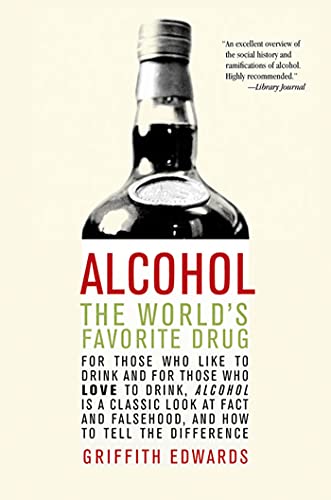
Inhaltsangabe
Alcohol is everywhere. Walk down any street in the western world and before long your feet will kick against an empty beer can, or your attention will be captured by an alluring advertisement that suggests that alcohol can magically transform your life. Its use is integral to many aspects of popular culture, but it is also a substance that has at times been preached against and even prohibited.
In this book, Griffith Edwards uses both history and chemistry to explore the whole issue of alcohol. Is it medicine, a delightful potion, poison, or a mysterious combination of all three? What part has alcohol played in various cultures and religions? Why do different people behave differently when drunk? What cures for habitual inebriation were popular in the past? Why is alcoholism considered a disease? What is "safe drinking"? Is alcohol good for the heart? Do current treatments work? Does Alcoholics Anonymous have the answer? Armed with the best solid information science, history, and sociology have to offer, Edwards asks how, in the light of this knowledge, society might in the future better handle this pleasure-giving, somewhat dangerous drug. Can society get its pleasure out of alcohol without the inevitable suffering that accompanies misuse? If so, what steps should we take to protect ourselves and others? Already considered in England to be a classic in the field, Alcohol will prove to be fascinating reading for the drinker and nondrinker alike.Die Inhaltsangabe kann sich auf eine andere Ausgabe dieses Titels beziehen.
Über die Autorin bzw. den Autor
Griffith Edwards
Auszug. © Genehmigter Nachdruck. Alle Rechte vorbehalten.
Alcohol
The World's Favorite Drug
By Griffith EdwardsSt. Martin's Press
Copyright © 2000 Griffith Edwards
All rights reserved.
ISBN: 978-0-312-30236-8All rights reserved.
Contents
Title Page,
Copyright Notice,
Preface,
Acknowledgements,
Note,
1. Alcohol, What is It?,
2. Alcohol, Myths and Metaphors,
3. A Short History of Drunkenness,
4. Thomas Nashe's Menagerie,
5. Alcohol is a Drug of Dependence,
6. The American Prohibition Experiment,
7. Calling Alcoholism a Disease,
8. Alcoholics Anonymous,
9. In the Name of Treatment,
10. The Mysterious Essences of Treatment,
11. Once an Alcoholic ...,
12. Molecule as Medicine,
13. The Drinker's Dilemma,
14. Ambiguous Futures,
Sources and Further Reading,
Index,
Copyright,
CHAPTER 1
Alcohol, What is It?
This book is neither for nor against alcohol. It considers a particular mind-acting chemical both as a drug and as a social fact. However, it also deals with the myths that have been so abundantly woven around this molecule. And one doesn't get far into this territory before encountering the many stark contradictions in the way people view a substance which has been declared by the World Health Organization to be a cause of cancer, which for the Catholic Church becomes in sacramental wine the blood of Christ, and which meanwhile continues as Western civilization's favourite recreational drug. Alcohol is a pervasive fact of life, but an extraordinary fact – pleasurable and destructive, anathematized and adulated, and deeply ambiguous. This introductory chapter gives in non-technical language some basic information on what alcohol is – the objective nature of the genie in the bottle.
Alcohol the chemical
Alcohol in terms of its molecular structure is C2H5OH and looks like this:
[FORMULA OMITTED]
Thus to a spine of two carbon atoms are attached five hydrogen atoms and a hydroxyl (oxygen–hydrogen) group. That constitutes a fairly simple structure carrying rather little information, and alcohol has therefore sometimes been referred to disparagingly by biochemists as a 'stupid' molecule. Drawn on a sheet of paper (or more properly projected into three-dimensional space), its structure is much smaller and less interesting than those of such complex mind-acting chemicals as, say, heroin, nicotine or the cannabinol which is the core drug constituent of cannabis.
Alcohol at room temperature is a colourless liquid which in pure form is astringent and unpleasant on the tongue. Dilution makes it less unpalatable, and alcohol and water mix together easily. Spirits are about 40 per cent absolute (pure) alcohol; port, sherry and other fortified wines 15–20 per cent; and wine around 12 per cent. A standard beer will be about 4 per cent alcohol by volume, although strong beers can be anything up to 10 per cent. What gives these various beverages their attractive and distinct tastes is not however their alcohol (diluted or otherwise), but the chemicals which have got into them in the course of production. It is possible to produce a beer from which nearly all the alcohol has been extracted and which still tastes reasonably like beer. But take out even a little of the complex flavouring given by sugar, hops, barley and so on, and the residual drink will be a pale imitation or even a parody of the original. Put unkindly, it is the dirt in the drink which makes it attractive to the nose and the palate, and which turns a mixture of alcohol and water into a good beer, a fine wine or a famous malt whisky. Vodka is relatively free from contaminants, and hence relatively odourless and tasteless.
Before going further, let's get a technical issue out of the way. In ordinary usage the word 'alcohol' refers to the substance we expect to find in alcoholic drinks. That is the way in which the word will be employed in this book. However, for the chemist the correct name for that substance is 'ethyl alcohol' or 'ethanol', while 'alcohol' is the generic name for a class of chemicals of which ethyl alcohol is but one member. The simplest member of the family has only one carbon atom at its core and is CH3OH, methyl alcohol or methanol. Sometimes known as wood alcohol, it is a constituent of methylated spirits and is highly toxic. The higher alcohols include propyl, butyl and amyl alcohol, with respectively three, four and five carbon chains, but these substances will not figure further in this book.
Fermentation
The ultimate source of all beverage alcohol is the breakdown of naturally occurring carbohydrate (starch or glucose) to ethyl alcohol, water and carbon dioxide, by the action of enzymes. Most commercial beer derives from the action of brewers' yeast on barley or other cereals, with hops added to some beers for flavouring. Commercially available wine derives from the breakdown of the sugar contained in the juice of the grape by the yeasts which are present in the bloom on the fruit's surface, although laboratory-bred yeast may also be used. Cider is made from apples, and perry from pears.
But if those are the materials which form the basis for the fermented alcoholic beverages which most societies drink, there are myriad other plant products which have at some time been employed in the production of alcohol, especially in developing countries. In North America, birch beer has been made from the sap of the same tree that provides covering for canoes, and a birch-based drink has also been drunk in Siberia. Chicha is a fermented drink made from maize, and has been consumed over wide areas of Central and South America from the pre-Columbian era onwards. In many parts of Africa, home production of beer has for centuries been a feature of rural culture, with maize, millet or sorghum the usual basis. Barley-based beers are brewed in the more northern parts of Africa, palm wine is a favourite drink in West Africa, and bananas and many other types of fruit are used for alcohol production within other local traditions. Rice wine is popular in the Far East. Other than in the Arctic regions, there is probably no part of the world where the abundance of nature aided by a kindly enzyme has not resulted in the availability of some sort of alcoholic drink. The flavour of these drinks may not always approach that of a real ale or a chateau-bottled claret – indigenous African beer may to the Western palate taste like a diluted porridge and even have a few dead flies floating in the billycan – but alcohol is alcohol and the common factor the world over.
So simple is the process of producing an alcoholic beverage by fermentation that early humans would have got hold of this technique as soon as it was possible to gather fruit, add water, and wait a few days for enzymatic action to do its work. These conditions probably imply the beginnings of a settled and agricultural way of life rather than a nomadic existence. Having emphasized the extreme simplicity of the basic process, it should be acknowledged that modern production of beer involves advanced technology, and brewing has developed a strong scientific base. Wine production also has its science, but in some ways stays closer to its ancient pre-industrial origins.
However primitive or advanced the technology, there is a limit on the alcohol concentration which can be achieved by any form of fermentation. This is set by the fact that, when the concentration rises to a certain level, the yeast will be inhibited or killed by the alcohol which it has itself...
„Über diesen Titel“ kann sich auf eine andere Ausgabe dieses Titels beziehen.
Suchergebnisse für Alcohol: The World's Favorite Drug

Beispielbild für diese ISBN
Alcohol: The World's Favorite Drug
Anbieter: World of Books (was SecondSale), Montgomery, IL, USA
Verkäuferbewertung 5 von 5 Sternen

Zustand: Good. Item in good condition. Textbooks may not include supplemental items i.e. CDs, access codes etc. Bestandsnummer des Verkäufers 00084163497
Gebraucht kaufen
EUR 4,80
Versand gratis
Versand innerhalb von USA
Versand innerhalb von USA
Anzahl: 2 verfügbar
Beispielbild für diese ISBN
Alcohol: The World's Favorite Drug
Verlag:
St. Martin's Griffin (edition First Edition), 2003
ISBN 10: 0312302363
ISBN 13: 9780312302368
Gebraucht
Paperback
Erstausgabe
Anbieter: BooksRun, Philadelphia, PA, USA
Verkäuferbewertung 5 von 5 Sternen
Paperback. Zustand: Fair. First Edition. The item might be beaten up but readable. May contain markings or highlighting, as well as stains, bent corners, or any other major defect, but the text is not obscured in any way. Bestandsnummer des Verkäufers 0312302363-7-1
Gebraucht kaufen
EUR 4,81
Versand gratis
Versand innerhalb von USA
Versand innerhalb von USA
Anzahl: 1 verfügbar
Beispielbild für diese ISBN
Alcohol: The World's Favorite Drug
Anbieter: ThriftBooks-Dallas, Dallas, TX, USA
Verkäuferbewertung 5 von 5 Sternen
Paperback. Zustand: Very Good. No Jacket. May have limited writing in cover pages. Pages are unmarked. ~ ThriftBooks: Read More, Spend Less. Bestandsnummer des Verkäufers G0312302363I4N00
Gebraucht kaufen
EUR 5,90
Versand gratis
Versand innerhalb von USA
Versand innerhalb von USA
Anzahl: 1 verfügbar
Beispielbild für diese ISBN
Alcohol : The World's Favorite Drug
Anbieter: Better World Books, Mishawaka, IN, USA
Verkäuferbewertung 5 von 5 Sternen
Zustand: Good. Pages intact with minimal writing/highlighting. The binding may be loose and creased. Dust jackets/supplements are not included. Stock photo provided. Product includes identifying sticker. Better World Books: Buy Books. Do Good. Bestandsnummer des Verkäufers 10576078-20
Gebraucht kaufen
EUR 6,43
Versand gratis
Versand innerhalb von USA
Versand innerhalb von USA
Anzahl: 1 verfügbar
Beispielbild für diese ISBN
Alcohol : The World's Favorite Drug
Anbieter: Better World Books, Mishawaka, IN, USA
Verkäuferbewertung 5 von 5 Sternen
Zustand: Good. Former library copy. Pages intact with minimal writing/highlighting. The binding may be loose and creased. Dust jackets/supplements are not included. Includes library markings. Stock photo provided. Product includes identifying sticker. Better World Books: Buy Books. Do Good. Bestandsnummer des Verkäufers 8733414-6
Gebraucht kaufen
EUR 6,43
Versand gratis
Versand innerhalb von USA
Versand innerhalb von USA
Anzahl: 1 verfügbar
Beispielbild für diese ISBN
Alcohol : The World's Favorite Drug
Anbieter: Better World Books: West, Reno, NV, USA
Verkäuferbewertung 5 von 5 Sternen
Zustand: Very Good. Pages intact with possible writing/highlighting. Binding strong with minor wear. Dust jackets/supplements may not be included. Stock photo provided. Product includes identifying sticker. Better World Books: Buy Books. Do Good. Bestandsnummer des Verkäufers 39329283-6
Gebraucht kaufen
EUR 6,43
Versand gratis
Versand innerhalb von USA
Versand innerhalb von USA
Anzahl: 1 verfügbar
Beispielbild für diese ISBN
Alcohol: The World's Favorite Drug
Anbieter: WorldofBooks, Goring-By-Sea, WS, Vereinigtes Königreich
Verkäuferbewertung 5 von 5 Sternen
Paperback. Zustand: Very Good. The book has been read, but is in excellent condition. Pages are intact and not marred by notes or highlighting. The spine remains undamaged. Bestandsnummer des Verkäufers GOR001816874
Gebraucht kaufen
EUR 4,42
EUR 6,53 Versand
Versand von Vereinigtes Königreich nach USA
Versand von Vereinigtes Königreich nach USA
Anzahl: 2 verfügbar
Foto des Verkäufers
Alcohol: The World's Favorite Drug
Anbieter: WeBuyBooks, Rossendale, LANCS, Vereinigtes Königreich
Verkäuferbewertung 5 von 5 Sternen
paperback. Zustand: Good. Most items will be dispatched the same or the next working day. A copy that has been read but remains in clean condition. All of the pages are intact and the cover is intact and the spine may show signs of wear. The book may have minor markings which are not specifically mentioned. Bestandsnummer des Verkäufers rev7307578515
Gebraucht kaufen
EUR 5,37
EUR 5,98 Versand
Versand von Vereinigtes Königreich nach USA
Versand von Vereinigtes Königreich nach USA
Anzahl: 1 verfügbar
Foto des Verkäufers
Alcohol: The World's Favorite Drug
Anbieter: WeBuyBooks, Rossendale, LANCS, Vereinigtes Königreich
Verkäuferbewertung 5 von 5 Sternen
paperback. Zustand: Very Good. Most items will be dispatched the same or the next working day. A copy that has been read, but is in excellent condition. Pages are intact and not marred by notes or highlighting. The spine remains undamaged. Bestandsnummer des Verkäufers rev2258427301
Gebraucht kaufen
EUR 5,37
EUR 5,98 Versand
Versand von Vereinigtes Königreich nach USA
Versand von Vereinigtes Königreich nach USA
Anzahl: 1 verfügbar
Beispielbild für diese ISBN
Alcohol
Anbieter: Half Price Books Inc., Dallas, TX, USA
Verkäuferbewertung 5 von 5 Sternen
Paperback. Zustand: Very Good. Connecting readers with great books since 1972! Used books may not include companion materials, and may have some shelf wear or limited writing. We ship orders daily and Customer Service is our top priority! Bestandsnummer des Verkäufers S_483248354
Gebraucht kaufen
EUR 8,99
EUR 3,28 Versand
Versand innerhalb von USA
Versand innerhalb von USA
Anzahl: 1 verfügbar