
Verwandte Artikel zu Raiders from the North: Empire of the Moghul (Empire...
Raiders from the North: Empire of the Moghul (Empire of the Moghul, 1, Band 1) - Softcover
Buch 1 von 6: Empire of the Moghul Series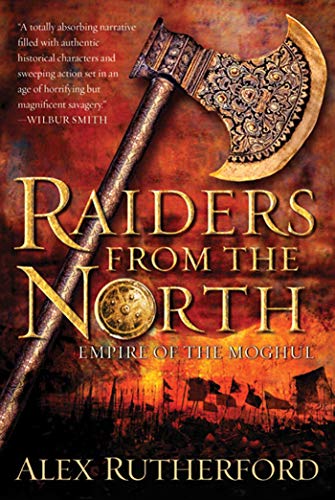
Inhaltsangabe
It is 1494, and the new ruler of Ferghana, Babur, faces a seemingly impossible challenge. He is determined to equal his great ancestor, Tamburlaine, whose conquests stretched from Delhi to the Mediterranean, from wealthy Persia to the wild Volga. But he is dangerously young to inherit a crown, and treasonous plots, tribal rivalries, rampaging armies, and ruthlessly ambitious enemies will threaten his destiny, his kingdom, even his survival.
Already an acclaimed international bestseller, Raiders from the North chronicles the rise and fall of one of the most powerful and magnificent dynasties the world has ever known. Full of breathtaking bloodshed and treachery, this is historical adventure at its very best.
Die Inhaltsangabe kann sich auf eine andere Ausgabe dieses Titels beziehen.
Über die Autorin bzw. den Autor
Alex Rutherford lives in London and has travelled extensively in India. Alex is also the author of the Empire of the Moghul sextet of historical novels currently being filmed by Disney Plus/(Hot Star) in India for a six-series, high-budget TV production. The showrunner is Nikhil Advani. The Empire of the Moghul books are also under motion picture development in Hollywood.
Auszug. © Genehmigter Nachdruck. Alle Rechte vorbehalten.
Raiders from the North
Empire of the MoghulBy Alex RutherfordSt. Martin's Griffin
Copyright © 2011 Alex RutherfordAll right reserved.
ISBN: 9780312573225
Chapter 1
Death Among the Doves
In a small dusty fortress in Central Asia in the summer of 1494, the baked-mud battlements, grey as elephant’s hide in daytime, were pinkening before Babur’s eyes with the sunset. Far beneath, the Jaxartes river gleamed a dull red as it flowed westward across the darkening plains. Babur shifted his weight on the stone step and returned his attention to his father, the king, who was pacing the fortress walls, hands clasped against the turquoise fastenings of his robes. His face was working excitedly as he launched into the story his twelve-year-old son had heard so many times before. But it was worth the retelling, Babur reflected. He listened carefully, alert for the new embellishments that always crept in. His lips moved with his father’s when the king reached the climax – the one part that never changed, each of its grandiose phrases sacrosanct.
‘And so it happened that our ancestor the great Timur – Timur the Warrior, whose name meant “Iron” and whose horses sweated blood as he galloped through the world – won a vast empire. Though he was so cruelly injured in his youth that one leg was longer than the other and he walked with a limp, he conquered from Delhi to the Mediterranean, from wealthy Persia to the wildernesses along the Volga. But was that enough for Timur? Of course not! Even when many years were upon him, he was still strong and robust in body, hard like a rock, his ambition boundless. His final enterprise was ninety years ago against China. He rode out with the thunder of two hundred thousand horsemen in his ears and victory would have been his, had Allah not summoned him to rest with him in Paradise. But how did Timur, this greatest of warriors – greater even than your other ancestor Genghis Khan – do all this? I see the question in your eyes, my son, and you are right to ask it.’
The king patted Babur’s head approvingly, seeing that he held his complete attention. Then he resumed, voice rising and falling with poetic fervour.
‘Timur was clever and brave but, above all, he was a great leader of men. My grandfather told me that his eyes were like candles without brilliance. Once men looked into those slits of muted light they could not turn away. And as Timur gazed into their souls he spoke of glory that would echo through the centuries and stir the lifeless dust that would be all that was left of their bones on earth. He spoke of gleaming gold and shimmering gems. He spoke of fine-boned women whose black hair hung like curtains of silk such as they had seen in the slave markets of his capital of Samarkand. Above all he spoke of their birthright, their right to be the possessors of the earth. And as Timur’s deep voice flowed over and around them, visions filled their minds of what was theirs for the taking until they would have followed him through the burning gates of hell.
‘Not that Timur was a barbarian, my son.’ The king shook his head vigorously so that the fringe he liked to leave hanging from his maroon silk turban swung from side to side. ‘No. He was a cultured man. His great city of Samarkand was a place of grace and beauty, of scholarship and learning. But Timur knew that a conqueror must let nothing – no one – stand in his way. Ruthlessness ruled his soul until the job was done and the more who knew it the better.’ He closed his eyes, picturing the glory days of his magnificent ancestor. He had worked himself into such a lather of pride and excitement that beads of sweat were bursting out on his forehead. He took a yellow silk scarf and mopped it.
Exhilarated as usual by the images his father had conjured, Babur smiled up at him to show he shared the same joyous pride. But even as he watched, his father’s face changed. The fervent light in his dark eyes faded and his expression grew despondent, even brooding. Babur’s smile faltered. His father’s story usually finished with this paean to Timur, but today the king continued, his tone bleak, the vibrancy gone.
‘But I – descendant of the great Timur though I am – what have I? Just Ferghana, a kingdom not two hundred miles long or one hundred wide. Look at it – a place of sheep and goats grazing in valleys ringed on three sides by mountains.’ He flung out an arm towards the soaring, cloud-circled peaks of Mount Beshtor. ‘Meanwhile three hundred miles to the west my brother rules golden Samarkand, while south across the Hindu Kush my cousin holds wealthy Kabul. I am their poor relation to be snubbed and despised. Yet my blood – your blood – is as good as theirs.’
‘Father—’
‘Even so, all we princes of the house of Timur,’ the king interrupted, voice trembling with passion, ‘what are any of us, compared with him? We squabble like petty chieftains as we struggle each to hold on to our own little scrap of his empire. I am as guilty as any of the others.’ He sounded really angry now. ‘If Timur came back today he would spit in our faces for the fools we are. We are so proud to call ourselves Mirza, “Offspring of the Amir”, so eager to call him ancestor, but would he be so ready to acknowledge us? Wouldn’t we have to fall on our knees and beg his forgiveness for dissipating our inheritance and forgetting our greatness?’
The king’s strong hands gripped Babur’s shoulders so hard it hurt. ‘You are old enough now to understand. That is why I am telling you this. We owe Timur a debt. He was a great man, my son. His blood is your blood. Never forget it. Be like him, if you can. Live up to your destiny and let it be greater than mine.’
‘I will try, Father . . . I promise.’
For a moment, the king’s eyes searched Babur’s face. Then, seemingly satisfied, he grunted and turned away. Babur sat very still. His father’s unexpected passion had shaken him. As he digested what he had said, he saw that the sun was almost down. Like so many other evenings, he watched the jagged landscape soften in the dying light. The cries of boys herding their sheep and goats back to their villages came out of the gathering gloom. So did a gentle, insistent cooing. His father’s favourite flock of white doves were fluttering home to their cote.
Babur heard a gentle sigh escape his father’s lips, as if he acknowledged that life still held pleasures as well as disappointments. He watched the king take a swig of cooling water from the leather bottle dangling at his side and, his face relaxing once more into its usual good humour, turn and hurry along the battlements towards the conical dovecote high on top of the wall and partly overhanging the dry ravine below. His gold-embroidered red velvet slippers slapped against the baked-mud floor and his arms were already outstretched, ready to take his favourite doves in his hands and caress their plump throats with the tenderness of a lover. Babur couldn’t see the attraction. Stupid little birds. The best place for them was plucked and poached in a sauce of pomegranates and crushed walnuts.
Babur’s mind returned to Timur and his marauding soldiers. What would it be like to feel that the whole world was yours? To take a city and have its king writhe in the dust at your feet? His father was right. How different it would be...
Death Among the Doves
In a small dusty fortress in Central Asia in the summer of 1494, the baked-mud battlements, grey as elephant’s hide in daytime, were pinkening before Babur’s eyes with the sunset. Far beneath, the Jaxartes river gleamed a dull red as it flowed westward across the darkening plains. Babur shifted his weight on the stone step and returned his attention to his father, the king, who was pacing the fortress walls, hands clasped against the turquoise fastenings of his robes. His face was working excitedly as he launched into the story his twelve-year-old son had heard so many times before. But it was worth the retelling, Babur reflected. He listened carefully, alert for the new embellishments that always crept in. His lips moved with his father’s when the king reached the climax – the one part that never changed, each of its grandiose phrases sacrosanct.
‘And so it happened that our ancestor the great Timur – Timur the Warrior, whose name meant “Iron” and whose horses sweated blood as he galloped through the world – won a vast empire. Though he was so cruelly injured in his youth that one leg was longer than the other and he walked with a limp, he conquered from Delhi to the Mediterranean, from wealthy Persia to the wildernesses along the Volga. But was that enough for Timur? Of course not! Even when many years were upon him, he was still strong and robust in body, hard like a rock, his ambition boundless. His final enterprise was ninety years ago against China. He rode out with the thunder of two hundred thousand horsemen in his ears and victory would have been his, had Allah not summoned him to rest with him in Paradise. But how did Timur, this greatest of warriors – greater even than your other ancestor Genghis Khan – do all this? I see the question in your eyes, my son, and you are right to ask it.’
The king patted Babur’s head approvingly, seeing that he held his complete attention. Then he resumed, voice rising and falling with poetic fervour.
‘Timur was clever and brave but, above all, he was a great leader of men. My grandfather told me that his eyes were like candles without brilliance. Once men looked into those slits of muted light they could not turn away. And as Timur gazed into their souls he spoke of glory that would echo through the centuries and stir the lifeless dust that would be all that was left of their bones on earth. He spoke of gleaming gold and shimmering gems. He spoke of fine-boned women whose black hair hung like curtains of silk such as they had seen in the slave markets of his capital of Samarkand. Above all he spoke of their birthright, their right to be the possessors of the earth. And as Timur’s deep voice flowed over and around them, visions filled their minds of what was theirs for the taking until they would have followed him through the burning gates of hell.
‘Not that Timur was a barbarian, my son.’ The king shook his head vigorously so that the fringe he liked to leave hanging from his maroon silk turban swung from side to side. ‘No. He was a cultured man. His great city of Samarkand was a place of grace and beauty, of scholarship and learning. But Timur knew that a conqueror must let nothing – no one – stand in his way. Ruthlessness ruled his soul until the job was done and the more who knew it the better.’ He closed his eyes, picturing the glory days of his magnificent ancestor. He had worked himself into such a lather of pride and excitement that beads of sweat were bursting out on his forehead. He took a yellow silk scarf and mopped it.
Exhilarated as usual by the images his father had conjured, Babur smiled up at him to show he shared the same joyous pride. But even as he watched, his father’s face changed. The fervent light in his dark eyes faded and his expression grew despondent, even brooding. Babur’s smile faltered. His father’s story usually finished with this paean to Timur, but today the king continued, his tone bleak, the vibrancy gone.
‘But I – descendant of the great Timur though I am – what have I? Just Ferghana, a kingdom not two hundred miles long or one hundred wide. Look at it – a place of sheep and goats grazing in valleys ringed on three sides by mountains.’ He flung out an arm towards the soaring, cloud-circled peaks of Mount Beshtor. ‘Meanwhile three hundred miles to the west my brother rules golden Samarkand, while south across the Hindu Kush my cousin holds wealthy Kabul. I am their poor relation to be snubbed and despised. Yet my blood – your blood – is as good as theirs.’
‘Father—’
‘Even so, all we princes of the house of Timur,’ the king interrupted, voice trembling with passion, ‘what are any of us, compared with him? We squabble like petty chieftains as we struggle each to hold on to our own little scrap of his empire. I am as guilty as any of the others.’ He sounded really angry now. ‘If Timur came back today he would spit in our faces for the fools we are. We are so proud to call ourselves Mirza, “Offspring of the Amir”, so eager to call him ancestor, but would he be so ready to acknowledge us? Wouldn’t we have to fall on our knees and beg his forgiveness for dissipating our inheritance and forgetting our greatness?’
The king’s strong hands gripped Babur’s shoulders so hard it hurt. ‘You are old enough now to understand. That is why I am telling you this. We owe Timur a debt. He was a great man, my son. His blood is your blood. Never forget it. Be like him, if you can. Live up to your destiny and let it be greater than mine.’
‘I will try, Father . . . I promise.’
For a moment, the king’s eyes searched Babur’s face. Then, seemingly satisfied, he grunted and turned away. Babur sat very still. His father’s unexpected passion had shaken him. As he digested what he had said, he saw that the sun was almost down. Like so many other evenings, he watched the jagged landscape soften in the dying light. The cries of boys herding their sheep and goats back to their villages came out of the gathering gloom. So did a gentle, insistent cooing. His father’s favourite flock of white doves were fluttering home to their cote.
Babur heard a gentle sigh escape his father’s lips, as if he acknowledged that life still held pleasures as well as disappointments. He watched the king take a swig of cooling water from the leather bottle dangling at his side and, his face relaxing once more into its usual good humour, turn and hurry along the battlements towards the conical dovecote high on top of the wall and partly overhanging the dry ravine below. His gold-embroidered red velvet slippers slapped against the baked-mud floor and his arms were already outstretched, ready to take his favourite doves in his hands and caress their plump throats with the tenderness of a lover. Babur couldn’t see the attraction. Stupid little birds. The best place for them was plucked and poached in a sauce of pomegranates and crushed walnuts.
Babur’s mind returned to Timur and his marauding soldiers. What would it be like to feel that the whole world was yours? To take a city and have its king writhe in the dust at your feet? His father was right. How different it would be...
„Über diesen Titel“ kann sich auf eine andere Ausgabe dieses Titels beziehen.
Suchergebnisse für Raiders from the North: Empire of the Moghul (Empire...

Beispielbild für diese ISBN
Raiders from the North: Empire of the Moghul
Anbieter: World of Books (was SecondSale), Montgomery, IL, USA
Verkäuferbewertung 5 von 5 Sternen

Zustand: Good. Item in good condition. Textbooks may not include supplemental items i.e. CDs, access codes etc. Bestandsnummer des Verkäufers 00107346733
Gebraucht kaufen
EUR 4,52
Versand gratis
Versand innerhalb von USA
Versand innerhalb von USA
Anzahl: 1 verfügbar
Beispielbild für diese ISBN
Raiders from the North: Empire of the Moghul
Verlag:
St. Martin's Griffin (edition Illustrated), 2011
ISBN 10: 0312573227
ISBN 13: 9780312573225
Gebraucht
Paperback
Anbieter: BooksRun, Philadelphia, PA, USA
Verkäuferbewertung 5 von 5 Sternen
Paperback. Zustand: Very Good. Illustrated. It's a well-cared-for item that has seen limited use. The item may show minor signs of wear. All the text is legible, with all pages included. It may have slight markings and/or highlighting. Bestandsnummer des Verkäufers 0312573227-11-1
Gebraucht kaufen
EUR 4,53
Versand gratis
Versand innerhalb von USA
Versand innerhalb von USA
Anzahl: 1 verfügbar
Foto des Verkäufers
Raiders from the North: Empire of the Moghul
Anbieter: clickgoodwillbooks, Indianapolis, IN, USA
Verkäuferbewertung 4 von 5 Sternen

Zustand: acceptable. Used - Acceptable: All pages and the cover are intact, but shrink wrap, dust covers, or boxed set case may be missing. Pages may include limited notes, highlighting, or minor water damage but the text is readable. Item may be missing bundled media. Bestandsnummer des Verkäufers CSIV.0312573227.A
Gebraucht kaufen
EUR 2,43
EUR 3,50 Versand
Versand innerhalb von USA
Versand innerhalb von USA
Anzahl: 1 verfügbar
Beispielbild für diese ISBN
Raiders from the North: Empire of the Moghul
Anbieter: ThriftBooks-Dallas, Dallas, TX, USA
Verkäuferbewertung 5 von 5 Sternen
Paperback. Zustand: Very Good. No Jacket. May have limited writing in cover pages. Pages are unmarked. ~ ThriftBooks: Read More, Spend Less. Bestandsnummer des Verkäufers G0312573227I4N00
Gebraucht kaufen
EUR 6,03
Versand gratis
Versand innerhalb von USA
Versand innerhalb von USA
Anzahl: 1 verfügbar
Beispielbild für diese ISBN
Raiders from the North: Empire of the Moghul
Anbieter: ThriftBooks-Atlanta, AUSTELL, GA, USA
Verkäuferbewertung 5 von 5 Sternen
Paperback. Zustand: Very Good. No Jacket. May have limited writing in cover pages. Pages are unmarked. ~ ThriftBooks: Read More, Spend Less. Bestandsnummer des Verkäufers G0312573227I4N00
Gebraucht kaufen
EUR 6,03
Versand gratis
Versand innerhalb von USA
Versand innerhalb von USA
Anzahl: 1 verfügbar
Foto des Verkäufers
Raiders from the North: Empire of the Moghul
Anbieter: -OnTimeBooks-, Phoenix, AZ, USA
Verkäuferbewertung 5 von 5 Sternen
Zustand: very_good. Gently read. May have name of previous ownership, or ex-library edition. Binding tight; spine straight and smooth, with no creasing; covers clean and crisp. Minimal signs of handling or shelving. 100% GUARANTEE! Shipped with delivery confirmation, if you're not satisfied with purchase please return item! Ships USPS Media Mail. Bestandsnummer des Verkäufers OTV.0312573227.VG
Gebraucht kaufen
EUR 6,19
Versand gratis
Versand innerhalb von USA
Versand innerhalb von USA
Anzahl: 1 verfügbar
Beispielbild für diese ISBN
Raiders from the North : Empire of the Moghul
Anbieter: Better World Books, Mishawaka, IN, USA
Verkäuferbewertung 5 von 5 Sternen
Zustand: Very Good. Former library copy. Pages intact with possible writing/highlighting. Binding strong with minor wear. Dust jackets/supplements may not be included. Includes library markings. Stock photo provided. Product includes identifying sticker. Better World Books: Buy Books. Do Good. Bestandsnummer des Verkäufers 5714711-6
Gebraucht kaufen
EUR 6,25
Versand gratis
Versand innerhalb von USA
Versand innerhalb von USA
Anzahl: 1 verfügbar
Foto des Verkäufers
Raiders from the North: Empire of the Moghul
Verlag:
Thomas Dunne Books, New York, 2011
ISBN 10: 0312573227
ISBN 13: 9780312573225
Gebraucht
Large Soft Cover
Anbieter: HERB RIESSEN-RARE BOOKS, Costa Mesa, CA, USA
Verkäuferbewertung 5 von 5 Sternen
Large Soft Cover. Zustand: Very Fine/New. First St. Martin's Griffin, 1st Print. Bestandsnummer des Verkäufers 9580
Gebraucht kaufen
EUR 3,93
EUR 5,71 Versand
Versand innerhalb von USA
Versand innerhalb von USA
Anzahl: 1 verfügbar
Beispielbild für diese ISBN
Raiders from the North (Empire of the Moghul)
Anbieter: Half Price Books Inc., Dallas, TX, USA
Verkäuferbewertung 5 von 5 Sternen
Paperback. Zustand: Very Good. Connecting readers with great books since 1972! Used books may not include companion materials, and may have some shelf wear or limited writing. We ship orders daily and Customer Service is our top priority! Bestandsnummer des Verkäufers S_455175666
Gebraucht kaufen
EUR 6,79
EUR 3,29 Versand
Versand innerhalb von USA
Versand innerhalb von USA
Anzahl: 1 verfügbar
Foto des Verkäufers
Raiders from the North : Empire of the Moghul
Anbieter: GreatBookPrices, Columbia, MD, USA
Verkäuferbewertung 5 von 5 Sternen
Zustand: As New. Unread book in perfect condition. Bestandsnummer des Verkäufers 12539684
Gebraucht kaufen
EUR 22,32
EUR 2,32 Versand
Versand innerhalb von USA
Versand innerhalb von USA
Anzahl: Mehr als 20 verfügbar