
Verwandte Artikel zu Half Life
Inhaltsangabe
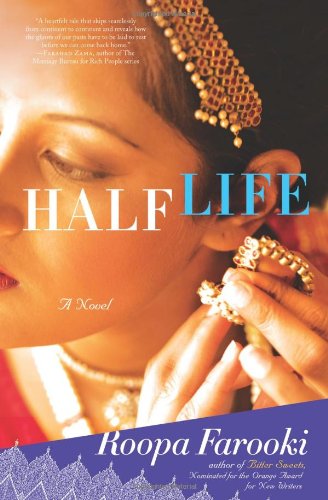
Abandoning her privileged life in England and husband of less than a year, Aruna Ahmed returns to her native Singapore, where she remembers the death of her father, her failed relationship with her best friend and a complicated psychological diagnosis she has tried to ignore.
Die Inhaltsangabe kann sich auf eine andere Ausgabe dieses Titels beziehen.
Über die Autorin bzw. den Autor
Roopa Farooki was born in Lahore, Pakistan, and brought up in London. She graduated from New College, Oxford in Philosophy, Politics and Economics and worked in advertising before writing fiction full time. Roopa now lives in Southeast England and Southwest France with her husband and two young sons, and teaches creative writing at the Canterbury Christ Chuch University masters' program.
Auszug. © Genehmigter Nachdruck. Alle Rechte vorbehalten.
Aruna
King Edward’s Road, Bethnal Green, London
It’s time to stop fighting, and go home. Those were the words which finally persuaded Aruna to walk out of her ground-floor Victorian flat in Bethnal Green, and keep on walking. One step at a time, one foot, and then the other, her inappropriately flimsy sandals flip-flopping on the damp east London streets; she avoids the dank, brown puddles, the foil glint of the takeaway containers glistening with the vibrant slime of sweet and sour sauce, the mottled banana skin left on the pavement like a practical joke, but otherwise walks in a straight line. One foot, and then the other. Toe to heel to toe to heel. Flip-flop. She knows exactly where she is going, and even though she could have carried everything she needs in her dressing-gown pocket – her credit card, her passport, her phone – she has taken her handbag instead, and she has paused in her escape long enough to dress in jeans, a T-shirt and even a jacket. Just for show. So that people won’t think that she is a madwoman who has walked out on her marriage and her marital home in the middle of breakfast, with her half-eaten porridge congealing in the bowl, with her tea cooling on the counter top. So that she won’t think so either. So she can turn up at the airport looking like anyone else, hand over her credit card, and run back to the city she had run away from in the first place.
It’s time to stop fighting, and go home. She hasn’t left a note. It’s not as though she is planning to kill herself, like last time. Then she had left a note, thinking it only polite, to exonerate her husband from any blame or self-reproach, to apologize and excuse herself, as though she were a schoolgirl asking to be let off gym class, instead of the rest of her life. When she had returned, having not gone through with it after all, her hair damp and reedy-smelling, as though she had simply been swimming in the Hampstead Heath Ponds instead of trying to drown herself there, the note was still on the counter. Patrick had been working late. She wasn’t sure if she had failed to end her life because she was too lazy and noncommittal – she hadn’t tried hard enough; the gentle, shallow water hadn’t tried hard enough either, it had bobbed her back up again and offered no helpful current. Perhaps, like the water, she was just too kind – it was kinder for everyone if she lived, wasn’t it? All life, even a life as unimportant as hers, performed some kindness to those it touched; wouldn’t her husband, if no one else, appreciate this kindness? Or perhaps that was just vanity – she hadn’t destroyed the note, but had smoothed it into their diary on the kitchen table, as one might a shopping list, or a love letter, or a poem; but Patrick had never noticed it, because he didn’t make appointments, she supposed. She eventually screwed it up and put it into the recycling box, which Patrick did take care of, judiciously separating paper, glass and plastic. He still didn’t see it – or if he did, he saw it as just another piece of paper. Patrick, ironically for a medical professional whose job is to observe, seems to see very little indeed, at least when it comes to her. He persistently mistakes her for someone better than she is, as though his gaze stops just short of her. He frequently expresses his love for her, but the truth is that he doesn’t know her very well, and she is sure that should he need to fill out a missing persons form, he would be distressed to realize that he doesn’t know her height, her weight, her dress size. He would possibly even be unsure of her exact age and birthday. Although he would probably get her hair and eyes right, as she has the same hair and eyes as almost every woman of Bengali descent. She imagines him filling out this part of the form with confidence, with relief, even; hair: black, eyes: brown.
It’s time to stop fighting, and go home. Those were the words which finally persuaded Aruna to walk out of her ground-floor Victorian flat in Bethnal Green, and keep on walking. One step at a time, one foot, and then the other, her inappropriately flimsy sandals flip-flopping on the damp east London streets; she avoids the dank, brown puddles, the foil glint of the takeaway containers glistening with the vibrant slime of sweet and sour sauce, the mottled banana skin left on the pavement like a practical joke, but otherwise walks in a straight line. One foot, and then the other. Toe to heel to toe to heel. Flip-flop. She knows exactly where she is going, and even though she could have carried everything she needs in her dressing-gown pocket – her credit card, her passport, her phone – she has taken her handbag instead, and she has paused in her escape long enough to dress in jeans, a T-shirt and even a jacket. Just for show. So that people won’t think that she is a madwoman who has walked out on her marriage and her marital home in the middle of breakfast, with her half-eaten porridge congealing in the bowl, with her tea cooling on the counter top. So that she won’t think so either. So she can turn up at the airport looking like anyone else, hand over her credit card, and run back to the city she had run away from in the first place.
It’s time to stop fighting, and go home. She hasn’t left a note. It’s not as though she is planning to kill herself, like last time. Then she had left a note, thinking it only polite, to exonerate her husband from any blame or self-reproach, to apologize and excuse herself, as though she were a schoolgirl asking to be let off gym class, instead of the rest of her life. When she had returned, having not gone through with it after all, her hair damp and reedy-smelling, as though she had simply been swimming in the Hampstead Heath Ponds instead of trying to drown herself there, the note was still on the counter. Patrick had been working late. She wasn’t sure if she had failed to end her life because she was too lazy and noncommittal – she hadn’t tried hard enough; the gentle, shallow water hadn’t tried hard enough either, it had bobbed her back up again and offered no helpful current. Perhaps, like the water, she was just too kind – it was kinder for everyone if she lived, wasn’t it? All life, even a life as unimportant as hers, performed some kindness to those it touched; wouldn’t her husband, if no one else, appreciate this kindness? Or perhaps that was just vanity – she hadn’t destroyed the note, but had smoothed it into their diary on the kitchen table, as one might a shopping list, or a love letter, or a poem; but Patrick had never noticed it, because he didn’t make appointments, she supposed. She eventually screwed it up and put it into the recycling box, which Patrick did take care of, judiciously separating paper, glass and plastic. He still didn’t see it – or if he did, he saw it as just another piece of paper. Patrick, ironically for a medical professional whose job is to observe, seems to see very little indeed, at least when it comes to her. He persistently mistakes her for someone better than she is, as though his gaze stops just short of her. He frequently expresses his love for her, but the truth is that he doesn’t know her very well, and she is sure that should he need to fill out a missing persons form, he would be distressed to realize that he doesn’t know her height, her weight, her dress size. He would possibly even be unsure of her exact age and birthday. Although he would probably get her hair and eyes right, as she has the same hair and eyes as almost every woman of Bengali descent. She imagines him filling out this part of the form with confidence, with relief, even; hair: black, eyes: brown.
She didn’t leave a note this time, as she has no idea what she would have put in it; apart from saying that she had left, but her absence would do this anyway. Wouldn’t it? Was it possible that Patrick would come home and go to work and come home and go to work and not notice until the weekend that she was missing, assuming that she was out shopping or working late in the faculty library, especially as she has recently been in the business of avoiding him in order to steer clear of the difficult conversation about babies that he seems so intent on pursuing. Was she wrong in assuming that her absence would be more noticeable than her presence? They live parallel, independent lives, and have always done so; he complains that even when she’s in, she’s out. When at home she supposes that she is not much more than a small creature curled indifferently on the sofa or in the bath or in the corner of the bed, scrawling in her notebooks with a quiet persistent scratching, working on her laptop with a quiet persistent tapping, but otherwise barely there, without a height or a weight or a dress size worth recalling.
She supposes that such a note should say the truth about why she is leaving, but there is no larger truth. There is nothing significant. There is no Big Important Question to be answered. She has not had an affair, she is not in trouble with the law or in debt, she does not hate him or dislike him at all: like most couples, they fight and bicker all the time, about the ridiculous minutiae of their shared life; who last loaded the dishwasher, and where the toilet roll should be stored. They argue about her refusal, thus far, to consider pregnancy and whether to spend Christmas with the in-laws. There is really nothing but the trivial problems of the everyday, and to other people she looks like nothing so much as an ordinary woman, recently married, as yet childless, with ordinary cares. She looks like this even to herself, on occasion; an ordinary woman, in an ordinary life, wondering why she has striven to be ordinary above everything else. Perhaps she expected it would bring her peace of mind, bringing together the pieces of mind that still inhabit her, their little voices whining inside like shards of glass waiting to pierce through her skin and reveal how sliced up and fragmented she has secretly been within herself, for such a long time. The only thing that currently makes her more than ordinary, extraordinary even, is that she has written and recycled a suicide note, without anyone in the world noticing, and that she has decided to stop fighting, and go home.
She supposes that such a note should say the truth about why she is leaving, but there is no larger truth. There is nothing significant. There is no Big Important Question to be answered. She has not had an affair, she is not in trouble with the law or in debt, she does not hate him or dislike him at all: like most couples, they fight and bicker all the time, about the ridiculous minutiae of their shared life; who last loaded the dishwasher, and where the toilet roll should be stored. They argue about her refusal, thus far, to consider pregnancy and whether to spend Christmas with the in-laws. There is really nothing but the trivial problems of the everyday, and to other people she looks like nothing so much as an ordinary woman, recently married, as yet childless, with ordinary cares. She looks like this even to herself, on occasion; an ordinary woman, in an ordinary life, wondering why she has striven to be ordinary above everything else. Perhaps she expected it would bring her peace of mind, bringing together the pieces of mind that still inhabit her, their little voices whining inside like shards of glass waiting to pierce through her skin and reveal how sliced up and fragmented she has secretly been within herself, for such a long time. The only thing that currently makes her more than ordinary, extraordinary even, is that she has written and recycled a suicide note, without anyone in the world noticing, and that she has decided to stop fighting, and go home.
The funny thing, laugh-out-loud funny when she dwells on it, is that she didn’t say those words in an earnest discussion with her husband, they weren’t advised her by a mother or a friend or a therapist or a lover. The words simply fell out of a book she had been skim-reading over breakfast that had some relevance to her research; fell out almost as casually as a child’s gift from a cereal packet, or junk mail from her morning newspaper. It was a comment between one prodigal son and another, unwilling opponents in a bloody conflict. And as she read it, she thought, OK then. Like a switch had been gently flicked in her head, and she had finally been prompted into action; leaving the breakfast table, dressing carelessly and rather too lightly for the British weather, and taking her handbag. She had put her passport in and taken her keys out, feeling a weight fall from her as she let them tumble onto the glass table in the hall with a musical tinkle. She had breathed a sigh of relief at the sight of them as she shut the door behind her. How easy it was, ridiculously easy, to leave. She suddenly felt so free that she really did laugh out loud, and stopped herself abruptly in case the neighbours heard. It was important to her that she didn’t seem mad, that she didn’t...
„Über diesen Titel“ kann sich auf eine andere Ausgabe dieses Titels beziehen.
Suchergebnisse für Half Life

Beispielbild für diese ISBN
Half Life
Anbieter: World of Books (was SecondSale), Montgomery, IL, USA
Verkäuferbewertung 5 von 5 Sternen

Zustand: Good. Good condition ex-library book with usual library markings and stickers. Bestandsnummer des Verkäufers 00091541971
Gebraucht kaufen
EUR 3,17
Versand gratis
Versand innerhalb von USA
Versand innerhalb von USA
Anzahl: 1 verfügbar
Beispielbild für diese ISBN
Half Life
Anbieter: World of Books Inc, Montgomery, IL, USA
Verkäuferbewertung 2 von 5 Sternen

Hardback. Zustand: Good. From the author of Corner Shop and Bitter Sweets comes a luminous new novel about one woman's journey back home - to a past she once wanted only to forget. It's time to stop fighting, and go home. Those were the words, written by a minor but well-reputed Bengali poet, that finally persuaded Aruna Ahmed Jones to exit her ground-floor Victorian flat wearing only jeans and a t-shirt, carrying nothing more substantial than a handbag, and keep on walking. Leaving behind the handsome Dr. Patrick Jones, her husband of less than a year, Aruna heads to Heathrow, where she boards a plane bound for Singapore, and her old life. When Aruna left for London, she was fleeing many things: her recently deceased father, the only family she'd ever had; her best friend and lover, Jazz, and the life they'd tried, and failed, to create together; the complicated psychological diagnosis she preferred to forget. But after years of fleeing the ghosts that continue to haunt her, Aruna is about to discover that running away is really the easy part; it is coming home--making peace with Jazz, with her past, and even with herself--that is hard. With shades of Slumdog Millionaire and The Namesake, Roopa Farooki's novel is luminous and gripping. Bestandsnummer des Verkäufers CIN0312577907G
Gebraucht kaufen
EUR 4,98
Versand gratis
Versand innerhalb von USA
Versand innerhalb von USA
Anzahl: 1 verfügbar
Beispielbild für diese ISBN
Half Life
Anbieter: Better World Books, Mishawaka, IN, USA
Verkäuferbewertung 5 von 5 Sternen
Zustand: Very Good. Former library copy. Pages intact with possible writing/highlighting. Binding strong with minor wear. Dust jackets/supplements may not be included. Includes library markings. Stock photo provided. Product includes identifying sticker. Better World Books: Buy Books. Do Good. Bestandsnummer des Verkäufers GRP102417117
Gebraucht kaufen
EUR 8,21
Versand gratis
Versand innerhalb von USA
Versand innerhalb von USA
Anzahl: 2 verfügbar
Beispielbild für diese ISBN
Half Life
Anbieter: Desoto Books, Tampa, FL, USA
Verkäuferbewertung 4 von 5 Sternen

Zustand: As New. Bestandsnummer des Verkäufers D0-SIWQ-HBHF
Gebraucht kaufen
EUR 11,75
EUR 2,63 Versand
Versand innerhalb von USA
Versand innerhalb von USA
Anzahl: 1 verfügbar
Foto des Verkäufers
Half Life
Anbieter: WeBuyBooks, Rossendale, LANCS, Vereinigtes Königreich
Verkäuferbewertung 5 von 5 Sternen
hardcover. Zustand: Very Good. Most items will be dispatched the same or the next working day. A copy that has been read, but is in excellent condition. Pages are intact and not marred by notes or highlighting. The spine remains undamaged. Bestandsnummer des Verkäufers rev2817846782
Gebraucht kaufen
EUR 21,15
EUR 6,10 Versand
Versand von Vereinigtes Königreich nach USA
Versand von Vereinigtes Königreich nach USA
Anzahl: 1 verfügbar
Beispielbild für diese ISBN
Half Life
Anbieter: Revaluation Books, Exeter, Vereinigtes Königreich
Verkäuferbewertung 5 von 5 Sternen
Hardcover. Zustand: Brand New. 1st edition. 259 pages. 9.50x6.25x1.00 inches. In Stock. Bestandsnummer des Verkäufers 0312577907
Neu kaufen
EUR 26,48
EUR 11,63 Versand
Versand von Vereinigtes Königreich nach USA
Versand von Vereinigtes Königreich nach USA
Anzahl: 1 verfügbar
Beispielbild für diese ISBN
Half Life (SCARCE FIRST AMERICAN EDITION, FIRST PRINTING SIGNED BY AUTHOR, ROOPA FAROOKI)
Verlag:
St Martin's Press, New York, New York, USA, 2010
ISBN 10: 0312577907
ISBN 13: 9780312577902
Gebraucht
Paperback
Erstausgabe
Signiert
Anbieter: Greystone Books, Margate, Vereinigtes Königreich
Verkäuferbewertung 5 von 5 Sternen
Paperback. Zustand: Very Good. First American Edition, First Printing. VG. First American Edition, First Printing. Paperback. (xii),259pp. PRESENTATION COPY INSCRIBED AND SIGNED BY AUTHOR, ROOPA FAROOKI. Signing reads, 'For ----/All best wishes/Roopa/Farooki'. A novel in which Aruna Jones walks out of her London apartment to return to her life in Singapore. A SCARCE first American edition, first printing SIGNED BY AUTHOR, ROOPA FAROOKI. Presentation Copy Inscribed & Signed. Bestandsnummer des Verkäufers 20414
Gebraucht kaufen
EUR 21,56
EUR 19,19 Versand
Versand von Vereinigtes Königreich nach USA
Versand von Vereinigtes Königreich nach USA
Anzahl: 1 verfügbar