
Verwandte Artikel zu The Rural Life
Inhaltsangabe
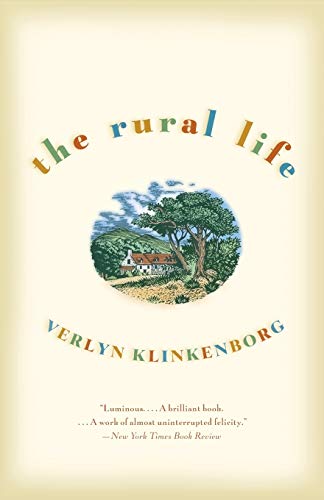
This "luminous, brilliant" meditation on life in the countryside will encourage you to see the natural world -- and our place in it -- anew (New York Times Book Review).
With an eloquence unmatched by any other living writer, Verlyn Klinkenborg observes the juncture at which our lives and the natural world intersect. His yearlong meditation on the rigors and wonders of country life -- encompassing memories of his family's Iowa homestead, time spent in the wide-open spaces of the American West, and his experiences on the small farm in upstate New York where he lives with his wife -- abounds with vicarious pleasures for the reader as it indelibly records and celebrates the everyday beauty of the world we inhabit.
"In a voice reminiscent of E.B. White, Klinkenborg paints a picture of a fading world in colors that are solid and authentic. His joy is evident throughout." --Los Angeles Times
Die Inhaltsangabe kann sich auf eine andere Ausgabe dieses Titels beziehen.
Über die Autorin bzw. den Autor
Verlyn Klinkenborg is the author of The Last Fine Time, Making Hay, and The Rural Life. His articles have appeared in many magazines, including The New Yorker, Harper's, Audubon, Smithsonian, and The New Republic. He teaches creative writing at Harvard University.
Auszug. © Genehmigter Nachdruck. Alle Rechte vorbehalten.
Excerpt
JANUARY
Every year about now, I feel the need to keep a journal. I recognize in this urge all my worst instincts as a writer. I walk past the blank books - gifts of nothingness - that pile up in bookstores at this season, and I can almost hear their clean white pages begging to be defaced. They evoke in me the amateur, the high school student, the miserable writerly aspirant I once was - a young man who could almost see the ink flowing onto the woven fibers of the blank page like the watering of some eternal garden. It took a long time, a lot of pens, and many blank books before I realized that I write in the simultaneous expectation that every word I write will live forever and be blotted out instantly.
It's hard to keep a journal under those conditions. It's harder still when it becomes clear that the purpose of a journal - at least of those journals begun in earnest on the first day of January - is not to record, day by day, just a fragment of thought or observation but to herd all one's days, like so many sheep, into a single pasture and prevent them from escaping. What drives the impulse toward New Year's journal keeping is also the shocking realization that the only thing left of the old year is a few tufts of wool caught in the barbed wire. What I want a journal to do could be done just as well by a more aggressive savings program.
A conscientious journal keeper is really the natural historian of his own life. His model is the amateur naturalists of the eighteenth and nineteenth centuries, writers like Gilbert White or collectors like George Eliot's Camden Farebrother. It often seems as though science in this century has little use anymore for amateur observers of that kind, that science has grown too institutional, too complex, to value the private watcher of a small patch of ground. It seems that way too when it comes to our own lives. They're cross-referenced, indexed, cataloged, and witnessed by the public and private institutions whose job is to tabulate and codify us. Even the task of introspection has been jobbed out to the professionals. A personal journal in our time comes to seem less like a valuable cache of perceptions than a naive recitation of symptoms that the writer lacks the authority to analyze.
But many of the great journals - I think especially of Samuel Pepys's seventeenth-century diary and James Boswell's eighteenth-century journal-are not marked by self-consciousness. They're marked by a dogged absence of self-consciousness, a willingness to suspend judgment of the journal itself, if not of its author, in order to keep the enterprise going. The value of Pepys's diary and Boswell's journal is the world they depict and only incidentally the depiction of their authors. Their journals weren't read until long after the authors had died. Both men wrote for an audience of one. Judging by my own fragmentary journals, that's one too many. It's not enough that I should be dead before anyone else reads them. I should be dead before I reread them myself.
So at the beginning of this new year, I'll try to hold out against more journal making. There are lots of good reasons to do so. I have enough to write as it is, and I know enough about writing now to distrust the words that seem to flow onto the page. A journal always conceals vastly more than it reveals. It's a poor substitute for memory, and memory is what I would like to nourish.
But if I do give in, this is what I have in mind. I want to count the crows in the field every afternoon. I want to record the temperatures, high and low, every day and measure the rain and snow. If a flock of turkeys walks into the barnyard, I want to mention the fact. If one of the horses throws a shoe, I want to say so, in writing, before I call the farrier; and I'd like to be able to tell from my journal just how many bales of hay I have squirreled away in the barn. It's no longer the writer in me that wants to keep a journal. It's the farmer - or rather the son and nephew and grandson of farmers.
All of the days with eves before them are behind us now for another year. The grand themes - rebirth and genial carnality - have come and gone like a chinook wind, bringing a familiar end-of-year thaw to body and spirit. Now the everyday returns and with it the ordinary kind of week in which Friday doesn't turn into Sunday - and Saturday into Sunday - as it has for two weeks running. It's time for a week in which each morning throws off a magnetic field all its own, when it's no trick telling Tuesday from Wednesday just by the sound of the alarm clock or the mood of your spouse.
With the everyday, winter comes at last to the new year. In the country it isn't necessarily snowfall or the sudden drop in temperature that marks the return of winter. It's the sound of the plow-guy - unless you happen to be the plow-guy - clearing the driveway well after dark, when the dogs are already asleep, too tired from an afternoon of running around a snowy field to rise and bark at the scraping and banging outside. In the time it takes to wonder what the racket is, I remember. It was last winter's sound, and now it's this winter's too. It seems surprising that the plow-guy even recalls where I live and that such a flimsy agreement - a couple of words and a nod over a rolled- down pickup window - could have such presumptive force. But that's the nature of the country, where lifelong service contracts are formed in an instant and attach to the property, not the person, as newcomers discover to their interest. Getting out of those contracts is like getting out of winter. Better just to move.
Winter's own presumptive force made itself plain recently, with rain upon snow followed by snow upon ice late into the darkness. The next morning my footsteps to the barn through the slush the night before had been preserved with remarkable sharpness - each one a life mask of my boot sole, the splash frozen in midair as if it were a Harold Edgerton photo. In the sunshine, snow slid off the metal barn roof with a hiss, and the horses skittered out from the run-in shed, taking pleasure as they always do in a momentary fright. In a single night they've learned how to pick their way over ice again. The roads are suddenly full of the overtentative and the overbold, for at night the cold, clean blacktop looks like hardpacked snow, and sometimes it actually is. Other seasons come abruptly but ask so little when they do. Winter is the only one that has to be relearned.
Somehow it seems appropriate that the year should have ended with a winter storm worth remembering, a walloping northeaster drawing snow down in heaps from a solid ceiling of clouds. This was the kind of storm preceded most richly by anticipation, by the heraldry of radar and rumor, bringing in advance a seasonal glibness to almost everyone in its probable path - everyone, that is, who doesn't have to travel. On Saturday morning the weather drew people to their windows again and again to see how fast the snow was falling, then to see if the fire hydrant had disappeared, then to worry whether the plows were coming. And as always when a storm of this dimension crosses the Northeast, what it brings in greatest abundance is a muffled hush, the sound of nothing doing.
A winter storm is episodic by nature, whether it marches on an arctic track out of the west or rides upward along the coast from the south, as this one did, congealing as it comes. It's been a long time since the last episode of this magnitude, and it was strangely reassuring, if only as a reminder of what true winter really means, since winter is now a pale, warm shadow of its ancestral self. Many seeds require a period of cold, called stratification, before they'll germinate. Thanks to this storm, residents of the Northeast can consider themselves properly stratified.
In the country the storm meant a chance, when the gusts were strongest, to pretend that...
„Über diesen Titel“ kann sich auf eine andere Ausgabe dieses Titels beziehen.
Suchergebnisse für The Rural Life

Beispielbild für diese ISBN
The Rural Life
Anbieter: World of Books (was SecondSale), Montgomery, IL, USA
Verkäuferbewertung 5 von 5 Sternen

Paperback. Zustand: Fair. The hugely admired author of "The Last Fine Time" preserves and makes new the sights, smells, sounds, and poetry of country living. Klinkenborg reveals the beauty of the American landscape, not from a scenic overlook, but through a screened-in porch or from the window of a pickup driving down an empty highway in the teeth of an approaching storm. Bestandsnummer des Verkäufers 00107835276
Gebraucht kaufen
EUR 5,10
Versand gratis
Versand innerhalb von USA
Versand innerhalb von USA
Anzahl: 3 verfügbar
Beispielbild für diese ISBN
The Rural Life
Anbieter: World of Books (was SecondSale), Montgomery, IL, USA
Verkäuferbewertung 5 von 5 Sternen
Zustand: Good. Item in good condition. Textbooks may not include supplemental items i.e. CDs, access codes etc. Bestandsnummer des Verkäufers 00086737635
Gebraucht kaufen
EUR 5,10
Versand gratis
Versand innerhalb von USA
Versand innerhalb von USA
Anzahl: 6 verfügbar
Foto des Verkäufers
The Rural Life
Verlag:
Little, Brown Paperbacks, 2004
ISBN 10: 0316735515
ISBN 13: 9780316735513
Gebraucht
Softcover
Anbieter: Greenworld Books, Arlington, TX, USA
Verkäuferbewertung 5 von 5 Sternen
Zustand: good. Fast Free Shipping â" Good condition. It may show normal signs of use, such as light writing, highlighting, or library markings, but all pages are intact and the book is fully readable. A solid, complete copy that's ready to enjoy. Bestandsnummer des Verkäufers GWV.0316735515.G
Gebraucht kaufen
EUR 5,11
Versand gratis
Versand innerhalb von USA
Versand innerhalb von USA
Anzahl: 1 verfügbar
Beispielbild für diese ISBN
The Rural Life
Verlag:
Little, Brown Paperbacks, 2004
ISBN 10: 0316735515
ISBN 13: 9780316735513
Gebraucht
Softcover
Anbieter: BookHolders, Towson, MD, USA
Verkäuferbewertung 5 von 5 Sternen
Zustand: Good. [ No Hassle 30 Day Returns ][ Ships Daily ] [ Underlining/Highlighting: NONE ] [ Writing: NONE ] [ Edition: reprint ] Publisher: Back Bay Books Pub Date: 1/1/2002 Binding: paperback Pages: 213 reprint edition. Bestandsnummer des Verkäufers 6735217
Gebraucht kaufen
EUR 5,39
Versand gratis
Versand innerhalb von USA
Versand innerhalb von USA
Anzahl: 1 verfügbar
Beispielbild für diese ISBN
The Rural Life
Verlag:
Little, Brown Paperbacks, 2004
ISBN 10: 0316735515
ISBN 13: 9780316735513
Gebraucht
Softcover
Anbieter: Wonder Book, Frederick, MD, USA
Verkäuferbewertung 5 von 5 Sternen
Zustand: Good. Good condition. A copy that has been read but remains intact. May contain markings such as bookplates, stamps, limited notes and highlighting, or a few light stains. Bestandsnummer des Verkäufers L09C-04653
Gebraucht kaufen
EUR 6,36
Versand gratis
Versand innerhalb von USA
Versand innerhalb von USA
Anzahl: 2 verfügbar
Beispielbild für diese ISBN
The Rural Life
Verlag:
Little, Brown Paperbacks, 2004
ISBN 10: 0316735515
ISBN 13: 9780316735513
Gebraucht
Softcover
Anbieter: Wonder Book, Frederick, MD, USA
Verkäuferbewertung 5 von 5 Sternen
Zustand: Very Good. Very Good condition. A copy that may have a few cosmetic defects. May also contain light spine creasing or a few markings such as an owner's name, short gifter's inscription or light stamp. Bestandsnummer des Verkäufers K02M-01220
Gebraucht kaufen
EUR 6,36
Versand gratis
Versand innerhalb von USA
Versand innerhalb von USA
Anzahl: 1 verfügbar
Foto des Verkäufers
The Rural Life
Verlag:
Little, Brown Paperbacks, 2004
ISBN 10: 0316735515
ISBN 13: 9780316735513
Gebraucht
Softcover
Anbieter: Goodwill, Brooklyn Park, MN, USA
Verkäuferbewertung 4 von 5 Sternen

Zustand: good. The corners are bent. Bestandsnummer des Verkäufers MINV.0316735515.G
Gebraucht kaufen
EUR 2,97
EUR 3,52 Versand
Versand innerhalb von USA
Versand innerhalb von USA
Anzahl: 2 verfügbar
Beispielbild für diese ISBN
The Rural Life
Anbieter: Better World Books, Mishawaka, IN, USA
Verkäuferbewertung 5 von 5 Sternen
Zustand: Good. Reprint. Pages intact with minimal writing/highlighting. The binding may be loose and creased. Dust jackets/supplements are not included. Stock photo provided. Product includes identifying sticker. Better World Books: Buy Books. Do Good. Bestandsnummer des Verkäufers 3196117-6
Gebraucht kaufen
EUR 6,50
Versand gratis
Versand innerhalb von USA
Versand innerhalb von USA
Anzahl: 2 verfügbar
Beispielbild für diese ISBN
The Rural Life
Verlag:
Little, Brown Paperbacks, 2004
ISBN 10: 0316735515
ISBN 13: 9780316735513
Gebraucht
Paperback
Anbieter: ThriftBooks-Reno, Reno, NV, USA
Verkäuferbewertung 5 von 5 Sternen
Paperback. Zustand: Good. No Jacket. Pages can have notes/highlighting. Spine may show signs of wear. ~ ThriftBooks: Read More, Spend Less. Bestandsnummer des Verkäufers G0316735515I3N00
Gebraucht kaufen
EUR 6,51
Versand gratis
Versand innerhalb von USA
Versand innerhalb von USA
Anzahl: 1 verfügbar
Beispielbild für diese ISBN
The Rural Life
Verlag:
Little, Brown Paperbacks, 2004
ISBN 10: 0316735515
ISBN 13: 9780316735513
Gebraucht
Paperback
Anbieter: ThriftBooks-Dallas, Dallas, TX, USA
Verkäuferbewertung 5 von 5 Sternen
Paperback. Zustand: Fair. No Jacket. Readable copy. Pages may have considerable notes/highlighting. ~ ThriftBooks: Read More, Spend Less. Bestandsnummer des Verkäufers G0316735515I5N00
Gebraucht kaufen
EUR 6,53
Versand gratis
Versand innerhalb von USA
Versand innerhalb von USA
Anzahl: 1 verfügbar