
Verwandte Artikel zu The Rural Life
Inhaltsangabe
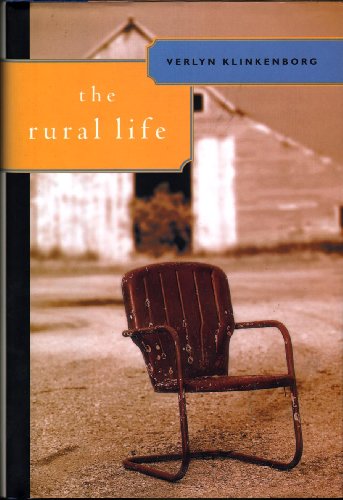
In THE RURAL LIFE, the hugely admired author of "The Last Fine Time" preserves and makes new the sights, smells, sounds, and poetry of country living. Here, Verlyn Klinkenborg reveals the beauty of the American landscape, not from a scenic overlook, but through a screened-in porch or from the window of a pickup driving down an empty highway in the teeth of an approaching storm. Klinkenborg brings reports of rural life back to us, his readers, with writing as vivid as high noon on a summer day or as dreamy as a dusk lit by fireflies. Composed in sections corresponding to the months of the year, The Rural Life highlights the pleasures and hardships, the reveries and stillness, that each season offers to the willing observer. Whether he writes of a small farm in upstate New York, a high pasture deep within the Rocky Mountains, or the bricked edge of a city shuddering in the wake of a "sudden Tuesday," Klinkenborg bears witness to nature's play in language as simple, unsentimental, and direct as life itself.
Die Inhaltsangabe kann sich auf eine andere Ausgabe dieses Titels beziehen.
Über die Autorin bzw. den Autor
Verlyn Klinkenborg comes from a family of Iowa farmers and is the author of "Making Hay" and "The Last Fine Time." He is a member of the editorial board of "The New York Times" and has written for "The New Yorker," "Mother Jones," and "Harper's." He lives on a small farm in upstate New York.
Rezensionen
Klinkenborg is a member of the editorial board of the New York Times and author of Making Hay. This collection of essays, most of which have previously been published in the NYT and elsewhere, describe his experiences of rural life, from his farm in upstate New York and in the American West. When a book is a compilation of essays, it can often suffer from a lack of continuity or context. While these selections are gathered according to month, they leap from geographic locations without regard to year; in fact, there is no indication of when they were written (except a couple references to 9/11). Klinkenborg explains: "If spring seems to be well advanced on one page and balky and weeks behind on the next...I'm probably describing two very different springs." Because he writes so well, one can endure the bumpy ride. Recommended for public and academic libraries.
--Lee Arnold, Historical Soc. of Pennsylvania, Philadelphia
Copyright 2002 Reed Business Information, Inc.
Klinkenborg's third book (after Making Hay and The Last Fine Time) is a selection of columns originally appearing on the New York Times editorial page under the heading "A Rural Life." They document in vivid detail the daily challenges of life in the country, and on a farm in particular. Though the columns are drawn from seven years of writing, the book is organized into a single year-12 chapters starting in "January" and ending in "December"-and flits from topic to topic, relying on a few short passages of news or descriptions of holidays to mark the passage of time. Likewise, the author never sticks to one place for long, but ranges across the continent of the U.S. and glimpses events in dozens of country towns from Wyoming and New Hampshire to Minnesota and New Mexico. Some episodes are emblematic of contemporary American culture: a high school football game, President Clinton's dedication of Walden Pond, the disquiet in the days following September 11. Others are more intimate passages discussing the author's family and the solace he finds in keeping bees, stacking hay or simply turning earth. Though this highly personal chronicle lacks any narrative arc other than the changing of the seasons and the author's emotional reaction to them, nothing in the prose is accidental, and the deliberate, finely hewn sentences convey, above all else, the seriousness with which Klinkenborg takes the task of watching the world around him. A heady meditation on our relationship to nature, echoing the works of the transcendentalists Thoreau and Emerson, the writing is much closer to poetry than essay.
Copyright 2002 Reed Business Information, Inc.
Most of these essays have been published previously in an eponymous column on the New York Times editorial page. Their collection in one volume achieves a kind of consecration of time, as Klinkenborg chronicles the passing year through changes he observes on his upstate New York farm and during his frequent travels out west. Klinkenborg lingers over the chapters devoted to the summer months, his prose appropriately rich and yearning. No death or rebirth is too small to be marveled over and recorded, but paradoxically, Klinkenborg's careful observation and reflective, uncomplicated language generate their own suspense. Descriptions of the changing light in September, drives through falling snow, and the satisfaction of a rooster's crow at dawn are rendered in joyous and unsentimental prose without a hint of folksiness. Klinkenborg's many fans will cherish this chance to spend a year in his company. For readers new to his work this is an excellent introduction to a fine and inspiring writer. Meredith Parets
Copyright © American Library Association. All rights reserved
„Über diesen Titel“ kann sich auf eine andere Ausgabe dieses Titels beziehen.
Suchergebnisse für The Rural Life

Beispielbild für diese ISBN
The Rural Life
Verlag:
Little, Brown and Company, 2002
ISBN 10: 0316741671
ISBN 13: 9780316741675
Gebraucht
Hardcover
Anbieter: Orion Tech, Kingwood, TX, USA
Verkäuferbewertung 5 von 5 Sternen

hardcover. Zustand: Good. Bestandsnummer des Verkäufers 0316741671-3-37324462
Gebraucht kaufen
EUR 3,93
Versand gratis
Versand innerhalb von USA
Versand innerhalb von USA
Anzahl: 1 verfügbar
Beispielbild für diese ISBN
Rural Life
Verlag:
Little, Brown and Company, 2003
ISBN 10: 0316741671
ISBN 13: 9780316741675
Gebraucht
Hardcover
Anbieter: World of Books (was SecondSale), Montgomery, IL, USA
Verkäuferbewertung 5 von 5 Sternen
Hardback. Zustand: Good. This is a collection of Klinkenborg's writings on the natural world and the changing seasons which appear frequently in a column entitled The Rural Life on the editorial page of the New York Times. Bestandsnummer des Verkäufers 00101947163
Gebraucht kaufen
EUR 3,94
Versand gratis
Versand innerhalb von USA
Versand innerhalb von USA
Anzahl: 5 verfügbar
Beispielbild für diese ISBN
Rural Life
Verlag:
Little, Brown and Company, 2003
ISBN 10: 0316741671
ISBN 13: 9780316741675
Gebraucht
Hardcover
Anbieter: World of Books (was SecondSale), Montgomery, IL, USA
Verkäuferbewertung 5 von 5 Sternen
Hardback. Zustand: Very Good. This is a collection of Klinkenborg's writings on the natural world and the changing seasons which appear frequently in a column entitled The Rural Life on the editorial page of the New York Times. Bestandsnummer des Verkäufers CIN0316741671VG
Gebraucht kaufen
EUR 3,94
Versand gratis
Versand innerhalb von USA
Versand innerhalb von USA
Anzahl: 3 verfügbar
Foto des Verkäufers
The Rural Life
Verlag:
Little, Brown and Company, 2002
ISBN 10: 0316741671
ISBN 13: 9780316741675
Gebraucht
Hardcover
Anbieter: Zoom Books Company, Lynden, WA, USA
Verkäuferbewertung 5 von 5 Sternen
Zustand: very_good. Book is in very good condition and may include minimal underlining highlighting. The book can also include "From the library of" labels. May not contain miscellaneous items toys, dvds, etc. . We offer 100% money back guarantee and 24 7 customer service. Bestandsnummer des Verkäufers ZBV.0316741671.VG
Gebraucht kaufen
EUR 4,08
Versand gratis
Versand innerhalb von USA
Versand innerhalb von USA
Anzahl: 1 verfügbar
Foto des Verkäufers
The Rural Life
Verlag:
Little, Brown and Company, 2002
ISBN 10: 0316741671
ISBN 13: 9780316741675
Gebraucht
Hardcover
Anbieter: Greenworld Books, Arlington, TX, USA
Verkäuferbewertung 5 von 5 Sternen
Zustand: good. Fast Free Shipping â" Good condition. It may show normal signs of use, such as light writing, highlighting, or library markings, but all pages are intact and the book is fully readable. A solid, complete copy that's ready to enjoy. Bestandsnummer des Verkäufers GWV.0316741671.G
Gebraucht kaufen
EUR 5,23
Versand gratis
Versand innerhalb von USA
Versand innerhalb von USA
Anzahl: 2 verfügbar
Foto des Verkäufers
The Rural Life
Verlag:
Little, Brown and Company, 2002
ISBN 10: 0316741671
ISBN 13: 9780316741675
Gebraucht
Hardcover
Anbieter: ZBK Books, Carlstadt, NJ, USA
Verkäuferbewertung 5 von 5 Sternen
Zustand: very_good. Missing Dust Cover - Used book in very good and clean conditions. Minor cosmetic defects may be present. Pages and cover intact. May include library marks, notes marks and highlighting. Fast Shipping. Bestandsnummer des Verkäufers ZWV.0316741671.VG
Gebraucht kaufen
EUR 5,42
Versand gratis
Versand innerhalb von USA
Versand innerhalb von USA
Anzahl: 1 verfügbar
Beispielbild für diese ISBN
The Rural Life
Verlag:
Little, Brown and Company, 2002
ISBN 10: 0316741671
ISBN 13: 9780316741675
Gebraucht
Hardcover
Anbieter: HPB Inc., Dallas, TX, USA
Verkäuferbewertung 5 von 5 Sternen
Hardcover. Zustand: Very Good. Connecting readers with great books since 1972! Used books may not include companion materials, and may have some shelf wear or limited writing. We ship orders daily and Customer Service is our top priority! Bestandsnummer des Verkäufers S_455335810
Gebraucht kaufen
EUR 2,31
EUR 3,36 Versand
Versand innerhalb von USA
Versand innerhalb von USA
Anzahl: 1 verfügbar
Beispielbild für diese ISBN
Rural Life
Verlag:
Little, Brown and Company, 2003
ISBN 10: 0316741671
ISBN 13: 9780316741675
Gebraucht
Hardcover
Anbieter: World of Books Inc, Montgomery, IL, USA
Verkäuferbewertung 4 von 5 Sternen

Hardback. Zustand: Good. This is a collection of Klinkenborg's writings on the natural world and the changing seasons which appear frequently in a column entitled The Rural Life on the editorial page of the New York Times. Bestandsnummer des Verkäufers CIN0316741671G
Gebraucht kaufen
EUR 5,78
Versand gratis
Versand innerhalb von USA
Versand innerhalb von USA
Anzahl: 5 verfügbar
Beispielbild für diese ISBN
Rural Life
Verlag:
Little, Brown and Company, 2003
ISBN 10: 0316741671
ISBN 13: 9780316741675
Gebraucht
Hardcover
Anbieter: World of Books Inc, Montgomery, IL, USA
Verkäuferbewertung 4 von 5 Sternen
Hardback. Zustand: Very Good. This is a collection of Klinkenborg's writings on the natural world and the changing seasons which appear frequently in a column entitled The Rural Life on the editorial page of the New York Times. Bestandsnummer des Verkäufers CIN0316741671VG
Gebraucht kaufen
EUR 5,78
Versand gratis
Versand innerhalb von USA
Versand innerhalb von USA
Anzahl: 3 verfügbar
Foto des Verkäufers
The Rural Life
Verlag:
Little, Brown and Company, 2002
ISBN 10: 0316741671
ISBN 13: 9780316741675
Gebraucht
Hardcover
Anbieter: Goodwill, Brooklyn Park, MN, USA
Verkäuferbewertung 4 von 5 Sternen
Zustand: very_good. Item may have minor cosmetic defects such as marks, wears, cuts, bends, or crushes on the cover, spine, pages, or dust cover. Shrink wrap, dust covers, or boxed set case may be missing. Item may contain remainder marks on outside edges, which should be noted in listing comments. Item may be missing bundled media. Bestandsnummer des Verkäufers MINV.0316741671.VG
Gebraucht kaufen
EUR 2,24
EUR 3,58 Versand
Versand innerhalb von USA
Versand innerhalb von USA
Anzahl: 1 verfügbar