
Verwandte Artikel zu Sibling Rivalry: Sound, Reassuring Advice for Getting...
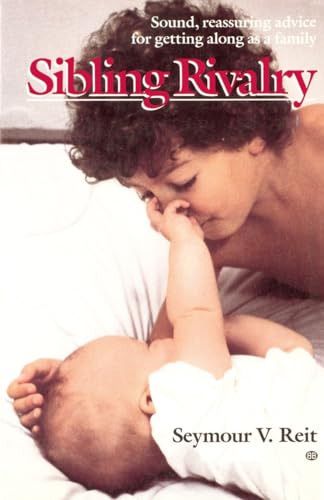
Sibling Rivalry: Sound, Reassuring Advice for Getting Along as a Family (The Bank Street College of Education Child Development Series) - Softcover
Inhaltsangabe
Written in the warm and reassuring Bank Street style, this is an authoritative, ground-breaking guide entriely devoted to the dilemmas of sibling rivalry. Issues such as jealousy, sharing and fighting between siblings are discussed, and there are special sections on twins, step-siblings and single parents.
Die Inhaltsangabe kann sich auf eine andere Ausgabe dieses Titels beziehen.
Über die Autorin bzw. den Autor
Seymour V. Reit
Von der hinteren Coverseite
Written in the warm and reassuring Bank Street style, this is an authoritative, ground-breaking guide entriely devoted to the dilemmas of sibling rivalry. Issues such as jealousy, sharing and fighting between siblings are discussed, and there are special sections on twins, step-siblings and single parents.
"From the Paperback edition.
Aus dem Klappentext
he warm and reassuring Bank Street style, this is an authoritative, ground-breaking guide entriely devoted to the dilemmas of sibling rivalry. Issues such as jealousy, sharing and fighting between siblings are discussed, and there are special sections on twins, step-siblings and single parents.
From the Paperback edition.
Auszug. © Genehmigter Nachdruck. Alle Rechte vorbehalten.
Foreword
I have two memories of the time when my sister, five years younger than myself, joined our family. My first memory, in the hospital, is crowded with excited grown-ups filling and darkening a tiny hallway. There is barely enough room for me, although, at five years old, I reached no higher than anyone’s thigh. There is a door with a high window in it. Suddenly, a red, crumple-faced, dark-headed bundle appears in the window, held by an invisible someone. My voice rings out, excited, proud of the cleverness of my observation, “It looks like a monkey!” And the grown-ups shush me in shocked tones.
The other memory is more complex—and needs some history. When mother went to the hospital to give birth to my sister, I was left with my grandparents. During my stay with them, I fell and broke an ankle, which required a stay in the hospital (not the same one as my mother’s!) and the wearing of a full cast, thigh to toe.
In this second memory I am in the backseat of a car, with a blanket covering my cast, going to bring my mother and the baby home. My aunt and my grandmother solemnly instruct me not to tell my mother about the cast, because it would upset her. We arrive at the hospital, and my mother, baby in arms, bends into the car with joyful face to greet me. Defying all the family, I throw back the blanket. “Look, Ma!” My mother gasps and as she sags, she almost drops the baby.
The only trouble with these memories is that they couldn’t both have happened, my first sight of my baby sister occurring both in the hospital hallway and from the recesses of an automobile. Nor could a child with a broken leg have been outside the nursery exclaiming about monkey resemblances. Why, then, do I tell these tales? Because whatever their relation to objective fact, the memories—and they are vivid and detailed—reflect deeply felt responses to the arrival of a sibling in a family.
First is the theme of rejection of the new baby. This is evident in both memories. In one, she is perceived as ugly and alien, a monkey; and in the other, she is even put in danger, almost caused to fall. Second is the sense of not being seen, perhaps even neglected. This is shown in the shadowed hospital hallway, where the older sister is not even noticed amidst the jostling grown-ups—until she demands attention with a clever comment. Third, what mixed feelings are shown toward the mother! “Look!” says the child. “Look what happened to me when you weren’t here! I don’t care if you’re upset at seeing my cast! You should be! You shouldn’t have gone away! Now you can drop that baby (even literally) and take care of me!”
As I write this, a follow-up memory arises. We arrive home together, my mother, my new sister, other relatives, and me in my leg cast. The apartment is full of people coming and going. I am in a bed in my parents’ room, watching my mother crying and exclaiming over me. I don’t understand her being upset, because I love being the center of all the excitement. Now she will pay attention to me!
Many parents with two or more children will recognize the intensely conflicted nature of the feelings I’ve described (and may remember them from their own childhood): rejection of the baby together with interest in the odd little creature, a sense of invisibility accompanied by determination to get attention, and the combination of need for mother and anger at her. All these, along with the affection and sense of alliance that usually emerge later, are wrapped up in what we call sibling rivalry, a somewhat simple designation for such a highly complex phenomenon.
Indeed, one of the primary themes of, this book is that sibling relationships are not simple. How could it be otherwise, when no intimate human relationship is simple? Sound relationships, including those between siblings, involve a rich mix: having one’s own needs met and the joy of fulfilling another’s, the continuing interest in another person, the challenge of meshing different styles and temperaments, mastery of frustrations and conflicts, and the fun and comfort of doing and being together. But it takes a long time to build a sound relationship, and with siblings, there are special wrinkles involved that are explored in this book.
One is that the children feel themselves in competition not only for elbow room and possessions but for their parents’ love and attention, a feeling that complicates the creation of a relationship on its own terms. Another is that siblings live together and cannot easily escape the intensity of their feelings for each other, both positive and negative: cooling-off periods, necessary in any relationship, are not easy to come by.
A third wrinkle, and the most complex, is that parents tend to invest their children with their own histories. A vigorous, strong-minded young daughter may evoke in a father reverberations of his early struggles with a bossy older sister. A mother may feel discomfort at her son’s sensitivity and shyness because it reminds her of her own continuing efforts to be assertive. Children may even be reminders of our own parents, the grandparent generation, not only because of physical resemblance but because of our own unfinished growing up. Which of us has not carried into our adult lives feelings about our parents’ authority over us as children, that then shaped how we attempted to control our own offspring, as if they were representatives of the past?
The hazards of laying the past on present children lie in our subsequent tendency to treat them as if they were indeed that long-ago sister, or self, or parent, instead of their unique selves. When that happens, the dynamic daughter may be prevented from pursuing her own independent path as a way of compensating for our personal insecurities. Or children may be dominated or coddled according to their fantasized connection to our earlier relationships with our own parents.
On the other hand, becoming part of the human family does involve, to some extent, inheriting not only bone structure and eye color but parental myths, fantasies, and memories. My mother often told my sister and me stories about her early life with her siblings: her feeling, as a middle child among five, of being loved less than the others; the way her older sister told jokes to keep her laughing and then sneaked food off her plate; her affection for her stylish younger sister. I, in turn, have shared these with my own daughter. They become, through the retelling, a part of our family culture. We all have a strong human need to make generational connections; there are strengths as well as hazards for children in feeling themselves linked to their parents’ past lives. The point is that children in a family must work out what they mean to each other, not only in relation to their daily interaction but in the context of their family history, for better or for worse. In each family the intense angers, jealousies, resentments, anxieties, and vengeances that normally surround a growing sibling relationship (and this book emphasizes the normalcy of such feelings) have different meanings largely because of different histories.
In one family, arguments and name calling are seen as unacceptable rudeness; in another, they are evidence of self-confident assertiveness; in still another they spell affection. Competition is admired by some parents and forbidden by others. What is viewed as polite by one will seem obsequious to another. These differences stem from different past experiences, both satisfying and painful, in coping with human challenges. As they learn about each other, brothers and sisters are also...
„Über diesen Titel“ kann sich auf eine andere Ausgabe dieses Titels beziehen.
Suchergebnisse für Sibling Rivalry: Sound, Reassuring Advice for Getting...

Beispielbild für diese ISBN
Sibling Rivalry: Sound, Reassuring Advice for Getting Along as a Family
Anbieter: World of Books (was SecondSale), Montgomery, IL, USA
Verkäuferbewertung 5 von 5 Sternen

Paperback. Zustand: Very Good. Written in the warm and reassuring Bank Street style, this is an authoritative, ground-breaking guide entriely devoted to the dilemmas of sibling rivalry. Issues such as jealousy, sharing and fighting between siblings are discussed, and there are special sections on twins, step-siblings and single parents. Bestandsnummer des Verkäufers 00100968887
Gebraucht kaufen
EUR 6,67
Versand gratis
Versand innerhalb von USA
Versand innerhalb von USA
Anzahl: 1 verfügbar
Beispielbild für diese ISBN
Sibling Rivalry: Sound, Reassuring Advice for Getting Along as a Family
Anbieter: ThriftBooks-Atlanta, AUSTELL, GA, USA
Verkäuferbewertung 5 von 5 Sternen
Paperback. Zustand: Fair. No Jacket. Readable copy. Pages may have considerable notes/highlighting. ~ ThriftBooks: Read More, Spend Less. Bestandsnummer des Verkäufers G0345305213I5N00
Gebraucht kaufen
EUR 6,68
Versand gratis
Versand innerhalb von USA
Versand innerhalb von USA
Anzahl: 1 verfügbar
Beispielbild für diese ISBN
Sibling Rivalry: Sound, Reassuring Advice for Getting Along as a Family
Anbieter: ThriftBooks-Dallas, Dallas, TX, USA
Verkäuferbewertung 5 von 5 Sternen
Paperback. Zustand: Good. No Jacket. Pages can have notes/highlighting. Spine may show signs of wear. ~ ThriftBooks: Read More, Spend Less. Bestandsnummer des Verkäufers G0345305213I3N00
Gebraucht kaufen
EUR 6,68
Versand gratis
Versand innerhalb von USA
Versand innerhalb von USA
Anzahl: 1 verfügbar
Beispielbild für diese ISBN
Sibling Rivalry : Sound, Reassuring Advice for Getting along As a Family
Verlag:
Random House Publishing Group, 1985
ISBN 10: 0345305213
ISBN 13: 9780345305213
Gebraucht
Softcover
Erstausgabe
Anbieter: Better World Books: West, Reno, NV, USA
Verkäuferbewertung 5 von 5 Sternen
Zustand: Good. 1st Edition. Pages intact with minimal writing/highlighting. The binding may be loose and creased. Dust jackets/supplements are not included. Stock photo provided. Product includes identifying sticker. Better World Books: Buy Books. Do Good. Bestandsnummer des Verkäufers 2881750-6
Gebraucht kaufen
EUR 8,35
Versand gratis
Versand innerhalb von USA
Versand innerhalb von USA
Anzahl: 1 verfügbar
Beispielbild für diese ISBN
Sibling Rivalry: Sound, Reassuring Advice for Getting Along as a Family (The Bank Street College of Education Child Development Series)
Verlag:
Random House Publishing Group (edition 1), 1985
ISBN 10: 0345305213
ISBN 13: 9780345305213
Gebraucht
Paperback
Anbieter: BooksRun, Philadelphia, PA, USA
Verkäuferbewertung 5 von 5 Sternen
Paperback. Zustand: Fair. 1. The item might be beaten up but readable. May contain markings or highlighting, as well as stains, bent corners, or any other major defect, but the text is not obscured in any way. Bestandsnummer des Verkäufers 0345305213-7-1-13
Gebraucht kaufen
EUR 8,36
Versand gratis
Versand innerhalb von USA
Versand innerhalb von USA
Anzahl: 1 verfügbar
Beispielbild für diese ISBN
Sibling Rivalry: Sound, Reassuring Advice for Getting Along as a Family
Anbieter: World of Books Inc, Montgomery, IL, USA
Verkäuferbewertung 4 von 5 Sternen

Paperback. Zustand: Very Good. Written in the warm and reassuring Bank Street style, this is an authoritative, ground-breaking guide entriely devoted to the dilemmas of sibling rivalry. Issues such as jealousy, sharing and fighting between siblings are discussed, and there are special sections on twins, step-siblings and single parents. Bestandsnummer des Verkäufers CIN0345305213VG
Gebraucht kaufen
EUR 8,51
Versand gratis
Versand innerhalb von USA
Versand innerhalb von USA
Anzahl: 1 verfügbar
Beispielbild für diese ISBN
Sibling Rivalry: Sound, Reassuring Advice for Getting Along as a Family (Bank Street College of Education Child Development)
Verlag:
Random House Publishing Group, 1985
ISBN 10: 0345305213
ISBN 13: 9780345305213
Neu
Softcover
Anbieter: Lakeside Books, Benton Harbor, MI, USA
Verkäuferbewertung 5 von 5 Sternen
Zustand: New. Brand New! Not Overstocks or Low Quality Book Club Editions! Direct From the Publisher! We're not a giant, faceless warehouse organization! We're a small town bookstore that loves books and loves it's customers! Buy from Lakeside Books! Bestandsnummer des Verkäufers OTF-S-9780345305213
Neu kaufen
EUR 10,49
EUR 3,56 Versand
Versand innerhalb von USA
Versand innerhalb von USA
Anzahl: Mehr als 20 verfügbar
Beispielbild für diese ISBN
Sibling Rivalry : Sound, Reassuring Advice for Getting Along As a Family
Verlag:
Random House Publishing Group, 1985
ISBN 10: 0345305213
ISBN 13: 9780345305213
Neu
Softcover
Anbieter: GreatBookPrices, Columbia, MD, USA
Verkäuferbewertung 5 von 5 Sternen
Zustand: New. Bestandsnummer des Verkäufers 964897-n
Neu kaufen
EUR 11,72
EUR 2,36 Versand
Versand innerhalb von USA
Versand innerhalb von USA
Anzahl: Mehr als 20 verfügbar
Foto des Verkäufers
Sibling Rivalry : Sound, Reassuring Advice for Getting Along As a Family
Verlag:
Random House Publishing Group, 1985
ISBN 10: 0345305213
ISBN 13: 9780345305213
Gebraucht
Softcover
Anbieter: GreatBookPrices, Columbia, MD, USA
Verkäuferbewertung 5 von 5 Sternen
Zustand: As New. Unread book in perfect condition. Bestandsnummer des Verkäufers 964897
Gebraucht kaufen
EUR 13,96
EUR 2,36 Versand
Versand innerhalb von USA
Versand innerhalb von USA
Anzahl: Mehr als 20 verfügbar
Beispielbild für diese ISBN
Sibling Rivalry
Print-on-DemandAnbieter: PBShop.store US, Wood Dale, IL, USA
Verkäuferbewertung 5 von 5 Sternen
PAP. Zustand: New. New Book. Shipped from UK. THIS BOOK IS PRINTED ON DEMAND. Established seller since 2000. Bestandsnummer des Verkäufers L0-9780345305213
Neu kaufen
EUR 17,43
Versand gratis
Versand innerhalb von USA
Versand innerhalb von USA
Anzahl: Mehr als 20 verfügbar