
Verwandte Artikel zu Women Who Run with the Wolves: Myths and Stories of...
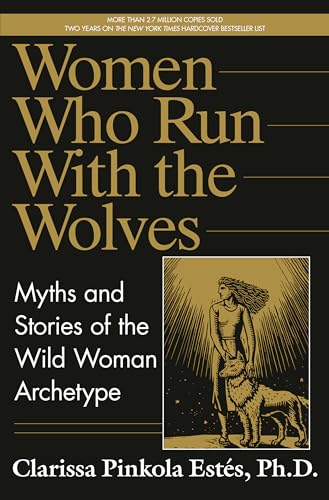
Inhaltsangabe
NEW YORK TIMES BESTSELLER • More than 2.7 million copies sold! • “A deeply spiritual book [that] honors what is tough, smart and untamed in women.”—The Washington Post Book World
Book club pick for Emma Watson’s Our Shared Shelf
Within every woman there lives a powerful force, filled with good instincts, passionate creativity, and ageless knowing. She is the Wild Woman, who represents the instinctual nature of women. But she is an endangered species. For though the gifts of wildish nature belong to us at birth, society’s attempt to “civilize” us into rigid roles has muffled the deep, life-giving messages of our own souls.
In Women Who Run with the Wolves, Dr. Clarissa Pinkola Estés unfolds rich intercultural myths, fairy tales, folk tales, and stories, many from her own traditions, in order to help women reconnect with the fierce, healthy, visionary attributes of this instinctual nature. Through the stories and commentaries in this remarkable book, we retrieve, examine, love, and understand the Wild Woman, and hold her against our deep psyches as one who is both magic and medicine.
Dr. Estés has created a new lexicon for describing the female psyche. Fertile and life-giving, it is a psychology of women in the truest sense, a knowing of the soul.
Die Inhaltsangabe kann sich auf eine andere Ausgabe dieses Titels beziehen.
Über die Autorin bzw. den Autor
Clarissa Pinkola Estés is an American poet, author, and spoken word artist.
Von der hinteren Coverseite
"WOMEN WHO RUN WITH THE WOLVES isn't just another book. It is a gift of profound insight, wisdom, and love. An oracle from one who knows."
Alice Walker
Within every woman there is a wild and natural creature, a powerful force, filled with good instincts, passionate creativity, and ageless knowing. Her name is Wild Woman, but she is an endangered species. Clarissa Pinkola Estes, Ph.D., Jungian analyst and cantadora storyteller shows how women's vitality can be restored through what she calls "psychic archeological digs" into the ruins of the female unconsious. Using multicultural myths, fairy tales, folk tales, and stories, Dr. Estes helps women reconnect with the healthy, instinctual, visionary attributes of the Wild Woman archetype.
Dr. Estes has created a new lexicon for describing the female psyche. Fertile and life-giving, it is a psychology of women in the truest sense, a knowing of the soul.
Aus dem Klappentext
"WOMEN WHO RUN WITH THE WOLVES isn't just another book. It is a gift of profound insight, wisdom, and love. An oracle from one who knows."
Alice Walker
Within every woman there is a wild and natural creature, a powerful force, filled with good instincts, passionate creativity, and ageless knowing. Her name is Wild Woman, but she is an endangered species. Clarissa Pinkola Estes, Ph.D., Jungian analyst and cantadora storyteller shows how women's vitality can be restored through what she calls "psychic archeological digs" into the ruins of the female unconsious. Using multicultural myths, fairy tales, folk tales, and stories, Dr. Estes helps women reconnect with the healthy, instinctual, visionary attributes of the Wild Woman archetype.
Dr. Estes has created a new lexicon for describing the female psyche. Fertile and life-giving, it is a psychology of women in the truest sense, a knowing of the soul.
Auszug. © Genehmigter Nachdruck. Alle Rechte vorbehalten.
Introduction
Singing Over the Bones
Wildlife and the Wild Woman are both endangered species.
Over time, we have seen the feminine instinctive nature looted, driven back, and overbuilt. For long periods it has been mismanaged like the wildlife and the wildlands. For several thousand years, as soon and as often as we turn our backs, it is relegated to the poorest land in the psyche. The spiritual lands of Wild Woman have, throughout history, been plundered or burnt, dens bulldozed, and natural cycles forced into unnatural rhythms to please others.
It’s not by accident that the pristine wilderness of our planet disappears as the understanding of our own inner wild natures fades. It is not so difficult to comprehend why old forests and old women are viewed as not very important resources. It is not such a mystery. It is not so coincidental that wolves and coyotes, bears and wildish women have similar reputations. They all share related instinctual archetypes, and as such, both are erroneously reputed to be ingracious, wholly and innately dangerous, and ravenous.
My life and work as a Jungian psychoanalyst, poet, and cantadora, keeper of the old stories, have taught me that women’s flagging vitality can be restored by extensive “psychic-archeological” digs into the ruins of the female underworld. By these methods we are able to recover the ways of the natural instinctive psyche, and through its personification in the Wild Woman archetype we are able to discern the ways and means of woman’s deepest nature. The modern woman is a blur of activity. She is pressured to be all things to all people. The old knowing is long overdue.
The title of this book, Women Who Run With the Wolves: Myths and Stories of the Wild Woman Archetype, came from my study of wildlife biology, wolves in particular. The studies of the wolves Canis lupus and Canis rufus are like the history of women, regarding both their spiritedness and their travails.
Healthy wolves and healthy women share certain psychic characteristics: keen sensing, playful spirit, and a heightened capacity for devotion. Wolves and women are relational by nature, inquiring, possessed of great endurance and strength. They are deeply intuitive, intensely concerned with their young, their mates and their pack. They are experienced in adapting to constantly changing circumstances; they are fiercely stalwart and very brave.
Yet both have been hounded, harassed, and falsely imputed to be devouring and devious, overly aggressive, of less value than those who are their detractors. They have been the targets of those who would clean up the wilds as well as the wildish environs of the psyche, extincting the instinctual, and leaving no trace of it behind. The predation of wolves and women by those who misunderstand them is strikingly similar.
So that is where the concept of the Wild Woman archetype first crystallized for me, in the study of wolves. I’ve studied other creatures as well, such as bear, elephant, and the soul-birds—butterflies. The characteristics of each species give abundant metaphoric hints into what is knowable about the feminine instinctual psyche.
The wild nature passed through my spirit twice, once by my birth to a passionate Mexican-Spanish bloodline, and later, through adoption by a family of fiery Hungarians. I was raised up near the Michigan state line, surrounded by woodlands, orchards, and farmland and near the Great Lakes. There, thunder and lightning were my main nutrition. Cornfields creaked and spoke aloud at night. Far up in the north, wolves came to the clearings in moonlight, prancing and praying. We could all drink from the same streams without fear.
Although I did not call her by that name then, my love for Wild Woman began when I was a little child. I was an aesthete rather than an athlete, and my only wish was to be an ecstatic wanderer. Rather than chairs and tables, I preferred the ground, trees, and caves, for in those places I felt I could lean against the cheek of God.
The river always called to be visited after dark, the fields needed to be walked in so they could make their rustle-talk. Fires needed to be built in the forest at night, and stories needed to be told outside the hearing of grown-ups.
I was lucky to be brought up in Nature. There, lightning strikes taught me about sudden death and the evanescence of life. Mice litters showed that death was softened by new life. When I unearthed “Indian beads,” fossils from the loam, I understood that humans have been here a long, long time. I learned about the sacred art of self-decoration with monarch butterflies perched atop my head, lightning bugs as my night jewelry, and emerald-green frogs as bracelets.
A wolf mother killed one of her mortally injured pups; this taught a hard compassion and the necessity of allowing death to come to the dying. The fuzzy caterpillars which fell from their branches and crawled back up again taught single-mindedness. Their tickle-walking on my arm taught how skin can come alive. Climbing to the tops of trees taught what sex would someday feel like.
My own post-World War II generation grew up in a time when women were infantilized and treated as property. They were kept as fallow gardens . . . but thankfully there was always wild seed which arrived on the wind. Though what they wrote was unauthorized, women blazed away anyway. Though what they painted went unrecognized, it fed the soul anyway. Women had to beg for the instruments and the spaces needed for their arts, and if none were forthcoming, they made space in trees, caves, woods, and closets.
Dancing was barely tolerated, if at all, so they danced in the forest where no one could see them, or in the basement, or on the way out to empty the trash. Self-decoration caused suspicion. Joyful body or dress increased the danger of being harmed or sexually assaulted. The very clothes on one’s shoulders could not be called one’s own.
It was a time when parents who abused their children were simply called “strict,” when the spiritual lacerations of profoundly exploited women were referred to as “nervous breakdowns,” when girls and women who were tightly girdled, tightly reined, and tightly muzzled were called “nice,” and those other females who managed to slip the collar for a moment or two of life were branded “bad.”
So like many women before and after me, I lived my life as a disguised criatura, creature. Like my kith and kin before me, I swagger staggered in high heels, and I wore a dress and hat to church. But my fabulous tail often fell below my hemline, and my ears twitched until my hat pitched, at the very least, down over both my eyes, and sometimes clear across the room.
I’ve not forgotten the song of those dark years, hambre del alma, the song of the starved soul. But neither have I forgotten the joyous canto hondo, the deep song, the words of which come back to us when we do the work of soulful reclamation.
Like a trail through a forest which becomes more and more faint and finally seems to diminish to a nothing, traditional psychological theory too soon runs out for the creative, the gifted, the deep woman. Traditional psychology is often spare or entirely silent about deeper issues important to women: the archetypal, the intuitive, the sexual and cyclical, the ages of women, a woman’s way, a woman’s knowing, her creative fire. This is what has driven my work on the Wild Woman archetype for over two decades.
A woman’s issues...
„Über diesen Titel“ kann sich auf eine andere Ausgabe dieses Titels beziehen.
Suchergebnisse für Women Who Run with the Wolves: Myths and Stories of...

Foto des Verkäufers
Women Who Run with the Wolves
Anbieter: Dream Books Co., Denver, CO, USA
Verkäuferbewertung 5 von 5 Sternen

Zustand: acceptable. This copy has clearly been enjoyedâ"expect noticeable shelf wear and some minor creases to the cover. Binding is strong, and all pages are legible. May contain previous library markings or stamps. Bestandsnummer des Verkäufers DBV.0345377443.A
Gebraucht kaufen
EUR 6,89
Versand gratis
Versand innerhalb von USA
Versand innerhalb von USA
Anzahl: 2 verfügbar
Beispielbild für diese ISBN
Women Who Run with the Wolves: Myths and Stories of the Wild Woman Archetype
Anbieter: Evergreen Goodwill, Seattle, WA, USA
Verkäuferbewertung 5 von 5 Sternen
hardcover. Zustand: Good. Bestandsnummer des Verkäufers mon0000026052
Gebraucht kaufen
EUR 4,49
EUR 3,45 Versand
Versand innerhalb von USA
Versand innerhalb von USA
Anzahl: 1 verfügbar
Beispielbild für diese ISBN
Women Who Run with the Wolves: Myths and Stories of the Wild Woman Archetype
Anbieter: Evergreen Goodwill, Seattle, WA, USA
Verkäuferbewertung 5 von 5 Sternen
hardcover. Zustand: Acceptable. Bestandsnummer des Verkäufers mon0000136599
Gebraucht kaufen
EUR 4,58
EUR 3,45 Versand
Versand innerhalb von USA
Versand innerhalb von USA
Anzahl: 1 verfügbar
Foto des Verkäufers
Women Who Run with the Wolves
Anbieter: Zoom Books East, Glendale Heights, IL, USA
Verkäuferbewertung 5 von 5 Sternen
Zustand: good. Book is in good condition and may include underlining highlighting and minimal wear. The book can also include "From the library of" labels. May not contain miscellaneous items toys, dvds, etc. . We offer 100% money back guarantee and 24 7 customer service. Bestandsnummer des Verkäufers ZEV.0345377443.G
Gebraucht kaufen
EUR 8,20
Versand gratis
Versand innerhalb von USA
Versand innerhalb von USA
Anzahl: 1 verfügbar
Foto des Verkäufers
Women Who Run with the Wolves
Anbieter: Goodwill, Brooklyn Park, MN, USA
Verkäuferbewertung 4 von 5 Sternen

Zustand: good. All pages and cover are intact including the dust cover, if applicable . Spine may show signs of wear. Pages may include limited notes and highlighting. May include "From the library of" labels. Shrink wrap, dust covers, or boxed set case may be missing. Item may be missing bundled media. Bestandsnummer des Verkäufers 2Y6RUU000JIJ_ns
Gebraucht kaufen
EUR 4,96
EUR 3,45 Versand
Versand innerhalb von USA
Versand innerhalb von USA
Anzahl: 1 verfügbar
Beispielbild für diese ISBN
Women Who Run with the Wolves
Anbieter: arcfoundationthriftstore, Ventura, CA, USA
Verkäuferbewertung 4 von 5 Sternen
hardcover. Zustand: Fair. minimal wear to DJ minimal wear on edges of cover stains on edges of pages gift inscription on inside cover page wear to inside bindingYour purchase benefits those with developmental disabilities to live a better quality of life. Bestandsnummer des Verkäufers 886-050826-KJ-12
Gebraucht kaufen
EUR 4,40
EUR 4,27 Versand
Versand innerhalb von USA
Versand innerhalb von USA
Anzahl: 1 verfügbar
Beispielbild für diese ISBN
Women Who Run with the Wolves: Myths and Stories of the Wild Woman Archetype
Anbieter: Wonder Book, Frederick, MD, USA
Verkäuferbewertung 5 von 5 Sternen
Zustand: Very Good. Very Good condition. Very Good dust jacket. A copy that may have a few cosmetic defects. May also contain light spine creasing or a few markings such as an owner's name, short gifter's inscription or light stamp. Bestandsnummer des Verkäufers H10L-00254
Gebraucht kaufen
EUR 9,03
Versand gratis
Versand innerhalb von USA
Versand innerhalb von USA
Anzahl: 1 verfügbar
Foto des Verkäufers
Women Who Run with the Wolves
Anbieter: Greenworld Books, Arlington, TX, USA
Verkäuferbewertung 5 von 5 Sternen
Zustand: very_good. Fast Free Shipping â" Very Good condition book with a firm cover and clean pages. Shows normal use and some light wear or limited notes markings. A solid, nice copy to enjoy. Bestandsnummer des Verkäufers GWV.0345377443.VG
Gebraucht kaufen
EUR 9,08
Versand gratis
Versand innerhalb von USA
Versand innerhalb von USA
Anzahl: 3 verfügbar
Beispielbild für diese ISBN
Women Who Run with the Wolves: Myths and Stories of the Wild Woman Archetype
Anbieter: The Maryland Book Bank, Baltimore, MD, USA
Verkäuferbewertung 5 von 5 Sternen
hardcover. Zustand: Very Good. Used - Very Good. Bestandsnummer des Verkäufers 7-U-4-0209
Gebraucht kaufen
EUR 6,09
EUR 4,05 Versand
Versand innerhalb von USA
Versand innerhalb von USA
Anzahl: 1 verfügbar
Beispielbild für diese ISBN
Women Who Run with the Wolves: Myths and Stories of the Wild Woman Archetype
Anbieter: Half Price Books Inc., Dallas, TX, USA
Verkäuferbewertung 5 von 5 Sternen
Hardcover. Zustand: Very Good. Connecting readers with great books since 1972! Used books may not include companion materials, and may have some shelf wear or limited writing. We ship orders daily and Customer Service is our top priority! Bestandsnummer des Verkäufers S_478948164
Gebraucht kaufen
EUR 7,11
EUR 3,24 Versand
Versand innerhalb von USA
Versand innerhalb von USA
Anzahl: 1 verfügbar