
Verwandte Artikel zu Becoming Queen Victoria: The Unexpected Rise of Britain'...
Inhaltsangabe
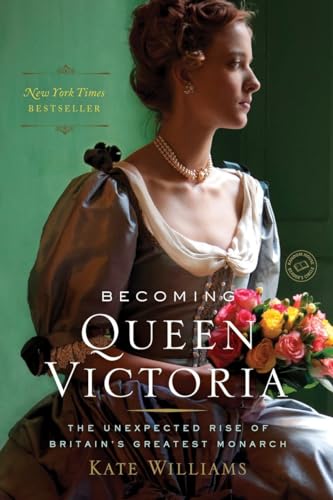
NEW YORK TIMES BESTSELLER • The perfect companion to the PBS Masterpiece series Victoria • A gripping account of Queen Victoria’s rise and early years in power from CNN’s official royal historian
“Kate Williams has perfected the art of historical biography. Her pacy writing is underpinned by the most impeccable scholarship.”—Alison Weir
In 1819, a girl was born to the fourth son of King George III. No one could have expected such an unassuming, overprotected girl to be an effective ruler—yet Queen Victoria would become one of the most powerful monarchs in history.
Writing with novelistic flair and historical precision, Kate Williams reveals a vibrant woman in the prime of her life, while chronicling the byzantine machinations that continued even after the crown was placed on her head. Upon hearing that she had inherited the throne, eighteen-year-old Victoria banished her overambitious mother from the room, a simple yet resolute move that would set the tone for her reign. The queen clashed constantly not only with her mother and her mother’s adviser, the Irish adventurer John Conroy, but with her ministers and even her beloved Prince Albert—all of whom attempted to seize control from her.
Williams lays bare the passions that swirled around the throne—the court secrets, the sexual repression, and the endless intrigue. The result is a grand tale of a woman whose destiny began long before she was born and whose legacy lives on.
Praise for Becoming Queen Victoria
“An informative, entertaining, gossipy tale.”—Publishers Weekly
“A great read . . . With lively writing, Ms. Williams [makes] the story fresh and appealing.”—The Washington Times
“Sparkling, engaging.”—Open Letters Monthly
Die Inhaltsangabe kann sich auf eine andere Ausgabe dieses Titels beziehen.
Über die Autorin bzw. den Autor
Kate Williams studied for her B.A. at Oxford University and went on to earn an M.A. from the University of London and a D.Phil. in history from Oxford. A lecturer and TV consultant in addition to being CNN’s royal historian, she has hosted several documentaries on British television and appears regularly on both American and British networks. Williams is the New York Times bestselling author of three biographies—Ambition and Desire: The Dangerous Life of Josephine Bonaparte, England’s Mistress: The Infamous Life of Emma Hamilton, and Becoming Queen Victoria: The Unexpected Rise of Britain’s Greatest Monarch—as well as a novel, The Pleasures of Men. Her articles and essays have been published in a wide range of books and journals. Kate Williams lives in London.
Auszug. © Genehmigter Nachdruck. Alle Rechte vorbehalten.
Chapter One
“The Most Distressing Feelings of My Heart”
The Prince of Wales was drunk. It was his wedding day, he was disgusted by his bride, and he was the most inebriated he had ever been outside of a brothel. He was in debt to the tune of over £500,000, and the only way to settle his obligations was to marry. But he was shocked by the ugliness of his wife-to-be, Caroline of Brunswick, and thought she smelled like a peasant. In the over?heated, overdecorated Chapel Royal, dressed sumptuously in his customary high-fashion garb, the prince gritted his teeth, took another swig of porter, and tried to focus his mind on the showers of money he would receive.
The marriage of the thirty-two-year-old Prince of Wales had been a subject of debate for years. By 1794, ministers and courtiers were desperate for cheering news. Great Britain was mired in despond and recession. War with France had strained the country’s finances and increased the price of imports, and the gentry lived in fear of the English mob setting off another French Revolution in England. “Never was there seen so gloomy a Birth-Day in this country as that of yesterday,” bleated the Morning Post in January, referring to the queen’s birthday. “Care and despondency seemed to sit on every brow, the affected smiles of Ministers shewed that disappointment and despondency resided in their hearts, and instead of being a day of joyous gratulations, a settled melancholy and dread apprehension for the safety of the Nation pervaded the Assembly.”
The English needed a national event to lift their spirits, and the ideal solution was a royal wedding. But George was a demanding suitor. After nearly seventeen years of chasing the most beautiful women in London, he was easily bored, made unhappier by unlimited choice. Few, if any, of Europe’s shy, bug-eyed princesses could have satisfied him. And yet, despite his own exacting standards, he was not the handsome young charmer he had once been. Perched on top of his flabby body was a round, rather saturnine face, and his once fine complexion had turned florid. Still, he had striking gray eyes, a mass of light brown hair, superb if flamboyant dress sense, and great charisma. When the heir to the throne was in the mood, no one could fail to be charmed by his exquisite manners and intensely flattering conversation.
The prince had always been hungry for affectionate sympathy. At the tender age of sixteen, he had fallen hopelessly in love with his sisters’ twenty-three-year-old assistant governess, Mary Hamilton, besieging her with letters. Seven years later, in 1785, he staged an elaborate charade by pretending he was on his deathbed in order to persuade the devout Catholic widow Maria Fitzherbert to marry him. Blonde, bosomy, and beaky, she was the only woman who had resisted him sexually, but once he had married her and conquered her in bed, he lost interest. Rele?gated to the status of morganatic, unofficial wife, since George III had not sanctioned the union, Mrs. Fitzherbert was soon made miserable by her husband’s philandering and spendthrift nature. As the diarist Thomas Raikes recorded, the prince was “young and impetuous and boisterous in his character, and very much addicted to the pleasures of the table.” He courted other women and borrowed money from Mrs. Fitzherbert. And then, in 1793, the clever, unprincipled, and fascinating Lady Jersey began to exert her charms.
Born in 1753, the daughter of the Irish bishop of Raphoe, Frances Twysden was seventeen when she was married to the thirty-five-year?-old Earl of Jersey. The prince first fell in love with her when she was twenty-nine and he twenty, but she batted him away. Twelve years later, however, once he was presiding over his own gilded court in St. James’s, she was eager to charm him. At forty-one, she was nearly ten years his senior and already a grandmother, but she possessed, according to the diarist Nathaniel Wraxall, “irresistible seduction and fascination.” The prince was soon captivated by her brittle, aloof glamour.
In the spring of 1794, the Court of Privileges decreed null and void the marriage of the prince’s younger brother Augustus to Lady Augusta Murray. To the Prince of Wales, the court’s decision seemed to give him permission to discard his wife in order to indulge himself with Lady Jersey. Catholic commoner Maria was even less suitable than the Protes?tant, aristocratic Lady Augusta. In June, when Mrs. Fitzherbert was dining with the Duke of Clarence and his mistress, Dora Jordan, she received an urgent letter. She opened it to find her lover informing her that their relationship was at an end. Her grief was only intensified by another letter, delivered a fortnight later, in which the prince justified his actions like a spoiled schoolboy. He, by contrast, thought he had acted very prop?erly toward his unofficial wife. As he fussed to Captain Jack Willet Payne, friend and member of his household:
To tell you what it has cost me to write, and to rip up every and the most distressing feelings of my heart . . . which have so long lodged there is impossible to express. God bless you my friend; whichever way this unpleasant affair now ends I have nothing to reproach myself with.
Opinion was sympathetic to Mrs. Fitzherbert, even though it was a time when Catholics were often reviled. The caricaturist Isaac Cruikshank produced an amusing cartoon of her fleeing in tears with her £6,000 annuity, as the prince fondles a skinny, wrinkly Lady Jersey. Still, the aristocracy did not waste too much time feeling sorry for the abandoned wife and hurried to flatter the new royal mistress.
Lady Jersey did not want her emotional prince falling in love with another Mrs. Fitzherbert or becoming dependent on the lady herself once more. She decided to secure her own position by encouraging her lover to enter into an arranged marriage. The prince was amenable to her persuasions, excited by the prospect of an expanded income on marriage, and payment of his horrific debts. In 1787, Parliament had been induced to pay off the most onerous sums and increase his allowance, but he had continued to spend wildly and his debts had shot up once more. By the time he fell in love with Lady Jersey, tradesmen were refusing to deal with him and creditors harassed him in the street. Finally realizing that Parliament would not bail him out again, the prince decided to marry and informed the king of his decision. He then promptly cast himself in the role of noble self-sacrificer, boasting how he had relinquished happiness and a love match to produce a royal heir. As he exclaimed when shown the list of possible candidates, “One damned German frau is as good as another.”
Princesses across Europe were practicing their English, but sly Lady Jersey had her eye on one particular German frau. She encouraged her lover to think favorably of his first cousin, Princess Caroline Amelia Elizabeth of Brunswick-Wolfenbüttel. Six years younger than the prince at twenty-six, she was immature and, gossip had it, fat, tactless, and vulgar. She had been an indulged child in Brunswick, a small but licen?tious court where the duke’s mistress was openly acknowledged. Then, as a teenager, she had been strictly disciplined, hardly ever allowed to dine with her mother, ordered upstairs if there were guests, and kept apart from her brothers. Thanks to such an upbringing, she was high-spirited, rebellious, attention seeking, and rude. She had thick blonde hair, fair skin, and lively blue eyes, but her boisterous, abrupt manner had put off potential suitors. When George’s mother, Queen Charlotte, heard some years previously that her brother Charles, Duke of Mecklenburg-Strelitz, was considering marriage with Princess...
„Über diesen Titel“ kann sich auf eine andere Ausgabe dieses Titels beziehen.
Weitere beliebte Ausgaben desselben Titels

Suchergebnisse für Becoming Queen Victoria: The Unexpected Rise of Britain'...

Foto des Verkäufers
Becoming Queen Victoria: The Unexpected Rise of Britain's Greatest Monarch
Anbieter: Zoom Books East, Glendale Heights, IL, USA
Verkäuferbewertung 5 von 5 Sternen

Zustand: very_good. Book is in very good condition and may include minimal underlining highlighting. The book can also include "From the library of" labels. May not contain miscellaneous items toys, dvds, etc. . We offer 100% money back guarantee and 24 7 customer service. Bestandsnummer des Verkäufers ZEV.034547239X.VG
Gebraucht kaufen
EUR 4,25
Versand gratis
Versand innerhalb von USA
Versand innerhalb von USA
Anzahl: 1 verfügbar
Beispielbild für diese ISBN
Becoming Queen Victoria: The Unexpected Rise of Britain's Greatest Monarch
Anbieter: Your Online Bookstore, Houston, TX, USA
Verkäuferbewertung 5 von 5 Sternen
Paperback. Zustand: Fair. Bestandsnummer des Verkäufers 034547239X-4-24054060
Gebraucht kaufen
EUR 4,33
Versand gratis
Versand innerhalb von USA
Versand innerhalb von USA
Anzahl: 1 verfügbar
Beispielbild für diese ISBN
Becoming Queen Victoria: The Unexpected Rise of Britain's Greatest Monarch
Anbieter: World of Books (was SecondSale), Montgomery, IL, USA
Verkäuferbewertung 5 von 5 Sternen
Zustand: Good. Item in good condition. Textbooks may not include supplemental items i.e. CDs, access codes etc. Bestandsnummer des Verkäufers 00105452876
Gebraucht kaufen
EUR 5,33
Versand gratis
Versand innerhalb von USA
Versand innerhalb von USA
Anzahl: 2 verfügbar
Beispielbild für diese ISBN
Becoming Queen Victoria: The Unexpected Rise of Britain's Greatest Monarch
Anbieter: ThriftBooks-Reno, Reno, NV, USA
Verkäuferbewertung 5 von 5 Sternen
Paperback. Zustand: Good. No Jacket. Pages can have notes/highlighting. Spine may show signs of wear. ~ ThriftBooks: Read More, Spend Less. Bestandsnummer des Verkäufers G034547239XI3N00
Gebraucht kaufen
EUR 5,92
Versand gratis
Versand innerhalb von USA
Versand innerhalb von USA
Anzahl: 1 verfügbar
Beispielbild für diese ISBN
Becoming Queen Victoria: The Unexpected Rise of Britain's Greatest Monarch
Anbieter: ThriftBooks-Phoenix, Phoenix, AZ, USA
Verkäuferbewertung 5 von 5 Sternen
Paperback. Zustand: Good. No Jacket. Pages can have notes/highlighting. Spine may show signs of wear. ~ ThriftBooks: Read More, Spend Less. Bestandsnummer des Verkäufers G034547239XI3N00
Gebraucht kaufen
EUR 5,92
Versand gratis
Versand innerhalb von USA
Versand innerhalb von USA
Anzahl: 1 verfügbar
Beispielbild für diese ISBN
Becoming Queen Victoria: The Unexpected Rise of Britain's Greatest Monarch
Anbieter: ThriftBooks-Atlanta, AUSTELL, GA, USA
Verkäuferbewertung 5 von 5 Sternen
Paperback. Zustand: Fair. No Jacket. Readable copy. Pages may have considerable notes/highlighting. ~ ThriftBooks: Read More, Spend Less. Bestandsnummer des Verkäufers G034547239XI5N00
Gebraucht kaufen
EUR 5,92
Versand gratis
Versand innerhalb von USA
Versand innerhalb von USA
Anzahl: 1 verfügbar
Beispielbild für diese ISBN
Becoming Queen Victoria: The Unexpected Rise of Britain's Greatest Monarch
Anbieter: ThriftBooks-Dallas, Dallas, TX, USA
Verkäuferbewertung 5 von 5 Sternen
Paperback. Zustand: Good. No Jacket. Pages can have notes/highlighting. Spine may show signs of wear. ~ ThriftBooks: Read More, Spend Less. Bestandsnummer des Verkäufers G034547239XI3N00
Gebraucht kaufen
EUR 5,92
Versand gratis
Versand innerhalb von USA
Versand innerhalb von USA
Anzahl: 1 verfügbar
Beispielbild für diese ISBN
Becoming Queen Victoria: The Unexpected Rise of Britain's Greatest Monarch
Anbieter: ThriftBooks-Atlanta, AUSTELL, GA, USA
Verkäuferbewertung 5 von 5 Sternen
Paperback. Zustand: Good. No Jacket. Pages can have notes/highlighting. Spine may show signs of wear. ~ ThriftBooks: Read More, Spend Less. Bestandsnummer des Verkäufers G034547239XI3N00
Gebraucht kaufen
EUR 5,92
Versand gratis
Versand innerhalb von USA
Versand innerhalb von USA
Anzahl: 1 verfügbar
Beispielbild für diese ISBN
Becoming Queen Victoria: The Unexpected Rise of Britain's Greatest Monarch
Anbieter: HPB-Diamond, Dallas, TX, USA
Verkäuferbewertung 5 von 5 Sternen
Paperback. Zustand: Very Good. Connecting readers with great books since 1972! Used books may not include companion materials, and may have some shelf wear or limited writing. We ship orders daily and Customer Service is our top priority! Bestandsnummer des Verkäufers S_464745933
Gebraucht kaufen
EUR 3,56
EUR 3,24 Versand
Versand innerhalb von USA
Versand innerhalb von USA
Anzahl: 1 verfügbar
Beispielbild für diese ISBN
Becoming Queen Victoria : The Unexpected Rise of Britain's Greatest Monarch
Verlag:
Random House Publishing Group, 2016
ISBN 10: 034547239X
ISBN 13: 9780345472397
Gebraucht
Softcover
Anbieter: Better World Books, Mishawaka, IN, USA
Verkäuferbewertung 5 von 5 Sternen
Zustand: Good. Pages intact with minimal writing/highlighting. The binding may be loose and creased. Dust jackets/supplements are not included. Stock photo provided. Product includes identifying sticker. Better World Books: Buy Books. Do Good. Bestandsnummer des Verkäufers 11402665-6
Gebraucht kaufen
EUR 6,98
Versand gratis
Versand innerhalb von USA
Versand innerhalb von USA
Anzahl: 1 verfügbar