
Verwandte Artikel zu We Two: Victoria and Albert: Rulers, Partners, Rivals
Inhaltsangabe
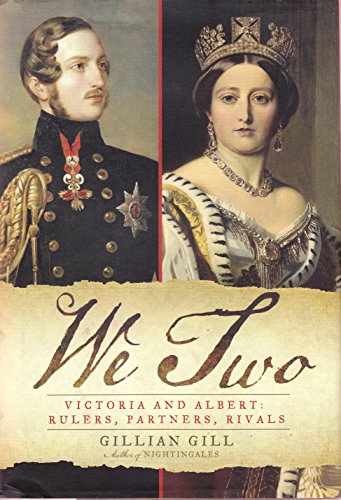
A twenty-first-century perspective on a giant of English history, Queen Victoria, and her marriage to German Prince Albert—timed to benefit from the release of the upcoming film The Young Victoria
Known as one of history’s most powerful and happily married couples, Victoria and Albert together ruled the British Empire for twenty years at the peak of its strength in mid-nineteenth century. The standard account of their union is that young Victoria, married at nineteen, was only too happy to hand over the reins of power to her husband, willingly taking a back seat to bear and raise their nine children.
A well-known chronicler of the lives of achieving women, author Gillian Gill rejects this outdated interpretation, retelling the couple’s story from a fresh, modern perspective. Victoria hated pregnancy, and as much as she loved Albert, she never let him impinge on her power. Gill makes the case that Albert’s early death was the reason for the marriage’s great success, leaving his widow another forty years on the throne to rule as sole monarch.
Gill’s last book, Nightingales, about the life and times of Florence Nightingale, was called “vivid and completely readable” by The New York Times Book Review. She brings the same engaging storytelling to this vibrant, important new biography.
Die Inhaltsangabe kann sich auf eine andere Ausgabe dieses Titels beziehen.
Über die Autorin bzw. den Autor
GILLIAN GILL holds a Ph.D. from Cambridge University, and has taught at Northeastern University, Wellesley College, Yale University, and Harvard University. Born in England, she now lives in Bedford, Massachusetts. She is also the author of Nightingales and biographies of Agatha Christie and Mary Baker Eddy.
Auszug. © Genehmigter Nachdruck. Alle Rechte vorbehalten.
Chapter One
Charlotte and Leopold
The folktales of charles perrault and the grimm brothers are surprisingly reliable about the lives of kings and queens in old Europe. Those tales are full of strange and dangerous royal courtships. Kings and queens are unable to conceive a normal child. Queens die in childbirth. Orphan princesses are sorely beset by uncaring fathers, wicked stepmothers, and villainous uncles, and only seven dwarfs or a magic donkey’s skin can save them.
The solutions are magical, but the problems were not fantasies. European kings and queens were in fact often neglected or abused in childhood. As adults they were plagued by the imperative to find a spouse and produce an heir. They then frequently repeated the cycle of neglect and abuse with their own children.
Before Princess Victoria of Kent was born, there lived a Princess Charlotte, her first cousin and very like her in character and ability. If Charlotte had lived and had children, a Saxe-Coburg dynasty would have taken hold in England in 1817, not 1840, and history books might well chronicle the joint reign of Charlotte and Leopold. But Charlotte was a princess that no fairy godmother came to save.
Charlotte’s parents, George, Prince of Wales (later prince regent, and then King George IV), and Princess Caroline of Brunswick, were first cousins. They had never seen one another before the eve of their wedding. George loathed Caroline on sight and consummated the marriage in a state of insulting inebriation. The two separated nine months before the birth of their only child and thereafter waged an increasingly ugly and public war on one another. He accused her, not unjustly, of being dirty, uncouth, and garrulous. She accused him, not unjustly, of promiscuity, malice, and neglect. Unloved and uncared for, Charlotte was a pawn in her parents’ acrimonious marital game.
Princess Charlotte emerged from this difficult childhood a woman of considerable abilities, if little education, and possessed of unusual courage and resolution. Wild, headstrong, opinionated, and self- absorbed, Charlotte yet longed for affection and intimacy. At eighteen she had few illusions and fewer friends, and longed to throw off the financial and social straitjacket of her life as an unmarried princess. She was anxious to avoid the fate of her royal aunts, the six talented and beautiful daughters of King George III who as young women were tethered to their dysfunctional parents and barred from marriage. Three in middle age finally escaped into the arms of grotesque bridegrooms, but frustration and boredom gnawed away at the lives of all these princesses.
Like the heroines of so many English novels of the period, Princess Charlotte saw marriage as the answer to her problems. She knew that, as second in line of succession to the English throne after her father, she was the most eligible partie in Europe. She also knew that her acceptable marital choices were limited to a handful of unknown foreigners. As two of her spinster aunts had discovered to their cost, tradition and the Royal Marriages Act of 1772 prevented the marriage of an English royal princess with any man, duke or drover, born in the United Kingdom of Great Britain and Ireland. It was common practice for princesses to be married to men they had never met, so Charlotte would be lucky to get a glimpse of her suitors at a ball or state dinner.
Charlotte’s father the prince regent also saw marriage as the solution to the problems he had with his daughter. He doted on tiny, cute girls, but Charlotte resembled her large, loud, voluptuous mother, and he had never loved her. Worse, Charlotte was popular with the English people, while he was greeted by catcalls and averted faces when he made a rare public appearance. The regent planned to marry his daughter off to the Prince of Orange, a distant cousin and the heir to the throne of Holland, England’s most ancient ally. Orange was, admittedly, a drunken lout, but Charlotte’s aunts had been grateful to marry worse.
At first Charlotte agreed to the betrothal. Then, astonishingly, she broke off the engagement and tried to run away from home. Perhaps she had read some novels and believed that young women had a right to choose their husbands. More probably she had made a rational assessment of what a Dutch marriage would mean to her. As Princess of Orange, she would be obliged to spend at least half the year in Holland. While she was abroad, her father might finally obtain the divorce he wanted and then marry a young princess. If a healthy stepbrother were born, Charlotte would no longer be her father’s heir. Though she had little love and no respect for her mother, the princess considered it essential to remain in England to support her own and her mother’s interests.
Charlotte’s unexpected and stubborn refusal of the Dutch prince angered her father, and she found herself a virtual prisoner. Marriage became even more desirable. She was in a hurry to find an eligible European prince properly subservient to her needs and wishes and willing to live in England. Charlotte made a strong play for Prince Frederick of Prussia, whom she found attractive, but he proved unresponsive. Then, as if by magic, at a ball given by her aunt the Duchess of York, another foreign prince appeared before Charlotte. He was charming, and his bloodline was impeccable. He had served valiantly in the recent wars against Napoleon and looked magnificent in his Russian cavalry officer’s uniform. If she deigned to marry him, he would owe her everything. His name was Leopold of Saxe-Coburg- Saalfeld.
The seventh child and third son of a bankrupt German princeling, Leopold, ambitious, talented, and handsome, was a youngest son right out of a fairy tale. In 1815 he came to London in the tsar’s entourage. Officially he was celebrating the defeat of Napoleon at Waterloo. Unofficially he was wooing the King of England’s only granddaughter. It was a bold move, supremely confident and coldly calculated by a man who had nothing to lose by aiming high. With the war over, Leopold was living from hand to mouth, since his private fortune amounted to some two hundred pounds a year. Sponsored by his imperial Russian friends, Leopold had uniforms made on credit, borrowed his brother-in-law Mensdorff’s dashing carriage, and set off for London. He was obliged to take rooms over a tradesman’s shop and still had trouble paying the rent. But he had an entrée to all the magnificent festivities organized by the prince regent and his brothers to celebrate the peace. Just as he had hoped, Princess Charlotte noticed him.
Now Leopold played a waiting game. He returned to the Continent and corresponded with Charlotte behind her father’s back. This correspondence was made possible through the good offices of Charlotte’s uncle the Duke of Kent, who was everlastingly at odds with his eldest brother, the regent. There followed a year of negotiations at a distance, during which Leopold aroused the princess’s passions by refusing to return to England. At last, wearied by his daughter’s intransigence, the prince regent agreed to accept Leopold as a son-in-law. Receiving this fabulous news from Lord Castlereagh, the English foreign secretary, Leopold wrapped himself in a long coat, a feather boa, and a fur muff, and posted full tilt across Europe. In the kind of proof of passion women find hard to resist, he arrived in London from Berlin, exhausted and ill, in the staggering time of three and a half weeks.
The wedding of Charlotte and Leopold was a fairy-tale affair for the whole nation, rather like the marriage of Charles, Prince of Wales, and Lady Diana Spencer in 1981, but with an interesting reversal of gender roles. Charlotte at nineteen, tall, gawky, and...
„Über diesen Titel“ kann sich auf eine andere Ausgabe dieses Titels beziehen.
Suchergebnisse für We Two: Victoria and Albert: Rulers, Partners, Rivals

Foto des Verkäufers
We Two: Victoria and Albert: Rulers, Partners, Rivals
Anbieter: Zoom Books Company, Lynden, WA, USA
Verkäuferbewertung 5 von 5 Sternen

Zustand: very_good. Book is in very good condition and may include minimal underlining highlighting. The book can also include "From the library of" labels. May not contain miscellaneous items toys, dvds, etc. . We offer 100% money back guarantee and 24 7 customer service. Bestandsnummer des Verkäufers ZBV.0345484053.VG
Gebraucht kaufen
EUR 4,00
Versand gratis
Versand innerhalb von USA
Versand innerhalb von USA
Anzahl: 1 verfügbar
Foto des Verkäufers
We Two: Victoria and Albert: Rulers, Partners, Rivals
Anbieter: Greenworld Books, Arlington, TX, USA
Verkäuferbewertung 5 von 5 Sternen
Zustand: very_good. Fast Free Shipping â" Very Good condition book with a firm cover and clean pages. Shows normal use and some light wear or limited notes markings. A solid, nice copy to enjoy. Bestandsnummer des Verkäufers GWV.0345484053.VG
Gebraucht kaufen
EUR 5,19
Versand gratis
Versand innerhalb von USA
Versand innerhalb von USA
Anzahl: 1 verfügbar
Beispielbild für diese ISBN
We Two: Victoria and Albert: Rulers, Partners, Rivals
Anbieter: World of Books (was SecondSale), Montgomery, IL, USA
Verkäuferbewertung 5 von 5 Sternen
Hardback. Zustand: Good. NEW YORK TIMES BESTSELLER A] delectable double bio . . . Talk about Victoria's secret. . . . A fascinating portrait of a genuine love match, but one in which the partners dealt with surprisingly modern issues. --USA Today It was the most influential marriage of the nineteenth century--and one of history' s most enduring love stories. Traditional biographies tell us that Queen Victoria inherited the throne as a na ve teenager, when the British Empire was at the height of its power, and seemed doomed to find failure as a monarch and misery as a woman until she married her German cousin Albert and accepted him as her lord and master. Now renowned chronicler Gillian Gill turns this familiar story on its head, revealing a strong, feisty queen and a brilliant, fragile prince working together to build a family based on support, trust, and fidelity, qualities neither had seen much of as children. The love affair that emerges is far more captivating, complex, and relevant than that depicted in any previous account. The epic relationship began poorly. The cousins first met as teenagers for a few brief, awkward, chaperoned weeks in 1836. At seventeen, charming rather than beautiful, Victoria already showed signs of wanting her own way. Albert, the boy who had been groomed for her since birth, was chubby, self-absorbed, and showed no interest in girls, let alone this princess. So when they met again in 1839 as queen and presumed prince-consort-to-be, neither had particularly high hopes. But the queen was delighted to discover a grown man, refined, accomplished, and whiskered. Albert is beautiful Victoria wrote, and she proposed just three days later. As Gill reveals, Victoria and Albert entered their marriage longing for intimate companionship, yet each was determined to be the ruler. This dynamic would continue through the years--each spouse, headstrong and impassioned, eager to lead the marriage on his or her own terms. For two decades, Victoria and Albert engaged in a very public contest for dominance. Against all odds, the marriage succeeded, but it was always a work in progress. And in the end, it was Albert's early death that set the Queen free to create the myth of her marriage as a peaceful idyll and her husband as Galahad, pure and perfect. As Gill shows, the marriage of Victoria and Albert was great not because it was perfect but because it was passionate and complicated. Wonderfully nuanced, surprising, often acerbic--and informed by revealing excerpts from the pair's journals and letters--We Two is a revolutionary portrait of a queen and her prince, a fascinating modern perspective on a couple who have become a legend. Bestandsnummer des Verkäufers 00105980526
Gebraucht kaufen
EUR 5,24
Versand gratis
Versand innerhalb von USA
Versand innerhalb von USA
Anzahl: 5 verfügbar
Beispielbild für diese ISBN
We Two: Victoria and Albert: Rulers, Partners, Rivals
Anbieter: World of Books Inc, Montgomery, IL, USA
Verkäuferbewertung 4 von 5 Sternen

Hardback. Zustand: Good. NEW YORK TIMES BESTSELLER A] delectable double bio . . . Talk about Victoria's secret. . . . A fascinating portrait of a genuine love match, but one in which the partners dealt with surprisingly modern issues. --USA Today It was the most influential marriage of the nineteenth century--and one of history' s most enduring love stories. Traditional biographies tell us that Queen Victoria inherited the throne as a na ve teenager, when the British Empire was at the height of its power, and seemed doomed to find failure as a monarch and misery as a woman until she married her German cousin Albert and accepted him as her lord and master. Now renowned chronicler Gillian Gill turns this familiar story on its head, revealing a strong, feisty queen and a brilliant, fragile prince working together to build a family based on support, trust, and fidelity, qualities neither had seen much of as children. The love affair that emerges is far more captivating, complex, and relevant than that depicted in any previous account. The epic relationship began poorly. The cousins first met as teenagers for a few brief, awkward, chaperoned weeks in 1836. At seventeen, charming rather than beautiful, Victoria already showed signs of wanting her own way. Albert, the boy who had been groomed for her since birth, was chubby, self-absorbed, and showed no interest in girls, let alone this princess. So when they met again in 1839 as queen and presumed prince-consort-to-be, neither had particularly high hopes. But the queen was delighted to discover a grown man, refined, accomplished, and whiskered. Albert is beautiful Victoria wrote, and she proposed just three days later. As Gill reveals, Victoria and Albert entered their marriage longing for intimate companionship, yet each was determined to be the ruler. This dynamic would continue through the years--each spouse, headstrong and impassioned, eager to lead the marriage on his or her own terms. For two decades, Victoria and Albert engaged in a very public contest for dominance. Against all odds, the marriage succeeded, but it was always a work in progress. And in the end, it was Albert's early death that set the Queen free to create the myth of her marriage as a peaceful idyll and her husband as Galahad, pure and perfect. As Gill shows, the marriage of Victoria and Albert was great not because it was perfect but because it was passionate and complicated. Wonderfully nuanced, surprising, often acerbic--and informed by revealing excerpts from the pair's journals and letters--We Two is a revolutionary portrait of a queen and her prince, a fascinating modern perspective on a couple who have become a legend. Bestandsnummer des Verkäufers CIN0345484053G
Gebraucht kaufen
EUR 7,05
Versand gratis
Versand innerhalb von USA
Versand innerhalb von USA
Anzahl: 5 verfügbar
Beispielbild für diese ISBN
We Two: Victoria and Albert: Rulers, Partners, Rivals
Anbieter: ThriftBooks-Phoenix, Phoenix, AZ, USA
Verkäuferbewertung 5 von 5 Sternen
Hardcover. Zustand: Very Good. No Jacket. Former library book; May have limited writing in cover pages. Pages are unmarked. ~ ThriftBooks: Read More, Spend Less. Bestandsnummer des Verkäufers G0345484053I4N10
Gebraucht kaufen
EUR 7,19
Versand gratis
Versand innerhalb von USA
Versand innerhalb von USA
Anzahl: 1 verfügbar
Beispielbild für diese ISBN
We Two: Victoria and Albert: Rulers, Partners, Rivals
Anbieter: ThriftBooks-Reno, Reno, NV, USA
Verkäuferbewertung 5 von 5 Sternen
Hardcover. Zustand: Good. No Jacket. Pages can have notes/highlighting. Spine may show signs of wear. ~ ThriftBooks: Read More, Spend Less. Bestandsnummer des Verkäufers G0345484053I3N00
Gebraucht kaufen
EUR 7,19
Versand gratis
Versand innerhalb von USA
Versand innerhalb von USA
Anzahl: 1 verfügbar
Beispielbild für diese ISBN
We Two: Victoria and Albert: Rulers, Partners, Rivals
Anbieter: ThriftBooks-Phoenix, Phoenix, AZ, USA
Verkäuferbewertung 5 von 5 Sternen
Hardcover. Zustand: Good. No Jacket. Missing dust jacket; Pages can have notes/highlighting. Spine may show signs of wear. ~ ThriftBooks: Read More, Spend Less. Bestandsnummer des Verkäufers G0345484053I3N01
Gebraucht kaufen
EUR 7,19
Versand gratis
Versand innerhalb von USA
Versand innerhalb von USA
Anzahl: 1 verfügbar
Beispielbild für diese ISBN
We Two: Victoria and Albert: Rulers, Partners, Rivals
Anbieter: ThriftBooks-Dallas, Dallas, TX, USA
Verkäuferbewertung 5 von 5 Sternen
Hardcover. Zustand: Good. No Jacket. Former library book; Pages can have notes/highlighting. Spine may show signs of wear. ~ ThriftBooks: Read More, Spend Less. Bestandsnummer des Verkäufers G0345484053I3N10
Gebraucht kaufen
EUR 7,23
Versand gratis
Versand innerhalb von USA
Versand innerhalb von USA
Anzahl: 1 verfügbar
Beispielbild für diese ISBN
We Two: Victoria and Albert: Rulers, Partners, Rivals
Anbieter: ThriftBooks-Atlanta, AUSTELL, GA, USA
Verkäuferbewertung 5 von 5 Sternen
Hardcover. Zustand: Fair. No Jacket. Former library book; Readable copy. Pages may have considerable notes/highlighting. ~ ThriftBooks: Read More, Spend Less. Bestandsnummer des Verkäufers G0345484053I5N10
Gebraucht kaufen
EUR 7,23
Versand gratis
Versand innerhalb von USA
Versand innerhalb von USA
Anzahl: 1 verfügbar
Beispielbild für diese ISBN
We Two: Victoria and Albert: Rulers, Partners, Rivals
Anbieter: ThriftBooks-Atlanta, AUSTELL, GA, USA
Verkäuferbewertung 5 von 5 Sternen
Hardcover. Zustand: Good. No Jacket. Pages can have notes/highlighting. Spine may show signs of wear. ~ ThriftBooks: Read More, Spend Less. Bestandsnummer des Verkäufers G0345484053I3N00
Gebraucht kaufen
EUR 7,23
Versand gratis
Versand innerhalb von USA
Versand innerhalb von USA
Anzahl: 1 verfügbar