
Verwandte Artikel zu Crime of Privilege: A Novel
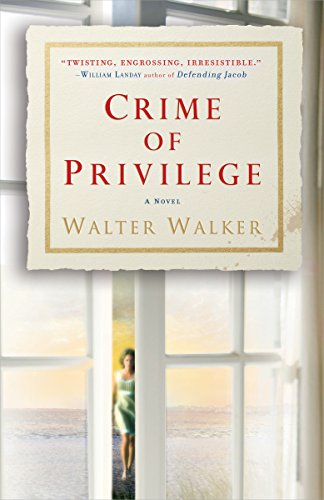
Inhaltsangabe
NAMED ONE OF THE BEST BOOKS OF THE YEAR BY THE SACRAMENTO BEE
In the tradition of Scott Turow, William Landay, and Nelson DeMille, Crime of Privilege is a stunning thriller about power, corruption, and the law in America—and the dangerous ways they come together.
A murder on Cape Cod. A rape in Palm Beach.
All they have in common is the presence of one of America’s most beloved and influential families. But nobody is asking questions. Not the police. Not the prosecutors. And certainly not George Becket, a young lawyer toiling away in the basement of the Cape & Islands district attorney’s office. George has always lived at the edge of power. He wasn’t born to privilege, but he understands how it works and has benefitted from it in ways he doesn’t like to admit. Now, an investigation brings him deep inside the world of the truly wealthy—and shows him what a perilous place it is.
Years have passed since a young woman was found brutally slain at an exclusive Cape Cod golf club, and no one has ever been charged. Cornered by the victim’s father, George can’t explain why certain leads were never explored—leads that point in the direction of a single family—and he agrees to look into it.
What begins as a search through the highly stratified layers of Cape Cod society, soon has George racing from Idaho to Hawaii, Costa Rica to France to New York City. But everywhere he goes he discovers people like himself: people with more secrets than answers, people haunted by a decision years past to trade silence for protection from life’s sharp edges. George finds his friends are not necessarily still friends and a spouse can be unfaithful in more ways than one. And despite threats at every turn, he is driven to reconstruct the victim’s last hours while searching not only for a killer but for his own redemption.
Praise for Crime of Privilege
“Twisting, engrossing, irresistible.”—William Landay, author of Defending Jacob
“Stunning . . . an outstanding crime story.”—Library Journal (starred review)
“A terrifically entertaining race of a read . . . jam-packed with intelligence, insight, morality and heart. Top-notch and highly recommended!”—John Lescroart
“A gripping thriller . . . an unsettling, multilayered look at the insidious symbiosis between power and corruption.”—Maclean’s
“A legal thriller and a murder mystery cloaked in pure enjoyment . . . The author’s wit, dry and cutting, is razor-sharp.”—Bookreporter
“An engaging, very well-paced novel . . . exciting and unpredictable.”—Examiner.com
Die Inhaltsangabe kann sich auf eine andere Ausgabe dieses Titels beziehen.
Über die Autorin bzw. den Autor
Walter Walker is a trial lawyer in San Francisco. He lives in Marin County, California, and on Cape Cod.
Auszug. © Genehmigter Nachdruck. Alle Rechte vorbehalten.
PALM BEACH, March 1996
1.
Almost everyone had heard of the family’s mansion on Ocean Boulevard, but very few had been there. A large part of the reason I had agreed to go to Florida, to spend my spring break with McFetridge, was simply to get inside. We were staying at his parents’ place, down the road in Delray, but every night we were invited to a party or a gathering somewhere, and this was the crowning event, cocktails at the iconic Spanish Revival house on the beach, where, it was promised, the Senator himself would be present.
I would speak to him as a guest of a guest in his house. Senator, yes, George Becket here. I admire your work on . . . What did I admire his work on? Any liberal cause, I suppose. I was twenty-two and filled with grandiose ideas. And then I was there, in his house, surrounded by people wearing silk and linen for a supposedly informal gathering where everyone acted as though it was normal for men in white jackets to park your car and women in black pinafores to serve champagne in crystal flutes carried on silver trays; and I had no opportunity to say anything more than, “Hello, Senator, thank you for having me.”
I had entered in McFetridge’s wake and we had been greeted by several family members who were not so much stationed in the foyer as conversing in its vicinity. I stood to the side while McFetridge went about kissing women’s cheeks and shaking men’s hands.
McFetridge seemed to know everyone. He knew them from a sailing race he did each May between Hyannisport and Nantucket, from Christmas-week ski trips to Aspen, from clubs to which his parents belonged, from prep school. “Nan . . . Eastie . . . Harlan . . . this is my friend Georgie.”
I had gone to prep school, too, but not Hotchkiss, St. Paul’s, Groton, or even Milton. In my brief exchanges with his friends, I found myself mentioning the dominance of my school on the athletic fields, courts, tracks, and pools of New England. We didn’t even play their schools. We played Andover, Exeter, Choate, Deerfield, and beat them all. I caught looks that said, You want to talk about that? And I would scramble for something else to say. “You guys always had a good crew team, didn’t you? Going to Henley this year?” Sometimes I would be ignored, sometimes abandoned. George thought he was having a conversation one moment; George was all by himself the next.
I wandered through large rooms with red tiled floors, nodding at everyone who caught my eye and smiling at those who seemed to be wondering who I was. There were pictures on the walls, pictures in bookcases, pictures on shelves and on top of the grand piano. Pictures of members of the family with the pope, Churchill, Desmond Tutu. I wondered if Desmond Tutu had the same picture in his house. I wondered if the pope did.
Eventually I found myself standing next to a striking young woman who seemed similarly out of touch with everyone else at the party. She had thick black hair that swept past her shoulders and green eyes that probably sparkled when they weren’t so glazed with drink. Kendrick Powell, she said her name was, and she was a student at Bryn Mawr. I had been there once, for a mixer, and I knew just enough about the school to keep the conversation going. And then one of the cousins appeared holding two very large cocktails in his hands. Palm Beach Specials, he said they were, and he had just made them.
He handed a drink to each of us and then he was gone, and we were left sipping fancy combinations of liquor and fruit juice out of tall frosted glasses. “Are you part of the family?” she asked, and I told her no, I was a friend of a friend. She looked as though she had to consider that, whether it was worth her time to continue talking to me if I was only a friend of a friend of the family, and then the friend himself appeared. Paul McFetridge, with his dangerous smile and his air of knowing exactly what was going on, delivering yet another Palm Beach Special to the already intoxicated Ms. Powell. He rather absently handed me one as well, and now I stood with a Palm Beach Special in each hand, feeling rather like McFetridge’s butler, his man George, as he shouldered his way between Kendrick and me. Elliot was here, did she know Elliot? She didn’t know Elliot. Wonderful squash player, Elliot. She didn’t play squash.
I finished one of the drinks in a single long swallow and put the glass down on whatever surface I could find. It was immediately scooped up by one of the waitstaff, who was gone before I could even say “Sorry.”
And then McFetridge, too, was gone, replaced by two more of the cousins, Peter Gregory Martin and Jamie Gregory, and I was pushed to the outskirts of the conversation once again. It had been Kendrick and me. Then Kendrick and McFetridge and me. Then Kendrick and Peter and Jamie, and I was left with no one to talk to, nothing to do but hold my place while Peter chatted her up.
What had they talked about? What do rich girls discuss when they are at the homes of even richer people whom they do not know personally, but whom they know all about? Peter had offered her things. You ever Jet Ski? We’ve got a couple, you want to go out on the ocean with us? Maybe tomorrow. Oh, wait, there’s a polo match. Have you ever been to a polo match? Jamie, half a head shorter, had chimed in, telling her what a hoot they are, spread out a blanket, get a couple of bottles of champagne. What did I have to offer? I had no place to go tomorrow. No place to go even while they were talking to her.
Maybe that was why I agreed to join the tour when Peter and Jamie offered to show Kendrick the rest of the house. They said, “C’mon,” and I went. Tagged along. Not to have done so would have meant standing alone.
2.
The thing about the senator was that despite his flaws, and he had many of them, he was an incredibly nice guy. He was also very polite. When he saw what was happening—when he opened the door and stuck his head into the room, saw that the girl was not protesting, saw that her eyes were open—he simply pulled his head back and shut the door. This was no place for him.
The thing about me was that I wasn’t doing anything, which was both my saving grace and my ultimate shame.
I had thought we were going to look at pictures, such as the ones I had seen already. Oh, my, look. There’s Jacques Cousteau! Willy Brandt! James Earl Jones! I had been thinking that we were going to visit rooms where important people had gathered: statesmen and politicians, artists and actors and writers and singers, educators and generals, industry leaders and social activists. That we were going to stop to admire mementos given by one celebrity to another. But instead we went directly to the far end of the house, down a long hall and away from the rest of the revelers to the library. Where it was quiet. Where we shut the door behind us.
Except the door did not quite shut before Peter stopped in his tracks and looked rather blearily at me. He was a fairly large man, his face pink, his eyes light blue, and for a moment he seemed uncertain who I was or what I was doing there. And then it came to him, I was McFetridge’s friend. “Georgie,” he said, as though he was responding to a quiz.
“Yes?”
“Why don’t you go and get us another round of those specials?”
I still had one in my hand. I didn’t need another round. I had done nothing but drink since I arrived. I looked at Kendrick. Her glass was empty except for the ice. She had drunk two to my one, and neither Peter nor Jamie seemed to have anything. I tilted my glass to my mouth and for the...
„Über diesen Titel“ kann sich auf eine andere Ausgabe dieses Titels beziehen.
Suchergebnisse für Crime of Privilege: A Novel

Beispielbild für diese ISBN
Crime of Privilege: A Novel
Anbieter: HPB-Ruby, Dallas, TX, USA
Verkäuferbewertung 5 von 5 Sternen

paperback. Zustand: Very Good. Connecting readers with great books since 1972! Used books may not include companion materials, and may have some shelf wear or limited writing. We ship orders daily and Customer Service is our top priority! Bestandsnummer des Verkäufers S_471870363
Gebraucht kaufen
EUR 2,67
EUR 3,24 Versand
Versand innerhalb von USA
Versand innerhalb von USA
Anzahl: 1 verfügbar
Beispielbild für diese ISBN
Crime of Privilege
Anbieter: ThriftBooks-Atlanta, AUSTELL, GA, USA
Verkäuferbewertung 5 von 5 Sternen
Paperback. Zustand: Good. No Jacket. Pages can have notes/highlighting. Spine may show signs of wear. ~ ThriftBooks: Read More, Spend Less. Bestandsnummer des Verkäufers G034554837XI3N00
Gebraucht kaufen
EUR 6,05
Versand gratis
Versand innerhalb von USA
Versand innerhalb von USA
Anzahl: 1 verfügbar
Beispielbild für diese ISBN
Crime of Privilege: A Novel
Anbieter: The Maryland Book Bank, Baltimore, MD, USA
Verkäuferbewertung 5 von 5 Sternen
paperback. Zustand: Very Good. Reprint. Used - Very Good. Bestandsnummer des Verkäufers 14-J-2-0291
Gebraucht kaufen
EUR 2,09
EUR 4,05 Versand
Versand innerhalb von USA
Versand innerhalb von USA
Anzahl: 1 verfügbar
Beispielbild für diese ISBN
Crime of Privilege: A Novel
Anbieter: Wonder Book, Frederick, MD, USA
Verkäuferbewertung 5 von 5 Sternen
Zustand: Very Good. Very Good condition. A copy that may have a few cosmetic defects. May also contain light spine creasing or a few markings such as an owner's name, short gifter's inscription or light stamp. Bestandsnummer des Verkäufers J04H-01077
Gebraucht kaufen
EUR 6,22
Versand gratis
Versand innerhalb von USA
Versand innerhalb von USA
Anzahl: 1 verfügbar
Beispielbild für diese ISBN
Crime of Privilege : A Novel
Verlag:
Random House Publishing Group, 2014
ISBN 10: 034554837X
ISBN 13: 9780345548375
Gebraucht
Softcover
Anbieter: Better World Books: West, Reno, NV, USA
Verkäuferbewertung 5 von 5 Sternen
Zustand: Very Good. Reprint. Pages intact with possible writing/highlighting. Binding strong with minor wear. Dust jackets/supplements may not be included. Stock photo provided. Product includes identifying sticker. Better World Books: Buy Books. Do Good. Bestandsnummer des Verkäufers 2285461-75
Gebraucht kaufen
EUR 6,35
Versand gratis
Versand innerhalb von USA
Versand innerhalb von USA
Anzahl: 1 verfügbar
Beispielbild für diese ISBN
Crime of Privilege : A Novel
Verlag:
Random House Publishing Group, 2014
ISBN 10: 034554837X
ISBN 13: 9780345548375
Gebraucht
Softcover
Anbieter: Better World Books, Mishawaka, IN, USA
Verkäuferbewertung 5 von 5 Sternen
Zustand: Good. Reprint. Former library copy. Pages intact with minimal writing/highlighting. The binding may be loose and creased. Dust jackets/supplements are not included. Includes library markings. Stock photo provided. Product includes identifying sticker. Better World Books: Buy Books. Do Good. Bestandsnummer des Verkäufers 12580874-6
Gebraucht kaufen
EUR 6,35
Versand gratis
Versand innerhalb von USA
Versand innerhalb von USA
Anzahl: 1 verfügbar
Beispielbild für diese ISBN
Crime of Privilege: A Novel
Anbieter: HPB-Diamond, Dallas, TX, USA
Verkäuferbewertung 5 von 5 Sternen
paperback. Zustand: Very Good. Connecting readers with great books since 1972! Used books may not include companion materials, and may have some shelf wear or limited writing. We ship orders daily and Customer Service is our top priority! Bestandsnummer des Verkäufers S_456246600
Gebraucht kaufen
EUR 3,46
EUR 3,24 Versand
Versand innerhalb von USA
Versand innerhalb von USA
Anzahl: 1 verfügbar
Beispielbild für diese ISBN
Crime of Privilege: A Novel
Anbieter: GoldBooks, Denver, CO, USA
Verkäuferbewertung 5 von 5 Sternen
Paperback. Zustand: very good. Very Good Copy. Customer Service Guaranteed. Bestandsnummer des Verkäufers 26D15_8_034554837X
Gebraucht kaufen
EUR 2,23
EUR 4,75 Versand
Versand innerhalb von USA
Versand innerhalb von USA
Anzahl: 1 verfügbar
Beispielbild für diese ISBN
Crime of Privilege: A Novel
Anbieter: Uncle Hugo's SF/Uncle Edgar's Mystery, Minneapolis, MN, USA
Verkäuferbewertung 5 von 5 Sternen
Soft cover. Zustand: Good. Ex-library edition with one inside back cover sticker and stamp. There is wear around the edges and corners. Bestandsnummer des Verkäufers 148966
Gebraucht kaufen
EUR 4,45
EUR 6,91 Versand
Versand innerhalb von USA
Versand innerhalb von USA
Anzahl: 1 verfügbar
Beispielbild für diese ISBN
Crime of Privilege Format: Paperback
Anbieter: INDOO, Avenel, NJ, USA
Verkäuferbewertung 5 von 5 Sternen
Zustand: New. Bestandsnummer des Verkäufers 9780345548375
Neu kaufen
EUR 13,90
Versand gratis
Versand innerhalb von USA
Versand innerhalb von USA
Anzahl: Mehr als 20 verfügbar