
Verwandte Artikel zu Citadel on the Mountain: A Memoir of Father and Son
Inhaltsangabe
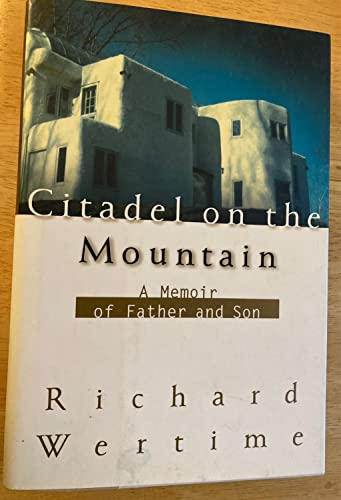
A warped dream, an overbearing father, and his son
A handsome, brilliant man, the author's father-irascible, strong-willed, a compulsive womanizer-stands at the center of this strangely compelling story.
In the mid-1970s, after a life in government service, which was shadowy in its depths, Ted Wertime built a fortress-like house on a mountaintop in south-central Pennsylvania. He had forged for himself a secondary career as a highly respected historian of ancient science and technology, and was convinced that it was his fate to lead a sweeping revolution that would cleanse the United States of energy abuse, political corruption, and an odd assortment of social ills. His "citadel" would serve as his revolutionary headquarters. He, his wife, and Joan, the last and most troubled of his succession of mistresses, lived in the house together in a bizarre ménage à trois. His dream was to recruit his four sons to take part in his cause.
The author, Richard Wertime, is the second-oldest son. Citadel on the Mountain is the story of his struggle to escape from a domineering and, at times, hypnotizing father who sought to control the sexual and professional lives of his offspring.
A handsome, brilliant man, the author's father-irascible, strong-willed, a compulsive womanizer-stands at the center of this strangely compelling story.
In the mid-1970s, after a life in government service, which was shadowy in its depths, Ted Wertime built a fortress-like house on a mountaintop in south-central Pennsylvania. He had forged for himself a secondary career as a highly respected historian of ancient science and technology, and was convinced that it was his fate to lead a sweeping revolution that would cleanse the United States of energy abuse, political corruption, and an odd assortment of social ills. His "citadel" would serve as his revolutionary headquarters. He, his wife, and Joan, the last and most troubled of his succession of mistresses, lived in the house together in a bizarre ménage à trois. His dream was to recruit his four sons to take part in his cause.
The author, Richard Wertime, is the second-oldest son. Citadel on the Mountain is the story of his struggle to escape from a domineering and, at times, hypnotizing father who sought to control the sexual and professional lives of his offspring.
Die Inhaltsangabe kann sich auf eine andere Ausgabe dieses Titels beziehen.
Über die Autorin bzw. den Autor
Richard Wertime was a longtime editor at Archaeology magazine and is now a professor of English at Beaver College in Pennsylvania.
Rezensionen
Three-quarters of the way through, this reviewer was prepared to pan this book. Why does a son have to air all his family's dirty laundryDe.g., his mother having to share a house with his father's mistress or his father's orchestrating an unwanted sexual liaison between the author and a family friend who had practically been a sister to him? Is it just to exorcise the demons of an autocratic, psychologically abusive, though brilliant parent? And do we really need to know about Wertime's (English, Beaver Coll.) childhood attempt to smother his disturbed younger brother or his pet name for his penis? Ultimately, however, this memoir proves as hard-hittingly poignant as Robert Anderson's play and 1970 movie, I Never Sang for My Father, and all this reader's memories of the minefield that is a father-son relationship come bubbling upDthe harsh words spoken and loving ones withheld, the desire to connect, and the need for independence. Truly, death ends a life, not a relationship. Recommended for most public libraries.DJim Burns, Ottumwa P.L., IA
Copyright 2000 Reed Business Information, Inc.
HIn a powerful, tonic memoir, Wertime turns a lifetime of torment at the hands of an abusive parent into a fiercely lyrical exorcism of pain, sorrow and anger. A former editor at Archaeology magazine and now a professor of English at Beaver College, Wertime grew up in both awe and fear of his domineering father, Theodore, who was a historian of science and ancient technologies, an accomplished violinist and violist, an OSS officer in India and China and, by some accounts, a CIA agent serving as cultural attach in Iran in the early 1960s and later in Athens. But, according to Wertime, the urbane scholar and diplomat had a dark side as a macho, authoritarian know-it-all with a sadistic streak. In the mid-1970s, as his behavior became increasingly bizarre, Theodore built a fortress-like house (the "citadel" of the title) on a mountaintop in Pennsylvania, stockpiling goods to prepare for an impending revolution. Inviting his anorexic, alcoholic mistress to live with him, he ordered his subservient, long-suffering wife (the author's mother) to accept a m nage trois. Unprovoked, he shot and killed the family's pet dog. When Theodore was diagnosed with inoperable cancer, Wertime fitfully attempted to draw close to his impossible parent, while also working through the pent-up rage and confusion that derailed his own first marriage and threatened to undo his second. Wertime writes beautifully, with great restraint and with an undercurrent of stymied love. Though his father's death brings neither closure nor absolution, his wise and healing confessional is spiked with razor-sharp insights about coming to terms with death and about growing up with no viable role model. 23 b&w photos. Agent, Amanda Urban. (Sept.)
Copyright 2000 Reed Business Information, Inc.
Intense emotions infuse this memoir, lending it realism that those in complicated father-son relationships will recognize. They will become inescapably interested in the Wertime family dynamic, curious about what the author's father will say, do, or denounce next, for Ted Wertime brooked no disagreement with his plans, which on occasion bordered on the apocalyptic. After a career in the State Department (possibly as cover for intelligence activities), Ted set to writing, about ancient metallurgy, or about the future of civilization writ large, often demanding that second son Richard (then an English professor) critique his articles. Those critiques instigate searing moments in the memoir, as occasions for paternal thunderbolts about the terms of their relationship. Other disturbing actions of the father (such as foisting a mistress on the family and shooting dead the family dog) add menace to the warring sentiments that animate the author's recollections. The three-dimensional vitality of the father's characterization is a superb effect of Wertime's subtly drawn family life. A finely written memoir. Gilbert Taylor
Copyright © American Library Association. All rights reserved
„Über diesen Titel“ kann sich auf eine andere Ausgabe dieses Titels beziehen.
Suchergebnisse für Citadel on the Mountain: A Memoir of Father and Son

Foto des Verkäufers
Citadel on the Mountain: A Memoir of Father and Son
Verlag:
Farrar, Straus and Giroux, 2000
ISBN 10: 0374123780
ISBN 13: 9780374123789
Gebraucht
Hardcover
Anbieter: -OnTimeBooks-, Phoenix, AZ, USA
Verkäuferbewertung 5 von 5 Sternen

Zustand: very_good. Gently read. May have name of previous ownership, or ex-library edition. Binding tight; spine straight and smooth, with no creasing; covers clean and crisp. Minimal signs of handling or shelving. 100% GUARANTEE! Shipped with delivery confirmation, if you're not satisfied with purchase please return item! Ships USPS Media Mail. Bestandsnummer des Verkäufers OTV.0374123780.VG
Gebraucht kaufen
EUR 6,42
Versand gratis
Versand innerhalb von USA
Versand innerhalb von USA
Anzahl: 1 verfügbar
Beispielbild für diese ISBN
Citadel on the Mountain : A Memoir of Father and Son
Verlag:
Farrar, Straus & Giroux, 2000
ISBN 10: 0374123780
ISBN 13: 9780374123789
Gebraucht
Hardcover
Anbieter: Better World Books, Mishawaka, IN, USA
Verkäuferbewertung 5 von 5 Sternen
Zustand: Good. Pages intact with minimal writing/highlighting. The binding may be loose and creased. Dust jackets/supplements are not included. Stock photo provided. Product includes identifying sticker. Better World Books: Buy Books. Do Good. Bestandsnummer des Verkäufers 39939559-75
Gebraucht kaufen
EUR 8,34
Versand gratis
Versand innerhalb von USA
Versand innerhalb von USA
Anzahl: 1 verfügbar
Beispielbild für diese ISBN
Citadel on the Mountain : A Memoir of Father and Son
Verlag:
Farrar, Straus & Giroux, 2000
ISBN 10: 0374123780
ISBN 13: 9780374123789
Gebraucht
Hardcover
Anbieter: Better World Books, Mishawaka, IN, USA
Verkäuferbewertung 5 von 5 Sternen
Zustand: Good. Former library copy. Pages intact with minimal writing/highlighting. The binding may be loose and creased. Dust jackets/supplements are not included. Includes library markings. Stock photo provided. Product includes identifying sticker. Better World Books: Buy Books. Do Good. Bestandsnummer des Verkäufers 45702594-6
Gebraucht kaufen
EUR 8,34
Versand gratis
Versand innerhalb von USA
Versand innerhalb von USA
Anzahl: 1 verfügbar
Beispielbild für diese ISBN
Citadel on the Mountain: A Memoir of Father and Son
Verlag:
Farrar, Straus and Giroux, 2000
ISBN 10: 0374123780
ISBN 13: 9780374123789
Gebraucht
Hardcover
Anbieter: ThriftBooks-Dallas, Dallas, TX, USA
Verkäuferbewertung 5 von 5 Sternen
Hardcover. Zustand: As New. No Jacket. Pages are clean and are not marred by notes or folds of any kind. ~ ThriftBooks: Read More, Spend Less. Bestandsnummer des Verkäufers G0374123780I2N00
Gebraucht kaufen
EUR 8,70
Versand gratis
Versand innerhalb von USA
Versand innerhalb von USA
Anzahl: 1 verfügbar
Beispielbild für diese ISBN
Citadel on the Mountain: a Memoir of Father and Son
Verlag:
Farrar Straus & Giroux, Gordonsville, Virginia, U.S.A., 2000
ISBN 10: 0374123780
ISBN 13: 9780374123789
Gebraucht
Hardcover
Anbieter: Top Notch Books, Tolar, TX, USA
Verkäuferbewertung 5 von 5 Sternen
Hard Cover. Zustand: Good. Zustand des Schutzumschlags: Good. Jacket is lightly rubbed, gummark on front. oards have minor shelfwear. Pages are clean, text has no markings, binding is sound. Size: 8vo - over 7¾" - 9¾" tall. Bestandsnummer des Verkäufers 217767A
Gebraucht kaufen
EUR 4,59
EUR 5,13 Versand
Versand innerhalb von USA
Versand innerhalb von USA
Anzahl: 1 verfügbar
Beispielbild für diese ISBN
Citadel on the Mountain: A Memoir (SIGNED)
Verlag:
Farrar Straus & Giroux, New York, 2000
ISBN 10: 0374123780
ISBN 13: 9780374123789
Gebraucht
Hardcover
Erstausgabe
Signiert
Anbieter: Daniel Montemarano, Newfield, NJ, USA
Verkäuferbewertung 5 von 5 Sternen
Hard Cover. Zustand: Near Fine. Zustand des Schutzumschlags: Near Fine. 1st Edition/1st Printing. SIGNED (inscribed) by author on title page. prev.owners name label on front end page. $23.00 price present on DJ flap. Size: 8vo - over 7¾" - 9¾" tall. Signed by Author. Bestandsnummer des Verkäufers 047625
Gebraucht kaufen
EUR 11,02
EUR 6,20 Versand
Versand innerhalb von USA
Versand innerhalb von USA
Anzahl: 1 verfügbar
Foto des Verkäufers
Citadel on the Mountain: A Memoir of Father and Son The Photos in this listing are of the book that is offered for sale
Verlag:
Farrar, Straus And Giroux, New York, 2000
ISBN 10: 0374123780
ISBN 13: 9780374123789
Gebraucht
Hardcover
Erstausgabe
Signiert
Anbieter: biblioboy, North Providence, RI, USA
Verkäuferbewertung 5 von 5 Sternen
Hardcover. Zustand: Near Fine. Zustand des Schutzumschlags: Near Fine. First Edition. New York: Farrar Straus and Giroux 2000. Hardcover. 0374123780 . First edition. This copy has been signed by the author on the title page. 262 pages. Fine copy in Near Fine jacket with very light rubbing. See photos clphE. Bestandsnummer des Verkäufers 867785
Gebraucht kaufen
EUR 11,02
EUR 6,24 Versand
Versand innerhalb von USA
Versand innerhalb von USA
Anzahl: 1 verfügbar
Beispielbild für diese ISBN
Citadel on the Mountain: A Memoir (SIGNED)
Verlag:
Farrar Straus & Giroux, New York, 2000
ISBN 10: 0374123780
ISBN 13: 9780374123789
Gebraucht
Hardcover
Erstausgabe
Signiert
Anbieter: Daniel Montemarano, Newfield, NJ, USA
Verkäuferbewertung 5 von 5 Sternen
Hard Cover. Zustand: Fine. Zustand des Schutzumschlags: Very Good +. 1st Edition/1st Printing. SIGNED (inscribed) by author on title page. DJ rubbed. $23.00 price present on DJ flap. Size: 8vo - over 7¾" - 9¾" tall. Signed by Author. Bestandsnummer des Verkäufers 045415
Gebraucht kaufen
EUR 11,49
EUR 6,20 Versand
Versand innerhalb von USA
Versand innerhalb von USA
Anzahl: 1 verfügbar
Beispielbild für diese ISBN
Citadel on the Mountain: A Memoir of Father and Son
Verlag:
Farrar, Straus and Giroux, 2000
ISBN 10: 0374123780
ISBN 13: 9780374123789
Gebraucht
Hardcover
Signiert
Anbieter: Wonder Book, Frederick, MD, USA
Verkäuferbewertung 5 von 5 Sternen
Zustand: Very Good. Signed Copy . Very Good dust jacket. Signed/Inscribed by author on title page. Bestandsnummer des Verkäufers A05OS-00707
Gebraucht kaufen
EUR 18,18
Versand gratis
Versand innerhalb von USA
Versand innerhalb von USA
Anzahl: 1 verfügbar
Beispielbild für diese ISBN
CITADEL ON THE MOUNTAIN. (Dust jacket title - "Citadel on the Mountain; A Memoir of Father and Son.")
Verlag:
New York: Farrar, Straus and Giroux, 2000., 2000
ISBN 10: 0374123780
ISBN 13: 9780374123789
Gebraucht
Hardcover
Erstausgabe
Signiert
Anbieter: David Hallinan, Bookseller, Columbus, MS, USA
Verkäuferbewertung 4 von 5 Sternen

First edition (per publisher's statement upon copyright page) DATED, INSCRIBED, AND SIGNED BY THE AUTHOR. [8], 264 pages. Hardcover; H 21.75cm x L 14.25cm. Dust jacket rubbed. Tan cloth spine with white boards. A very good+ copy in a very good+ dust jacket with the author's warm ten-line ink inscription dated October 2000 on the title page. ISBN 0374123780. Bestandsnummer des Verkäufers Z626X-2574
Gebraucht kaufen
EUR 12,17
EUR 6,69 Versand
Versand innerhalb von USA
Versand innerhalb von USA
Anzahl: 1 verfügbar