
Verwandte Artikel zu Why Did You Have to Get a Divorce? And When Can I Get...
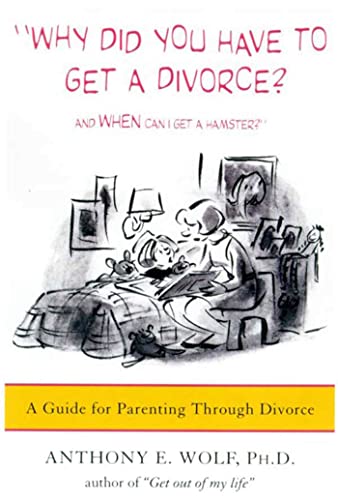
Why Did You Have to Get a Divorce? And When Can I Get a Hamster?: A Guide to Parenting Through Divorce - Softcover
Inhaltsangabe
Definitive advice from the author of the bestselling "Get out of my life".
Divorce, argues Anthony E. Wolf, does not have to do long-term damage to a child. In his groundbreaking new book, he shows parents how to steer children through the pain and the complex feelings engendered by divorce, feelings that, if not resolved, can create continuing problems for a child. Wolf also explains how to deal with the difficult issues that so frequently accompany a divorce. How do you tell your child about the divorce? How do you keep your children from being caught between you and your ex-partner? What do you do if that other parent gradually fades out of their lives? Or, how do you maintain strong ties with your children if you are not the primary custodial parent? How do you help them cope with new living arrangements, as well as stepparents or stepsiblings?
"Why did you have to get a divorce?" is filled with stories that parents will recognize with relief. Positive, at times even funny, and, above all, effective, this guide will speak directly to divorcing and divorced parents.
Die Inhaltsangabe kann sich auf eine andere Ausgabe dieses Titels beziehen.
Über die Autorin bzw. den Autor
Anthony E. Wolf, received his Ph.D. in Clinical Psychology from the City University of New York. For more than two decades he has been in private practice seeing children and adolescents in the Springfield, Massachusetts area. Married, Dr. Wolf is the father of two grown children. He has written several books on parenting, including Get Out of My Life, But First Could You Drive Me & Cheryl to the Mall?, and numerous articles, which have appeared in such magazines as Child Magazine, Parents, and Family Circle. He has also written a monthly column for Child Magazine.
Auszug. © Genehmigter Nachdruck. Alle Rechte vorbehalten.
Why Did You Have to Get a Divorce? And When Can I Get a Hamster?
A Guide to Parenting Through DivorceBy Anthony E. Wolf, Ph.D.Farrar, Straus and Giroux
Copyright © 1998 Anthony E. Wolf, Ph.D.All right reserved.
ISBN: 9780374525682
Why Did You Have to Get a Divorce? And When Can I Get a Hamster?
1
Breaking the News
THEIR FIRST REACTION
I used to live with my family in a house that traveled through the air. And I never was afraid, because my house was big and strong. But today I heard a big crack and suddenly the house broke in two. Looking down over the edge, there was just empty space and I was very scared.
Children's first reaction to the news of their parents' divorce will most often be simple and straightforward.
What's going to happen? Am I going to be okay? I'm scared. I don't want them to get a divorce. I hate this. Maybe if I close my eyes this will all turn out to be a dream and go away.
The bottom has dropped out of their world. What they have always known and what they have always taken for granted--the basic structure of their lives--what they have always felt would magically make everything okay and protect them from all the terrors of the world--suddenly, all this is no more.
WHO SHOULD TELL THEM
When experiencing a major shock like this, children want to be with the person who makes them feel the safest. If one parent clearly has been in the main parenting role, that parent should break the news. Otherwise, which parent tells them might matter to the parents, but it means nothing to the children. The news itself is so huge that it bowls over everything else, including the messenger. Therefore, however you and your soon to be ex-spouse tell your kids, whatever you are both most comfortable with is fine.
WHEN TO TELL THEM
Several "whens" need to be considered in breaking the news. The first is that you should tell your children about the pending separation or divorce only after that particular decision is final. From your children's perspective, either you are splitting up or you are not. If you're unsure, do not "prepare them" for the possibility.
"Your father and I are thinking about getting a divorce."
Your advance warning only increases their worrying with no real benefit. It becomes a form of torture.
"Have you decided yet? Is it going to happen? When? Please don't. No. Please don't."
Well, yes, actually it is going to happen. Only I'm not telling you yet. Instead I'm drawing it out to make it easier for you.
No, thank you.
The second "when" is the actual time that you select to tell them. The news will be a big shock. They will need time to let it sink in. Although there never is a good time, you need at least to make sure that the moment you select is one when you will be together for a while, preferably on a nonschool day. When they are suddenly feeling very unsafe and very alone, they will need you to be there for them, so they can feel as safe as possible and not so alone. When you or they are about to go off somewhere--to school, to work, to soccer practice--is not a good time to break the news. Just before bedtime is another bad choice. They probably wouldn't get to sleep for a long time after that bedtime story.
WHAT TO TELL THEM
"Your father and I have decided to get a divorce."
Use the word "divorce" if you have decided that you are getting a divorce. It's the word that the world uses, and you don't want to avoid it. If your children are very young and may not understand what divorce means, use the word, but also explain it.
"Which means that your father and I won't be married anymore. We won't be living in the same house anymore."
If you have decided to separate, but don't yet know about divorce, tell them that.
"Your father and I have decided that he is going to move out of the house for a while--he will be staying with Grandpa and Gramma."
"Why? Why's Daddy going?"
"We've decided that for now it's better this way."
"Are you going to get divorced?"
"We don't know. But for now Dad will be staying with Grandpa and Gramma."
Speculation about what may happen down the road can only pull children into additional worrying. Stick with what you do know and admit to that which you don't.
"Are you getting a divorce? You have to tell me. I have to know."
"For now, we just don't know."
After you've broken the initial news, tell your children what is going to happen to them. Keep whatever you say short and to the point. They are totally overwhelmed by the news they've just heard, so don't provide more details than they can handle. The basics are more than enough.
"You and Tricia will still live here with me. Your dad is moving out. He's going to live with Uncle Phil for a while. You will still get to spend time with him. We're not exactly sure yet how that will work out, but whatever happens, you will always have a home and you will always get to see both of us."
TELLING THEM WHY
I don't care why they're getting a divorce. I hate all of this. This is a nightmare. I just want it to go away. I don't want them to get a divorce. I want it to go back to like it was before. I want to hide under a blanket and maybe when I come out they'll tell me it was all just a joke.
Initially, the news of the split-up floods out everything else. Children aren't interested in the reasons. Parents are mainly the ones who care about "why."
The kids need to know it wasn't my fault. I don't want them to blame me. I don't want them to be mad at me when it wasn't my choice at all. I wasn't the one who started having the affair and then decided to end the marriage. It's not fair to have them be mad at me for something that wasn't my fault at all. They need to know that.
No, they don't, not when they're first getting the news. They just want it all to go away. They may ask "Why?" but this "Why?" is not actually looking for reasons for the divorce.
"Why? Why are you getting a divorce? I don't want you to get a divorce. Why do you have to?"
This "Why?" really means "Why is this happening to me? I don't want it to happen. Tell me it's not going to happen." This "Why?" is asking if there is some way the situation can be undone. It is a plea for something that will instantly make the news of the divorcesomehow more understandable and manageable. But at this moment nothing can--except time.
Unfortunately, at this time, explanations don't really help.
"I know this is hard for you to understand, but sometimes adults who were once in love find they don't love each other anymore. You know how your dad and I fought and argued a lot. Well, we just didn't love each other anymore. All the good feelings we had for each other were gone. We both felt that it would be...
„Über diesen Titel“ kann sich auf eine andere Ausgabe dieses Titels beziehen.
Suchergebnisse für Why Did You Have to Get a Divorce? And When Can I Get...

Beispielbild für diese ISBN
Why Did You Have to Get a Divorce? and When Can I Get a Hamster?: A Guide to Parenting Through Divorce
Verlag:
Farrar, Straus and Giroux, 1998
ISBN 10: 0374525684
ISBN 13: 9780374525682
Gebraucht
Paperback
Anbieter: World of Books (was SecondSale), Montgomery, IL, USA
Verkäuferbewertung 5 von 5 Sternen

Paperback. Zustand: Good. Definitive advice from the author of the bestselling "Get out of my life". Divorce, argues Anthony E. Wolf, does not have to do long-term damage to a child. In his groundbreaking new book, he shows parents how to steer children through the pain and the complex feelings engendered by divorce, feelings that, if not resolved, can create continuing problems for a child. Wolf also explains how to deal with the difficult issues that so frequently accompany a divorce. How do you tell your child about the divorce? How do you keep your children from being caught between you and your ex-partner? What do you do if that other parent gradually fades out of their lives? Or, how do you maintain strong ties with your children if you are not the primary custodial parent? How do you help them cope with new living arrangements, as well as stepparents or stepsiblings? "Why did you have to get a divorce?" is filled with stories that parents will recognize with relief. Positive, at times even funny, and, above all, effective, this guide will speak directly to divorcing and divorced parents. Bestandsnummer des Verkäufers 00087384086
Gebraucht kaufen
EUR 3,73
Versand gratis
Versand innerhalb von USA
Versand innerhalb von USA
Anzahl: 5 verfügbar
Beispielbild für diese ISBN
Why Did You Have to Get a Divorce? And When Can I Get a Hamster?
Verlag:
Farrar, Straus and Giroux, 1998
ISBN 10: 0374525684
ISBN 13: 9780374525682
Gebraucht
Paperback
Anbieter: Gulf Coast Books, Cypress, TX, USA
Verkäuferbewertung 5 von 5 Sternen
Paperback. Zustand: Fair. Bestandsnummer des Verkäufers 0374525684-4-25019632
Gebraucht kaufen
EUR 3,73
Versand gratis
Versand innerhalb von USA
Versand innerhalb von USA
Anzahl: 1 verfügbar
Beispielbild für diese ISBN
Why Did You Have to Get a Divorce? And When Can I Get a Hamster?: A Guide to Parenting Through Divorce
Verlag:
Farrar, Straus and Giroux, 1998
ISBN 10: 0374525684
ISBN 13: 9780374525682
Gebraucht
paperback
Anbieter: Your Online Bookstore, Houston, TX, USA
Verkäuferbewertung 5 von 5 Sternen
paperback. Zustand: Fair. Bestandsnummer des Verkäufers 0374525684-4-35491014
Gebraucht kaufen
EUR 3,73
Versand gratis
Versand innerhalb von USA
Versand innerhalb von USA
Anzahl: 1 verfügbar
Beispielbild für diese ISBN
Why Did You Have to Get a Divorce? And When Can I Get a Hamster?: A Guide to Parenting Through Divorce
Verlag:
Farrar, Straus and Giroux (edition 1), 1998
ISBN 10: 0374525684
ISBN 13: 9780374525682
Gebraucht
Paperback
Anbieter: BooksRun, Philadelphia, PA, USA
Verkäuferbewertung 5 von 5 Sternen
Paperback. Zustand: Very Good. 1. It's a well-cared-for item that has seen limited use. The item may show minor signs of wear. All the text is legible, with all pages included. It may have slight markings and/or highlighting. Bestandsnummer des Verkäufers 0374525684-11-6
Gebraucht kaufen
EUR 4,65
Versand gratis
Versand innerhalb von USA
Versand innerhalb von USA
Anzahl: 1 verfügbar
Foto des Verkäufers
Why Did You Have to Get a Divorce? And When Can I Get a Hamster?: A Guide to Parenting Through Divorce
Verlag:
Farrar, Straus and Giroux, 1998
ISBN 10: 0374525684
ISBN 13: 9780374525682
Gebraucht
Softcover
Anbieter: ZBK Books, Carlstadt, NJ, USA
Verkäuferbewertung 5 von 5 Sternen
Zustand: good. Fast & Free Shipping â" Good condition. It may show normal signs of use, such as light writing, highlighting, or library markings, but all pages are intact and the book is fully readable. A solid, complete copy that's ready to enjoy. Bestandsnummer des Verkäufers ZWV.0374525684.G
Gebraucht kaufen
EUR 4,98
Versand gratis
Versand innerhalb von USA
Versand innerhalb von USA
Anzahl: 1 verfügbar
Foto des Verkäufers
Why Did You Have to Get a Divorce? And When Can I Get a Hamster?: A Guide to Parenting Through Divorce
Verlag:
Farrar, Straus and Giroux, 1998
ISBN 10: 0374525684
ISBN 13: 9780374525682
Gebraucht
Softcover
Anbieter: Greenworld Books, Arlington, TX, USA
Verkäuferbewertung 5 von 5 Sternen
Zustand: like_new. Fast Free Shipping â" Excellent condition book with clean cover and pages. Barely handled, with minimal wear. An outstanding copy, close to enjoy! Bestandsnummer des Verkäufers GWV.0374525684.LN
Gebraucht kaufen
EUR 4,98
Versand gratis
Versand innerhalb von USA
Versand innerhalb von USA
Anzahl: 2 verfügbar
Beispielbild für diese ISBN
Why Did You Have to Get a Divorce? and When Can I Get a Hamster?: A Guide to Parenting Through Divorce
Verlag:
Farrar, Straus and Giroux, 1998
ISBN 10: 0374525684
ISBN 13: 9780374525682
Gebraucht
Paperback
Anbieter: World of Books Inc, Montgomery, IL, USA
Verkäuferbewertung 4 von 5 Sternen

Paperback. Zustand: Good. Definitive advice from the author of the bestselling "Get out of my life". Divorce, argues Anthony E. Wolf, does not have to do long-term damage to a child. In his groundbreaking new book, he shows parents how to steer children through the pain and the complex feelings engendered by divorce, feelings that, if not resolved, can create continuing problems for a child. Wolf also explains how to deal with the difficult issues that so frequently accompany a divorce. How do you tell your child about the divorce? How do you keep your children from being caught between you and your ex-partner? What do you do if that other parent gradually fades out of their lives? Or, how do you maintain strong ties with your children if you are not the primary custodial parent? How do you help them cope with new living arrangements, as well as stepparents or stepsiblings? "Why did you have to get a divorce?" is filled with stories that parents will recognize with relief. Positive, at times even funny, and, above all, effective, this guide will speak directly to divorcing and divorced parents. Bestandsnummer des Verkäufers CIN0374525684G
Gebraucht kaufen
EUR 5,57
Versand gratis
Versand innerhalb von USA
Versand innerhalb von USA
Anzahl: 5 verfügbar
Beispielbild für diese ISBN
Why Did You Have to Get a Divorce? and When Can I Get a Hamster?: A Guide to Parenting Through Divorce
Verlag:
Farrar, Straus and Giroux, 1998
ISBN 10: 0374525684
ISBN 13: 9780374525682
Gebraucht
Paperback
Anbieter: ThriftBooks-Dallas, Dallas, TX, USA
Verkäuferbewertung 5 von 5 Sternen
Paperback. Zustand: Very Good. No Jacket. May have limited writing in cover pages. Pages are unmarked. ~ ThriftBooks: Read More, Spend Less. Bestandsnummer des Verkäufers G0374525684I4N00
Gebraucht kaufen
EUR 6,00
Versand gratis
Versand innerhalb von USA
Versand innerhalb von USA
Anzahl: 1 verfügbar
Beispielbild für diese ISBN
Why Did You Have to Get a Divorce? and When Can I Get a Hamster? : A Guide to Parenting Through Divorce
Verlag:
Farrar, Straus & Giroux, 1998
ISBN 10: 0374525684
ISBN 13: 9780374525682
Gebraucht
Softcover
Erstausgabe
Anbieter: Better World Books, Mishawaka, IN, USA
Verkäuferbewertung 5 von 5 Sternen
Zustand: Good. 1st Edition. Former library copy. Pages intact with minimal writing/highlighting. The binding may be loose and creased. Dust jackets/supplements are not included. Includes library markings. Stock photo provided. Product includes identifying sticker. Better World Books: Buy Books. Do Good. Bestandsnummer des Verkäufers GRP102607278
Gebraucht kaufen
EUR 6,19
Versand gratis
Versand innerhalb von USA
Versand innerhalb von USA
Anzahl: 1 verfügbar
Beispielbild für diese ISBN
Why Did You Have to Get a Divorce? and When Can I Get a Hamster? : A Guide to Parenting Through Divorce
Verlag:
Farrar, Straus & Giroux, 1998
ISBN 10: 0374525684
ISBN 13: 9780374525682
Gebraucht
Softcover
Erstausgabe
Anbieter: Better World Books, Mishawaka, IN, USA
Verkäuferbewertung 5 von 5 Sternen
Zustand: Very Good. 1st Edition. Pages intact with possible writing/highlighting. Binding strong with minor wear. Dust jackets/supplements may not be included. Stock photo provided. Product includes identifying sticker. Better World Books: Buy Books. Do Good. Bestandsnummer des Verkäufers 5532607-20
Gebraucht kaufen
EUR 6,19
Versand gratis
Versand innerhalb von USA
Versand innerhalb von USA
Anzahl: 1 verfügbar