
Verwandte Artikel zu Between Father and Son: Family Letters
Inhaltsangabe
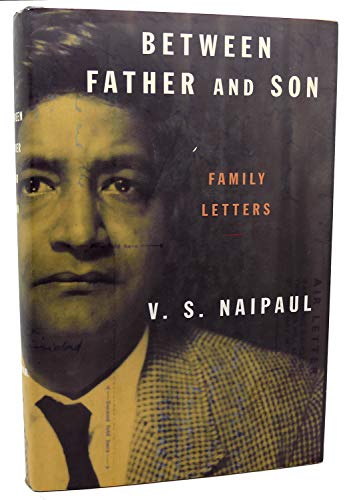
Offering an intimate portrait of the author's early, formative years, a collection of letters chronicles Naipaul's arrival in Oxford from Trinidad as a teenager and his complex relationships with members of his family, including his troubled father and beloved sister. 40,000 first printing.
Die Inhaltsangabe kann sich auf eine andere Ausgabe dieses Titels beziehen.
Über die Autorin bzw. den Autor
V. S. Naipaul was born in Trinidad in 1932. He went to England on a scholarship in 1950. After four years at University College, Oxford, he began to write, and since then has followed no other profession. He has published more than twenty books of fiction and nonfiction, including <b>An Area of Darkness, In a Free State, Among the Believers</b>, and <b>India: A Million Mutinies Now</b>. He lives in Wiltshire, England.
Aus dem Klappentext
In 1950, after winning a scholarship from the government of Trinidad, V. S. Naipaul, aged seventeen, left home for the first time. Following a two-week journey by steamer, he arrived in Oxford, England, a world utterly removed from the one he had longed to escape and to which he would never really return. This extraordinary collection of letters gives us, as nothing published previously has, an intimate view of Naipaul's formative years. <br><br>It is a story of family members oceans apart, clinging to one another against the sadness of dislocation and isolation: The young Naipaul, desperate not for a degree but to become a writer and make his way in the world. His beloved sister Kamla, anxious and bewildered, away at school in India. And his melancholy but loving father, whose own broken dream of succeeding as a writer would be realized in the singular achievement of his son. <br><br>With the satisfactions of a novel, <b>Between Father and Son</b> portrays a deeply affecting family drama, even as it bears witness to the flowering of one of the great literary geniuses of the century.
Auszug. © Genehmigter Nachdruck. Alle Rechte vorbehalten.
INTRODUCTION
The task of introducing this extraordinary and moving correspondence is a delicate one. In these letters between a father and a son, the older man worn down by the cares of a large family and the distress of unfulfilled ambitions, the younger on the threshold of a broad and brilliant literary career, lies some of the raw material of one of the finest and most enduring novels of the twentieth century: V. S. Naipaul's A House for Mr Biswas. Yet the letters also celebrate Seepersad Naipaul's achievement as a writer, not merely in the genesis and evolution of his single published novel, The Adventures of Gurudeva; but also, and perhaps more strikingly, in revealing the dedication of the true artist. For Seepersad Naipaul (Pa), the life of the mind -- the writer's life -- was everything: to record the ways of men and women, with a shrewd, comical and kindly eye, and to do that from within his own originality, was to live nobly. In his elder son, Vidia, he found a miraculous echo to this belief -- miraculous, because there is no sense of a son's following in his father's footsteps, or of a father's urging that he might do so. There is a sense, rather, of the two men's being in step, neither embarrassed by any of the implications of the generation that divided them -- and Vidia only seventeen when the present correspondence opens. The difference in their ages, and the fact of Seepersad's early death, have allowed Vidia to acknowledge the debt he owes to his father, and he has embraced the opportunity to do so in manifold ways in his work. In this correspondence, the reader will recognize the subtle, and unwitting, repayment of a father's debt to his son. . . . GILLON AITKEN
Letters
September 21, 1949 -- September 22, 1950: Port of Spain to Oxford
Trinidad
September 21, 1949
Dear Kamla [Naipaul's elder sister],
I wonder what is the matter with this typewriter. It looks all right now, though. I am enclosing some cuttings which, I am sure, will delight you. You will note that I went after all to the Old Boys' Association Dinner. I can count those hours as among the most painful I have ever spent. In the first place, I have no table manners; in the second, I had no food. Special arrangements, I was informed after the dinner, had been made for me, but these appeared to have been limited to serving me potatoes in various ways -- now fried, now boiled. I had told the manager to bring me some corn soup instead of the turtle soup that the others were having. He ignored this and the waiter brought up to me a plateful of a green slime. This was the turtle soup. I was nauseated and annoyed and told the man to take it away. This, I was told, was a gross breach of etiquette. So I had bread and butter and ice-cold water for the first two eating rounds. The menu was in French. What you would call stewed chicken they called 'Poulet Sauté Renaissance'. Coffee was 'moka'. I had rather expected that to be some exotic Russian dish. Dessert included something called 'Pomme Surprise'. This literally means 'surprised apple', and the younger Hannays, who was next to me, told me it was an apple pudding done in a surprise manner. The thing came. I ate it. It was fine. But I tasted no apple. 'That,' Hannays told me, 'is the surprise.'
I have just finished filling out the application forms for entrance to the University; I had some pictures of myself taken. I had always thought that, though not attractive, I was not ugly. This picture undeceived me. I never knew my face was fat. The picture said so. I looked at the Asiatic on the paper and thought that an Indian from India could look no more Indian than I did. My face would give anyone the idea that I was a two-hundred-pounder. I had hoped to send up a striking intellectual pose to the University people, but look what they have got. And I even paid two dollars for a re-touched picture.
I am all right. I am actually reading once more. I decided to start preparing myself for next year by a thorough knowledge of the nineteenth-century novel. I read the Butler book [Samuel Butler's The Way of All Flesh (1903)]; I think it is not half as good as Maugham's Of Human Bondage. The construction is clumsy. Butler has stressed too much on passing religious conflicts; is too concerned with proving his theory of heredity. I then went on to Jane Austen. I had read so much in praise of her. I went to the library and got Emma. It has an introduction by Monica Dickens, which extolled the book as the finest Austen ever wrote. Frankly, the introduction proved better reading than the book itself. Jane Austen appears to be essentially a writer for women; if she had lived in our age she would undoubtedly have been a leading contributor to the women's papers. Her work really bored me. It is mere gossip. It could appeal to a female audience. The diction is fine, of course. But the work, besides being mere gossip, is slick and professional.
I think you would be interested to know how my $75 will be spent. I have taken over all your debts. $50 will go to the bank; $10 to Millington; and $15 to Dass. I have about two dollars pocket money. I get this from Mamie for teaching Sita. Sending that child to school to get an academic education is a waste of time and money. She is the most obtuse thing I have ever met. If you want to break a man's heart, give him a class of Sitas to teach. I wonder if you know that I have been teaching George. He is dull but could pass if made to work hard. I am sure you will be glad to know that Jainarayan is making splendid progress. Those people are a sorry lot. This devaluation business is going to make it even harder for them.
It is not for us at home to do extensive writing; that is your job. It is you who are seeing new countries, having new and exciting experiences which will probably remain in your memory as the most interesting part of your life. I must say, however, that your letters have improved enormously. I wonder why. Is it because you are writing spontaneously, without any conscious effort at literature? I think it is. . . .
. . . While you are in India, you should keep your eyes open. This has two meanings: the subsidiary one is to watch your personal effects carefully; the Indians are a thieving lot. Remember what happened to the trousers of the West Indian cricket eleven. [The white flannel trousers of the West Indian cricket team visiting India at this time were famously stolen in Bombay.] Keep your eyes open and let me know whether Beverly Nichols is right. He went to India in 1945, and saw a wretched country, full of pompous mediocrity, with no future. He saw the filth; refused to mention the 'spiritualness' that impresses another kind of visitor. Of course the Indians did not like the book, but I think he was telling the truth. From Nehru's autobiography, I think the Premier of India is a first-class showman using his saintliness as a weapon of rule. But I am sure it has a certain basis in fact. Huxley may have degenerated of late into an invalid crippled by a malady that has received enormous approval by the intellectuals -- mysticism -- but what he said in his book [Jesting Pilate (1926)] about India twenty years or so ago is true. He said that it was half-diets that produced ascetics and people who spend all their time in meditation. You will be right at the heart of the whole cranky thing. Please don't get contaminated; I will be glad when your three years will be finished; then you could breathe the invigorating air of atheism. (I don't like that word. It seems to suggest that the person is interested in religion; it doesn't suggest one who ignores it completely . . .)
I suppose that by now you have received the ten pounds. We got your diary. I could sense an underlying unhappiness and worry in it. I don't think you were completely...
„Über diesen Titel“ kann sich auf eine andere Ausgabe dieses Titels beziehen.
Suchergebnisse für Between Father and Son: Family Letters

Beispielbild für diese ISBN
Between Father and Son : Family Letters
Anbieter: World of Books (was SecondSale), Montgomery, IL, USA
Verkäuferbewertung 5 von 5 Sternen

Zustand: Good. Good condition ex-library book with usual library markings and stickers. Bestandsnummer des Verkäufers 00095276736
Gebraucht kaufen
EUR 6,21
Versand gratis
Versand innerhalb von USA
Versand innerhalb von USA
Anzahl: 1 verfügbar
Beispielbild für diese ISBN
Between Father and Son : Family Letters
Anbieter: World of Books (was SecondSale), Montgomery, IL, USA
Verkäuferbewertung 5 von 5 Sternen
Zustand: Very Good. Item in very good condition! Textbooks may not include supplemental items i.e. CDs, access codes etc. Bestandsnummer des Verkäufers 00094428060
Gebraucht kaufen
EUR 6,21
Versand gratis
Versand innerhalb von USA
Versand innerhalb von USA
Anzahl: 1 verfügbar
Beispielbild für diese ISBN
Between Father and Son : Family Letters
Anbieter: Wonder Book, Frederick, MD, USA
Verkäuferbewertung 5 von 5 Sternen
Zustand: Good. Good condition. Good dust jacket. A copy that has been read but remains intact. May contain markings such as bookplates, stamps, limited notes and highlighting, or a few light stains. Bestandsnummer des Verkäufers K07R-00518
Gebraucht kaufen
EUR 6,22
Versand gratis
Versand innerhalb von USA
Versand innerhalb von USA
Anzahl: 1 verfügbar
Beispielbild für diese ISBN
Between Father and Son : Family Letters
Anbieter: ThriftBooks-Dallas, Dallas, TX, USA
Verkäuferbewertung 5 von 5 Sternen
Hardcover. Zustand: Very Good. No Jacket. Missing dust jacket; May have limited writing in cover pages. Pages are unmarked. ~ ThriftBooks: Read More, Spend Less. Bestandsnummer des Verkäufers G0375407308I4N01
Gebraucht kaufen
EUR 6,51
Versand gratis
Versand innerhalb von USA
Versand innerhalb von USA
Anzahl: 1 verfügbar
Beispielbild für diese ISBN
Between Father and Son : Family Letters
Anbieter: ThriftBooks-Dallas, Dallas, TX, USA
Verkäuferbewertung 5 von 5 Sternen
Hardcover. Zustand: Good. No Jacket. Pages can have notes/highlighting. Spine may show signs of wear. ~ ThriftBooks: Read More, Spend Less. Bestandsnummer des Verkäufers G0375407308I3N00
Gebraucht kaufen
EUR 6,51
Versand gratis
Versand innerhalb von USA
Versand innerhalb von USA
Anzahl: 1 verfügbar
Beispielbild für diese ISBN
Between Father and Son : Family Letters
Anbieter: ThriftBooks-Atlanta, AUSTELL, GA, USA
Verkäuferbewertung 5 von 5 Sternen
Hardcover. Zustand: Good. No Jacket. Pages can have notes/highlighting. Spine may show signs of wear. ~ ThriftBooks: Read More, Spend Less. Bestandsnummer des Verkäufers G0375407308I3N00
Gebraucht kaufen
EUR 6,51
Versand gratis
Versand innerhalb von USA
Versand innerhalb von USA
Anzahl: 1 verfügbar
Beispielbild für diese ISBN
Between Father and Son : Family Letters
Anbieter: ThriftBooks-Dallas, Dallas, TX, USA
Verkäuferbewertung 5 von 5 Sternen
Hardcover. Zustand: Very Good. No Jacket. May have limited writing in cover pages. Pages are unmarked. ~ ThriftBooks: Read More, Spend Less. Bestandsnummer des Verkäufers G0375407308I4N00
Gebraucht kaufen
EUR 6,51
Versand gratis
Versand innerhalb von USA
Versand innerhalb von USA
Anzahl: 1 verfügbar
Beispielbild für diese ISBN
Between Father and Son : Family Letters
Anbieter: HPB-Diamond, Dallas, TX, USA
Verkäuferbewertung 5 von 5 Sternen
hardcover. Zustand: Very Good. Connecting readers with great books since 1972! Used books may not include companion materials, and may have some shelf wear or limited writing. We ship orders daily and Customer Service is our top priority! Bestandsnummer des Verkäufers S_414399383
Gebraucht kaufen
EUR 3,56
EUR 3,24 Versand
Versand innerhalb von USA
Versand innerhalb von USA
Anzahl: 1 verfügbar
Beispielbild für diese ISBN
Between Father and Son : Family Letters
Anbieter: Half Price Books Inc., Dallas, TX, USA
Verkäuferbewertung 5 von 5 Sternen
hardcover. Zustand: Very Good. Connecting readers with great books since 1972! Used books may not include companion materials, and may have some shelf wear or limited writing. We ship orders daily and Customer Service is our top priority! Bestandsnummer des Verkäufers S_464308012
Gebraucht kaufen
EUR 4,45
EUR 3,01 Versand
Versand innerhalb von USA
Versand innerhalb von USA
Anzahl: 1 verfügbar
Foto des Verkäufers
Between Father and Son : Family Letters
Anbieter: AVERYBOOKS, Phoenix, NY, USA
Verkäuferbewertung 5 von 5 Sternen
Hardcover. Zustand: Very Good. Zustand des Schutzumschlags: Very Good. 1st Edition. First American Edition. Bestandsnummer des Verkäufers ABE-1720393663490
Gebraucht kaufen
EUR 8,90
Versand gratis
Versand innerhalb von USA
Versand innerhalb von USA
Anzahl: 1 verfügbar