
Verwandte Artikel zu Chagall: A Biography
Inhaltsangabe
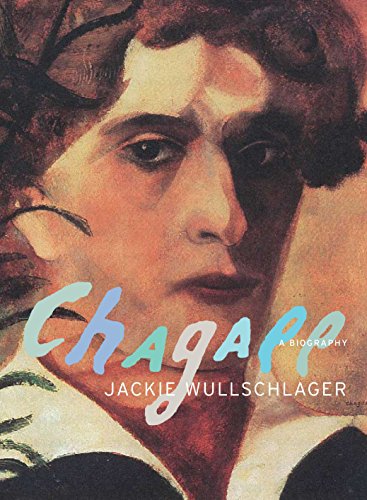
“When Matisse dies,” Pablo Picasso remarked in the 1950s, “Chagall will be the only painter left who understands what color really is.” As a pioneer of modernism and one of the greatest figurative artists of the twentieth century, Marc Chagall achieved fame and fortune, and over the course of a long career created some of the best-known and most-loved paintings of our time. Yet behind this triumph lay struggle, heartbreak, bitterness, frustration, lost love, exile—and above all the miracle of survival.
Born into near poverty in Russia in 1887, the son of a Jewish herring merchant, Chagall fled the repressive “potato-colored” tsarist empire in 1911 for Paris. There he worked alongside Modigliani and Léger in the tumbledown tenement called La Ruche, where “one either died or came out famous.” But turmoil lay ahead—war and revolution; a period as an improbable artistic commissar in the young Soviet Union; a difficult existence in Weimar Germany, occupied France, and eventually the United States. Throughout, as Jackie Wullschlager makes plain in this groundbreaking biography, he never ceased giving form on canvas to his dreams, longings, and memories.
His subject, more often than not, was the shtetl life of his childhood, the wooden huts and synagogues, the goatherds, rabbis, and violinists—the whole lost world of Eastern European Jewry. Wullschlager brilliantly describes this world and evokes the characters who peopled it: Chagall’s passionate, energetic mother, Feiga-Ita; his eccentric fellow painter and teacher Bakst; his clever, intense first wife, Bella; their glamorous daughter, Ida; his tough-minded final companion and wife, Vava; and the colorful, tragic array of artist, actor, and writer friends who perished under the Stalinist regime.
Wullschlager explores in detail Chagall’s complex relationship with Russia and makes clear the Russian dimension he brought to Western modernism. She shows how, as André Breton put it, “under his sole impulse, metaphor made its triumphal entry into modern painting,” and helped shape the new surrealist movement. As art critic of the Financial Times, she provides a breadth of knowledge on Chagall’s work, and at the same time as an experienced biographer she brings Chagall the man fully to life—ambitious, charming, suspicious, funny, contradictory, dependent, but above all obsessively determined to produce art of singular beauty and emotional depth.
Drawing upon hitherto unseen archival material, including numerous letters from the family collection in Paris, and illustrated with nearly two hundred paintings, drawings, and photographs, Chagall is a landmark biography to rank with Hilary Spurling’s Matisse and John Richardson’s Picasso.
Die Inhaltsangabe kann sich auf eine andere Ausgabe dieses Titels beziehen.
Über die Autorin bzw. den Autor
Jackie Wullschlager is chief art critic for the Financial Times. Her books include a prizewinning life of Hans Christian Andersen and an acclaimed group biography of children’s book writers, Inventing Wonderland.
Auszug. © Genehmigter Nachdruck. Alle Rechte vorbehalten.
“My Sad and Joyful Town”Vitebsk, 1887–1900 Every painter is born somewhere,” Chagall mused as an exile in the United States in the 1940s. “And even though he may later respond to the influences of other atmospheres, a certain essence—a certain ‘aroma’ of his birthplace clings to his work. . .The vital mark these early influences leave is, as it were, on the handwriting of the artist. This is clear to us in the character of the trees and card players of a Cézanne, born in France,—in the curled sinuosities of the horizons and figures of a Van Gogh, born in Holland,—in the almost Arab ornamentation of a Picasso, born in Spain—or in the quattrocento linear feeling of a Modigliani, born in Italy. That is the manner in which I hope I have preserved the influences of my childhood.” Vitebsk, “my sad and joyful town,” was approaching the zenith of its development as a solid, provincial military outpost of the vast Russian empire when Chagall was born there on 7 July 1887. The baroque green and white Uspensky Cathedral, on the hill crowning the city skyline of thirty bright onion-domed churches and sixty synagogues, and the jumble of wooden houses and wandering Jews depicted in paintings such as Over Vitebsk announce a long, mixed cultural heritage. The artist Ilya Repin called Vitebsk “the Russian Toledo” because, like El Greco’s city, its tumbling silhouette was characterized by a mix of Christian and Jewish spires, towers, and domes, dating back to the twelfth-century Church of the Annunciation. Set in a region of blue lakes, pine forests, broad plains, and gentle hills, the picturesque old White Russian city rises high on the banks of the wide Dvina River where two tributaries, the Vitba and the Luchesa, join it. Life here, during snow-filled six-month winters and short sultry summers, when bathing huts appeared briefly on the riverbanks, had always been tough: Vitebsk was a contested town throughout its history. A fortification on the profitable trading routes between Kiev, Novgorod, Byzantium, and the Baltic Sea since the tenth century, it belonged to Lithuania in the Middle Ages, then to Poland, though it was frequently torched by invading Russians. It was annexed by Russia in the eighteenth century and became the northeastern fringe of the Pale of Settlement, the area—comprising present-day Belarus, Lithuania, parts of Poland, Latvia, and Ukraine—to which Catherine the Great confined all the Jews of her empire. By 1890 there were five million of them there, concentrated in middle-sized towns like Vitebsk and neighbouring Dvinsk (now Daugavpils) and constituting 40 percent of world Jewry. From the 1860s the new Moscow–Riga and Kiev–St. Petersburg railways, crossing in Vitebsk, brought people streaming into the city from the countryside, and thus for the first time an urban proletariat appeared here. Between 1860 and 1890 Vitebsk’s population doubled to 66,000 people: more than half of them were Jews, engaged mostly in the small trading enterprises—dealing in paper, oil, iron, fur, flour, sugar, herring—by which the town thrived. The rest were Russians, White Russians, and Poles, but so vital were the Jews in trade and business that one inhabitant recalled, If I were a stranger and not a Vitebskite, and after having read the signs on stores and the names of tenants and offices, recorded on the lists of tenants in every yard along all the streets, I would have said that Vitebsk was a purely Jewish city, built by Jews, with their initiative, energy, and money. The sense that Vitebsk is a Jewish city is felt especially on Sabbath and Jewish holidays, when all the stores, offices, factories are closed and silent. Even in government offices, such as the Government Bank, the Notary, the Courthouse, Post and Telegraph Offices, and so on. Yiddish, here as throughout the Pale, was mother tongue to almost all the Jewish population, half of whom could speak nothing else. It set the Jewish culture of cities like Vitebsk apart from the sea of backward, brutalised Slavic villages that encircled them, their peasants still serfs only a generation before Chagall’s birth. Yiddish was Chagall’s principal language until adolescence, the language of the family home, and its use enshrined a feeling of security and belonging, of participating in an autonomous system of values, religious traditions, and laws, that a Jew in the nineteenth century could find nowhere else. The Jews who arrived in Vitebsk from smaller settlements in the Pale, therefore, felt quickly at home. Among them in 1886 was a slim, slight girl of twenty, Feiga-Ita Tchernina, eldest daughter of the kosher butcher and slaughterer in the small country town of Lyozno, forty miles to the east. Her mother, Chana, had recently died, and Feiga-Ita was leaving behind a slumbering existence where her father “lay half his life on top of the stove, a quarter in the synagogue, and the rest in the butcher shop,” surrounded by the indolent among his offspring, the ones who had not made it to the city. His famous grandson later portrayed them, affectionately, as a caricature of Russian provincial inertia: Uncle Leiba sitting all day on a bench outside his house while “his daughters browse like red cows”; pale Aunt Mariassaja “lies on the sofa. . .her body elongated, exhausted, her breasts sag”; Uncle Judah “is still on the stove, he seldom goes out”; Uncle Israel “is still sitting in his same place. . .warming himself, eyes closed, in front of the stove”; only Uncle Neuch, with his cart and mare, immortalised in the painting The Cattle Dealer, did any work. This was the rural Russia of which the St. Petersburg bureaucrats and intellectuals despaired—“nowhere else in Europe can one find such incapacity for steady, moderate, measured work,” wrote the nineteenth-century historian Vasilii Kliuchevskii—but it was nonetheless full of sensuous colour and life. Feiga-Ita came to Vitebsk to marry twenty-three-year-old Khatskel (the Yiddish form of Ezekiel, translated into Russian as Zakhar, and abbreviated within the family to Hasha, Chaty, or Chazia) Shagal, a distant cousin whom she had never met; as was customary for Orthodox Jews of the time, it was an arranged marriage. Khatskel had left Lyozno not long before with his parents, David and Basheva, for the burgeoning city; he worked as a labourer at Jachnine’s herring warehouse on the banks of the Dvina and lived near the town prison in the newcomers’ northern suburb of Peskovatik under the shadow of its seventeenth-century Holy Trinity Church, commonly known as “the Black Trinity.” His father, already in his sixties, scraped a living as a small-time teacher of religion to poor local boys. A fragile younger brother, Zussy, stayed behind in Lyozno, apprenticed to a hairdresser; unenterprising and childishly vain, he was the only one of the extended family later to take an interest in his nephew’s paintings, though he declined to keep a portrait of himself, judging it insufficiently flattering.Peskovatik means “in the sands,” and the home where Feiga-Ita joined Khatskel was not so different from the country town she had just left. The roads were unpaved, frozen in the winter and full of muddy puddles in the summer; haphazardly built along them were wooden shacks with small backyards where chickens and goats scratched; cattle wandered on dirt tracks and into houses and shops, giving the area a rural appearance. Feiga-Ita milked goats in their yard, but even the wealthy Rosenfelds, Bella’s parents, kept a cow in the courtyard beneath their apartment along with horses and chickens, and insisted that their servants feed the children fresh milk. When they went to a dacha...
„Über diesen Titel“ kann sich auf eine andere Ausgabe dieses Titels beziehen.
Suchergebnisse für Chagall: A Biography

Beispielbild für diese ISBN
Chagall: A Biography
Anbieter: ThriftBooks-Atlanta, AUSTELL, GA, USA
Verkäuferbewertung 5 von 5 Sternen

Hardcover. Zustand: Good. No Jacket. Former library book; Pages can have notes/highlighting. Spine may show signs of wear. ~ ThriftBooks: Read More, Spend Less. Bestandsnummer des Verkäufers G037541455XI3N10
Gebraucht kaufen
EUR 7,08
Versand gratis
Versand innerhalb von USA
Versand innerhalb von USA
Anzahl: 1 verfügbar
Beispielbild für diese ISBN
Chagall: A Biography
Anbieter: ThriftBooks-Atlanta, AUSTELL, GA, USA
Verkäuferbewertung 5 von 5 Sternen
Hardcover. Zustand: Good. No Jacket. Pages can have notes/highlighting. Spine may show signs of wear. ~ ThriftBooks: Read More, Spend Less. Bestandsnummer des Verkäufers G037541455XI3N00
Gebraucht kaufen
EUR 7,08
Versand gratis
Versand innerhalb von USA
Versand innerhalb von USA
Anzahl: 1 verfügbar
Foto des Verkäufers
Chagall: A Biography
Anbieter: Goodwill Books, Hillsboro, OR, USA
Verkäuferbewertung 5 von 5 Sternen
Zustand: acceptable. Fairly worn, but readable and intact. If applicable: Dust jacket, disc or access code may not be included. Bestandsnummer des Verkäufers GICWV.037541455X.A
Gebraucht kaufen
EUR 4,21
EUR 3,60 Versand
Versand innerhalb von USA
Versand innerhalb von USA
Anzahl: 1 verfügbar
Beispielbild für diese ISBN
Chagall: A Biography
Anbieter: World of Books (was SecondSale), Montgomery, IL, USA
Verkäuferbewertung 5 von 5 Sternen
Hardback. Zustand: Good. When Matisse dies, Pablo Picasso remarked in the 1950s, Chagall will be the only painter left who understands what color really is. As a pioneer of modernism and one of the greatest figurative artists of the twentieth century, Marc Chagall achieved fame and fortune, and over the course of a long career created some of the best-known and most-loved paintings of our time. Yet behind this triumph lay struggle, heartbreak, bitterness, frustration, lost love, exile--and above all the miracle of survival. Born into near poverty in Russia in 1887, the son of a Jewish herring merchant, Chagall fled the repressive potato-colored tsarist empire in 1911 for Paris. There he worked alongside Modigliani and L ger in the tumbledown tenement called La Ruche, where one either died or came out famous. But turmoil lay ahead--war and revolution; a period as an improbable artistic commissar in the young Soviet Union; a difficult existence in Weimar Germany, occupied France, and eventually the United States. Throughout, as Jackie Wullschlager makes plain in this groundbreaking biography, he never ceased giving form on canvas to his dreams, longings, and memories. His subject, more often than not, was the shtetl life of his childhood, the wooden huts and synagogues, the goatherds, rabbis, and violinists--the whole lost world of Eastern European Jewry. Wullschlager brilliantly describes this world and evokes the characters who peopled it: Chagall's passionate, energetic mother, Feiga-Ita; his eccentric fellow painter and teacher Bakst; his clever, intense first wife, Bella; their glamorous daughter, Ida; his tough-minded final companion and wife, Vava; and the colorful, tragic array of artist, actor, and writer friends who perished under the Stalinist regime. Wullschlager explores in detail Chagall's complex relationship with Russia and makes clear the Russian dimension he brought to Western modernism. She shows how, as Andr Breton put it, under his sole impulse, metaphor made its triumphal entry into modern painting, and helped shape the new surrealist movement. As art critic of the Financial Times, she provides a breadth of knowledge on Chagall's work, and at the same time as an experienced biographer she brings Chagall the man fully to life--ambitious, charming, suspicious, funny, contradictory, dependent, but above all obsessively determined to produce art of singular beauty and emotional depth. Drawing upon hitherto unseen archival material, including numerous letters from the family collection in Paris, and illustrated with nearly two hundred paintings, drawings, and photographs, Chagall is a landmark biography to rank with Hilary Spurling's Matisse and John Richardson's Picasso. Bestandsnummer des Verkäufers 00107857444
Gebraucht kaufen
EUR 7,83
Versand gratis
Versand innerhalb von USA
Versand innerhalb von USA
Anzahl: 7 verfügbar
Beispielbild für diese ISBN
Chagall: A Biography
Anbieter: Keeps Books, Wilmington, IL, USA
Verkäuferbewertung 5 von 5 Sternen
hardcover. Zustand: Good. EX-LIBRARY copy with usual markings. Dust jacket in protective mylar. One pages is creased. Text unmarked. Good solid copy. Ships Next Business Day. Bestandsnummer des Verkäufers 260716009
Gebraucht kaufen
EUR 5,09
EUR 4,43 Versand
Versand innerhalb von USA
Versand innerhalb von USA
Anzahl: 1 verfügbar
Beispielbild für diese ISBN
Chagall: A Biography
Anbieter: Magers and Quinn Booksellers, Minneapolis, MN, USA
Verkäuferbewertung 5 von 5 Sternen
hardcover. Zustand: Acceptable. May have underlining, highlighting, margin notes, remainder marks, inscriptions, book plates, tears, significant wear, and/or a missing dust jacket, box, or discs. Damaged item. Bestandsnummer des Verkäufers 1481401
Gebraucht kaufen
EUR 6,02
EUR 3,60 Versand
Versand innerhalb von USA
Versand innerhalb von USA
Anzahl: 1 verfügbar
Beispielbild für diese ISBN
Chagall: A Biography
Anbieter: World of Books Inc, Montgomery, IL, USA
Verkäuferbewertung 4 von 5 Sternen

Hardback. Zustand: Good. When Matisse dies, Pablo Picasso remarked in the 1950s, Chagall will be the only painter left who understands what color really is. As a pioneer of modernism and one of the greatest figurative artists of the twentieth century, Marc Chagall achieved fame and fortune, and over the course of a long career created some of the best-known and most-loved paintings of our time. Yet behind this triumph lay struggle, heartbreak, bitterness, frustration, lost love, exile--and above all the miracle of survival. Born into near poverty in Russia in 1887, the son of a Jewish herring merchant, Chagall fled the repressive potato-colored tsarist empire in 1911 for Paris. There he worked alongside Modigliani and L ger in the tumbledown tenement called La Ruche, where one either died or came out famous. But turmoil lay ahead--war and revolution; a period as an improbable artistic commissar in the young Soviet Union; a difficult existence in Weimar Germany, occupied France, and eventually the United States. Throughout, as Jackie Wullschlager makes plain in this groundbreaking biography, he never ceased giving form on canvas to his dreams, longings, and memories. His subject, more often than not, was the shtetl life of his childhood, the wooden huts and synagogues, the goatherds, rabbis, and violinists--the whole lost world of Eastern European Jewry. Wullschlager brilliantly describes this world and evokes the characters who peopled it: Chagall's passionate, energetic mother, Feiga-Ita; his eccentric fellow painter and teacher Bakst; his clever, intense first wife, Bella; their glamorous daughter, Ida; his tough-minded final companion and wife, Vava; and the colorful, tragic array of artist, actor, and writer friends who perished under the Stalinist regime. Wullschlager explores in detail Chagall's complex relationship with Russia and makes clear the Russian dimension he brought to Western modernism. She shows how, as Andr Breton put it, under his sole impulse, metaphor made its triumphal entry into modern painting, and helped shape the new surrealist movement. As art critic of the Financial Times, she provides a breadth of knowledge on Chagall's work, and at the same time as an experienced biographer she brings Chagall the man fully to life--ambitious, charming, suspicious, funny, contradictory, dependent, but above all obsessively determined to produce art of singular beauty and emotional depth. Drawing upon hitherto unseen archival material, including numerous letters from the family collection in Paris, and illustrated with nearly two hundred paintings, drawings, and photographs, Chagall is a landmark biography to rank with Hilary Spurling's Matisse and John Richardson's Picasso. Bestandsnummer des Verkäufers CIN037541455XG
Gebraucht kaufen
EUR 9,69
Versand gratis
Versand innerhalb von USA
Versand innerhalb von USA
Anzahl: 7 verfügbar
Foto des Verkäufers
Chagall: A Biography
Anbieter: Goodwill of Greater Milwaukee and Chicago, Racine, WI, USA
Verkäuferbewertung 5 von 5 Sternen
Zustand: acceptable. Book is considered to be in acceptable condition. The actual cover image may not match the stock photo. Book may have one or more of the following defects: noticeable wear on the cover dust jacket or spine; curved, dog eared or creased page s ; writing or highlighting inside or on the edges; sticker s or other adhesive on cover; CD DVD may not be included; and book may be a former library copy. Bestandsnummer des Verkäufers SEWV.037541455X.A
Gebraucht kaufen
EUR 7,13
EUR 2,70 Versand
Versand innerhalb von USA
Versand innerhalb von USA
Anzahl: 1 verfügbar
Beispielbild für diese ISBN
Chagall : A Biography
Verlag:
Knopf Doubleday Publishing Group, 2008
ISBN 10: 037541455X
ISBN 13: 9780375414558
Gebraucht
Hardcover
Erstausgabe
Anbieter: Better World Books, Mishawaka, IN, USA
Verkäuferbewertung 5 von 5 Sternen
Zustand: Very Good. 1st Edition. Pages intact with possible writing/highlighting. Binding strong with minor wear. Dust jackets/supplements may not be included. Stock photo provided. Product includes identifying sticker. Better World Books: Buy Books. Do Good. Bestandsnummer des Verkäufers 11431121-20
Gebraucht kaufen
EUR 11,28
Versand gratis
Versand innerhalb von USA
Versand innerhalb von USA
Anzahl: 1 verfügbar
Beispielbild für diese ISBN
Chagall: A Biography (KNOPF)
Anbieter: HPB-Movies, Dallas, TX, USA
Verkäuferbewertung 4 von 5 Sternen
Hardcover. Zustand: Very Good. Connecting readers with great books since 1972! Used books may not include companion materials, and may have some shelf wear or limited writing. We ship orders daily and Customer Service is our top priority! Bestandsnummer des Verkäufers S_485349255
Gebraucht kaufen
EUR 11,13
EUR 3,38 Versand
Versand innerhalb von USA
Versand innerhalb von USA
Anzahl: 1 verfügbar