
Verwandte Artikel zu Surveillance
Inhaltsangabe
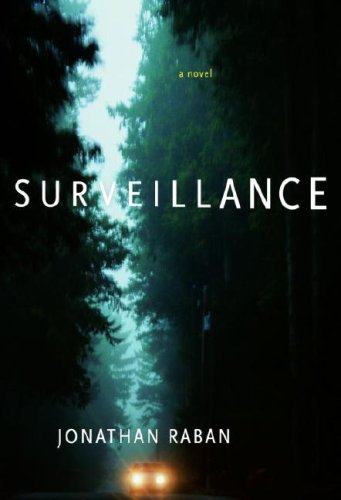
In a post-9/11 America that has become obsessed with security and intelligence gathering, Lucy Bengstrom struggles to support herself and her young daughter, Alida, on a meager income as a freelance journalist, until she is assigned to profile August Vanags, a retired professor turned best-selling author. 40,000 first printing.
Die Inhaltsangabe kann sich auf eine andere Ausgabe dieses Titels beziehen.
Über die Autorin bzw. den Autor
The author, most recently, of Waxwings and Passage to Juneau, Jonathan Raban was born in En-gland and since 1990 has lived in Seattle. His honors include the National Book Critics Circle Award, the Heinemann Award of the Royal Society of Literature, the PEN/West Creative Nonfiction Award, the Pacific Northwest Bookseller Association’s Award, and the Governor’s Award of the State of Washington.
Auszug. © Genehmigter Nachdruck. Alle Rechte vorbehalten.
1
After the explosion, the driver of the overturned school bus stood beside the wreckage, his clothes in shreds. He was cupping his hands to his ears, as if to spare himself the noise of sirens, car alarms, bullhorns, whistles, and tumbling masonry. When he brought his hands away and held them in front of his face, both palms were dripping blood. His mouth opened wide in a scream that was lost in the surrounding din.
Beyond the bus, a tire dump had caught fire. Swirls and billows of black smoke, looking as thick and glossy as oil in the early morning sunshine, rose in a fast-climbing plume above the flames. The painted letters of the company sign, PACIFIC AUTO RECYCLING, swelled and popped in the heat.
A child was scrambling from a blown-out window on the bus—a towheaded boy of nine or ten, his face framing a disheveled grin. Half in, half out of the bus, he sat on the window's edge, gazing at the lurid inferno of burning tires and the screaming driver as if the catastrophic nature of the occasion quite eluded him.
Rescue workers came running—sexless toddlers in silver spacesuits—their giant feet slipping and sliding on the pulverized glass that coated the road inches deep like a freak hail-fall. Shards of glass were still dropping from the windows of buildings that had taken the full force of the blast.
The hollow whoomph of an exploding gas tank came from inside the auto-wrecking yard, followed by another a couple of seconds later. A spaceman with a machine gun shouted, "Keep down! Keep down!" at the rescue team, his voice muffled and distorted as he yelled through his respirator into a bullhorn. Bent low, stumbling through glass, they reached the bus, from which silvery tendrils of smoke or steam were now drifting skyward.
"Get in there! Get every live kid out of it, now!"
Silver-suited fatties clambered onto the axle casing, hoisted themselves atop the side of the yellow bus, and dropped inside through the windows. Two pairs of rescuers half carried, half hustled the grinning boy and the driver along the road, splashing through a small turbulent river that issued from a ruptured water main. The driver's head flopped against his chest, blood from his ears spattering what was left of his shirtfront.
A body in a torn tracksuit lay on its back in the path of the rescue party, her mouth and eyes open as if she'd been saying something important when sudden death interrupted. Dust, fine and pale as talcum powder, was settling on her face, as it settled on the parked cars and curbside dandelions, graying everything on which it fell.
The ground quaked to the sound of a bigger whoomph from the wrecking yard. The bus driver's head jerked upright from between the shoulders of his rescuers, and he let out a throaty, gargling howl. "Oh my Christ!" The word "Christ" was drawn out over several seconds, mingling in the air with the echoing rumble of the latest explosion.
"Not there!! There! Get them on the Decon van! The Red Cross van, assholes. Move it! I said move it!"
"Go fuck yourself," said one of the rescuers from inside his hazmat hood, his voice audible only to the bus driver and, by a stretch, to his fellow rescuer. "Fucking National fucking Guard."
The stumbling trio broke into an ungainly trot, closely followed by the rescuers with the boy, like competitors in a three-legged race making the final dash for the tape.
The tarry chemical stink of the fire filled the Red Cross van taking them to the Decon tent at Harborview. The rear windows looked out on boiling flames and on the dense black overcast, rifted here and there by scraps of flawless blue, that now darkened the streets. In the foreground, a camo Humvee, spacemen with gurneys, running stick figures, splayed bodies, liberated papers seesawing in air, drifts of toxic dust, smoking heaps of bricks and torn Sheetrock.
The driver of the school bus, Tad, was trying to assign the name of a painter to the scene. Goya, maybe. Or Hieronymus Bosch. He tipped his head and jiggled his pinkie in his right ear to clear the canal of stage blood.
"How're you doing, kid?"
"Good."
"Better than school, huh?"
The boy's nose was squashed against the glass. The transfixed grin hadn't left his face since the moment when he'd first climbed out of the bus.
"You wait," Tad said. "You wait till you go through Decon. That's something else."
In Decon the boy would be stripped naked and hosed down before being admitted to the hospital. Tad had gone through it a couple of exercises ago. Never again: he'd written that into his contract. Today, as soon as the van reached Harborview, he'd be into his next part. After Bus Driver with Burst Eardrums came Psychotic Homeless Man Disrupting Work of Rescue Team, then Dying Amputee, Man Having Coronary, and—the one he seriously dreaded—Man Being Dug from Rubble.
Tad Zachary was one of the six professional stars of the show titled TOPOFF 27 by the Department of Homeland Security. Most victims were played by volunteers from government offices and by homeless people getting minimum wage and a free lunch. Tad and his fellow actors were scoring $1,000 of federal money apiece for their day's work. They were the ones who'd be filmed in close-up, their images beamed by satellite to the bunker in D.C. where the exercise was being monitored.
He needed the job. His last appearance on stage had been sixteen months ago, when he'd played Willy Loman in the ACT revival of Death of a Salesman. Since the downturn in the economy, one Seattle theater after another had gone dark, and Tad was scraping by on residuals, commercials, voiceovers, PSAs, vilely written parts in spec indie movies at $250 a throw, management-and-training films, the rare gig as MC at a corporate junket, and the interest on the proceeds of the sale of his mother's house in Portland. He had to remind himself most days that he was lucky: he had a strong local name and good connections. Even jobs in retail, the usual standby of the out-of-work actor, were in short supply now. His friend Gilda Hahn, who'd played opposite him as Linda Loman, had been on food stamps before she found her current role, working the midnight shift at a 7-Eleven on Denny Way.
For Tad the TOPOFFs were performances, but for the emergency services they were dress rehearsals: FEMA, the National Guard, the firefighters, police, ambulancemen, and civic officials were still plotting out their lines and moves, and still not getting it right. In TOPOFF 26, nearly every rescue worker had been contaminated, fatalities had vastly exceeded predictions, chains of command had broken down, hospitals overwhelmed. The reviews that came down from D.C. were so terrible, Tad had heard, that they were officially classified and never reached the press.
This one was the most realistic yet. A dirty bomb (two thousand pounds of ammonium sulfate, nitrate, and fuel oil, mixed up with fifty pounds of cesium-137 in powdered form) had gone off in a container supposedly holding "cotton apparel" from Indonesia, recently unloaded from a ship docked at Harbor Island. A fireworks expert (the same guy who directed the July Fourth display on Elliott Bay) created the terrific gunpowder explosion and the rockets laden with talc to simulate cesium. The tire fire had been set with gasoline, the broken glass supplied by volunteers standing on the roofs of neighboring buildings. At least the pictures beamed to the other Washington would look great.
A section of Route 99 had been closed for the exercise, which was happening in an area five city blocks square. Yet even in this micro version of nuclear horror, chaos was already...
„Über diesen Titel“ kann sich auf eine andere Ausgabe dieses Titels beziehen.
Suchergebnisse für Surveillance

Beispielbild für diese ISBN
Surveillance: A Novel
Anbieter: World of Books (was SecondSale), Montgomery, IL, USA
Verkäuferbewertung 5 von 5 Sternen

Zustand: Very Good. Item in very good condition! Textbooks may not include supplemental items i.e. CDs, access codes etc. Bestandsnummer des Verkäufers 00078525635
Gebraucht kaufen
EUR 4,26
Versand gratis
Versand innerhalb von USA
Versand innerhalb von USA
Anzahl: 2 verfügbar
Beispielbild für diese ISBN
Surveillance: A Novel
Anbieter: BookHolders, Towson, MD, USA
Verkäuferbewertung 5 von 5 Sternen
Zustand: Good. [ No Hassle 30 Day Returns ][ Ships Daily ] [ Underlining/Highlighting: NONE ] [ Writing: NONE ] [ Edition: First ] Publisher: Pantheon Pub Date: 1/30/2007 Binding: Hardcover Pages: 272 First edition. Bestandsnummer des Verkäufers 5989901
Gebraucht kaufen
EUR 4,27
Versand gratis
Versand innerhalb von USA
Versand innerhalb von USA
Anzahl: 1 verfügbar
Beispielbild für diese ISBN
Surveillance: A Novel
Verlag:
Pantheon (edition First Edition), 2007
ISBN 10: 0375422447
ISBN 13: 9780375422447
Gebraucht
Hardcover
Erstausgabe
Anbieter: BooksRun, Philadelphia, PA, USA
Verkäuferbewertung 5 von 5 Sternen
Hardcover. Zustand: Very Good. First Edition. With dust jacket. It's a well-cared-for item that has seen limited use. The item may show minor signs of wear. All the text is legible, with all pages included. It may have slight markings and/or highlighting. Bestandsnummer des Verkäufers 0375422447-11-1-29
Gebraucht kaufen
EUR 5,57
Versand gratis
Versand innerhalb von USA
Versand innerhalb von USA
Anzahl: 1 verfügbar
Beispielbild für diese ISBN
Surveillance
Verlag:
Knopf Doubleday Publishing Group, 2007
ISBN 10: 0375422447
ISBN 13: 9780375422447
Gebraucht
Hardcover
Anbieter: Better World Books, Mishawaka, IN, USA
Verkäuferbewertung 5 von 5 Sternen
Zustand: Good. Former library copy. Pages intact with minimal writing/highlighting. The binding may be loose and creased. Dust jackets/supplements are not included. Includes library markings. Stock photo provided. Product includes identifying sticker. Better World Books: Buy Books. Do Good. Bestandsnummer des Verkäufers 2295788-6
Gebraucht kaufen
EUR 6,35
Versand gratis
Versand innerhalb von USA
Versand innerhalb von USA
Anzahl: 1 verfügbar
Beispielbild für diese ISBN
Surveillance
Verlag:
Knopf Doubleday Publishing Group, 2007
ISBN 10: 0375422447
ISBN 13: 9780375422447
Gebraucht
Hardcover
Anbieter: Better World Books, Mishawaka, IN, USA
Verkäuferbewertung 5 von 5 Sternen
Zustand: Very Good. Former library copy. Pages intact with possible writing/highlighting. Binding strong with minor wear. Dust jackets/supplements may not be included. Includes library markings. Stock photo provided. Product includes identifying sticker. Better World Books: Buy Books. Do Good. Bestandsnummer des Verkäufers 2295790-6
Gebraucht kaufen
EUR 6,35
Versand gratis
Versand innerhalb von USA
Versand innerhalb von USA
Anzahl: 1 verfügbar
Beispielbild für diese ISBN
Surveillance: A Novel
Anbieter: Wonder Book, Frederick, MD, USA
Verkäuferbewertung 5 von 5 Sternen
Zustand: As New. Like New condition. Very Good dust jacket. In protective mylar cover. A near perfect copy that may have very minor cosmetic defects. Bestandsnummer des Verkäufers K08N-00429
Gebraucht kaufen
EUR 6,42
Versand gratis
Versand innerhalb von USA
Versand innerhalb von USA
Anzahl: 1 verfügbar
Beispielbild für diese ISBN
Surveillance: A Novel
Anbieter: Wonder Book, Frederick, MD, USA
Verkäuferbewertung 5 von 5 Sternen
Zustand: As New. Signed Copy . Very Good dust jacket. Signed by author on title page. Bestandsnummer des Verkäufers A15OSa-00278
Gebraucht kaufen
EUR 6,42
Versand gratis
Versand innerhalb von USA
Versand innerhalb von USA
Anzahl: 1 verfügbar
Beispielbild für diese ISBN
Surveillance: A Novel
Anbieter: ThriftBooks-Atlanta, AUSTELL, GA, USA
Verkäuferbewertung 5 von 5 Sternen
Hardcover. Zustand: Very Good. No Jacket. Former library book; May have limited writing in cover pages. Pages are unmarked. ~ ThriftBooks: Read More, Spend Less. Bestandsnummer des Verkäufers G0375422447I4N10
Gebraucht kaufen
EUR 7,11
Versand gratis
Versand innerhalb von USA
Versand innerhalb von USA
Anzahl: 1 verfügbar
Beispielbild für diese ISBN
Surveillance: A Novel
Anbieter: ThriftBooks-Dallas, Dallas, TX, USA
Verkäuferbewertung 5 von 5 Sternen
Hardcover. Zustand: Very Good. No Jacket. May have limited writing in cover pages. Pages are unmarked. ~ ThriftBooks: Read More, Spend Less. Bestandsnummer des Verkäufers G0375422447I4N00
Gebraucht kaufen
EUR 7,11
Versand gratis
Versand innerhalb von USA
Versand innerhalb von USA
Anzahl: 1 verfügbar
Beispielbild für diese ISBN
Surveillance: A Novel
Anbieter: ThriftBooks-Atlanta, AUSTELL, GA, USA
Verkäuferbewertung 5 von 5 Sternen
Hardcover. Zustand: Very Good. No Jacket. May have limited writing in cover pages. Pages are unmarked. ~ ThriftBooks: Read More, Spend Less. Bestandsnummer des Verkäufers G0375422447I4N00
Gebraucht kaufen
EUR 7,11
Versand gratis
Versand innerhalb von USA
Versand innerhalb von USA
Anzahl: 1 verfügbar