
Verwandte Artikel zu The Double Comfort Safari Club: The New No. 1 Ladies'...
The Double Comfort Safari Club: The New No. 1 Ladies' Detective Agency Novel (No. 1 Ladies' Detective Agency, 11, Band 11) - Hardcover
Buch 11 von 27: No 1. Ladies' Detective Agency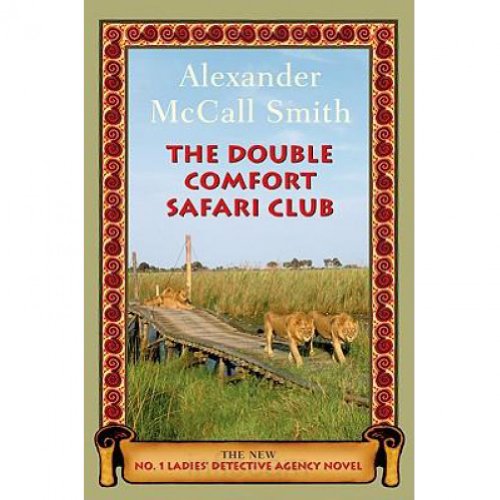
Inhaltsangabe
THE NO. 1 LADIES’ DETECTIVE AGENCY - Book 11
Fans around the world adore the bestselling No. 1 Ladies’ Detective Agency series, the basis of the HBO TV show, and its proprietor Precious Ramotswe, Botswana’s premier lady detective. In this charming series, Mma Ramotswe navigates her cases and her personal life with wisdom, and good humor—not to mention help from her loyal assistant, Grace Makutsi, and the occasional cup of tea.
Readers will agree that this touching and dramatic new installment in Alexander McCall Smith’s beloved and best-selling series is the finest yet. In this story, Precious Ramotswe deals with issues of mistaken identity and great fortune against the beautiful backdrop of Botswana’s remote and striking Okavango Delta.
Mma Ramotswe and Mma Makutsi head to a safari camp to carry out a delicate mission on behalf of a former guest who has left one of the guides a large sum of money. But once they find their man, Precious begins to sense that something is not right. To make matters worse, shortly before their departure Mma Makutsi’s fiancé, Phuti Radiphuti, suffers a debilitating accident, and when his aunt moves in to take care of him, she also pushes Mma Makutsi out of the picture. Could she be trying to break up the relationship? Finally, a local priest and his wife independently approach Mma Ramotswe with concerns of infidelity, creating a rather unusual and tricky situation. Nevertheless, Precious is confident that with a little patience, kindness and good sense things will work out for the best, something that will delight her many fans.
Die Inhaltsangabe kann sich auf eine andere Ausgabe dieses Titels beziehen.
Über die Autorin bzw. den Autor
Alexander McCall Smith is also the author of the Isabel Dalhousie series, the Portuguese Irregular Verbs series, and the 44 Scotland Street series. He is professor emeritus of medical law at the University of Edinburgh and has served on many national and international bodies concerned with bioethics. He was born in what is now known as Zimbabwe and taught law at the University of Botswana. He lives in Scotland. Visit his website at www.alexandermccallsmith.com.
Auszug. © Genehmigter Nachdruck. Alle Rechte vorbehalten.
The Double Comfort Safari Club
The New No. 1 Ladies' Detective Agency NovelBy Alexander Mccall SmithPantheon
Copyright © 2010 Alexander Mccall SmithAll right reserved.
ISBN: 9780375424502
Chapter One
YOU DO NOT CHANGE PEOPLE BY SHOUTING AT THEM
No car, thought Mr. J.L.B. Matekoni, that great mechanic, and good man. No car . . .
He paused. It was necessary, he felt, to order the mind when one was about to think something profound. And Mr. J.L.B. Matekoni was at that moment on the verge of an exceptionally important thought, even though its final shape had yet to reveal itself. How much easier it was for Mma Ramotswe—she put things so well, so succinctly, so profoundly, and appeared to do this with such little effort. It was very different if one was a mechanic, and therefore not used to telling people—in the nicest possible way, of course—how to run their lives. Then one had to think quite hard to find just the right words that would make people sit up and say, “But that is very true, Rra!” Or, especially if you were Mma Ramotswe, “But surely that is well known!”
He had very few criticisms to make of Precious Ramotswe, his wife and founder of the No. 1 Ladies’ Detective Agency, but if one were to make a list of her faults—which would be a minuscule document, barely visible, indeed, to the naked eye—one would perhaps have to include a tendency (only a slight tendency, of course) to claim that things that she happened to believe were well known. This phrase gave these beliefs a sort of unassailable authority, the status that went with facts that all right-thinking people would readily acknowledge—such as the fact that the sun rose in the east, over the undulating canopy of acacia that stretched along Botswana’s border, over the waters of the great Limpopo River itself that now, at the height of the rainy season, flowed deep and fast towards the ocean half a continent away. Or the fact that Seretse Khama had been the first President of Botswana; or even the truism that Botswana was one of the finest and most peaceful countries in the world. All of these facts were indeed both incontestable and well known; whereas Mma Ramotswe’s pronouncements, to which she attributed the special status of being well known, were often, rather, statements of opinion. There was a difference, thought Mr. J.L.B. Matekoni, but it was not one he was planning to point out; there were some things, after all, that it was not helpful for a husband to say to his wife and that, he thought, was probably one of them.
Now, his thoughts having been properly marshalled, the right words came to him in a neat, economical expression: No car is entirely perfect. That was what he wanted to say, and these words were all that was needed to say it. So he said it once more. No car is entirely perfect.
In his experience, which was considerable—as the proprietor of Tlokweng Road Speedy Motors and attending physician, therefore, to a whole fleet of middle-ranking cars—every vehicle had its bad points, its foibles, its rattles, its complaints; and this, he thought, was the language of machinery, those idiosyncratic engine sounds by which a car would strive to communicate with those with ears to listen, usually mechanics. Every car had its good points too: a comfortable driving seat, perhaps, moulded over the years to the shape of the car’s owner, or an engine that started the first time without hesitation or complaint, even on the coldest winter morning, when the air above Botswana was dry and crisp and sharp in the lungs. Each car, then, was an individual, and if only he could get his apprentices to grasp that fact, their work might be a little bit more reliable and less prone to require redoing by him. Push, shove, twist: these were no mantras for a good mechanic. Listen, coax, soothe: that should be the motto inscribed above the entrance to every garage; that, or the words which he had once seen printed on the advertisement for a garage in Francistown: Your car is ours.
That slogan, persuasive though it might have sounded, had given him pause. It was a little ambiguous, he decided: on the one hand, it might be taken to suggest that the garage was in the business of taking people’s cars away from them—an unfortunate choice of words if read that way. On the other, it could mean that the garage staff treated clients’ cars with the same care that they treated their own. That, he thought, is what they meant, and it would have been preferable if they had said it. It is always better to say what you mean—it was his wife, Mma Ramotswe, who said that, and he had always assumed that she meant it.
No, he mused: there is no such thing as a perfect car, and if every car had its good and bad points, it was the same with people. Just as every person had his or her little ways—habits that niggled or irritated others, annoying mannerisms, vices and failings, moments of selfishness—so too did they have their good points: a winning smile, an infectious sense of humour, the ability to cook a favourite dish just the way you wanted it.
That was the way the world was; it was composed of a few almost perfect people (ourselves); then there were a good many people who generally did their best but were not all that perfect (our friends and colleagues); and finally, there were a few rather nasty ones (our enemies and opponents). Most people fell into that middle group—those who did their best—and the last group was, thankfully, very small and not much in evidence in places like Botswana, where he was fortunate enough to live.
These reflections came to Mr. J.L.B. Matekoni while he was driving his tow-truck down the Lobatse Road. He was on what Mma Ramotswe described as one of his errands of mercy. In this case he was setting out to rescue the car of one Mma Constance Mateleke, a senior and highly regarded midwife and, as it happened, a long-standing friend of Mma Ramotswe. She had called him from the roadside. “Quite dead,” said Mma Mateleke through the faint, crackling line of her mobile phone. “Stopped. Plenty of petrol. Just stopped like that, Mr. Matekoni. Dead.”
Mr. J.L.B. Matekoni smiled to himself. “No car dies for ever,” he consoled her. “When a car seems to die, it is sometimes just sleeping. Like Lazarus, you know.” He was not quite sure of the analogy. As a boy he had heard the story of Lazarus at Sunday School in Molepolole, but his recollection was now hazy. It was many years ago, and the stories of that time, the real, the made-up, the long-winded tales of the old people—all of these had a tendency to get mixed up and become one. There were seven lean cows in somebody’s dream, or was it five lean cows and seven fat ones?
“So you are calling yourself Jesus Christ now, are you, Mr. Matekoni? No more Tlokweng Road Speedy Motors, is it? Jesus Christ Motors now?” retorted Mma Mateleke. “You say that you can raise cars from the dead. Is that what you’re saying?”
Mr. J.L.B. Matekoni chuckled. “Certainly not. No, I am just a mechanic, but I know how to wake cars up. That is not a special thing. Any mechanic can wake a car.” Not apprentices, though, he thought.
“We’ll see,” she said. “I have great faith in you, Mr. Matekoni, but this car seems very sick now. And time is running away. Perhaps we should stop...
„Über diesen Titel“ kann sich auf eine andere Ausgabe dieses Titels beziehen.
Suchergebnisse für The Double Comfort Safari Club: The New No. 1 Ladies'...

Beispielbild für diese ISBN
The Double Comfort Safari Club: The New No. 1 Ladies' Detective Agency Novel
Anbieter: World of Books (was SecondSale), Montgomery, IL, USA
Verkäuferbewertung 5 von 5 Sternen

Hardback. Zustand: Good. Fans around the world adore the bestselling No. 1 Ladies' Detective Agency series and its proprietor, Precious Ramotswe, Botswana's premier lady detective. In this charming series, Mma Ramotswe--with help from her loyal associate, Grace Makutsi--navigates her cases and her personal life with wisdom, good humor, and the occasional cup of tea. In this story, Precious Ramotswe deals with issues of mistaken identity and great fortune against the beautiful backdrop of Botswana's remote and striking Okavango Delta. Mma Ramotswe and Mma Makutsi head to a safari camp to carry out a delicate mission on behalf of a former guest who has left one of the guides a large sum of money. But once they find their man, Precious begins to sense that something is not right. To make matters worse, shortly before their departure Mma Makutsi's fianc , Phuti Radiphuti, suffers a debilitating accident, and when his aunt moves in to take care of him, she also pushes Mma Makutsi out of the picture. Could she be trying to break up the relationship? Finally, a local priest and his wife independently approach Mma Ramotswe with concerns of infidelity, creating a rather unusual and tricky situation. Nevertheless, Precious is confident that with a little patience, kindness and good sense things will work out for the best, something that will delight her many fans. Bestandsnummer des Verkäufers 00086008098
Gebraucht kaufen
EUR 3,71
Versand gratis
Versand innerhalb von USA
Versand innerhalb von USA
Anzahl: Mehr als 20 verfügbar
Beispielbild für diese ISBN
The Double Comfort Safari Club: The New No. 1 Ladies' Detective Agency Novel
Anbieter: World of Books (was SecondSale), Montgomery, IL, USA
Verkäuferbewertung 5 von 5 Sternen
Hardback. Zustand: Fair. Fans around the world adore the bestselling No. 1 Ladies' Detective Agency series and its proprietor, Precious Ramotswe, Botswana's premier lady detective. In this charming series, Mma Ramotswe--with help from her loyal associate, Grace Makutsi--navigates her cases and her personal life with wisdom, good humor, and the occasional cup of tea. In this story, Precious Ramotswe deals with issues of mistaken identity and great fortune against the beautiful backdrop of Botswana's remote and striking Okavango Delta. Mma Ramotswe and Mma Makutsi head to a safari camp to carry out a delicate mission on behalf of a former guest who has left one of the guides a large sum of money. But once they find their man, Precious begins to sense that something is not right. To make matters worse, shortly before their departure Mma Makutsi's fianc , Phuti Radiphuti, suffers a debilitating accident, and when his aunt moves in to take care of him, she also pushes Mma Makutsi out of the picture. Could she be trying to break up the relationship? Finally, a local priest and his wife independently approach Mma Ramotswe with concerns of infidelity, creating a rather unusual and tricky situation. Nevertheless, Precious is confident that with a little patience, kindness and good sense things will work out for the best, something that will delight her many fans. Bestandsnummer des Verkäufers 00086669534
Gebraucht kaufen
EUR 3,71
Versand gratis
Versand innerhalb von USA
Versand innerhalb von USA
Anzahl: 5 verfügbar
Beispielbild für diese ISBN
The Double Comfort Safari Club (No. 1 Ladies' Detective Agency)
Anbieter: Gulf Coast Books, Cypress, TX, USA
Verkäuferbewertung 5 von 5 Sternen
Hardcover. Zustand: Very Good. Bestandsnummer des Verkäufers 0375424504-2-20687342
Gebraucht kaufen
EUR 3,72
Versand gratis
Versand innerhalb von USA
Versand innerhalb von USA
Anzahl: 2 verfügbar
Beispielbild für diese ISBN
The Double Comfort Safari Club (No. 1 Ladies' Detective Agency)
Anbieter: Orion Tech, Kingwood, TX, USA
Verkäuferbewertung 5 von 5 Sternen
Hardcover. Zustand: Very Good. Bestandsnummer des Verkäufers 0375424504-2-19156701
Gebraucht kaufen
EUR 3,73
Versand gratis
Versand innerhalb von USA
Versand innerhalb von USA
Anzahl: 2 verfügbar
Beispielbild für diese ISBN
The Double Comfort Safari Club (No. 1 Ladies' Detective Agency)
Anbieter: Your Online Bookstore, Houston, TX, USA
Verkäuferbewertung 5 von 5 Sternen
hardcover. Zustand: Very Good. Bestandsnummer des Verkäufers 0375424504-2-36105539
Gebraucht kaufen
EUR 3,75
Versand gratis
Versand innerhalb von USA
Versand innerhalb von USA
Anzahl: 1 verfügbar
Foto des Verkäufers
The Double Comfort Safari Club (No. 1 Ladies' Detective Agency)
Anbieter: Used Book Company, Egg Harbor Township, NJ, USA
Verkäuferbewertung 5 von 5 Sternen
Zustand: Very Good. Former library copy. Shows minimal signs of wear and previous use. Can include minimal notes/highlighting. A portion of your purchase benefits nonprofits! - Note: Edition & format may differ from what is shown in stock photo & item details. May not include supplementary material (toys, access code, dvds, etc). Bestandsnummer des Verkäufers 584R0H0004TT_ns
Gebraucht kaufen
EUR 3,91
Versand gratis
Versand innerhalb von USA
Versand innerhalb von USA
Anzahl: 1 verfügbar
Beispielbild für diese ISBN
The Double Comfort Safari Club (No. 1 Ladies' Detective Agency)
Anbieter: BRT Resales, DeLand, FL, USA
Verkäuferbewertung 5 von 5 Sternen
Hardcover. Zustand: Very Good. 1st Edition. Very Good hardcover 9780375424502. Bestandsnummer des Verkäufers ABE-1778522771340
Gebraucht kaufen
EUR 4,07
Versand gratis
Versand innerhalb von USA
Versand innerhalb von USA
Anzahl: 1 verfügbar
Beispielbild für diese ISBN
The Double Comfort Safari Club (No. 1 Ladies' Detective Agency)
Anbieter: More Than Words, Waltham, MA, USA
Verkäuferbewertung 5 von 5 Sternen
Zustand: Very Good. . good. All orders guaranteed and ship within 24 hours. Before placing your order for please contact us for confirmation on the book's binding. Check out our other listings to add to your order for discounted shipping. Bestandsnummer des Verkäufers WAL-S-2d-01945
Gebraucht kaufen
EUR 0,92
EUR 3,55 Versand
Versand innerhalb von USA
Versand innerhalb von USA
Anzahl: 1 verfügbar
Beispielbild für diese ISBN
The Double Comfort Safari Club (No. 1 Ladies' Detective Agency)
Anbieter: More Than Words, Waltham, MA, USA
Verkäuferbewertung 5 von 5 Sternen
Zustand: Good. A sound copy with only light wear. Overall a solid copy at a great price! Bestandsnummer des Verkäufers BOS-H-11f-02080
Gebraucht kaufen
EUR 0,92
EUR 3,55 Versand
Versand innerhalb von USA
Versand innerhalb von USA
Anzahl: 3 verfügbar
Foto des Verkäufers
The Double Comfort Safari Club (No. 1 Ladies' Detective Agency)
Anbieter: Reliant Bookstore, El Dorado, KS, USA
Verkäuferbewertung 5 von 5 Sternen
Zustand: very_good. This book is in excellent condition. There may be minimal writing on the inside cover or cover page. Cover image on the book may vary from photo. Ships out quickly in a secure plastic mailer. Bestandsnummer des Verkäufers RDV.0375424504.VG
Gebraucht kaufen
EUR 4,49
Versand gratis
Versand innerhalb von USA
Versand innerhalb von USA
Anzahl: 1 verfügbar