
Verwandte Artikel zu Reflections on the Revolution in France
Inhaltsangabe
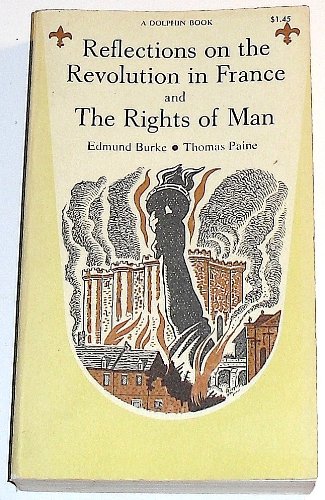
Edmund Burke was a statesman and philosopher who favored gradual reform over revolution. Arguing that the ideology behind the French Revolution was too ephemeral, he predicted a disastrous outcome. Well regarded by the liberals of his day for his support of constitutional limitations on sovereign authority, his condemnation of religious persecution, and his sympathy for the grievances of the American colonists, Burke also gained the respect of conservatives when he published his "Reflections on the Revolution in France" in 1790. One of Paine's greatest and most widely read works, considered a classic statement of faith in democracy and egalitarianism, defends the early events of the French Revolution, supports social security for workers, public employment for those in need of work, abolition of laws limiting wages, and other social reforms.
Die Inhaltsangabe kann sich auf eine andere Ausgabe dieses Titels beziehen.
Suchergebnisse für Reflections on the Revolution in France

Beispielbild für diese ISBN
Reflections on the Revolution in France & The Rights of Man
Anbieter: HPB-Ruby, Dallas, TX, USA
Verkäuferbewertung 5 von 5 Sternen

paperback. Zustand: Very Good. Connecting readers with great books since 1972! Used books may not include companion materials, and may have some shelf wear or limited writing. We ship orders daily and Customer Service is our top priority! Bestandsnummer des Verkäufers S_478268611
Gebraucht kaufen
EUR 2,65
EUR 3,23 Versand
Versand innerhalb von USA
Versand innerhalb von USA
Anzahl: 1 verfügbar
Beispielbild für diese ISBN
Reflections on the Revolution in France & The Rights of Man
Anbieter: HPB Inc., Dallas, TX, USA
Verkäuferbewertung 5 von 5 Sternen
Paperback. Zustand: Very Good. Connecting readers with great books since 1972! Used books may not include companion materials, and may have some shelf wear or limited writing. We ship orders daily and Customer Service is our top priority! Bestandsnummer des Verkäufers S_451526398
Gebraucht kaufen
EUR 2,65
EUR 3,23 Versand
Versand innerhalb von USA
Versand innerhalb von USA
Anzahl: 1 verfügbar
Beispielbild für diese ISBN
Reflections on the Revolution in France & The Rights of Man
Anbieter: Your Online Bookstore, Houston, TX, USA
Verkäuferbewertung 5 von 5 Sternen
paperback. Zustand: Fair. Bestandsnummer des Verkäufers 0385081901-4-37448607
Gebraucht kaufen
EUR 5,96
Versand gratis
Versand innerhalb von USA
Versand innerhalb von USA
Anzahl: 1 verfügbar
Beispielbild für diese ISBN
Reflections on the Revolution in France
Verlag:
Knopf Doubleday Publishing Group, 1969
ISBN 10: 0385081901
ISBN 13: 9780385081900
Gebraucht
Softcover
Anbieter: Better World Books: West, Reno, NV, USA
Verkäuferbewertung 5 von 5 Sternen
Zustand: Good. Pages intact with minimal writing/highlighting. The binding may be loose and creased. Dust jackets/supplements are not included. Stock photo provided. Product includes identifying sticker. Better World Books: Buy Books. Do Good. Bestandsnummer des Verkäufers GRP67757339
Gebraucht kaufen
EUR 5,96
Versand gratis
Versand innerhalb von USA
Versand innerhalb von USA
Anzahl: 2 verfügbar
Foto des Verkäufers
Reflections on the Revolution in France & The Rights of Man
Anbieter: -OnTimeBooks-, Phoenix, AZ, USA
Verkäuferbewertung 5 von 5 Sternen
Zustand: very_good. Gently read. May have name of previous ownership, or ex-library edition. Binding tight; spine straight and smooth, with no creasing; covers clean and crisp. Minimal signs of handling or shelving. 100% GUARANTEE! Shipped with delivery confirmation, if you're not satisfied with purchase please return item! Ships USPS Media Mail. Bestandsnummer des Verkäufers OTV.0385081901.VG
Gebraucht kaufen
EUR 6,82
Versand gratis
Versand innerhalb von USA
Versand innerhalb von USA
Anzahl: 1 verfügbar
Foto des Verkäufers
Reflections on the Revolution in France & The Rights of Man
Anbieter: Range & River Books, Bishop, CA, USA
Verkäuferbewertung 5 von 5 Sternen
Paperback. Zustand: Good. Good paperback with tight binding and clean pages. Stamped Discard, no other library markings. Excellent reading copy with clean pages. Moderate shelf wear to edges and corners of covers and spine. One small hole punch on front right corner of cover. Previous book store sticker price sticker on spine near bottom. ; Ex-Library; 6.90 X 4 X 1.20 inches. Bestandsnummer des Verkäufers 40765
Gebraucht kaufen
EUR 2,66
EUR 4,73 Versand
Versand innerhalb von USA
Versand innerhalb von USA
Anzahl: 1 verfügbar
Beispielbild für diese ISBN
Reflections on the Revolution in France & The Rights of Man
Verlag:
Doubleday & Company, Inc., 1961
ISBN 10: 0385081901
ISBN 13: 9780385081900
Gebraucht
Mass Market Paperback
Anbieter: Top Notch Books, Tolar, TX, USA
Verkäuferbewertung 5 von 5 Sternen
Mass Market Paperback. Zustand: Good. Wraps scuffed with edgewear. Pages are clean & text is free from markings. Size: 12mo - over 6¾" - 7¾" tall. Bestandsnummer des Verkäufers 239711H
Gebraucht kaufen
EUR 4,43
EUR 4,95 Versand
Versand innerhalb von USA
Versand innerhalb von USA
Anzahl: 1 verfügbar
Foto des Verkäufers
Reflections on the Revolution in France & The Rights of Man
Verlag:
Anchor July 1969, 1969
ISBN 10: 0385081901
ISBN 13: 9780385081900
Gebraucht
Mass Market PaperBack
Anbieter: A Cappella Books, Inc., Atlanta, GA, USA
Verkäuferbewertung 5 von 5 Sternen
Mass Market PaperBack. Zustand: Good. Bestandsnummer des Verkäufers 394088
Gebraucht kaufen
EUR 14,18
Versand gratis
Versand innerhalb von USA
Versand innerhalb von USA
Anzahl: 1 verfügbar
Foto des Verkäufers
Reflections on the Revolution in France and The Rights of Man
Verlag:
Anchor Books Anchor Press/Doubleday, Garden City, 1973
ISBN 10: 0385081901
ISBN 13: 9780385081900
Gebraucht
Mass Market Paperback
Anbieter: Past Pages, Oshawa, ON, Kanada
Verkäuferbewertung 5 von 5 Sternen
Mass Market Paperback. Zustand: Good. Light Creasing on Front, Rear Covers; Front Cover Moderately Chipped; Rear Cover, Spine Lightly Chipped; Light Sticker Pull to Front Cover. SYNOPSIS: Because the French Revolution was, in Burke's phrase, "the most astonishing event . . . in human history," a full seventeen months elapsed after the first meeting of the National Assembly before any notable public figure dared to interpret the events in France to an awe-struck world. In November 1790, Burke published his Reflections on the Revolution in France, a masterpiece of political analysis and prediction which ran through ten editions in the first year. Many attempts were made to refute Burke's attack on the Revolution, of which none was more famous than Thomas Paine's Rights of Man. The issue joined between these great antagonists was the value of our civilized heritage. Burke believed that each generation was beholden for its liberties, its learning, and other great gifts to the cumulative achievement of all past generations. Paine wished to free man from the dead hand of corrupt custom and hereditary privilege and to restore him to full possession of his original natural rights. At the beginning of our era of glittering and terrible revolutions, Burke taught fear of human pride and Paine, hope in human charity, both with a clear and passionate conviction that can still instruct and move us. Edmund Burke (1729-97) was the second son of an Irish attorney. From 1743 to 1748 he attended Trinity College, Dublin, and in 1756 he first came to public notice with the publication of A Vindication of Natural Society and the Philosophical Inquiry into the Origin of Our Ideas on the Sublime and Beautiful. He entered Parliament in 1765 and represented the great seaport of Bristol from 1774 to 1780. While he never held any important ministerial post, Burke gained an extraordinary influence in England by means of his published writings, reaching the climax of his fame with the publication, in 1790, of Reflections on the Revolution in France. This great British statesman and publicist, who commanded the admiration and friendship of Samuel Johnson, devoted his life to five "great, just, and honorable causes": the preservation of the English Constitution, the emancipation of Ireland, the emancipation of the American Colonies, the protection of the people of India from the misgovernment of the East India Company, and opposition to the ravages of the French Revolution. Thomas Paine (1737-1809) was born in England, a Quaker and the son of a poor corsetmaker. At thirteen he was apprenticed to his father's trade. After a meeting with Benjamin Franklin in London, he sailed for Philadelphia in 1774. In the new land he became a journalist and an ardent patriot. His pamphlet, Common Sense, urging the immediate declaration of independence, appeared in January 1776 and did a great deal to inspire the American Revolution. He traveled with the Revolutionary Army and wrote the Crisis pamphlets. In 1787 he returned to England, only to leave for France two years later, a self-appointed missionary of revolution. His famous answer to Edmund Burke's condemnation of the French Revolution, The Rights of Man, resulted in his trial for treason and banishment. When the sentence was delivered he was in France, where he was subsequently imprisoned under the Terror. In prison he began writing The Age of Reason. He returned to America in 1802, but found himself ostracized as a radical freethinker and lived in poverty until his death. Size: 12mo - over 6¾" - 7¾" tall. Bestandsnummer des Verkäufers 000805
Gebraucht kaufen
EUR 13,33
EUR 64,55 Versand
Versand von Kanada nach USA
Versand von Kanada nach USA
Anzahl: 1 verfügbar
Beispielbild für diese ISBN
Reflections on the Revolution in France & The Rights of Man
Anbieter: BennettBooksLtd, Los Angeles, CA, USA
Verkäuferbewertung 5 von 5 Sternen
paperback. Zustand: New. In shrink wrap. Looks like an interesting title! Bestandsnummer des Verkäufers Q-0385081901
Neu kaufen
EUR 92,85
EUR 5,98 Versand
Versand innerhalb von USA
Versand innerhalb von USA
Anzahl: 1 verfügbar