
Verwandte Artikel zu The Tiger's Wife: A Novel
Inhaltsangabe
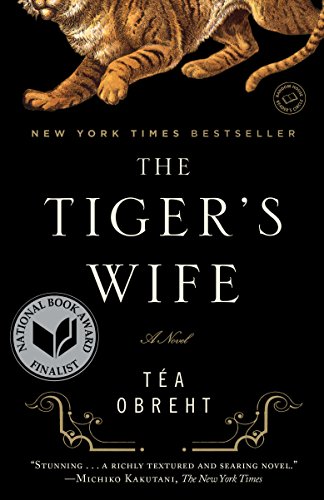
NEW YORK TIMES BESTSELLER • NATIONAL BOOK AWARD FINALIST • The instant classic debut novel from the author of Inland and The Morningside, hailed as “a thrilling beginning to what will certainly be a great literary career” (Elle)
“Spectacular . . . [Téa Obreht] spins a tale of such marvel and magic in a literary voice so enchanting that the mesmerized reader wants her never to stop.”—Entertainment Weekly
“Not since Zadie Smith has a young writer arrived with such power and grace.”—Time
ONE OF THE TEN BEST BOOKS OF THE YEAR: Michiko Kakutani, The New York Times; Entertainment Weekly; The Christian Science Monitor; The Kansas City Star; Library Journal
In a Balkan country mending from war, Natalia, a young doctor, is compelled to unravel the mysterious circumstances surrounding her beloved grandfather’s recent death. Searching for clues, she turns to his worn copy of The Jungle Book and the stories he told her of his encounters over the years with “the deathless man.” But most extraordinary of all is the story her grandfather never told her—the legend of the tiger’s wife.
Weaving a brilliant latticework of family legend, loss, and love, Téa Obreht, hailed by Colum McCann as “the most thrilling literary discovery in years,” has spun a timeless novel that will establish her as one of the most vibrant, original authors of her generation.
ONE OF THE BEST BOOKS OF THE YEAR: The Wall Street Journal, O: The Oprah Magazine, The Economist, Vogue, Slate, Chicago Tribune, The Seattle Times, Dayton Daily News, Publishers Weekly, Alan Cheuse, NPR’s All Things Considered
Die Inhaltsangabe kann sich auf eine andere Ausgabe dieses Titels beziehen.
Über die Autorin bzw. den Autor
Téa Obreht was born in Belgrade in the former Yugoslavia in 1985 and has lived in the United States since the age of twelve. Her writing has been published in The New Yorker, The Atlantic, Harper’s, and The Guardian, and has been anthologized in The Best American Short Stories and The Best American Nonrequired Reading. She has been named by The New Yorker as one of the twenty best American fiction writers under forty and included in the National Book Foundation’s list of 5 Under 35. Téa Obreht lives in New York.
Auszug. © Genehmigter Nachdruck. Alle Rechte vorbehalten.
1
The Coast
the forty days of the soul begin on the morning after death. That first night, before its forty days begin, the soul lies still against sweated-on pillows and watches the living fold the hands and close the eyes, choke the room with smoke and silence to keep the new soul from the doors and the windows and the cracks in the floor so that it does not run out of the house like a river. The living know that, at daybreak, the soul will leave them and make its way to the places of its past—the schools and dormitories of its youth, army barracks and tenements, houses razed to the ground and rebuilt, places that recall love and guilt, difficulties and unbridled happiness, optimism and ecstasy, memories of grace meaningless to anyone else—and sometimes this journey will carry it so far for so long that it will forget to come back. For this reason, the living bring their own rituals to a standstill: to welcome the newly loosed spirit, the living will not clean, will not wash or tidy, will not remove the soul’s belongings for forty days, hoping that sentiment and longing will bring it home again, encourage it to return with a message, with a sign, or with forgiveness.
If it is properly enticed, the soul will return as the days go by, to rummage through drawers, peer inside cupboards, seek the tactile comfort of its living identity by reassessing the dish rack and the doorbell and the telephone, reminding itself of functionality, all the time touching things that produce sound and make its presence known to the inhabitants of the house.
Speaking quietly into the phone, my grandma reminded me of this after she told me of my grandfather’s death. For her, the forty days were fact and common sense, knowledge left over from burying two parents and an older sister, assorted cousins and strangers from her hometown, a formula she had recited to comfort my grandfather whenever he lost a patient in whom he was particularly invested—a superstition, according to him, but something in which he had indulged her with less and less protest as old age had hardened her beliefs.
My grandma was shocked, angry because we had been robbed of my grandfather’s forty days, reduced now to thirty-seven or thirty-eight by the circumstances of his death. He had died alone, on a trip away from home; she hadn’t known that he was already dead when she ironed his clothes the day before, or washed the dishes that morning, and she couldn’t account for the spiritual consequences of her ignorance. He had died in a clinic in an obscure town called Zdrevkov on the other side of the border; no one my grandma had spoken to knew where Zdrevkov was, and when she asked me, I told her the truth: I had no idea what he had been doing there.
“You’re lying,” she said.
“Bako, I’m not.”
“He told us he was on his way to meet you.”
“That can’t be right,” I said.
He had lied to her, I realized, and lied to me. He had taken advantage of my own cross-country trip to slip away—a week ago, she was saying, by bus, right after I had set out myself—and had gone off for some reason unknown to either of us. It had taken the Zdrevkov clinic staff three whole days to track my grandma down after he died, to tell her and my mother that he was dead, arrange to send his body. It had arrived at the City morgue that morning, but by then, I was already four hundred miles from home, standing in the public bathroom at the last service station before the border, the pay phone against my ear, my pant legs rolled up, sandals in hand, bare feet slipping on the green tiles under the broken sink.
Somebody had fastened a bent hose onto the faucet, and it hung, nozzle down, from the boiler pipes, coughing thin streams of water onto the floor. It must have been going for hours: water was everywhere, flooding the tile grooves and pooling around the rims of the squat toilets, dripping over the doorstep and into the dried-up garden behind the shack. None of this fazed the bathroom attendant, a middle-aged woman with an orange scarf tied around her hair, whom I had found dozing in a corner chair and dismissed from the room with a handful of bills, afraid of what those seven missed beeper pages from my grandma meant before I even picked up the receiver.
I was furious with her for not having told me that my grandfather had left home. He had told her and my mother that he was worried about my goodwill mission, about the inoculations at the Brejevina orphanage, and that he was coming down to help. But I couldn’t berate my grandma without giving myself away, because she would have told me if she had known about his illness, which my grandfather and I had hidden from her. So I let her talk, and said nothing about how I had been with him at the Military Academy of Medicine three months before when he had found out, or how the oncologist, a lifelong colleague of my grandfather’s, had shown him the scans and my grandfather had put his hat down on his knee and said, “Fuck. You go looking for a gnat and you find a donkey.”
I put two more coins into the slot, and the phone whirred. Sparrows were diving from the brick ledges of the bathroom walls, dropping into the puddles at my feet, shivering water over their backs. The sun outside had baked the early afternoon into stillness, and the hot, wet air stood in the room with me, shining in the doorway that led out to the road, where the cars at border control were packed in a tight line along the glazed tarmac. I could see our car, left side dented from a recent run-in with a tractor, and Zóra sitting in the driver’s seat, door propped open, one long leg dragging along the ground, glances darting back toward the bathroom more and more often as she drew closer to the customs booth.
“They called last night,” my grandma was saying, her voice louder. “And I thought, they’ve made a mistake. I didn’t want to call you until we were sure, to worry you in case it wasn’t him. But your mother went down to the morgue this morning.” She was quiet, and then: “I don’t understand, I don’t understand any of it.”
“I don’t either, Bako,” I said.
“He was going to meet you.”
“I didn’t know about it.”
Then the tone of her voice changed. She was suspicious, my grandma, of why I wasn’t crying, why I wasn’t hysterical. For the first ten minutes of our conversation, she had probably allowed herself to believe that my calm was the result of my being in a foreign hospital, on assignment, surrounded, perhaps, by colleagues. She would have challenged me a lot sooner if she had known that I was hiding in the border-stop bathroom so that Zóra wouldn’t overhear.
She said, “Haven’t you got anything to say?”
“I just don’t know, Bako. Why would he lie about coming to see me?”
“You haven’t asked if it was an accident,” she said. “Why haven’t you asked that? Why haven’t you asked how he died?”
“I didn’t even know he had left home,” I said. “I didn’t know any of this was going on.”
“You’re not crying,” she said.
“Neither are you.”
“Your mother is heartbroken,” she said to me. “He must have known. They said he was very ill—so he must have known, he must have told someone. Was it you?”
“If he had known, he wouldn’t have gone anywhere,” I said, with what I hoped was conviction. “He would have known better.” There were white towels stacked neatly on a metal shelf...
„Über diesen Titel“ kann sich auf eine andere Ausgabe dieses Titels beziehen.
Suchergebnisse für The Tiger's Wife: A Novel

Beispielbild für diese ISBN
The Tiger's Wife: A Novel
Verlag:
Bantam Doubleday Dell Publishing Group Inc, 2011
ISBN 10: 0385343841
ISBN 13: 9780385343848
Gebraucht
Paperback
Anbieter: World of Books (was SecondSale), Montgomery, IL, USA
Verkäuferbewertung 5 von 5 Sternen

Paperback. Zustand: Very Good. NEW YORK TIMES BESTSELLER * NATIONAL BOOK AWARD FINALIST * The instant classic debut novel from the author of Inland and The Morningside, hailed as "a thrilling beginning to what will certainly be a great literary career" (Elle) "Spectacular . . . [Téa Obreht] spins a tale of such marvel and magic in a literary voice so enchanting that the mesmerized reader wants her never to stop."--Entertainment Weekly "Not since Zadie Smith has a young writer arrived with such power and grace."--Time ONE OF THE TEN BEST BOOKS OF THE YEAR: Michiko Kakutani, The New York Times; Entertainment Weekly; The Christian Science Monitor; The Kansas City Star; Library Journal In a Balkan country mending from war, Natalia, a young doctor, is compelled to unravel the mysterious circumstances surrounding her beloved grandfather's recent death. Searching for clues, she turns to his worn copy of The Jungle Book and the stories he told her of his encounters over the years with "the deathless man." But most extraordinary of all is the story her grandfather never told her--the legend of the tiger's wife. Weaving a brilliant latticework of family legend, loss, and love, Téa Obreht, hailed by Colum McCann as "the most thrilling literary discovery in years," has spun a timeless novel that will establish her as one of the most vibrant, original authors of her generation. ONE OF THE BEST BOOKS OF THE YEAR: The Wall Street Journal, O: The Oprah Magazine, The Economist, Vogue, Slate, Chicago Tribune, The Seattle Times, Dayton Daily News, Publishers Weekly, Alan Cheuse, NPR's All Things Considered. Bestandsnummer des Verkäufers 00099921170
Gebraucht kaufen
EUR 3,75
Versand gratis
Versand innerhalb von USA
Versand innerhalb von USA
Anzahl: Mehr als 20 verfügbar
Beispielbild für diese ISBN
The Tiger's Wife: A Novel
Verlag:
Bantam Doubleday Dell Publishing Group Inc, 2011
ISBN 10: 0385343841
ISBN 13: 9780385343848
Gebraucht
Paperback
Anbieter: World of Books (was SecondSale), Montgomery, IL, USA
Verkäuferbewertung 5 von 5 Sternen
Paperback. Zustand: Good. NEW YORK TIMES BESTSELLER * NATIONAL BOOK AWARD FINALIST * The instant classic debut novel from the author of Inland and The Morningside, hailed as "a thrilling beginning to what will certainly be a great literary career" (Elle) "Spectacular . . . [Téa Obreht] spins a tale of such marvel and magic in a literary voice so enchanting that the mesmerized reader wants her never to stop."--Entertainment Weekly "Not since Zadie Smith has a young writer arrived with such power and grace."--Time ONE OF THE TEN BEST BOOKS OF THE YEAR: Michiko Kakutani, The New York Times; Entertainment Weekly; The Christian Science Monitor; The Kansas City Star; Library Journal In a Balkan country mending from war, Natalia, a young doctor, is compelled to unravel the mysterious circumstances surrounding her beloved grandfather's recent death. Searching for clues, she turns to his worn copy of The Jungle Book and the stories he told her of his encounters over the years with "the deathless man." But most extraordinary of all is the story her grandfather never told her--the legend of the tiger's wife. Weaving a brilliant latticework of family legend, loss, and love, Téa Obreht, hailed by Colum McCann as "the most thrilling literary discovery in years," has spun a timeless novel that will establish her as one of the most vibrant, original authors of her generation. ONE OF THE BEST BOOKS OF THE YEAR: The Wall Street Journal, O: The Oprah Magazine, The Economist, Vogue, Slate, Chicago Tribune, The Seattle Times, Dayton Daily News, Publishers Weekly, Alan Cheuse, NPR's All Things Considered. Bestandsnummer des Verkäufers 00061723158
Gebraucht kaufen
EUR 3,75
Versand gratis
Versand innerhalb von USA
Versand innerhalb von USA
Anzahl: Mehr als 20 verfügbar
Beispielbild für diese ISBN
The Tiger's Wife: A Novel
Verlag:
Bantam Doubleday Dell Publishing Group Inc, 2011
ISBN 10: 0385343841
ISBN 13: 9780385343848
Gebraucht
Paperback
Anbieter: World of Books (was SecondSale), Montgomery, IL, USA
Verkäuferbewertung 5 von 5 Sternen
Paperback. Zustand: Fair. NEW YORK TIMES BESTSELLER * NATIONAL BOOK AWARD FINALIST * The instant classic debut novel from the author of Inland and The Morningside, hailed as "a thrilling beginning to what will certainly be a great literary career" (Elle) "Spectacular . . . [Téa Obreht] spins a tale of such marvel and magic in a literary voice so enchanting that the mesmerized reader wants her never to stop."--Entertainment Weekly "Not since Zadie Smith has a young writer arrived with such power and grace."--Time ONE OF THE TEN BEST BOOKS OF THE YEAR: Michiko Kakutani, The New York Times; Entertainment Weekly; The Christian Science Monitor; The Kansas City Star; Library Journal In a Balkan country mending from war, Natalia, a young doctor, is compelled to unravel the mysterious circumstances surrounding her beloved grandfather's recent death. Searching for clues, she turns to his worn copy of The Jungle Book and the stories he told her of his encounters over the years with "the deathless man." But most extraordinary of all is the story her grandfather never told her--the legend of the tiger's wife. Weaving a brilliant latticework of family legend, loss, and love, Téa Obreht, hailed by Colum McCann as "the most thrilling literary discovery in years," has spun a timeless novel that will establish her as one of the most vibrant, original authors of her generation. ONE OF THE BEST BOOKS OF THE YEAR: The Wall Street Journal, O: The Oprah Magazine, The Economist, Vogue, Slate, Chicago Tribune, The Seattle Times, Dayton Daily News, Publishers Weekly, Alan Cheuse, NPR's All Things Considered. Bestandsnummer des Verkäufers 00094770360
Gebraucht kaufen
EUR 3,75
Versand gratis
Versand innerhalb von USA
Versand innerhalb von USA
Anzahl: Mehr als 20 verfügbar
Beispielbild für diese ISBN
The Tiger's Wife: A Novel
Verlag:
Random House Trade Paperbacks, 2011
ISBN 10: 0385343841
ISBN 13: 9780385343848
Gebraucht
Paperback
Anbieter: Orion Tech, Kingwood, TX, USA
Verkäuferbewertung 5 von 5 Sternen
Paperback. Zustand: Very Good. Bestandsnummer des Verkäufers 0385343841-2-19111681
Gebraucht kaufen
EUR 3,76
Versand gratis
Versand innerhalb von USA
Versand innerhalb von USA
Anzahl: 6 verfügbar
Beispielbild für diese ISBN
The Tiger's Wife: A Novel
Verlag:
Random House Trade Paperbacks, 2011
ISBN 10: 0385343841
ISBN 13: 9780385343848
Gebraucht
Paperback
Anbieter: Your Online Bookstore, Houston, TX, USA
Verkäuferbewertung 5 von 5 Sternen
Paperback. Zustand: Fair. Bestandsnummer des Verkäufers 0385343841-4-19169866
Gebraucht kaufen
EUR 3,76
Versand gratis
Versand innerhalb von USA
Versand innerhalb von USA
Anzahl: 2 verfügbar
Beispielbild für diese ISBN
The Tiger's Wife: A Novel
Verlag:
Random House Trade Paperbacks, 2011
ISBN 10: 0385343841
ISBN 13: 9780385343848
Gebraucht
Paperback
Anbieter: Orion Tech, Kingwood, TX, USA
Verkäuferbewertung 5 von 5 Sternen
Paperback. Zustand: Fair. Bestandsnummer des Verkäufers 0385343841-4-20064783
Gebraucht kaufen
EUR 3,76
Versand gratis
Versand innerhalb von USA
Versand innerhalb von USA
Anzahl: 1 verfügbar
Beispielbild für diese ISBN
The Tiger's Wife: A Novel
Verlag:
Random House Trade Paperbacks, 2011
ISBN 10: 0385343841
ISBN 13: 9780385343848
Gebraucht
paperback
Anbieter: Orion Tech, Kingwood, TX, USA
Verkäuferbewertung 5 von 5 Sternen
paperback. Zustand: As New. Bestandsnummer des Verkäufers 0385343841-1-37856430
Gebraucht kaufen
EUR 3,76
Versand gratis
Versand innerhalb von USA
Versand innerhalb von USA
Anzahl: 1 verfügbar
Beispielbild für diese ISBN
The Tiger's Wife: A Novel
Verlag:
Random House Trade Paperbacks, 2011
ISBN 10: 0385343841
ISBN 13: 9780385343848
Gebraucht
Paperback
Anbieter: Your Online Bookstore, Houston, TX, USA
Verkäuferbewertung 5 von 5 Sternen
Paperback. Zustand: As New. Bestandsnummer des Verkäufers 0385343841-1-19954683
Gebraucht kaufen
EUR 3,76
Versand gratis
Versand innerhalb von USA
Versand innerhalb von USA
Anzahl: 1 verfügbar
Beispielbild für diese ISBN
The Tiger's Wife: A Novel
Verlag:
Random House Trade Paperbacks, 2011
ISBN 10: 0385343841
ISBN 13: 9780385343848
Gebraucht
Paperback
Anbieter: Your Online Bookstore, Houston, TX, USA
Verkäuferbewertung 5 von 5 Sternen
Paperback. Zustand: Very Good. Bestandsnummer des Verkäufers 0385343841-2-19104774
Gebraucht kaufen
EUR 3,76
Versand gratis
Versand innerhalb von USA
Versand innerhalb von USA
Anzahl: 7 verfügbar
Beispielbild für diese ISBN
The Tiger's Wife: A Novel
Verlag:
Random House Trade Paperbacks, 2011
ISBN 10: 0385343841
ISBN 13: 9780385343848
Gebraucht
Paperback
Anbieter: Gulf Coast Books, Cypress, TX, USA
Verkäuferbewertung 5 von 5 Sternen
Paperback. Zustand: As New. Bestandsnummer des Verkäufers 0385343841-1-20089994
Gebraucht kaufen
EUR 3,76
Versand gratis
Versand innerhalb von USA
Versand innerhalb von USA
Anzahl: 1 verfügbar