
Verwandte Artikel zu The Andalucian Friend
Inhaltsangabe
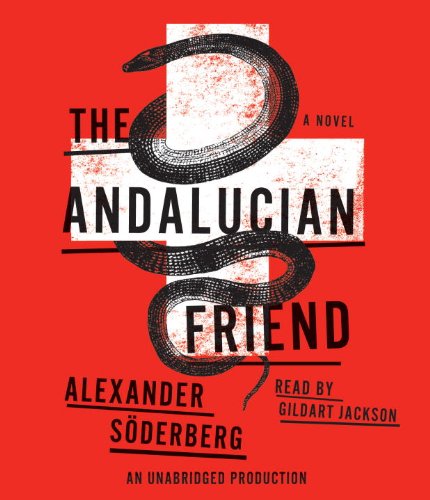
A Monumental International Crime Thriller That Brad Thor Calls "The Girl with the Dragon Tattoo meetsThe Sopranos."
Enemies Are Everywhere
When Sophie Brinkmann—nurse, widow, single mother—meets Hector Guzman, her life is uneventful. She likes his quiet charm and easy smile; she likes the way he welcomes her into his family. She quickly learns, though, that his smooth façade masks something much more sinister.
Guzman is the head of a powerful international crime ring with a reach into drugs and weapons that extends from Europe to South America. His interests are under siege by a ruthless German syndicate who will stop at nothing to stake their claim. But the Guzmans are fighters and will go to war to protect what’s rightfully theirs. The conflict quickly escalates to become a deadly turf war between the rival organizations that includes an itinerant arms dealer, a deeply disturbed detective, a vicious hit man, and a wily police chief. Sophie, too, is unwittingly caught in the middle. She must summon everything within her to navigate this intricate web of moral ambiguity, deadly obsession, and craven gamesmanship.
The Andalucian Friend is a powerhouse of a novel—turbo-charged, action-packed, highly sophisticated, and epic in scope—and announces Alexander Söderberg as the most exciting new voice in thrillers in a generation.
Die Inhaltsangabe kann sich auf eine andere Ausgabe dieses Titels beziehen.
Über die Autorin bzw. den Autor
ALEXANDER SÖDERBERG has worked as a screenwriter for Swedish television. His work includes the TV adaptations of Camilla Läckberg's and Åke Edwardsson's novels. He lives in the countryside in the south of Sweden with his wife and children. THE ANDALUCIAN FRIEND is his first novel.
Auszug. © Genehmigter Nachdruck. Alle Rechte vorbehalten.
1
There was something about her that made some people say she didn’t look like a nurse, and she could never figure out if this was a compliment or an insult. She had long, dark hair and a pair of green eyes that sometimes gave the impression that she was about to burst out laughing. She wasn’t; that was just the way she looked, as if she had been born with a smile in her eyes.
She went down the stairs, which creaked beneath her feet. The house --a fairly small, yellow wooden villa built in 1911, with leaded windows, shiny old parquet floors, and a garden that could have been bigger --was her place on this earth, she realized that the first time she saw it.
The kitchen window was open to the still spring evening. The smell coming through the window was more summer than spring. Summer wasn’t supposed to arrive for several weeks, but the heat had come early and not wanted to leave. Now it was just hanging there, heavy and completely still. She was grateful for it, needed it, enjoyed being able to have her windows and doors open --being able to move freely between outside and in.
There was the sound of a moped in the distance, a thrush was singing in a tree --other birds too, but she didn’t know their names.
Sophie got out the china and set the table for two, with the best plates, nicest cutlery, and the finest glasses, avoiding the workaday as best she could. She knew she would be eating alone, seeing as Albert ate when he was hungry, which seldom coincided with her timing. She heard his steps on the stairs --sneakers on old oak wood; a bit too heavy, a bit too hard --Albert wasn’t bothered by the noise he was making. She smiled at him as he came into the kitchen; he smiled back boyishly, yanked open the fridge door, and stood there for far too long, staring at the contents.
“Shut the fridge, Albert.”
He stood where he was; she ate for a while, idly leafing through a newspaper, then she looked up, said the same thing again, this time with a hint of irritation in her voice.
“I can’t move . . . ,” he whispered theatrically.
She laughed, not so much at his dry sense of humor but more because he was just funny, which made her happy . . . proud, even.
“How was your day?” she asked.
She could see he was close to laughter. She recognized the signs, he always thought his own jokes were funny. Albert took a bottle of mineral water from the fridge, slammed the door, and jumped up onto the kitchen counter. The carbon dioxide hissed as he unscrewed the top.
“Everyone’s mad,” he said, taking a sip. Albert started to tell her about his day in small fragments as they occurred to him. She listened and smiled as he made fun of the teachers and other people. She could see he enjoyed being amusing, then suddenly he was done. Sophie could never figure out when this was going to happen; he would just stop, as if he had gotten fed up with himself and his sense of humor. And she felt like reaching out to him to ask him to stay, carry on being funny, carry on being human, friendly, and mean at the same time. But that wasn’t how it worked. She’d tried before and it had gone wrong, so she let him go.
He disappeared into the hall. A short silence; maybe he was changing his shoes.
“You owe me a thousand kronor,” he said.
“What for?”
“The cleaning lady came today.”
“Don’t say ‘cleaning lady.’”
She heard the zip of his jacket.
“So what should I say?”
She didn’t know. He was on his way out through the door.
“Kiss, kiss, Mom,” he said, his tone suddenly gentle.
The door closed and she could hear his steps on the gravel path outside the open window.
“Give me a ring if you’re going to be late,” she called.
Sophie went on as normal. She cleared the table, tidied up, watched some television, called a friend and talked about nothing --and the evening passed. She went up to bed and tried to read some of the book on her bedside table, about a woman who had found a new life helping the street children of Bucharest. The book was dull; the woman was pretentious and Sophie had nothing in common with her. She closed the book and fell asleep alone in her bed as usual.
Eight hours later, and the time was quarter past six in the morning. Sophie got up, showered, wiped the bathroom mirror, which revealed hidden words when it steamed up: Albert, AIK, and a load of other illegible things that he wrote with his finger while he was brushing his teeth. She had told him to stop doing it, but he didn’t seem to care, and in some ways she rather liked that.
She ate a light breakfast on her feet as she read the front page of the morning paper. It would soon be time to leave for work. She shouted up to Albert three times that it was time to get up, then fifteen minutes later she was sitting on her bicycle and letting the mild morning air wake her up.
He went by the name of Jeans. They seriously believed that was his name. They’d laughed and pointed to their trousers. Jeans!
But his name was Jens, and he was sitting at a table in a hut in the jungle in Paraguay together with three Russians. The boss’s name was Dmitry, a lanky guy in his thirties, his face still looked like a child’s --a child whose parents were cousins. His colleagues, Gosha and Vitaly, were the same age --and their parents may have been siblings. They kept laughing without showing any sign of pleasure, their eyes wide, half-open mouths letting on that they didn’t really understand anything at all.
Dmitry was mixing a batch of dry martinis in a plastic container. He tipped in some olives and shook it around, poured it into some rinsed-out coffee mugs, spilling it, then proposed a toast in Russian. His friends roared; they all drank the martinis, which had an undertone of diesel.
Jens didn’t like them, not a single one. They were repulsive: dishonest, rude, twitchy. . . . He tried to not show his distaste but it shone through; he’d always been bad at hiding his feelings.
“Let’s take a look at the goods,” he said.
The Russians lit up like children on Christmas morning. He went out of the shed toward the jeep that was parked in the middle of the dusty, poorly lit yard.
He had no idea why the Russians had come all the way to Paraguay to look at the goods. Normally someone ordered something from him, he delivered, got paid, never met the customer. But this time it was different, as if the whole business of buying arms was a big deal for them, something fun, an adventure in itself. He had no idea what they were involved in either, and he didn’t want to know. It didn’t matter; they were there to look at their purchases, test the weapons, snort some cocaine, fuck some whores, and pay Jens the second of three installments.
He had brought one MP7 and one Steyr AUG with him. The rest were packed away in a warehouse by the harbor in Ciudad del Este awaiting shipment.
The Russians grabbed the guns and pretended to shoot one another. Hands up . . . hands up! They were shrieking with laughter, jerking about. Dmitry had a white smear of coke in his stubble.
Gosha and Vitaly were arguing over the MP7, pulling and tugging at the gun, punching each other hard in the head with their fists. Dmitry separated them, brought out the container of dry martinis.
Jens watched from a distance. The Russians would get out of hand, the Paraguayans would come back...
„Über diesen Titel“ kann sich auf eine andere Ausgabe dieses Titels beziehen.
Suchergebnisse für The Andalucian Friend

Beispielbild für diese ISBN
The Andalucian Friend: A Novel
Anbieter: The Media Foundation, BEAVERTON, OR, USA
Verkäuferbewertung 5 von 5 Sternen

audioCD. Zustand: Fine. Former library asset (with clear, protective plastic cover and library stamp on inside cover). Discs (13), artwork and clamshell case in excellent condition. 100% Satisfaction Guaranteed. Orders received before 3PM PT typically ship same day. All profits support the non-profit community. Bestandsnummer des Verkäufers mon0000158554
Gebraucht kaufen
EUR 2,22
EUR 3,92 Versand
Versand innerhalb von USA
Versand innerhalb von USA
Anzahl: 1 verfügbar
Beispielbild für diese ISBN
The Andalucian Friend: A Novel
Verlag:
Random House Audio, UNITED STATES, 2013
ISBN 10: 0385360878
ISBN 13: 9780385360876
Gebraucht
Anbieter: The Yard Sale Store, Narrowsburg, NY, USA
Verkäuferbewertung 5 von 5 Sternen
AUDIO CD. Zustand: Good. 13 AUDIO CDs withdrawn from the library collection. Each CD will be polished for your satisfaction for relaible quality of sound. Some library stamp and marking to the case and the CDs. Enjoy this worthwhile AUDIO CD performance. Bestandsnummer des Verkäufers 100042820141080
Gebraucht kaufen
EUR 9,84
EUR 5,21 Versand
Versand innerhalb von USA
Versand innerhalb von USA
Anzahl: 1 verfügbar
Beispielbild für diese ISBN
The Andalucian Friend: A Novel
Anbieter: The Yard Sale Store, Narrowsburg, NY, USA
Verkäuferbewertung 5 von 5 Sternen
AUDIO CD. Zustand: Good. 13 AUDIO CDs withdrawn from the library collection. Some library markings. We will polish the AUDIO CDs for your satisfaction. You will receive a good set. Enjoy this reliable AUDIO CD performance. Bestandsnummer des Verkäufers ChaChaSum15Audi
Gebraucht kaufen
EUR 17,93
EUR 5,21 Versand
Versand innerhalb von USA
Versand innerhalb von USA
Anzahl: 1 verfügbar