
Inhaltsangabe
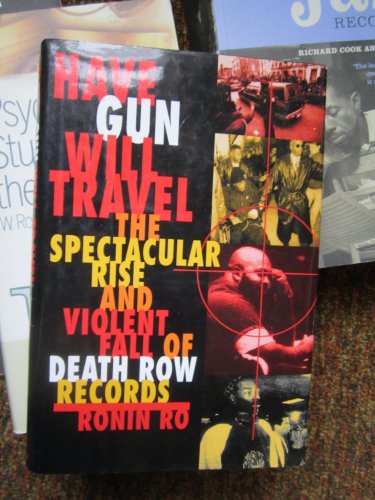
Death Row Records is one of the most successful music labels of all time. From its inception in 1992, it exploded on the rap music scene with sales climbing to the $125 million mark in just four years. Even more noticeable than the label's financial success is the effect it had on American youth culture, making gangsta rap more popular with suburban white youth and MTV viewers than traditional rock groups. But under the guidance of six-foot-four-inch, 300-pound CEO Marion "Suge" Knight, Death Row also became the most controversial record label in history--a place where violence, gang feuds, threats, intimidation, and brushes with death were business as usual.
Have Gun Will Travel details the spectacular rise and violent fall of a music label that had at its heart a ferocious criminal enterprise cloaked behind corporate facades that gave it a guise of legitimacy. With inside access no other writer can claim, Ronin Ro, the country's preeminent rap journalist, exposes the facts everyone else is afraid to divulge--from the initial bankrolling of Death Row by a leader of L.A.'s notorious Bloods gang, to links with New York's Genovese crime family. Have Gun Will Travel lays bare the full story behind this influential label, including the still-unsolved murders of Tupac Shakur and the Notorious B.I.G., as well as Suge Knight's rise to power, his fight with East Coast rap titans such as Sean "Puffy" Combs, and his eventual imprisonment.
Although it has been all over the news--from The Wall Street Journal to Rolling Stone--this is a timeless story about an empire built on greed, corruption, murder, and exploitation. With exclusive interviews and bloodcurdling eyewitness accounts, Have Gun Will Travel combines the behind-the-scenes fascination of books like Hit Men and Hit and Run with the violence and dramatic sweep of The Godfather, in a brilliant and blistering document of contemporary culture.
Die Inhaltsangabe kann sich auf eine andere Ausgabe dieses Titels beziehen.
Über die Autorin bzw. den Autor
Ronin Ro is a journalist as well as the author of Gangsta: Merchandising the Rhymes of Violence. A former rapper, he has written for numerous publications, including The Source, Spy, SPIN, Rolling Stone, Playboy, and Vibe. He lives with his wife and daughter in upstate New York, where he is currently at work on a novel.
Aus dem Klappentext
cords is one of the most successful music labels of all time. From its inception in 1992, it exploded on the rap music scene with sales climbing to the $125 million mark in just four years. Even more noticeable than the label's financial success is the effect it had on American youth culture, making gangsta rap more popular with suburban white youth and MTV viewers than traditional rock groups. But under the guidance of six-foot-four-inch, 300-pound CEO Marion "Suge" Knight, Death Row also became the most controversial record label in history--a place where violence, gang feuds, threats, intimidation, and brushes with death were business as usual.<br><br><i>Have Gun Will Travel</i> details the spectacular rise and violent fall of a music label that had at its heart a ferocious criminal enterprise cloaked behind corporate facades that gave it a guise of legitimacy. With inside access no other writer can claim, Ronin Ro, the country's pre
Auszug. © Genehmigter Nachdruck. Alle Rechte vorbehalten.
Whether he was in his home in Anaheim Hills, his residence in Westwood, or his abode in the Valley, Suge Knight's day began with an arduous workout. In his mirrored gym, as a stereo blared soul music by artists like Al Green or Marvin Gaye, Suge bench-pressed heavy weights. His cellular phone never stopped ringing; his beeper kept sounding; running Death Row was a twenty-four-hour occupation. But Suge focused on thrusting the barbell into the air. After admiring himself in the mirror, taking a quick shower, then slipping into casual clothing, he got in his customized Mercedes convertible and began making his rounds.
His first stop was Let Me Ride, the label's non-entertainment venture, a custom hydraulic shop located near stores with small barred windows and security gates. "A company can't just barge into the 'hood trying to provide some fake charity bullshit," Suge once said. "You got to deliver something real or it just won't work."
Over the door Suge had hung a painting of the customized Chevy Low Rider Dre used in the "Nuthin' but a 'G' Thang" video. Suge's employees--ex-convict buddies or friends from the Bloods--would join him in idle talk about cars, neighborhood beefs, upcoming artists, or old friends who needed jobs. At the sight of Suge, homeless people stepped forward, knowing he could always be counted on to hand over a dollar bill. Police cars slowed at the sight of his clique. "Sometimes it's as if the police are just out looking for trouble," Suge told a reporter. "It don't bother me none though. That's the way it's been as long as I can remember. I'm used to it."
When his cell phone rang, he ended conversations, leaped into his luxury car, and sped over to the label's Westwood office. At the time, Suge was overseeing the production of the Above the Rim soundtrack. He was working with Dre; MC Hammer's brother, Louis Burrell; and executives from New Line Cinema, the company releasing the film. In addition to his stable of Death Row acts, the album would include all-new music by female R&B trio SWV (Sisters With Voices), Luke's R&B group H-town, and New York crooner Al B Sure. Since the film starred Tupac Shakur, Suge viewed the soundtrack as another opportunity to try to get Shakur on the label.
Suge knew twenty-two-year-old Tupac was going through a rough period. On February 1, Tupac appeared in Los Angeles municipal court to face charges filed against him by film director Allen Hughes. After Allen and Albert Hughes directed a number of his music videos, Tupac landed the starring role in Juice. The Hughes brothers then asked if they could use Tupac's name to secure a movie deal: They were working on their debut, Menace II Society. Tupac agreed, then worked with John Singleton on the film Poetic Justice. When Tupac told the Hughes brothers he wanted only a small part in Menace, they said they had the perfect role. After reading the script, Tupac felt they had offered "a sucker role."
"They was trippin'," he said, "'cause they got this thing with John Singleton. They feel like they competing with him." While watching MTV one evening, a segment on the Hughes brothers, the directors said they dropped Tupac from the film. Tupac was enraged that he had to learn this while watching television.
He and his friends visited the Hughes brothers on the set of the video for Spice One's "Trigger Got No Heart," Menace II Society's theme music. Instantly, Tupac slugged Allen Hughes; his friends leaped on Allen and tried to grab his brother Albert, who wisely fled the scene. "If I have to go to jail," Tupac said, "I don't even want to be living. I just want to cease to exist for however long they have me there, and then when I come out, I'll be reborn, you know what I'm saying?"
In court, the Hughes brothers arrived with a security team. "Aw, you lil' bitch!" said Allen Hughes upon seeing Tupac alone.
"Lil' bitch?" Tupac tossed his Walkman to a friend. "Nigga, you wasn't saying that shit when I was whoopin' yo little ass all up and down the set of your video!"
"You and twelve of your niggas!"
While restraining the Hughes brothers, one of their bodyguards accidentally shoved Tupac, who began to rant and rave until white sheriffs arrived. "Officers," Tupac said then in as docile a tone as he could muster, "I'm so glad you arrived! These men were trying to attack me! Can you believe that? They tried to attack me with the Nation of Islam. Those are Farrakhan's boys, you know."
On March 9, a day before his sentencing hearing, Tupac left his room at the Montrose Hotel, where he lived while in town. He steered his rented Lexus LS 300 coupe to a Shell station on Sunset, parked, entered the convenience store, and searched for magazines and snack foods. Five Crips appeared, one of them asking, Where you from?
All over, Tupac replied.
"No you ain't," said the Crip. "You from Baltimore. But you don't never claim it. I know 'cause my homeboy used to take care of you."
Tupac said, Your homeboy lied. No one took care of me in Baltimore.
Just then, white teenagers stepped up to ask for an autograph. Tupac turned to sign one. Infuriated, the Crip yelled, "I'm first to jack this nigga!"
Sensing danger, Tupac quickly reached over to a display case filled with scissors and grabbed a pair. But it was too late. The wily Crip slammed a ham-like fist into Tupac's eye, then left the store with his four friends. Holding the pair of scissors like a dagger, Tupac burst onto Sunset Boulevard and saw the Crip enter a car and take off.
The next day, local and national television stations (including MTV) had film crews stationed outside the L.A. County Courthouse. Inside, the prosecution claimed Tupac could not control his anger. When closing arguments ended, the judge pronounced sentence: For striking director Allen Hughes, Tupac would have to serve fifteen days in a Los Angeles jail.
After his release, Tupac flew to New York, fell in with new friends and bodyguards, and partied with them on the set of Above the Rim. On April 2, he dropped by NBC studios to watch his friend Snoop Doggy Dogg record an appearance for Saturday Night Live. Suge Knight reminded Shakur that he could still sign with Death Row: The label would support him and provide lawyers; they would pair him with hip-hop's most commercial producer; they would buy him cars, install him in a fancy house, and pay well--all he had to do was say the word and sign the contract. Thankful for the $200,000 Suge had paid him for one song, Tupac nonetheless refused Suge's offer: He still didn't feel comfortable with the idea of leaving Interscope Records or his own management.
Three weeks later, in early May, the lights dimmed at New York's Paramount Theater and the very first Source Awards ceremony began. The Source started as a pamphlet thrown together by students at Harvard University; three years later, in 1991, it was the top-selling, most-imitated hip-hop magazine in North America. At their very first awards ceremony, a hip-hop version of the annual Grammy Awards, the guest list included Long Island's De La Soul, Tupac Shakur, New Jersey's Queen Latifah and Treach (of Naughty by Nature), Queens, New York's A Tribe Called Quest and Run-D.M.C., Mount Vernon's Pete Rock & CL Smooth, Staten Island's Wu-Tang Clan, Menace II Society star Larenz Tate, Brooklyn's Masta Ace and DJ Premier, Harlem's Doug E. Fresh, South Bronx rapper KRS-One, Luther Campbell from Miami, the R&B group SWV and Death Row artists such as the Lady of Rage.
That evening, Suge felt on top of the world. Death...
„Über diesen Titel“ kann sich auf eine andere Ausgabe dieses Titels beziehen.
Weitere beliebte Ausgaben desselben Titels

Suchergebnisse für Have Gun Will Travel: The Spectacular Rise and Violent...

Foto des Verkäufers
Have Gun Will Travel
Anbieter: Gate City Books, GREENSBORO, NC, USA
Verkäuferbewertung 5 von 5 Sternen

Zustand: good. USED book in GOOD condition. Great binding, pages and cover show normal signs of wear from use. Bestandsnummer des Verkäufers GCM.2Y7P
Gebraucht kaufen
EUR 11,70
Versand gratis
Versand innerhalb von USA
Versand innerhalb von USA
Anzahl: 1 verfügbar
Beispielbild für diese ISBN
Have Gun Will Travel
Anbieter: World of Books (was SecondSale), Montgomery, IL, USA
Verkäuferbewertung 5 von 5 Sternen
Zustand: Good. Item in good condition. Textbooks may not include supplemental items i.e. CDs, access codes etc. Bestandsnummer des Verkäufers 00097631418
Gebraucht kaufen
EUR 11,96
Versand gratis
Versand innerhalb von USA
Versand innerhalb von USA
Anzahl: 1 verfügbar
Foto des Verkäufers
Have Gun Will Travel
Anbieter: Zoom Books Company, Lynden, WA, USA
Verkäuferbewertung 5 von 5 Sternen
Zustand: very_good. Book is in very good condition and may include minimal underlining highlighting. The book can also include "From the library of" labels. May not contain miscellaneous items toys, dvds, etc. . We offer 100% money back guarantee and 24 7 customer service. Bestandsnummer des Verkäufers ZBV.0385491344.VG
Gebraucht kaufen
EUR 12,02
Versand gratis
Versand innerhalb von USA
Versand innerhalb von USA
Anzahl: 1 verfügbar
Beispielbild für diese ISBN
Have Gun Will Travel
Anbieter: Half Price Books Inc., Dallas, TX, USA
Verkäuferbewertung 5 von 5 Sternen
Hardcover. Zustand: Very Good. Connecting readers with great books since 1972! Used books may not include companion materials, and may have some shelf wear or limited writing. We ship orders daily and Customer Service is our top priority! Bestandsnummer des Verkäufers S_477214769
Gebraucht kaufen
EUR 10,16
EUR 3,05 Versand
Versand innerhalb von USA
Versand innerhalb von USA
Anzahl: 1 verfügbar
Beispielbild für diese ISBN
Have Gun Will Travel
Anbieter: ThriftBooks-Atlanta, AUSTELL, GA, USA
Verkäuferbewertung 5 von 5 Sternen
Hardcover. Zustand: Fair. No Jacket. Readable copy. Pages may have considerable notes/highlighting. ~ ThriftBooks: Read More, Spend Less. Bestandsnummer des Verkäufers G0385491344I5N00
Gebraucht kaufen
EUR 13,59
Versand gratis
Versand innerhalb von USA
Versand innerhalb von USA
Anzahl: 1 verfügbar
Beispielbild für diese ISBN
Have Gun Will Travel
Anbieter: ThriftBooks-Atlanta, AUSTELL, GA, USA
Verkäuferbewertung 5 von 5 Sternen
Hardcover. Zustand: Fair. No Jacket. Missing dust jacket; Readable copy. Pages may have considerable notes/highlighting. ~ ThriftBooks: Read More, Spend Less. Bestandsnummer des Verkäufers G0385491344I5N01
Gebraucht kaufen
EUR 13,59
Versand gratis
Versand innerhalb von USA
Versand innerhalb von USA
Anzahl: 1 verfügbar
Beispielbild für diese ISBN
Have Gun Will Travel
Anbieter: ThriftBooks-Atlanta, AUSTELL, GA, USA
Verkäuferbewertung 5 von 5 Sternen
Hardcover. Zustand: Good. No Jacket. Pages can have notes/highlighting. Spine may show signs of wear. ~ ThriftBooks: Read More, Spend Less. Bestandsnummer des Verkäufers G0385491344I3N00
Gebraucht kaufen
EUR 13,59
Versand gratis
Versand innerhalb von USA
Versand innerhalb von USA
Anzahl: 1 verfügbar
Foto des Verkäufers
Have Gun Will Travel
Anbieter: -OnTimeBooks-, Phoenix, AZ, USA
Verkäuferbewertung 5 von 5 Sternen
Zustand: good. A copy that has been read, remains in good condition. All pages are intact, and the cover is intact. The spine and cover show signs of wear. Pages can include notes and highlighting and show signs of wear, and the copy can include "From the library of" labels or previous owner inscriptions. 100% GUARANTEE! Shipped with delivery confirmation, if you're not satisfied with purchase please return item! Ships via media mail. Bestandsnummer des Verkäufers OTV.0385491344.G
Gebraucht kaufen
EUR 16,38
Versand gratis
Versand innerhalb von USA
Versand innerhalb von USA
Anzahl: 1 verfügbar
Foto des Verkäufers
Have Gun Will Travel
Anbieter: Goodwill of Silicon Valley, SAN JOSE, CA, USA
Verkäuferbewertung 5 von 5 Sternen
Zustand: good. Supports Goodwill of Silicon Valley job training programs. The cover and pages are in Good condition! Any other included accessories are also in Good condition showing use. Use can include some highlighting and writing, page and cover creases as well as other types visible wear. Bestandsnummer des Verkäufers GWSVV.0385491344.G
Gebraucht kaufen
EUR 13,58
EUR 3,49 Versand
Versand innerhalb von USA
Versand innerhalb von USA
Anzahl: 1 verfügbar
Beispielbild für diese ISBN
Have Gun Will Travel: The Spectacular Rise and Violent Fall of Death Row Records
Anbieter: WorldofBooks, Goring-By-Sea, WS, Vereinigtes Königreich
Verkäuferbewertung 5 von 5 Sternen
Hardback. Zustand: Very Good. The book has been read, but is in excellent condition. Pages are intact and not marred by notes or highlighting. The spine remains undamaged. Bestandsnummer des Verkäufers GOR002069639
Gebraucht kaufen
EUR 21,95
EUR 6,59 Versand
Versand von Vereinigtes Königreich nach USA
Versand von Vereinigtes Königreich nach USA
Anzahl: 1 verfügbar