Inhaltsangabe
“People who take God seriously will not remain silent about their faith. They will often disagree about doctrine or policy, but they won’t be quiet. They can’t be. They’ll act on what they believe, sometimes at the cost of their reputations and careers. Obviously the common good demands a respect for other people with different beliefs and a willingness to compromise whenever possible. But for Catholics, the common good can never mean muting themselves in public debate on foundational issues of human dignity. Christian faith is always personal but never private. This is why any notion of tolerance that tries to reduce faith to private idiosyncrasy, or a set of opinions that we can indulge at home but need to be quiet about in public, will always fail.”
—From the Introduction
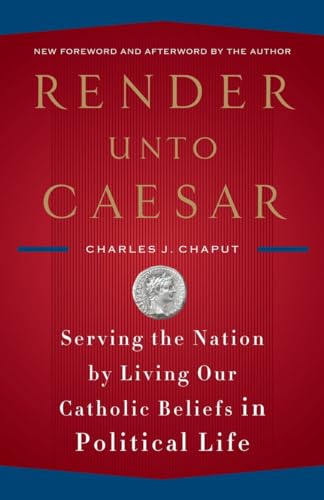
Few topics in recent years have ignited as much public debate as the balance between religion and politics. Does religious thought have any place in political discourse? Do religious believers have the right to turn their values into political action? What does it truly mean to have a separation of church and state? The very heart of these important questions is here addressed by one of the leading voices on the topic, Charles J. Chaput, Archbishop of Philadelphia.
While American society has ample room for believers and nonbelievers alike, Chaput argues, our public life must be considered within the context of its Christian roots. American democracy does not ask its citizens to put aside their deeply held moral and religious beliefs for the sake of public policy. In fact, it requires exactly the opposite.
As the nation’s founders knew very well, people are fallible. The majority of voters, as history has shown again and again, can be uninformed, misinformed, biased, or simply wrong. Thus, to survive, American democracy depends on an engaged citizenry —people of character, including religious believers, fighting for their beliefs in the public square—respectfully but vigorously, and without apology. Anything less is bad citizenship and a form of theft from the nation’s health. Or as the author suggests: Good manners are not an excuse for political cowardice.
American Catholics and other persons of goodwill are part of a struggle for our nation’s future, says Charles J. Chaput. Our choices, including our political choices, matter. Catholics need to take an active, vocal, and morally consistent role in public debate. We can’t claim to personally believe in the sanctity of the human person, and then act in our public policies as if we don’t. We can’t separate our private convictions from our public actions without diminishing both. In the words of the author, “How we act works backward on our convictions, making them stronger or smothering them under a snowfall of alibis.”
Vivid, provocative, clear, and compelling, Render unto Caesar is a call to American Catholics to serve the highest ideals of their nation by first living their Catholic faith deeply, authentically.
Die Inhaltsangabe kann sich auf eine andere Ausgabe dieses Titels beziehen.
Über die Autorin bzw. den Autor
CHARLES J. CHAPUT, O.F.M, is archbishop of Philadelphia. Raised in a Native American and French-Canadian household in a small town on the plains of Kansas, he has moved beyond his humble origins to become one of the American Catholic hierarchy's most visible and outspoken leaders. Archbishop Chaput consistently involves himself in the great moral debates of the nation, from abortion to the war in Iraq. Archbishop Chaput belongs to the United States Commission on International Religious Freedom. He is the author of Render Unto Caesar and A Heart on Fire.
Auszug. © Genehmigter Nachdruck. Alle Rechte vorbehalten.
1.
STARTING AT THE SOURCE
I wrote this book for two reasons. The first is simple. A friend asked me to do it.
My friend is a young attorney. In 2004, he ran for the Colorado General Assembly on the Democratic Party ticket. He did surprisingly well. He lost by a small margin in a heavily Republican district. But it was an odd experience. He was barely thirty and new to campaigning. His older opponent had an advantage as the incumbent. Worse, he was a political “blue,” but running in traditionally red territory.
Even his own party saw him as a strange creature. My friend believed then and believes now that Roe v. Wade is bad law. Thus, he had trouble with some of his own Democratic colleagues from the day he chose to run. He found out how hard it is to raise money. He felt the same heavy pressure all candidates feel to adjust their principles to win support. What he discovered--like many others--is that being a faithful Catholic in political life is often easier said than done. Some months after the election, he asked me to write down my thoughts about Catholics in public service to help people considering a political career. I agreed.
The irony, though, is this: A very good guide to Catholic citizenship and public leadership already exists. The pastoral statement Living the Gospel of Life, issued in 1998 by the U.S. Catholic bishops--though it had to survive a great deal of internal friction and wrangling first--remains, in my view, the best tool anywhere for understanding the American Catholic political vocation.1 Catholics already know that politics exists to serve the common good. But what is the common good? It’s a thorny question. Some problems are more complicated than others. Some issues have more gravity than others. Some methods to achieve a good end are wrong in themselves. We can never choose them without coarsening the society we inhabit.
Public officials have a special responsibility in sorting these things out. This is why the health of our public life requires men and women of strong moral character in political service. No community understands this better than the Catholic Church, from centuries of both good and ugly experience. The genius of Pope John Paul II’s great 1995 encyclical, Evangelium Vitae (The Gospel of Life), is not that it gives us a specific, sectarian blueprint for building a moral society. It doesn’t. Rather, it offers a common architecture for humane political thought and boundaries for government action that cannot be crossed without brutalizing human dignity. When the U.S. bishops issued Living the Gospel of Life, they applied the best of John Paul’s encyclical to the American experience. Not surprisingly, no other document ever issued by the American bishops on political responsibility has the clarity, coherence, and force of Living the Gospel of Life. The only sadness is that so few Catholics seem to know about it. In fact, if this book does nothing more than lead more people to read and act on Living the Gospel of Life, it will have partly served its purpose.
The second reason for this book is more personal. Like many other pastors, I deal with the human problems that drive public policy every day: homelessness, poverty, abortion, immigration, and a dozen other issues. No one addresses these problems more directly or effectively than the Catholic Church and other religious communities. Over the past decade I’ve grown increasingly tired of the church and her people being told to be quiet on public issues that urgently concern us. Worse, Catholics themselves too often stay silent out of a misguided sense of good manners. Even those of us who are bishops can sometimes seem more concerned with discretion and diplomacy than speaking plainly and acting clearly. Do not misunderstand me. Discretion and diplomacy are essential skills--but not if they lead to a habit of self-censorship. Self-censorship is an even bigger mistake than allowing ourselves to be lectured by people with little sympathy for our beliefs.
Let me explain what this book will not do. It will not endorse any political party or candidate. Both major U.S. political parties have plenty of good people in their ranks. Neither party fully represents a Catholic way of thinking about social issues. One of the lessons we need to learn from the last fifty years is that a preferred American “Catholic” party doesn’t exist. The sooner Catholics feel at home in any political party, the sooner that party begins to take them for granted and then to ignore their concerns. Party loyalty is a dead end. It’s a lethal form of laziness. Issues matter. Character matters. Acting on principle matters. The sound bite and the slogan do not matter. They belong to a vocabulary of the herd, and human beings deserve better. Real freedom demands an ability to think, and a great deal of modern life seems deliberately designed to discourage that.
This book will not feed anyone’s nostalgia for a Catholic golden age. The past usually looks better as it fades in the rearview mirror. Art Buchwald once said that if you like nostalgia, pretend today is yesterday and then go out and have a great time. I agree. After listening to some ten thousand personal confessions over thirty-seven years of priesthood, I’m very confident that the details of daily life change over time, but human nature doesn’t. We’ve seen better and worse times to be Catholic in the United States than the present. But today is the time in which we need to work.
This book will not be an academic study or a work of formal scholarship. I’ve included endnotes where I believe them to be useful or necessary, but they are not exhaustive. On the other hand, this book certainly does claim to be a statement of common sense amply supported by history, public record, and fact. Readers will also notice that I reference Joseph Ratzinger in various ways throughout this book, but not because of his election in 2005 as Pope Benedict XVI. At least, this is not the main reason. In fact, popes serve, contribute, fade like everyone else and recede into the memory of the church. People usually assume that popes, and all pastors, have far more “power” over events than they actually do.
As successor of Peter, Joseph Ratzinger is a pastor for all Catholics, including American Catholics. But equally important, the course of his life and the development of his thought--as an author, intellectual, and teacher; from his time as a seminarian in the Third Reich, to young theologian, to bishop, to cardinal, to confidant and close adviser to John Paul II, to his own election as pope--offer a unique window on the course of Catholic life in the twentieth and early twenty-first centuries. He belongs to an extraordinary generation of Catholic leaders who lived through war and genocide, remained faithful to Jesus Christ, never lost their love for the church, and struggled hard to renew her mission to the world; a generation we should learn from and which, when it passes, will not come again.
Finally, this book doesn’t offer any grand theory. It does offer thoughts based on my nineteen years as an American Catholic bishop and my interest in our common history. I believe that our nation’s public life, like Christianity itself, is meant for everyone, and everyone has a duty to contribute to it. The American experiment depends on the active involvement of all its citizens, not just lobbyists, experts, think tanks, and the mass media. For Catholics, politics--the pursuit of justice and the common good--is part of the history of salvation. No one is a minor actor in that drama. Each person is important.
I grew up in Concordia, Kansas. It’s a typical small farming community of fewer than seven...
„Über diesen Titel“ kann sich auf eine andere Ausgabe dieses Titels beziehen.
Weitere beliebte Ausgaben desselben Titels

Suchergebnisse für Render Unto Caesar: Serving the Nation by Living Our...

Foto des Verkäufers
Render Unto Caesar: Serving the Nation by Living Our Catholic Beliefs in Political Life
Anbieter: ZBK Books, Carlstadt, NJ, USA
Verkäuferbewertung 5 von 5 Sternen

Zustand: acceptable. Fast & Free Shipping â" A well-used but reliable copy with all text fully readable. Pages and cover remain intact, though wear such as notes, highlighting, bends, or library marks may be present. Supplemental items like CDs or access codes may not be included. Bestandsnummer des Verkäufers ZWV.0385522290.A
Beispielbild für diese ISBN
Render Unto Caesar: Serving the Nation by Living Our Catholic Beliefs in Political Life
Anbieter: Once Upon A Time Books, Siloam Springs, AR, USA
Verkäuferbewertung 4 von 5 Sternen

paperback. Zustand: Acceptable. This is a used book. It may contain highlighting/underlining and/or the book may show heavier signs of wear . It may also be ex-library or without dustjacket. This is a used book. It may contain highlighting/underlining and/or the book may show heavier signs of wear . It may also be ex-library or without dustjacket. Bestandsnummer des Verkäufers mon0001363956
Beispielbild für diese ISBN
Render Unto Caesar: Serving the Nation by Living Our Catholic Beliefs in Political Life
Anbieter: Wonder Book, Frederick, MD, USA
Verkäuferbewertung 5 von 5 Sternen
Zustand: Very Good. Very Good condition. A copy that may have a few cosmetic defects. May also contain light spine creasing or a few markings such as an owner's name, short gifter's inscription or light stamp. Bestandsnummer des Verkäufers H07N-01242
Beispielbild für diese ISBN
Render Unto Caesar Serving the
Anbieter: World of Books (was SecondSale), Montgomery, IL, USA
Verkäuferbewertung 5 von 5 Sternen
Zustand: Good. Item in good condition. Textbooks may not include supplemental items i.e. CDs, access codes etc. Bestandsnummer des Verkäufers 00092875360
Beispielbild für diese ISBN
Render Unto Caesar Serving the
Anbieter: World of Books (was SecondSale), Montgomery, IL, USA
Verkäuferbewertung 5 von 5 Sternen
Zustand: Very Good. Item in very good condition! Textbooks may not include supplemental items i.e. CDs, access codes etc. Bestandsnummer des Verkäufers 00092506322
Foto des Verkäufers
Render Unto Caesar: Serving the Nation by Living Our Catholic Beliefs in Political Life
Anbieter: Off The Shelf, Antonia, MO, USA
Verkäuferbewertung 4 von 5 Sternen
Zustand: good. The item shows wear from consistent use, but it remains in good condition and works perfectly. All pages and cover are intact including the dust cover, if applicable . Spine may show signs of wear. Pages may include limited notes and highlighting. May NOT include discs, access code or other supplemental materials. Bestandsnummer des Verkäufers 4WILKM00O4E5
Beispielbild für diese ISBN
Render Unto Caesar: Serving the Nation by Living Our Catholic Beliefs in Political Life
Verlag:
Prh Christian Publishing, 2009
ISBN 10: 0385522290
ISBN 13: 9780385522298
Gebraucht
Paperback
Anbieter: ThriftBooks-Phoenix, Phoenix, AZ, USA
Verkäuferbewertung 5 von 5 Sternen
Paperback. Zustand: Very Good. No Jacket. May have limited writing in cover pages. Pages are unmarked. ~ ThriftBooks: Read More, Spend Less. Bestandsnummer des Verkäufers G0385522290I4N00
Beispielbild für diese ISBN
Render Unto Caesar: Serving the Nation by Living Our Catholic Beliefs in Political Life
Verlag:
Prh Christian Publishing, 2009
ISBN 10: 0385522290
ISBN 13: 9780385522298
Gebraucht
Paperback
Anbieter: ThriftBooks-Atlanta, AUSTELL, GA, USA
Verkäuferbewertung 5 von 5 Sternen
Paperback. Zustand: Very Good. No Jacket. May have limited writing in cover pages. Pages are unmarked. ~ ThriftBooks: Read More, Spend Less. Bestandsnummer des Verkäufers G0385522290I4N00
Beispielbild für diese ISBN
Render Unto Caesar: Serving the Nation by Living Our Catholic Beliefs in Political Life
Verlag:
Prh Christian Publishing, 2009
ISBN 10: 0385522290
ISBN 13: 9780385522298
Gebraucht
Paperback
Anbieter: ThriftBooks-Dallas, Dallas, TX, USA
Verkäuferbewertung 5 von 5 Sternen
Paperback. Zustand: Very Good. No Jacket. May have limited writing in cover pages. Pages are unmarked. ~ ThriftBooks: Read More, Spend Less. Bestandsnummer des Verkäufers G0385522290I4N00
Beispielbild für diese ISBN
Render Unto Caesar: Serving the Nation by Living Our Catholic Beliefs in Political Life
Anbieter: Half Price Books Inc., Dallas, TX, USA
Verkäuferbewertung 5 von 5 Sternen
Paperback. Zustand: Very Good. Connecting readers with great books since 1972! Used books may not include companion materials, and may have some shelf wear or limited writing. We ship orders daily and Customer Service is our top priority! Bestandsnummer des Verkäufers S_446312825