
Verwandte Artikel zu Top of the Rock: Inside the Rise and Fall of Must See...
Inhaltsangabe
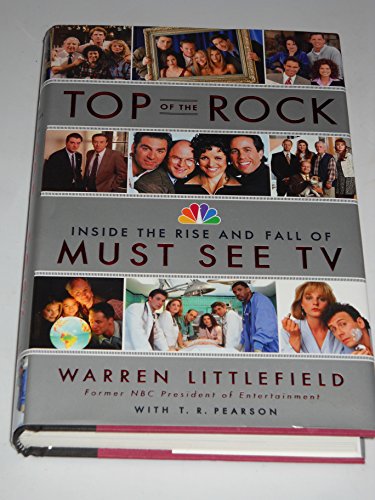
Seinfeld, Friends, Frasier, ER, Cheers,Law & Order, Will & Grace…Here is the funny, splashy, irresistible insiders’ account of the greatest era in television history -- told by the actors, writers, directors, producers, and the network executives who made it happen…and watched it all fall apart.
Warren Littlefield was the NBC President of Entertainment who oversaw the Peacock Network’s rise from also-ran to a division that generated a billion dollars in profits.In this fast-paced and exceptionally entertaining oral history, Littlefield and NBC luminaries including Jerry Seinfeld, Jason Alexander, Kelsey Grammer, Matt LeBlanc, Lisa Kudrow, Julianna Marguiles, Anthony Edwards, Noah Wylie, Debra Messing, Jack Welch, Jimmy Burrows, Helen Hunt, and Dick Wolf vividly recapture the incredible era of Must See TV.
From 1993 through 1998, NBC exploded every conventional notion of what a broadcast network could accomplish with the greatest prime-time line-up in television history. On Thursday nights, a cavalcade of groundbreaking comedies and dramas streamed into homes, attracting a staggering 75 million viewers and generating more revenue than all other six nights of programming combined. The road to success, however, was a rocky one. How do you turn a show likeSeinfeld, one of the lowest testing pilots of all time, into a hit when the network overlords are constantly warring, or worse, drowning in a bottle of vodka?
Top of the Rock is an addictively readable account of the risky business decisions, creative passion, and leaps of faith that made Must See TV possible. Chock full of delicious behind-the-scenes anecdotes that run the gamut from hilarious casting and programming ploys to petty jealousies and drug interventions, you’re in for a juicy, unputdownable read.
Die Inhaltsangabe kann sich auf eine andere Ausgabe dieses Titels beziehen.
Über die Autorin bzw. den Autor
WARREN LITTLEFIELD is the former NBC president of entertainment. Previous to that, he was the NBC comedy executive who developed such hit shows asThe Cosby Show and The Fresh Prince of Bel-Air. He currently runs his own television production company.
T. R. PEARSON is the author of fourteen novels, including A Short History of a Small Place, and a dozen screenplays.
Auszug. © Genehmigter Nachdruck. Alle Rechte vorbehalten.
1
Where Everybody Knows Your Name
Warren: I arrived at NBC in December 1979, hired by Brandon Tartikoff to work in the comedy department. I was manager of comedy development, the junior member of the department. Brandon was a newly minted vice president of development at the network, which was mired in last place. I was twenty-seven years old, and though I had watched a lot of it, I knew next to nothing about network television. Brandon, my boss, was all of thirty.
In what was just a three-way race for audience (there’d be no Fox Broadcasting until 1987), NBC was jokingly derided as number four. CBS had ten comedies on its schedule, including M*A*S*H, WKRP in Cincinnati, The Jeffersons, Alice, and One Day at a Time. ABC could boast fourteen sitcoms, among them Happy Days, Laverne & Shirley, Barney Miller, Soap, Taxi, and Three’s Company. At NBC, we had Diff’rent Strokes and Hello, Larry.
In terms of general viewership, CBS led the way with about sixteen million households. ABC was a close second with fifteen million. NBC lagged well behind at twelve million. For the 1980 season, Little House on the Prairie was our top-rated show at sixteenth. We placed only four shows in the top thirty. There was nowhere to go but up.
Worse still, NBC’s head of programming at the time was a man named Paul Klein. He had a background in audience research and had come up with the strategy of LOP, which stood for Least Objectionable Programming (I’m not kidding). The object was to piss off as few viewers as possible. The network product line was largely geared toward big events, so we became the Big Event network.
A TV critic once asked Paul Klein, “How do you know when you’ve got a big event?”
Klein said, “We sit around a table, and people throw out ideas, and somebody says, ‘That’s a big event,’ and that’s when we know.”
It was an insane form of programming, expensive and not in the least bit habit--forming. NBC had essentially abandoned weekly series as the spine of the network. As a remedy, the legendary Fred Silverman had been brought over from ABC to turn things around. Fred didn’t waste a lot of time in making Brandon the new head of the entertainment division. I hoped that would also be good for me.
By then, Fred had already enjoyed remarkable success at the other two networks. A Time magazine cover piece on Silverman had called him “The Man with the Golden Gut.” NBC was in desperate need of a programming miracle, so maybe a golden gut would do.
My first encounter with Fred was pretty alarming for me. It took place in a conference room on the second floor at NBC in Burbank. We were meeting to review the current development slate. Fred wasn’t very happy. In fact, he was screaming that it was impossible to turn NBC around if deals couldn’t be made faster.
Fred shifted in his chair, looked at me, and shrieked, “Why haven’t you closed any of those deals yet!?”
I experienced major shrinkage and couldn’t get any words out.
Finally my boss jumped in and said, “Fred, this is Warren. He’s the new guy in comedy development.”
“Oh,” Fred said. “Where the fuck is the business affairs guy?”
My only words to the legendary Fred Silverman that day were “Don’t know. Not me.”
We were so desperate for quality programming that we had to wave a series commitment at Les and Glen Charles and Jimmy Burrows. The trio had never created a show, but they had worked on more than a few iconic programs: The Mary Tyler Moore Show, Phyllis, The Bob Newhart Show, and Taxi. We guaranteed them thirteen episodes on the air just to lure them to pitch us. Nobody wanted to be on NBC. To get Jimmy and the Charles brothers, we knew we’d have to overpromise and overpay, and, boy, did we.
That’s a pitch meeting I’ll never forget. Over breakfast, Brandon Tartikoff, Michael Zinberg, and I first got wind of what would become Cheers.
Jim Burrows: Cheers was pitched as a Miller Lite commercial. Those commercials with the jocks, Marv Throneberry and all that. We had an athletic leading man. Sam Malone, originally, was a wide receiver. That’s how we pitched it. NBC made a deal for us--two for one. They had to put one on the air. We had to write two. The pitch wasn’t too difficult. Since the three of us had run Taxi for about three years, we knew what we were doing, and NBC knew it. It’s not like today, where they hire kids who’ve never run a show, based on one script.
Bob Broder: Grant Tinker had hired the Charles brothers at MTM, and they’d worked their way up to executive producers on the final year of the original Newhart show. Jimmy Burrows was a director who hadn’t directed television but had been the stage manager in New York for a very unsuccessful musical, Holly Golightly, with Mary Tyler Moore and Richard Chamberlain. It had closed very quickly. Out of that, Jimmy developed a relationship with Mary and Grant, and he begged for an apprenticeship to come out and work with the MTM company.
At the time, I was representing Jay Sandrich, who was Jimmy Burrows before Jimmy Burrows became Jimmy Burrows. Jay Sandrich was the top multi-camera director at the time, in 1970. He did the pilot for The Mary Tyler Moore Show, and he went on to do Cosby and The Golden Girls.
Grant Tinker asked Jay Sandrich to mentor Jimmy. Jimmy asked me, “Would you represent me? I know Jay Sandrich can’t do all the work he’s being offered. Maybe you could get me a couple of gigs.” I’ve been Jimmy’s agent since 1972 or ’73. While Jay was a star, Burrows is by any metric a supernova. He has now directed the pilots for over fifty--six series that have gone on air. Not failed pilots, broken pilots--on-air series. Fifty-six of them.
Jim Burrows: Since I come from a stage background, in comedy I kind of know what’s funny. The first show I ever watched out here was The Mary Tyler Moore Show. It had four of the most powerful writers in television working on it--Jim Brooks, Allan Burns, Ed. Weinberger, and Stan Daniels. Powerhouses. The director was Jay Sandrich, who mentored me. I used to see Jay go after the writers, and Jay would say what he thought. He’d do that to protect his actors.
Writers want you to do the script, but sometimes what works in the writers’ room doesn’t work on the stage. Jay would say, “I’ll do it your way, but I’m not sure it’s the right way. Let’s show you what we can do.” That empowers the actors to feel like a larger part of the creative process.
Bob Broder: When you watch Jimmy shoot a show, he’s fascinating. He’s never watching. He’s listening. He’ll walk up and down behind the cameras, and all of a sudden he’ll kick a camera dolly to change the angle. He has a quad split in his head. He knows what each camera is seeing.
Jim Burrows: The guys we pitched Cheers to knew a lot more about television than the guys we pitch to today. We got to pitch to guys who got it. We talked about a bar but not a romance. We might have mentioned Tracy/Hepburn. I don’t remember. So many pitches under the bridge.
Bob Broder: I believe Abe Burrows, Jimmy’s father, wrote on a radio show called Duffy’s Tavern. The beauty of having set the show in a bar meant when the door opened, the story started, and any story could walk in that door. It wasn’t like doing a family comedy where you had to figure out how you were going to service your six characters. Some pretty strange people came in that door.
Warren: I remember Jim Burrows and the Charles...
„Über diesen Titel“ kann sich auf eine andere Ausgabe dieses Titels beziehen.
Suchergebnisse für Top of the Rock: Inside the Rise and Fall of Must See...

Beispielbild für diese ISBN
Top of the Rock: Inside the Ri
Anbieter: World of Books (was SecondSale), Montgomery, IL, USA
Verkäuferbewertung 5 von 5 Sternen

Zustand: Good. Item in good condition. Textbooks may not include supplemental items i.e. CDs, access codes etc. Bestandsnummer des Verkäufers 00099118846
Gebraucht kaufen
EUR 4,14
Versand gratis
Versand innerhalb von USA
Versand innerhalb von USA
Anzahl: 8 verfügbar
Beispielbild für diese ISBN
Top of the Rock: Inside the Ri
Anbieter: World of Books (was SecondSale), Montgomery, IL, USA
Verkäuferbewertung 5 von 5 Sternen
Zustand: Acceptable. Item in acceptable condition! Textbooks may not include supplemental items i.e. CDs, access codes etc. Bestandsnummer des Verkäufers 00109553004
Gebraucht kaufen
EUR 4,14
Versand gratis
Versand innerhalb von USA
Versand innerhalb von USA
Anzahl: 1 verfügbar
Foto des Verkäufers
Top of the Rock: Inside the Rise and Fall of Must See TV
Anbieter: 3Brothers Bookstore, Egg harbor township, NJ, USA
Verkäuferbewertung 5 von 5 Sternen
Zustand: very_good. Cover may have light wear, pages in very good condition and binding is sturdy; may have other light shelf wear or creases. May have notes or highlighting. Bestandsnummer des Verkäufers EVV.0385533748.VG
Gebraucht kaufen
EUR 4,15
Versand gratis
Versand innerhalb von USA
Versand innerhalb von USA
Anzahl: 1 verfügbar
Foto des Verkäufers
Top of the Rock: Inside the Rise and Fall of Must See TV
Anbieter: Used Book Company, Egg Harbor Township, NJ, USA
Verkäuferbewertung 5 von 5 Sternen
Zustand: Very Good. Shows minimal signs of wear and previous use. Can include minimal notes/highlighting. A portion of your purchase benefits nonprofits! - Note: Edition & format may differ from what is shown in stock photo & item details. May not include supplementary material (toys, access code, dvds, etc). Bestandsnummer des Verkäufers 584UZG000AJO_ns
Gebraucht kaufen
EUR 4,30
Versand gratis
Versand innerhalb von USA
Versand innerhalb von USA
Anzahl: 1 verfügbar
Foto des Verkäufers
Top of the Rock: Inside the Rise and Fall of Must See TV
Anbieter: Greenworld Books, Arlington, TX, USA
Verkäuferbewertung 5 von 5 Sternen
Zustand: very_good. Fast Free Shipping â" Very Good condition book with a firm cover and clean pages. Shows normal use and some light wear or limited notes markings. A solid, nice copy to enjoy. Bestandsnummer des Verkäufers GWV.0385533748.VG
Gebraucht kaufen
EUR 4,82
Versand gratis
Versand innerhalb von USA
Versand innerhalb von USA
Anzahl: 1 verfügbar
Beispielbild für diese ISBN
Top of the Rock: Inside the Rise and Fall of Must See TV
Verlag:
Doubleday (edition First Edition), 2012
ISBN 10: 0385533748
ISBN 13: 9780385533744
Gebraucht
Hardcover
Erstausgabe
Anbieter: BooksRun, Philadelphia, PA, USA
Verkäuferbewertung 5 von 5 Sternen
Hardcover. Zustand: Very Good. First Edition. With dust jacket. It's a well-cared-for item that has seen limited use. The item may show minor signs of wear. All the text is legible, with all pages included. It may have slight markings and/or highlighting. Bestandsnummer des Verkäufers 0385533748-11-1-29
Gebraucht kaufen
EUR 5,13
Versand gratis
Versand innerhalb von USA
Versand innerhalb von USA
Anzahl: 2 verfügbar
Beispielbild für diese ISBN
Top of the Rock: Inside the Rise and Fall of Must See TV
Anbieter: HPB-Ruby, Dallas, TX, USA
Verkäuferbewertung 5 von 5 Sternen
hardcover. Zustand: Very Good. Connecting readers with great books since 1972! Used books may not include companion materials, and may have some shelf wear or limited writing. We ship orders daily and Customer Service is our top priority! Bestandsnummer des Verkäufers S_470770303
Gebraucht kaufen
EUR 2,35
EUR 3,30 Versand
Versand innerhalb von USA
Versand innerhalb von USA
Anzahl: 1 verfügbar
Beispielbild für diese ISBN
Top of the Rock: Inside the Rise and Fall of Must See TV
Anbieter: World of Books Inc, Montgomery, IL, USA
Verkäuferbewertung 4 von 5 Sternen

Hardback. Zustand: Good. Top of the Rock is an absorbing insiders' account of an incredible time and place in television history: the years when Must See TV--led by Cheers, Seinfeld, Friends, ER, and Law & Order--made NBC an unstoppable success. Here the story is vividly told through the words of the actors, writers, producers, creators, and network executives who helped the Peacock rise to its greatest heights--and then saw it all fall apart. Under the supervision of President of Entertainment Warren Littlefield, NBC went from being an also-ran, losing millions of dollars in failed shows, to the number one station, generating billions of dollars in profit. At its height, the Thursday night lineup alone brought in more revenue than the other six nights of programming combined. Top of the Rock dishes out behind-the-scenes stories from all the biggest shows, revealing the highly risky business decisions, creative passion, and blind leaps of faith that made Must See TV possible. Jerry Seinfeld Jason Alexander Kelsey Grammer Sean Hayes Helen Hunt Lisa Kudrow Eriq La Salle Matt LeBlanc John Lithgow Julianna Margulies Eric McCormack Debra Messing Megan Mullally David Hyde Pierce Paul Reiser Noah Wyle and more. Bestandsnummer des Verkäufers CIN0385533748G
Gebraucht kaufen
EUR 5,95
Versand gratis
Versand innerhalb von USA
Versand innerhalb von USA
Anzahl: 9 verfügbar
Foto des Verkäufers
Top of the Rock: Inside the Rise and Fall of Must See TV
Anbieter: Off The Shelf, Antonia, MO, USA
Verkäuferbewertung 5 von 5 Sternen
Zustand: good. The item shows wear from consistent use, but it remains in good condition and works perfectly. All pages and cover are intact including the dust cover, if applicable . Spine may show signs of wear. Pages may include limited notes and highlighting. May NOT include discs, access code or other supplemental materials. Bestandsnummer des Verkäufers 4WIKS60006BM
Gebraucht kaufen
EUR 1,71
EUR 4,39 Versand
Versand innerhalb von USA
Versand innerhalb von USA
Anzahl: 1 verfügbar
Beispielbild für diese ISBN
Top of the Rock: Inside the Rise and Fall of Must See TV
Anbieter: ThriftBooks-Atlanta, AUSTELL, GA, USA
Verkäuferbewertung 5 von 5 Sternen
Hardcover. Zustand: Very Good. No Jacket. May have limited writing in cover pages. Pages are unmarked. ~ ThriftBooks: Read More, Spend Less. Bestandsnummer des Verkäufers G0385533748I4N00
Gebraucht kaufen
EUR 6,21
Versand gratis
Versand innerhalb von USA
Versand innerhalb von USA
Anzahl: 1 verfügbar