
Verwandte Artikel zu The Ugly Renaissance: Sex, Greed, Violence and Depravity...
Inhaltsangabe
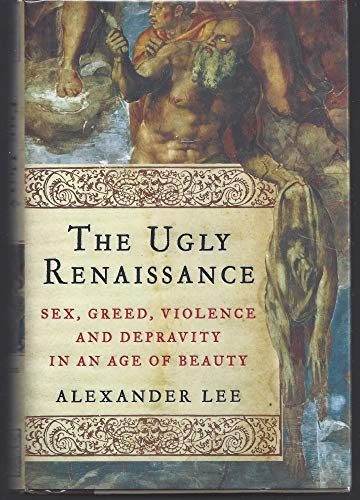
A fascinating and counterintuitive portrait of the sordid, hidden world behind the dazzling artwork of Michelangelo, Leonardo da Vinci, Botticelli, and more
Renowned as a period of cultural rebirth and artistic innovation, the Renaissance is cloaked in a unique aura of beauty and brilliance. Its very name conjures up awe-inspiring images of an age of lofty ideals in which life imitated the fantastic artworks for which it has become famous. But behind the vast explosion of new art and culture lurked a seamy, vicious world of power politics, perversity, and corruption that has more in common with the present day than anyone dares to admit.
In this lively and meticulously researched portrait, Renaissance scholar Alexander Lee illuminates the dark and titillating contradictions that were hidden beneath the surface of the period’s best-known artworks. Rife with tales of scheming bankers, greedy politicians, sex-crazed priests, bloody rivalries, vicious intolerance, rampant disease, and lives of extravagance and excess, this gripping exploration of the underbelly of Renaissance Italy shows that, far from being the product of high-minded ideals, the sublime monuments of the Renaissance were created by flawed and tormented artists who lived in an ever-expanding world of inequality, dark sexuality, bigotry, and hatred.
The Ugly Renaissance is a delightfully debauched journey through the surprising contradictions of Italy’s past and shows that were it not for the profusion of depravity and degradation, history’s greatest masterpieces might never have come into being.
Die Inhaltsangabe kann sich auf eine andere Ausgabe dieses Titels beziehen.
Über die Autorin bzw. den Autor
ALEXANDER LEE is a Stipendiary Lecturer in Early Modern History at St. Catherine's College, Oxford. A prize-winning specialist in the history of the Italian Renaissance, he holds degrees from the universities of Cambridge and Edinburgh, and is the author of numerous academic works on the Renaissance.
Auszug. © Genehmigter Nachdruck. Alle Rechte vorbehalten.
1 Michelangelo's Nose
One fine summer’s afternoon in 1491, the sixteen-year-old Michelangelo Buonarroti was sitting sketching in the church of Santa Maria del Carmine in Florence. With a stick of chalk between his fingers and a sheaf of paper on his knees, he was busy copying Masaccio’s celebrated frescoes in the Brancacci Chapel with “such judgement” that all those who saw his drawings were astonished.
Even as an adolescent, Michelangelo had begun to grow used to such admiration. Despite his youth, he had already earned a degree of celebrity and had acquired a correspondingly high opinion of himself. Carrying a letter of recommendation from the artist Domenico Ghirlandaio, he had not only been accepted as a pupil of the sculptor Bertoldo di Giovanni at the artistic school that had recently been founded in the gardens of San Marco, but had even been welcomed into the household of Lorenzo de’ Medici, Florence’s de facto ruler. Enraptured by the young man, Lorenzo had ushered Michelangelo into the company of the city’s foremost intellectuals, including the humanists Angelo Poliziano, Marsilio Ficino, and Pico della Mirandola. Michelangelo flourished. He nurtured those skills that were to characterize the art of the period. Studying anatomy with extreme care, he honed the naturalistic style that had been in continuous development since the innovations of Giotto di Bondone, two centuries earlier. And devoting himself to the emulation of classical sculpture, he set out on the path that later led Giorgio Vasari to claim that he had “surpassed and vanquished the ancients.” Following a suggestion made by Poliziano in this period, he carved a relief depicting the battle of the centaurs that was “so beautiful” it seemed to be “the work not of a young man, but of a great master with a wealth of study and experience behind him.”
Michelangelo’s fame and self-confidence were growing by the day, but as he was about to discover, so was the envy of his schoolfellows. Sitting next to him in the Brancacci Chapel that day was Pietro Torrigiano. Although three years older than Michelangelo, Pietro was another of Bertoldo di Giovanni’s pupils and was also recognized as something of a rising star. Competition between the two was almost inevitable. Under Bertoldo’s tutelage, they had been encouraged to compete, and they strove to outdo each other in imitating and surpassing the works of masters like Masaccio. Michelangelo was, however, too brilliant and outspoken for the rivalry to be entirely friendly.
As they sketched alongside one another in the chapel, Michelangelo and Pietro appear to have begun discussing who was better placed to take up Masaccio’s mantle as Florence’s finest painter. Given their sur- roundings, it was a natural subject. Despite being acclaimed as an artist of genius in his own lifetime, Masaccio had died before he could com- plete the frescoes in the chapel. His work had been completed by Filippino Lippi, although how successfully was a matter of personal opinion. Perhaps Michelangelo, who had spent many months studying the frescoes, observed that Lippi had been unable to match Masaccio’s talent and that he himself was the only person capable of attaining—if not exceeding—the master’s standards. He may simply have spoken derisively of Pietro’s sketches, as was apparently his habit. Whatever the case, Michelangelo managed to enrage his friend. Talented but hardly brilliant, Pietro couldn’t stand Michelangelo’s ribbing.
“Jealous [at] seeing him more honoured than himself and more able in his work,” Pietro began mocking Michelangelo. If his behavior in later years is anything to go by, Michelangelo might simply have laughed. Whatever the case, Pietro was furious. Clenching his fists, he punched Michelangelo squarely in the face. The blow was so hard that it “almost tore off the cartilage of [the] nose.” Michelangelo slumped unconscious to the floor, his nose “broken and crushed” and his torso covered with blood.
Michelangelo was hurriedly carried back to his home in the Palazzo Medici Riccardi, where he is said to have been lying “as if dead.” It did not take Lorenzo de’ Medici long to learn of his plight. Storming into the room in which his stricken protégé lay, he flew into a towering rage and hurled every imaginable insult at the “bestial” Pietro. At once, Pietro saw the magnitude of his mistake: he had no option but to leave Florence.
* * *
Unwittingly, the barely conscious Michelangelo was caught up in a moment that captured perfectly an important dimension of the world of late Renaissance art and that represented the fulfillment of what has become known as the “rise of the artist.” Although he was only sixteen years old, he had already begun to hone that unique combination of talents that contemporaries would later describe as “divine.” Skilled in sculpture and drawing, he was also devoted to Dante, learned in the Italian classics, a fine poet, and a friend to the finest humanist minds. Without any sense of irony intended, he was what we might now call a Renaissance man. What’s more, he was recognized as such. Despite his age, Michelangelo had been feted by Florence’s social and intellectual elite, and his ability had been honored with patronage and respect. The son of a comparatively modest bureaucrat from an obscure little town, he had earned the affection of the most powerful family in Florence because of his artistic skill. Lorenzo “the Magnificent”—himself a noted poet, connoisseur, and collector—treated him “like a son.” Indeed, Lorenzo’s son Giovanni and Giovanni’s illegitimate cousin Giulio—each of whom would later become pope (as Leo X and Clem- ent VII, respectively) —would address him as their “brother” ever after.
Two hundred years earlier, it would have been unthinkable for any artist to have been honored in such a way. In the eyes of most contemporaries, a late-thirteenth- or early-fourteenth-century artist was not a creator but a craftsman. The practitioner of a merely mechanical art, he was largely restricted to the confines of a provincial bottega (workshop) that was subject to the often draconian regulations of guilds.
Regardless of his ability, the artist’s social status was not high. Although some early Renaissance artists occasionally occupied positions in communal government or came from magnate families, they were the exceptions rather than the rule. Most came from fairly humble backgrounds, as can be gauged from how little we know about their parents. Later biographers, like the snobbish Vasari, often skip over such details, and their silence suggests that carpenters, innkeepers, farmers, and even unskilled laborers may have sired some of the great names of early Renaissance art. What evidence we have seems to confirm this impression. Some artists were from very modest backgrounds and came from families engaged in the lowliest crafts. Giotto di Bondone, for example, was rumored to have been raised as a poor shepherd boy but was most probably the son of a Florentine blacksmith. For others, art—like carpentry—was a family business. Three of Duccio di Buoninsegna’s sons became painters, and Simone Martini’s brother and two brothers-in-law were all artists.
From the mid-fourteenth century onward, however, the social world of art and the...
„Über diesen Titel“ kann sich auf eine andere Ausgabe dieses Titels beziehen.
Suchergebnisse für The Ugly Renaissance: Sex, Greed, Violence and Depravity...

Beispielbild für diese ISBN
The Ugly Renaissance Sex Greed
Anbieter: World of Books (was SecondSale), Montgomery, IL, USA
Verkäuferbewertung 5 von 5 Sternen

Zustand: Good. Item in good condition. Textbooks may not include supplemental items i.e. CDs, access codes etc. Bestandsnummer des Verkäufers 00102949720
Gebraucht kaufen
EUR 4,81
Versand gratis
Versand innerhalb von USA
Versand innerhalb von USA
Anzahl: 2 verfügbar
Foto des Verkäufers
The Ugly Renaissance: Sex, Greed, Violence and Depravity in an Age of Beauty
Anbieter: Greenworld Books, Arlington, TX, USA
Verkäuferbewertung 5 von 5 Sternen
Zustand: very_good. Fast Free Shipping â" Very Good condition book with a firm cover and clean pages. Shows normal use and some light wear or limited notes markings. A solid, nice copy to enjoy. Bestandsnummer des Verkäufers GWV.0385536593.VG
Gebraucht kaufen
EUR 4,81
Versand gratis
Versand innerhalb von USA
Versand innerhalb von USA
Anzahl: 1 verfügbar
Foto des Verkäufers
The Ugly Renaissance: Sex, Greed, Violence and Depravity in an Age of Beauty
Anbieter: Goodwill Books, Hillsboro, OR, USA
Verkäuferbewertung 5 von 5 Sternen
Zustand: good. Signs of wear and consistent use. Bestandsnummer des Verkäufers GICWV.0385536593.G
Gebraucht kaufen
EUR 3,87
EUR 3,51 Versand
Versand innerhalb von USA
Versand innerhalb von USA
Anzahl: 1 verfügbar
Beispielbild für diese ISBN
The Ugly Renaissance: Sex, Greed, Violence and Depravity in an Age of Beauty
Anbieter: ThriftBooks-Dallas, Dallas, TX, USA
Verkäuferbewertung 5 von 5 Sternen
Hardcover. Zustand: Good. No Jacket. Pages can have notes/highlighting. Spine may show signs of wear. ~ ThriftBooks: Read More, Spend Less. Bestandsnummer des Verkäufers G0385536593I3N00
Gebraucht kaufen
EUR 7,48
Versand gratis
Versand innerhalb von USA
Versand innerhalb von USA
Anzahl: 1 verfügbar
Beispielbild für diese ISBN
The Ugly Renaissance: Sex, Greed, Violence and Depravity in an Age of Beauty
Anbieter: HPB-Red, Dallas, TX, USA
Verkäuferbewertung 5 von 5 Sternen
hardcover. Zustand: Good. Connecting readers with great books since 1972! Used textbooks may not include companion materials such as access codes, etc. May have some wear or writing/highlighting. We ship orders daily and Customer Service is our top priority! Bestandsnummer des Verkäufers S_426283043
Gebraucht kaufen
EUR 4,52
EUR 3,29 Versand
Versand innerhalb von USA
Versand innerhalb von USA
Anzahl: 1 verfügbar
Beispielbild für diese ISBN
The Ugly Renaissance
Verlag:
Doubleday Publishing Company, New York, NY, 2013
ISBN 10: 0385536593
ISBN 13: 9780385536592
Gebraucht
Hardcover
Anbieter: Foxtrot Books, Yankton, SD, USA
Verkäuferbewertung 5 von 5 Sternen
Hardcover. Zustand: Good. Zustand des Schutzumschlags: Good. Good Condition hard cover 433 pages. Bestandsnummer des Verkäufers 036266
Gebraucht kaufen
EUR 4,52
EUR 3,73 Versand
Versand innerhalb von USA
Versand innerhalb von USA
Anzahl: 1 verfügbar
Beispielbild für diese ISBN
The Ugly Renaissance : Sex, Greed, Violence and Depravity in an Age of Beauty
Verlag:
Knopf Doubleday Publishing Group, 2014
ISBN 10: 0385536593
ISBN 13: 9780385536592
Gebraucht
Hardcover
Erstausgabe
Anbieter: Better World Books, Mishawaka, IN, USA
Verkäuferbewertung 5 von 5 Sternen
Zustand: Good. 1st. Pages intact with minimal writing/highlighting. The binding may be loose and creased. Dust jackets/supplements are not included. Stock photo provided. Product includes identifying sticker. Better World Books: Buy Books. Do Good. Bestandsnummer des Verkäufers 6425131-6
Gebraucht kaufen
EUR 8,65
Versand gratis
Versand innerhalb von USA
Versand innerhalb von USA
Anzahl: 1 verfügbar
Beispielbild für diese ISBN
The Ugly Renaissance : Sex, Greed, Violence and Depravity in an Age of Beauty
Verlag:
Knopf Doubleday Publishing Group, 2014
ISBN 10: 0385536593
ISBN 13: 9780385536592
Gebraucht
Hardcover
Erstausgabe
Anbieter: Better World Books, Mishawaka, IN, USA
Verkäuferbewertung 5 von 5 Sternen
Zustand: Good. 1st. Former library copy. Pages intact with minimal writing/highlighting. The binding may be loose and creased. Dust jackets/supplements are not included. Includes library markings. Stock photo provided. Product includes identifying sticker. Better World Books: Buy Books. Do Good. Bestandsnummer des Verkäufers 4297053-6
Gebraucht kaufen
EUR 8,65
Versand gratis
Versand innerhalb von USA
Versand innerhalb von USA
Anzahl: 1 verfügbar
Beispielbild für diese ISBN
The Ugly Renaissance : Sex, Greed, Violence and Depravity in an Age of Beauty
Verlag:
Knopf Doubleday Publishing Group, 2014
ISBN 10: 0385536593
ISBN 13: 9780385536592
Gebraucht
Hardcover
Erstausgabe
Anbieter: Better World Books, Mishawaka, IN, USA
Verkäuferbewertung 5 von 5 Sternen
Zustand: Very Good. 1st. Former library copy. Pages intact with possible writing/highlighting. Binding strong with minor wear. Dust jackets/supplements may not be included. Includes library markings. Stock photo provided. Product includes identifying sticker. Better World Books: Buy Books. Do Good. Bestandsnummer des Verkäufers 13369089-6
Gebraucht kaufen
EUR 8,65
Versand gratis
Versand innerhalb von USA
Versand innerhalb von USA
Anzahl: 1 verfügbar
Beispielbild für diese ISBN
The Ugly Renaissance : Sex, Greed, Violence and Depravity in an Age of Beauty
Verlag:
Knopf Doubleday Publishing Group, 2014
ISBN 10: 0385536593
ISBN 13: 9780385536592
Gebraucht
Hardcover
Erstausgabe
Anbieter: Better World Books: West, Reno, NV, USA
Verkäuferbewertung 5 von 5 Sternen
Zustand: Good. 1st. Former library copy. Pages intact with minimal writing/highlighting. The binding may be loose and creased. Dust jackets/supplements are not included. Includes library markings. Stock photo provided. Product includes identifying sticker. Better World Books: Buy Books. Do Good. Bestandsnummer des Verkäufers 4297053-6
Gebraucht kaufen
EUR 8,65
Versand gratis
Versand innerhalb von USA
Versand innerhalb von USA
Anzahl: 1 verfügbar