
Verwandte Artikel zu The Physiological Clock (Heidelberg Science Library)
Inhaltsangabe
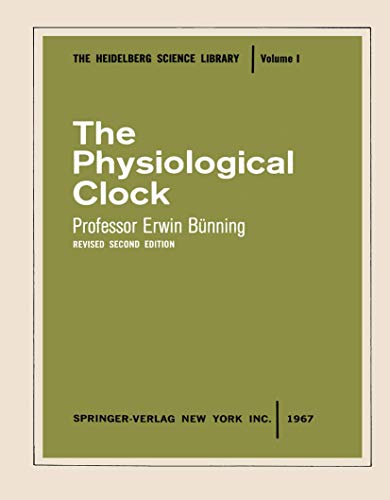
This monograph is limited to considerations of the biological measurement of time in which unicellular organisms, as well as cells of higher plants, animals, and man utilize periods of approximately 24 hours. The author's intention is to discuss the present state of our knowledge of the physiological nature of this clock and the manifold means by which the organism uses this clock. Since new developments are occuring so rapidly in this field, it was necessary to revise extensively all of the chapters. The author is deeply indebted to his son-in-law, Dr. RICHARD M. FRANKLIN of the Public Health Research Institute of the City of New York, for his assistance with the revisions in this new English edition, as well as his review of that portion of the text adapted from the first English edition. This book is not intended for that group of specialists who are quite familiar with the terminology and jargon of the field of circadian rhythms. Therefore I have avoided employing the symbols, abbreviations, etc. normally used in this small circle of researchers. In this manner I hope to attract new workers into this fascinating field, workers who will contribute through their discoveries to a speedy outdating of this presentation. Ttibingen, September 1966 ERwiN BuNNING Contents Chapter 1. Introduction . . . . . .
Die Inhaltsangabe kann sich auf eine andere Ausgabe dieses Titels beziehen.

