
Verwandte Artikel zu The Diversity of Life
Inhaltsangabe
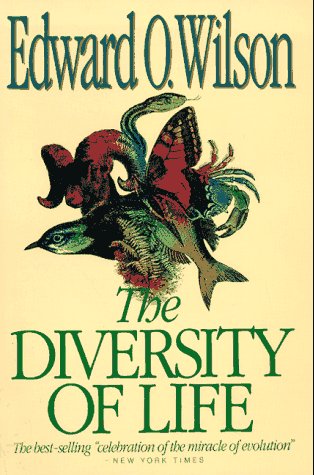
The Pulitzer Prize-winning scientist and author reveals the diversity of life on the planet and the threat humankind poses to Earth's rich variety of ecosystems and their inhabitants. By the author of On Human Nature. Reprint. 75,000 first printing. NYT.
Die Inhaltsangabe kann sich auf eine andere Ausgabe dieses Titels beziehen.
Suchergebnisse für The Diversity of Life

Beispielbild für diese ISBN
Diversity of Life
Anbieter: World of Books (was SecondSale), Montgomery, IL, USA
Verkäuferbewertung 5 von 5 Sternen

Paperback. Zustand: Fair. In the Amazon Basin the greatest violence sometimes begins as a flicker of light beyond the horizon. There in the perfect bowl of the night sky, untouched by light from any human source, a thunderstorm sends its premonitory signal and begins a slow journey to the observer, who thinks: the world is about to change. Watching from the edge of the Brazilian rain forest, witness to the sort of violence nature visits upon its creatures, Edward O. Wilson reflects on the crucible of evolution, and so begins his remarkable account of how the living world became diverse and how humans are destroying that diversity. Wilson, internationally regarded as the dean of biodiversity studies, conducts us on a tour through time, traces the processes that create new species in bursts of adaptive radiation, and points out the cataclysmic events that have disrupted evolution and diminished global diversity over the past 600 million years. The five enormous natural blows to the planet (such as meteorite strikes and climatic changes) required 10 to 100 million years of evolutionary repair. The sixth great spasm of extinction on earth--caused this time entirely by humans--may be the one that breaks the crucible of life. Wilson identifies this crisis in countless ecosystems around the globe: coral reefs, grasslands, rain forests, and other natural habitats. Drawing on a variety of examples such as the decline of bird populations in the United States, the extinction of many species of freshwater fish in Africa and Asia, and the rapid disappearance of flora and fauna as the rain forests are cut down, he poignantly describes the death throes of the living world's diversity--projected to decline as much as 20 percent by the year 2020. All evidence marshaled here resonates through Wilson's tightly reasoned call for a spirit of stewardship over the world's biological wealth. He makes a plea for specific actions that will enhance rather than diminish not just diversity but the quality of life on earth. Cutting through the tangle of environmental issues that often obscure the real concern, Wilson maintains that the era of confrontation between forces for the preservation of nature and those for economic development is over; he convincingly drives home the point that both aims can, and must, be integrated. Unparalleled in its range and depth, Wilson's masterwork is essential reading for those who care about preserving the world biological variety and ensuring our planet's health. Bestandsnummer des Verkäufers 00101264729
Gebraucht kaufen
EUR 5,62
Versand gratis
Versand innerhalb von USA
Versand innerhalb von USA
Anzahl: 1 verfügbar
Beispielbild für diese ISBN
Diversity of Life
Anbieter: World of Books (was SecondSale), Montgomery, IL, USA
Verkäuferbewertung 5 von 5 Sternen
Paperback. Zustand: Very Good. In the Amazon Basin the greatest violence sometimes begins as a flicker of light beyond the horizon. There in the perfect bowl of the night sky, untouched by light from any human source, a thunderstorm sends its premonitory signal and begins a slow journey to the observer, who thinks: the world is about to change. Watching from the edge of the Brazilian rain forest, witness to the sort of violence nature visits upon its creatures, Edward O. Wilson reflects on the crucible of evolution, and so begins his remarkable account of how the living world became diverse and how humans are destroying that diversity. Wilson, internationally regarded as the dean of biodiversity studies, conducts us on a tour through time, traces the processes that create new species in bursts of adaptive radiation, and points out the cataclysmic events that have disrupted evolution and diminished global diversity over the past 600 million years. The five enormous natural blows to the planet (such as meteorite strikes and climatic changes) required 10 to 100 million years of evolutionary repair. The sixth great spasm of extinction on earth--caused this time entirely by humans--may be the one that breaks the crucible of life. Wilson identifies this crisis in countless ecosystems around the globe: coral reefs, grasslands, rain forests, and other natural habitats. Drawing on a variety of examples such as the decline of bird populations in the United States, the extinction of many species of freshwater fish in Africa and Asia, and the rapid disappearance of flora and fauna as the rain forests are cut down, he poignantly describes the death throes of the living world's diversity--projected to decline as much as 20 percent by the year 2020. All evidence marshaled here resonates through Wilson's tightly reasoned call for a spirit of stewardship over the world's biological wealth. He makes a plea for specific actions that will enhance rather than diminish not just diversity but the quality of life on earth. Cutting through the tangle of environmental issues that often obscure the real concern, Wilson maintains that the era of confrontation between forces for the preservation of nature and those for economic development is over; he convincingly drives home the point that both aims can, and must, be integrated. Unparalleled in its range and depth, Wilson's masterwork is essential reading for those who care about preserving the world biological variety and ensuring our planet's health. Bestandsnummer des Verkäufers 00110090914
Gebraucht kaufen
EUR 5,62
Versand gratis
Versand innerhalb von USA
Versand innerhalb von USA
Anzahl: 1 verfügbar
Beispielbild für diese ISBN
Diversity of Life
Anbieter: World of Books (was SecondSale), Montgomery, IL, USA
Verkäuferbewertung 5 von 5 Sternen
Paperback. Zustand: Good. In the Amazon Basin the greatest violence sometimes begins as a flicker of light beyond the horizon. There in the perfect bowl of the night sky, untouched by light from any human source, a thunderstorm sends its premonitory signal and begins a slow journey to the observer, who thinks: the world is about to change. Watching from the edge of the Brazilian rain forest, witness to the sort of violence nature visits upon its creatures, Edward O. Wilson reflects on the crucible of evolution, and so begins his remarkable account of how the living world became diverse and how humans are destroying that diversity. Wilson, internationally regarded as the dean of biodiversity studies, conducts us on a tour through time, traces the processes that create new species in bursts of adaptive radiation, and points out the cataclysmic events that have disrupted evolution and diminished global diversity over the past 600 million years. The five enormous natural blows to the planet (such as meteorite strikes and climatic changes) required 10 to 100 million years of evolutionary repair. The sixth great spasm of extinction on earth--caused this time entirely by humans--may be the one that breaks the crucible of life. Wilson identifies this crisis in countless ecosystems around the globe: coral reefs, grasslands, rain forests, and other natural habitats. Drawing on a variety of examples such as the decline of bird populations in the United States, the extinction of many species of freshwater fish in Africa and Asia, and the rapid disappearance of flora and fauna as the rain forests are cut down, he poignantly describes the death throes of the living world's diversity--projected to decline as much as 20 percent by the year 2020. All evidence marshaled here resonates through Wilson's tightly reasoned call for a spirit of stewardship over the world's biological wealth. He makes a plea for specific actions that will enhance rather than diminish not just diversity but the quality of life on earth. Cutting through the tangle of environmental issues that often obscure the real concern, Wilson maintains that the era of confrontation between forces for the preservation of nature and those for economic development is over; he convincingly drives home the point that both aims can, and must, be integrated. Unparalleled in its range and depth, Wilson's masterwork is essential reading for those who care about preserving the world biological variety and ensuring our planet's health. Bestandsnummer des Verkäufers 00096006060
Gebraucht kaufen
EUR 5,62
Versand gratis
Versand innerhalb von USA
Versand innerhalb von USA
Anzahl: 5 verfügbar
Beispielbild für diese ISBN
Diversity Of Life
Anbieter: Orion Tech, Kingwood, TX, USA
Verkäuferbewertung 5 von 5 Sternen
paperback. Zustand: Good. Bestandsnummer des Verkäufers 0393310477-3-37893860
Gebraucht kaufen
EUR 5,63
Versand gratis
Versand innerhalb von USA
Versand innerhalb von USA
Anzahl: 1 verfügbar
Beispielbild für diese ISBN
Diversity Of Life
Verlag:
INGRAM BOOK COMPANY (edition ), 1993
ISBN 10: 0393310477
ISBN 13: 9780393310474
Gebraucht
Paperback
Anbieter: BooksRun, Philadelphia, PA, USA
Verkäuferbewertung 5 von 5 Sternen
Paperback. Zustand: Very Good. It's a well-cared-for item that has seen limited use. The item may show minor signs of wear. All the text is legible, with all pages included. It may have slight markings and/or highlighting. Bestandsnummer des Verkäufers 0393310477-11-1
Gebraucht kaufen
EUR 5,70
Versand gratis
Versand innerhalb von USA
Versand innerhalb von USA
Anzahl: 1 verfügbar
Beispielbild für diese ISBN
Diversity Of Life
Anbieter: HPB-Ruby, Dallas, TX, USA
Verkäuferbewertung 5 von 5 Sternen
paperback. Zustand: Very Good. Connecting readers with great books since 1972! Used books may not include companion materials, and may have some shelf wear or limited writing. We ship orders daily and Customer Service is our top priority! Bestandsnummer des Verkäufers S_477405916
Gebraucht kaufen
EUR 2,53
EUR 3,31 Versand
Versand innerhalb von USA
Versand innerhalb von USA
Anzahl: 1 verfügbar
Beispielbild für diese ISBN
Diversity Of Life
Anbieter: HPB-Emerald, Dallas, TX, USA
Verkäuferbewertung 5 von 5 Sternen
paperback. Zustand: Very Good. Connecting readers with great books since 1972! Used books may not include companion materials, and may have some shelf wear or limited writing. We ship orders daily and Customer Service is our top priority! Bestandsnummer des Verkäufers S_475997929
Gebraucht kaufen
EUR 2,53
EUR 3,31 Versand
Versand innerhalb von USA
Versand innerhalb von USA
Anzahl: 1 verfügbar
Beispielbild für diese ISBN
Diversity Of Life
Anbieter: ThriftBooks-Atlanta, AUSTELL, GA, USA
Verkäuferbewertung 5 von 5 Sternen
Paperback. Zustand: Good. No Jacket. Former library book; Pages can have notes/highlighting. Spine may show signs of wear. ~ ThriftBooks: Read More, Spend Less. Bestandsnummer des Verkäufers G0393310477I3N10
Gebraucht kaufen
EUR 5,93
Versand gratis
Versand innerhalb von USA
Versand innerhalb von USA
Anzahl: 1 verfügbar
Beispielbild für diese ISBN
Diversity Of Life
Anbieter: ThriftBooks-Atlanta, AUSTELL, GA, USA
Verkäuferbewertung 5 von 5 Sternen
Paperback. Zustand: Very Good. No Jacket. May have limited writing in cover pages. Pages are unmarked. ~ ThriftBooks: Read More, Spend Less. Bestandsnummer des Verkäufers G0393310477I4N00
Gebraucht kaufen
EUR 5,93
Versand gratis
Versand innerhalb von USA
Versand innerhalb von USA
Anzahl: 1 verfügbar
Beispielbild für diese ISBN
Diversity Of Life
Anbieter: ThriftBooks-Atlanta, AUSTELL, GA, USA
Verkäuferbewertung 5 von 5 Sternen
Paperback. Zustand: Good. No Jacket. Pages can have notes/highlighting. Spine may show signs of wear. ~ ThriftBooks: Read More, Spend Less. Bestandsnummer des Verkäufers G0393310477I3N00
Gebraucht kaufen
EUR 5,93
Versand gratis
Versand innerhalb von USA
Versand innerhalb von USA
Anzahl: 2 verfügbar