
Verwandte Artikel zu The Castle in the Forest (Rough Cut)
Inhaltsangabe
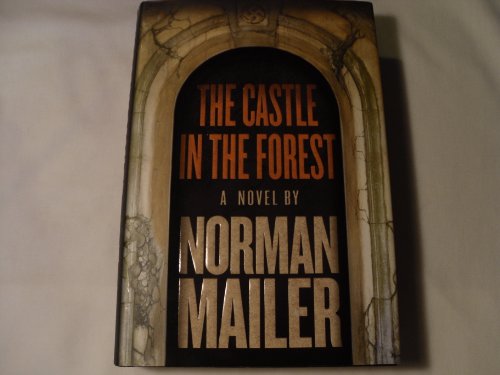
A mysterious SS man offers an insightful glimpse of the life and career of Adolf Hitler, offering a unique perspective on his family, his childhood and adolescence, and the evolution of the man who became the personification of evil, in a panoramic novel that explores the essence of the struggle between good and evil that exists in us all.
Die Inhaltsangabe kann sich auf eine andere Ausgabe dieses Titels beziehen.
Über die Autorin bzw. den Autor
Norman Mailer was born in 1923 in Long Branch, New Jersey, and grew up in Brooklyn, New York. In 1955, he was one of the co-founders of The Village Voice. He is the author of more than thirty books, including The Naked and the Dead; The Armies of the Night, for which he won a National Book Award and the Pulitzer Prize; The Executioner’s Song, for which he won his second Pulitzer Prize; Harlot’s Ghost; Oswald’s Tale; and The Gospel According to the Son. He lives in Provincetown, Massachusetts, with his wife, the novelist Norris Church Mailer.
To schedule a speaking engagement, please contact American Program Bureau at www.apbspeakers.com
Auszug. © Genehmigter Nachdruck. Alle Rechte vorbehalten.
1
You may call me D.T. That is short for Dieter, a German name, and D.T. will do, now that I am in America, this curious nation. If I draw upon reserves of patience, it is because time passes here without meaning for me, and that is a state to dispose one to rebellion. Can this be why I am writing a book? Among my former associates, we had to swear never to undertake such an action. I was, after all, a member of a matchless Intelligence group. Its classification was SS, Special Section IV-2a, and we were directly under the supervision of Heinrich Himmler. Today, the man is seen as a monster, and I would not look to defend him—he turned out to be one hell of a monster. All the same, Himmler did have an original mind, and one of his theses does take me into my literary intentions, which are, I promise, not routine.
2
The room that Himmler used when speaking to our elite group was a small lecture hall with dark walnut paneling and was limited to twenty seats raked upward in four rows of five. My emphasis will not be, however, on such descriptions. I prefer to concern myself with Himmler’s unorthodox concepts. They may even have stimulated me to begin a memoir that is bound to prove unsettling. I know that I will sail into a sea of turbulence, for I must uproot many a conventional belief. A cacophony erupts in my spirit at the thought. As Intelligence officers, we often seek to warp our findings. Mendacity, after all, possesses its own art, but this is a venture that will ask me to forsake such skills.
Enough! Let me present Heinrich Himmler. You, the reader, must be prepared for no easy occasion. This man, whose nickname, behind his back, was Heini, had become by 1938 one of the four truly important leaders in Germany. Yet his most cherished and secret intellectual pursuit was the study of incest. It dominated our highest-level research, and our findings were kept to closed conferences. Incest, Heini would propose, had always been rife among the poor of all lands. Even our German peasantry had been much afflicted, yes, even as late as the nineteenth century. “Normally, no one in learned circles cares to speak of the matter,” he would remark. “After all, there is nothing to be done. Who would bother to call some poor wretch a certified offspring of incest? No, every establishment of every civilized nation looks to sweep such stuff under the rug.”
That is, all ranking government officials in the world except for our Heinrich Himmler. He did have the most extraordinary ideas fermenting behind his unhappy spectacles. I must repeat that for a man with a bland and chinless mug, he certainly exhibited a frustrating mixture of brilliance and stupidity. For example, he declared himself to be a pagan. He predicted that there would be a healthy future for humankind once paganism took over the world. Everyone’s soul would then be enriched with hitherto unacceptable pleasures. None of us could conceive, however, of an orgy where carnality would rise to such a pitch that you might find a woman ready to throw herself into a flesh-melting roll with Heinrich Himmler. No, not even in the most innovative spirit! For you could always see his face as it must once have been at a school dance, that bespectacled disapproving stare of the wallflower, tall, thin, a youth full of physical ineptitude. Already he had a small potbelly. There he was, ready to wait by the wall while the dance went on.
Yet he grew obsessed over the years with matters others did not dare to mention aloud (which, I must say, is usually the first step to new thought). In fact, he paid close attention to mental retardation. Why? Because Himmler subscribed to the theory that the best human possibilities lie close to the worst. So he was ready to assume that promising children when found in low, nondescript families could be “incestuaries.” The word in German, as he coined it, was Inzestuarier. He did not like the more common term of such disgrace, Blutschande (blood-scandal), or as it is sometimes employed in polite circles, Dramatik des Blutes (blood-drama).
None of us felt sufficiently qualified to say that his theory could be dismissed. Even in the early years of the SS, Himmler had recognized that one of our prime needs was to develop exceptional research groups. We had a duty to search into ultimates. As Himmler put it, the health of National Socialism depended on nothing less than these letzte Fragen (last questions). We were to explore problems that other nations did not dare to go near. Incest was at the head of the list. The German mind had to re-establish itself again as the leading inspiration to the learned world. In turn—so went his unstated coupling—much recognition might be given to Heinrich Himmler for his profound attack on problems originating in the agricultural milieu. He would emphasize the underlying point: Husbandry could hardly be investigated without comprehending the peasant. Yet to understand this man of the earth was to speak of incest.
Here, I promise you, he would hold up his hand in precisely that little gesture Hitler used to employ—one prissy flip of the wrist. It was Heinrich’s way of saying: “Now comes the meat. And with it—the potatoes!” Off he would go on a peroration. “Yes,” he would say, “incest! This is one very good reason that old peasants are devout. An acute fear of the sinful is bound to display itself by one of two extremes: Absolute devotion to religious practice. Or nihilism. I can recall from my student days that the Marxist Friedrich Engels once wrote, ‘When the Catholic Church decided adultery was impossible to prevent, they made divorce impossible to obtain.’ A brilliant remark even if it comes from the wrong mouth. As much can be said for blood-scandal. That is also impossible to prevent. So, the peasant looks to keep himself devout.” He nodded. He nodded again as if two good pumps of his head might be the minimum necessary to convince us that he was speaking from both sides of his heart.
How often, he asked, could the average peasant of the last century avoid these blood temptations? After all, that was not so easy. Peasants, it had to be said, were not usually attractive people. Their features were worn away by hard labor. Besides, they reeked of the field and the barn. Personal odors were at the mercy of hot summers. Under such circumstances, would not basic impulses trigger forbidden inclinations? Given the paucity of their social life, how were they to acquire the ability to stay away from entanglements with brothers and sisters, fathers and daughters?
He did not go on to speak of the pell-mell of limbs and torsos formed by three or four children in a bed, nor the ham-handed naturalness of the most agreeable work of all—that hard-breathing, feverish meat-heavy run up the hills of physical joy—but he did declare, “More than a few in the agricultural sector come, willy-nilly, to see incest as an acceptable option. Who, after all, is most likely to find the honorable work-hardened features of the father or the brother particularly attractive? The sisters, of course! Or the daughters. Often they are the only ones. The father, having created them, remains the focus of their attention.”
Hand it to Himmler. He had been storing theories in his head for two decades. A great believer in Schopenhauer, he would also give prominence to a word still relatively new in 1938—genes. These genes, he said, were the biological embodiment of Schopenhauer’s concept of the Will. They are the basic element of this mysterious Will. “We know,” he said, “that instincts can be passed from one generation to the next. Why? I would say it is in the nature of the Will to remain true to its origins. I even speak of that...
„Über diesen Titel“ kann sich auf eine andere Ausgabe dieses Titels beziehen.
Suchergebnisse für The Castle in the Forest (Rough Cut)

Beispielbild für diese ISBN
The Castle in the Forest
Anbieter: World of Books (was SecondSale), Montgomery, IL, USA
Verkäuferbewertung 5 von 5 Sternen

Zustand: Acceptable. Item in acceptable condition! Textbooks may not include supplemental items i.e. CDs, access codes etc. Bestandsnummer des Verkäufers 00100787965
Gebraucht kaufen
EUR 3,87
Versand gratis
Versand innerhalb von USA
Versand innerhalb von USA
Anzahl: 4 verfügbar
Beispielbild für diese ISBN
The Castle in the Forest
Anbieter: World of Books (was SecondSale), Montgomery, IL, USA
Verkäuferbewertung 5 von 5 Sternen
Zustand: Very Good. Item in very good condition! Textbooks may not include supplemental items i.e. CDs, access codes etc. Bestandsnummer des Verkäufers 00110573363
Gebraucht kaufen
EUR 3,87
Versand gratis
Versand innerhalb von USA
Versand innerhalb von USA
Anzahl: 1 verfügbar
Beispielbild für diese ISBN
The Castle in the Forest
Anbieter: World of Books (was SecondSale), Montgomery, IL, USA
Verkäuferbewertung 5 von 5 Sternen
Hardback. Zustand: Good. The final work of fiction from Norman Mailer, a defining voice of the postwar era, is also one of his most ambitious, taking as its subject the evil of Adolf Hitler. The narrator, a mysterious SS man in possession of extraordinary secrets, follows Adolf from birth through adolescence and offers revealing portraits of Hitler's parents and siblings. A crucial reflection on the shadows that eclipsed the twentieth century, Mailer's novel delivers myriad twists and surprises along with characteristically astonishing insights into the struggle between good and evil that exists in us all. Praise for The Castle in the Forest This remarkable novel about the young Adolf Hitler, his family and their shifting circumstances, is Mailer's most perfect apprehension of the absolutely alien. . . . Mailer doesn't inhabit these historical figures so much as possess them.--The New York Times Book Review Terrifically creepy . . . an icy and convincing portrait of the dictator as a young sociopath.--Entertainment Weekly The work of a bold and confident writer who may yet be seen as the preeminent novelist of our time . . . a source of tremendous narrative pleasure . . . Every character . . . lives and breathes.--South Florida Sun-Sentinel Blackly hilarious, beautifully written . . . The Castle in the Forest] has vigor, excitement, humor and vastness of spirit.--The New York Observer Praise for Norman Mailer Norman Mailer] loomed over American letters longer and larger than any other writer of his generation.--The New York Times A writer of the greatest and most reckless talent.--The New Yorker Mailer is indispensable, an American treasure.--The Washington Post A devastatingly alive and original creative mind.--Life Mailer is fierce, courageous, and reckless and nearly everything he writes has sections of headlong brilliance.--The New York Review of Books The largest mind and imagination in modern] American literature . . . Unlike just about every American writer since Henry James, Mailer has managed to grow and become richer in wisdom with each new book.--Chicago Tribune Mailer is a master of his craft. His language carries you through the story like a leaf on a stream.--The Cincinnati Post From the Hardcover edition. Bestandsnummer des Verkäufers 00097014300
Gebraucht kaufen
EUR 3,87
Versand gratis
Versand innerhalb von USA
Versand innerhalb von USA
Anzahl: 16 verfügbar
Foto des Verkäufers
The Castle in the Forest
Anbieter: 3Brothers Bookstore, Egg harbor township, NJ, USA
Verkäuferbewertung 5 von 5 Sternen
Zustand: very_good. Cover may have light wear, pages in very good condition and binding is sturdy; may have other light shelf wear or creases. May have notes or highlighting. Bestandsnummer des Verkäufers EVV.0394536495.VG
Gebraucht kaufen
EUR 3,88
Versand gratis
Versand innerhalb von USA
Versand innerhalb von USA
Anzahl: 2 verfügbar
Foto des Verkäufers
The Castle in the Forest
Anbieter: Used Book Company, Egg Harbor Township, NJ, USA
Verkäuferbewertung 5 von 5 Sternen
Zustand: Very Good. Former library copy. Shows minimal signs of wear and previous use. Can include minimal notes/highlighting. A portion of your purchase benefits nonprofits! - Note: Edition & format may differ from what is shown in stock photo & item details. May not include supplementary material (toys, access code, dvds, etc). Bestandsnummer des Verkäufers 584R0H0004D9_ns
Gebraucht kaufen
EUR 3,98
Versand gratis
Versand innerhalb von USA
Versand innerhalb von USA
Anzahl: 1 verfügbar
Beispielbild für diese ISBN
The Castle in the Forest
Verlag:
Random House (edition First Edition), 2007
ISBN 10: 0394536495
ISBN 13: 9780394536491
Gebraucht
Hardcover
Erstausgabe
Anbieter: BooksRun, Philadelphia, PA, USA
Verkäuferbewertung 5 von 5 Sternen
Hardcover. Zustand: Fair. First Edition. With dust jacket. The item might be beaten up but readable. May contain markings or highlighting, as well as stains, bent corners, or any other major defect, but the text is not obscured in any way. Bestandsnummer des Verkäufers 0394536495-7-1-29
Gebraucht kaufen
EUR 4,79
Versand gratis
Versand innerhalb von USA
Versand innerhalb von USA
Anzahl: 1 verfügbar
Foto des Verkäufers
The Castle in the Forest
Anbieter: Greenworld Books, Arlington, TX, USA
Verkäuferbewertung 5 von 5 Sternen
Zustand: very_good. Fast Free Shipping â" Very Good condition book with a firm cover and clean pages. Shows normal use and some light wear or limited notes markings. A solid, nice copy to enjoy. Bestandsnummer des Verkäufers GWV.0394536495.VG
Gebraucht kaufen
EUR 4,89
Versand gratis
Versand innerhalb von USA
Versand innerhalb von USA
Anzahl: 5 verfügbar
Foto des Verkäufers
The Castle in the Forest
Anbieter: Greenworld Books, Arlington, TX, USA
Verkäuferbewertung 5 von 5 Sternen
Zustand: good. Fast Free Shipping â" Good condition. It may show normal signs of use, such as light writing, highlighting, or library markings, but all pages are intact and the book is fully readable. A solid, complete copy that's ready to enjoy. Bestandsnummer des Verkäufers GWV.0394536495.G
Gebraucht kaufen
EUR 4,89
Versand gratis
Versand innerhalb von USA
Versand innerhalb von USA
Anzahl: 2 verfügbar
Beispielbild für diese ISBN
The Castle in the Forest
Anbieter: More Than Words, Waltham, MA, USA
Verkäuferbewertung 5 von 5 Sternen
Zustand: Good. A sound copy with only light wear. Overall a solid copy at a great price! Bestandsnummer des Verkäufers BOS-S-11f-01501
Gebraucht kaufen
EUR 1,40
EUR 3,56 Versand
Versand innerhalb von USA
Versand innerhalb von USA
Anzahl: 1 verfügbar
Beispielbild für diese ISBN
The Castle in the Forest
Anbieter: World of Books Inc, Montgomery, IL, USA
Verkäuferbewertung 4 von 5 Sternen

Hardback. Zustand: Good. The final work of fiction from Norman Mailer, a defining voice of the postwar era, is also one of his most ambitious, taking as its subject the evil of Adolf Hitler. The narrator, a mysterious SS man in possession of extraordinary secrets, follows Adolf from birth through adolescence and offers revealing portraits of Hitler's parents and siblings. A crucial reflection on the shadows that eclipsed the twentieth century, Mailer's novel delivers myriad twists and surprises along with characteristically astonishing insights into the struggle between good and evil that exists in us all. Praise for The Castle in the Forest This remarkable novel about the young Adolf Hitler, his family and their shifting circumstances, is Mailer's most perfect apprehension of the absolutely alien. . . . Mailer doesn't inhabit these historical figures so much as possess them.--The New York Times Book Review Terrifically creepy . . . an icy and convincing portrait of the dictator as a young sociopath.--Entertainment Weekly The work of a bold and confident writer who may yet be seen as the preeminent novelist of our time . . . a source of tremendous narrative pleasure . . . Every character . . . lives and breathes.--South Florida Sun-Sentinel Blackly hilarious, beautifully written . . . The Castle in the Forest] has vigor, excitement, humor and vastness of spirit.--The New York Observer Praise for Norman Mailer Norman Mailer] loomed over American letters longer and larger than any other writer of his generation.--The New York Times A writer of the greatest and most reckless talent.--The New Yorker Mailer is indispensable, an American treasure.--The Washington Post A devastatingly alive and original creative mind.--Life Mailer is fierce, courageous, and reckless and nearly everything he writes has sections of headlong brilliance.--The New York Review of Books The largest mind and imagination in modern] American literature . . . Unlike just about every American writer since Henry James, Mailer has managed to grow and become richer in wisdom with each new book.--Chicago Tribune Mailer is a master of his craft. His language carries you through the story like a leaf on a stream.--The Cincinnati Post From the Hardcover edition. Bestandsnummer des Verkäufers CIN0394536495G
Gebraucht kaufen
EUR 5,71
Versand gratis
Versand innerhalb von USA
Versand innerhalb von USA
Anzahl: 16 verfügbar