
Inhaltsangabe
Selected as one of Amazon's Best Books of the Month for February
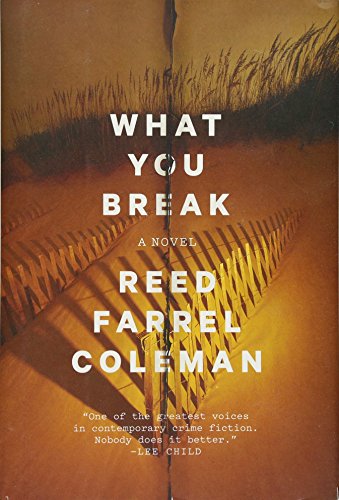
Former Suffolk County cop Gus Murphy returns to prowl the meaner streets of Long Island’s darkest precincts with a Russian mercenary at his back in the stunning second installment of Reed Farrel Coleman’s critically acclaimed, Edgar-nominated series.
Gus Murphy and his girlfriend, Magdalena, are put in harm’s way when Gus is caught up in the distant aftershocks of heinous crimes committed decades ago in Vietnam and Russia. Gus’s ex-priest pal, Bill Kilkenny, introduces him to a wealthy businessman anxious to have someone look more deeply into the brutal murder of his granddaughter. Though the police already have the girl’s murderer in custody, they have been unable to provide a reason for the killing. The businessman, Spears, offers big incentives if Gus can supply him with what the cops cannot—a motive.
Later that same day, Gus witnesses the execution of a man who has just met with his friend Slava. As Gus looks into the girl’s murder and tries to protect Slava from the executioner’s bullet, he must navigate a minefield populated by hostile cops, street gangs, and a Russian mercenary who will stop at nothing to do his master’s bidding. But in trying to solve the girl’s murder and save his friend, Gus may be opening a door into a past that was best left forgotten. Can he fix the damage done, or is it true that what you break you own...forever?
Die Inhaltsangabe kann sich auf eine andere Ausgabe dieses Titels beziehen.
Über die Autorin bzw. den Autor
Reed Farrel Coleman, called “a hard-boiled poet” by NPR’s Maureen Corrigan and the “noir poet laureate” in The Huffington Post, is the Edgar-nominated author of twenty-three novels and three novellas, including the critically acclaimed Moe Prager series and the first novel in this series, Where It Hurts. A three-time winner of the Shamus Award, he has also won the Anthony, Macavity, Barry, and Audie awards.
Auszug. © Genehmigter Nachdruck. Alle Rechte vorbehalten.
1
(saturday night)
He was one of the chatty passengers, the type who wanted to be my pal, my best pal ever. Just my luck. I usually worked security at the club on Saturday nights, but with Fredo at his sister’s wedding and our substitute driver out sick, I had to drive. For my first year on the job as the nightshift courtesy van driver for the Paragon Hotel, I hated guys like this. The compulsive talkers who dealt with their anxieties about flying or being near New York City or being away from the wife and kids by making nice with the poor schmuck who drove the three-stop route between Long Island MacArthur Airport, the hotel, and the Long Island Rail Road’s Ronkonkoma station. And this guy had it bad. He was a determined sort.
“So—hey, what’s your name, anyway?”
“Gus.”
“So, Gus . . . Gus, huh? What’s that short for? August? Gustave? -Unusual names, either one, huh?”
I nodded, not bothering to tell him that Gus was an abbreviated version of my middle name, Augustus. What for? This wasn’t an actual conversation. It was verbal smoke that would waft away and disperse into nothingness the moment I unloaded his bags and turned him over to the new night clerk for registration. It was a trick of time, a way to waste the empty minutes, to fill them up with something, anything other than reflection or thought. But I was onto the trick of time and I knew all there was to know about emptiness.
On and on it went. Where did I come from? What did I do before this? Was I married? Did I have kids?
That first year, either I wouldn’t answer or I’d grunt or I’d make stuff up. Anything to deflect or to quiet the chatter, anything not to tell the truth. That I was from Smithtown. That I was three-plus years retired from the Suffolk County Police Department. That I was divorced. That I once had two kids, but now only had one. The last part, the part about losing a kid, that was really the answer to all of his questions, to any questions about me, because it defined me. Who I was, where I came from, all the answers, none of it mattered. I was once somebody, then my son John died, then I was somebody else. Before John Jr. During John Jr. After John Jr. It was like that. I was still becoming that somebody else. I supposed I would be becoming him until the moment I stopped drawing breath.
Thankfully, it was the short run I was driving, the one from the terminal at MacArthur back to the hotel, and I wouldn’t have to deal with Mr. Curious for too much longer. Actually, I’d moved my focus away from Chatty before we’d made it out the airport exit and turned onto Vets Highway. No, my attention was fixed on my other passenger, the one half bathed in shadow in the last row of the van.
He hadn’t said anything to me when I hoisted his beat-up blue duffel bag into the back of the van and had only nodded when I asked if he was going to the Paragon Hotel. He’d headed straight for the last row of seats, though the van had capacity for twelve people and there was only him and the talker along for the ride. I don’t know why, exactly, but I got the sense he was a foreigner. I laughed at myself for thinking that word. “Foreigner,” such an outdated term, like something my belligerent drunk of a father might’ve used or a word out of a ’50s movie about marauding Commie spies in our midst.
Both my passengers had gotten off a Southwest flight from Fort Lauderdale. Not much intrigue in flights from Fort Lauderdale, just a lot of old snowbirds who split their time between New York and Florida. No intrigue on any flights into MacArthur because there were no international flights. There were barely any flights to anywhere anymore, and the place was down to two airlines. Word was that Islip Township, the authority that ran the airport, was trying like mad to lure an Icelandic airline to fly into MacArthur. If that failed, I guess they could always try for Burkina Faso Airlines with daily nonstop flights to Ouagadougou and Bobo-Dioulasso. Either way, it might add a little character to Suffolk County, certainly to the parts of Suffolk County that weren’t the Hamptons. Which is to say, most of the county. For the vast majority of Suffolk residents, the Hamptons might as well have been as far away as Ouagadougou or Reykjavík.
I also got the sense that the foreigner was running. From what or from whom or to where, I couldn’t say. But that he was a runner, I knew. A street cop, even one who worked the less-than-mean streets of East Northport and Commack, knows a runner when he sees one. Although his vacant blue eyes were hidden in the shadows, I felt them on me as I glanced back at him in my rearview mirror. I felt them darting from side to side, alert, on the lookout, assessing. Where was the threat coming from? Who was a threat? Where could I run? Who could I trust? And then there was his frayed blue duffel bag: faded, stitched—ragged, ugly unskilled stiches like drunken railroad tracks—taped and taped again. It hadn’t been neatly packed, but was lumpy and unevenly weighted. It was the kind of bag a man who has to move on the spur of the moment might pack. He might just shove all of his things, his dirty laundry, his books, his family photos, his secrets into it, and go.
The chatter stopped, as it always did, when I pulled the van into the driveway of the Paragon and parked beneath its weirdly ’80s-style portico that had somehow escaped remodeling. I flung the column-mounted gearshift into park, the van lurching forward. I used my left foot to kick the door open, hopped out of the driver’s seat, ran around to the side of the van closest to the hotel entrance, and swung open both side doors to let my passengers out. I went to the rear of the van and unloaded the chatty guy’s two roller bags and the runner’s duffel. Chatty gave me two dollars and strolled toward the hotel without a word. I guess we weren’t best pals anymore.
The runner didn’t tip me. Didn’t speak. He just picked up the duffel, his head on a swivel, and moved to the hotel entrance. I didn’t care much about him beyond the potential for trouble that might surround any runner. I had to care about that much because I doubled as the hotel detective. That was part of my deal with the Bonacker family, the folks who currently owned the Paragon. I drove the van four nights a week, bounced at the Full Flaps Lounge on weekends, provided my police expertise and, when called for, my muscle. In return, I got paid a modest salary and a free room for as long as I was employed at the hotel. So far it had worked out well for us all, which was why I made sure to keep an eye on the runner as he made his way through the sliding doors.
It was when he got inside that I noticed something that piqued my interest in him even more than his duffel bag or his suspicious eyes. Slava, the night bellman and my friend, a man who worked nights because the dark helped hide his past, blanched at the sight of the runner. I didn’t know much about where Slava had come from or why he’d come to the States. He refused to share those things with me because he was so ashamed by them that he didn’t want to think about them himself. That much he’d shared. But one thing I knew about Slava, a big, ugly man with a jolly demeanor, was that there wasn’t much in the world that scared him. So why, I wondered, was he scared now? What about the runner, a thin, weak-jawed man with high flat cheekbones, scared Slava?
Then I saw it, the subtle exchange between them. The runner smiled at Slava. It was a slight, sad smile of recognition, which Slava greeted with a frown and a quick shake of his...
„Über diesen Titel“ kann sich auf eine andere Ausgabe dieses Titels beziehen.
Weitere beliebte Ausgaben desselben Titels

Suchergebnisse für What You Break: A Novel (Gus Murphy, 2, Band 2)

Beispielbild für diese ISBN
What You Break (A Gus Murphy Novel)
Anbieter: World of Books (was SecondSale), Montgomery, IL, USA
Verkäuferbewertung 5 von 5 Sternen

Zustand: Good. Item in good condition. Textbooks may not include supplemental items i.e. CDs, access codes etc. Bestandsnummer des Verkäufers 00047969608
Gebraucht kaufen
EUR 4,15
Versand gratis
Versand innerhalb von USA
Versand innerhalb von USA
Anzahl: 3 verfügbar
Beispielbild für diese ISBN
What You Break (A Gus Murphy Novel)
Anbieter: World of Books (was SecondSale), Montgomery, IL, USA
Verkäuferbewertung 5 von 5 Sternen
Zustand: Very Good. Item in very good condition! Textbooks may not include supplemental items i.e. CDs, access codes etc. Bestandsnummer des Verkäufers 00078954001
Gebraucht kaufen
EUR 4,15
Versand gratis
Versand innerhalb von USA
Versand innerhalb von USA
Anzahl: 1 verfügbar
Foto des Verkäufers
What You Break (A Gus Murphy Novel)
Anbieter: Used Book Company, Egg Harbor Township, NJ, USA
Verkäuferbewertung 3 von 5 Sternen

Zustand: very_good. Shows minimal signs of wear and previous use. Can include notes highlighting. A portion of your purchase benefits nonprofits! - Note: Edition & format may differ from what is shown in stock photo & item details. May not include supplementary material such as toys, access code, dvds, etc. Bestandsnummer des Verkäufers 584XQ40009AE_ns
Gebraucht kaufen
EUR 4,90
Versand gratis
Versand innerhalb von USA
Versand innerhalb von USA
Anzahl: 2 verfügbar
Foto des Verkäufers
What You Break (A Gus Murphy Novel)
Anbieter: Greenworld Books, Arlington, TX, USA
Verkäuferbewertung 5 von 5 Sternen
Zustand: good. Fast Free Shipping â" Good condition. It may show normal signs of use, such as light writing, highlighting, or library markings, but all pages are intact and the book is fully readable. A solid, complete copy that's ready to enjoy. Bestandsnummer des Verkäufers GWV.0399173048.G
Gebraucht kaufen
EUR 5,12
Versand gratis
Versand innerhalb von USA
Versand innerhalb von USA
Anzahl: 1 verfügbar
Beispielbild für diese ISBN
What You Break (A Gus Murphy Novel)
Verlag:
G.P. Putnam's Sons (edition First Edition), 2017
ISBN 10: 0399173048
ISBN 13: 9780399173042
Gebraucht
Hardcover
Erstausgabe
Anbieter: BooksRun, Philadelphia, PA, USA
Verkäuferbewertung 5 von 5 Sternen
Hardcover. Zustand: Very Good. First Edition. With dust jacket. It's a well-cared-for item that has seen limited use. The item may show minor signs of wear. All the text is legible, with all pages included. It may have slight markings and/or highlighting. Bestandsnummer des Verkäufers 0399173048-11-1-29
Gebraucht kaufen
EUR 5,65
Versand gratis
Versand innerhalb von USA
Versand innerhalb von USA
Anzahl: 1 verfügbar
Foto des Verkäufers
What You Break (A Gus Murphy Novel)
Anbieter: Off The Shelf, Antonia, MO, USA
Verkäuferbewertung 5 von 5 Sternen
Zustand: good. EX LIBRARY BOOK - with the usual stamps, stickers and labels. The item shows wear from consistent use, but it remains in good condition and works perfectly. All pages and cover are intact including the dust cover, if applicable . Spine may show signs of wear. Pages may include limited notes and highlighting. May NOT include discs, access code or other supplemental materials. Bestandsnummer des Verkäufers 4WILKM00P58E
Gebraucht kaufen
EUR 1,34
EUR 4,33 Versand
Versand innerhalb von USA
Versand innerhalb von USA
Anzahl: 1 verfügbar
Beispielbild für diese ISBN
What You Break (A Gus Murphy Novel)
Anbieter: ThriftBooks-Atlanta, AUSTELL, GA, USA
Verkäuferbewertung 5 von 5 Sternen
Hardcover. Zustand: Very Good. No Jacket. Missing dust jacket; May have limited writing in cover pages. Pages are unmarked. ~ ThriftBooks: Read More, Spend Less. Bestandsnummer des Verkäufers G0399173048I4N01
Gebraucht kaufen
EUR 5,79
Versand gratis
Versand innerhalb von USA
Versand innerhalb von USA
Anzahl: 1 verfügbar
Beispielbild für diese ISBN
What You Break (A Gus Murphy Novel)
Anbieter: ThriftBooks-Dallas, Dallas, TX, USA
Verkäuferbewertung 5 von 5 Sternen
Hardcover. Zustand: Very Good. No Jacket. May have limited writing in cover pages. Pages are unmarked. ~ ThriftBooks: Read More, Spend Less. Bestandsnummer des Verkäufers G0399173048I4N00
Gebraucht kaufen
EUR 5,79
Versand gratis
Versand innerhalb von USA
Versand innerhalb von USA
Anzahl: 1 verfügbar
Beispielbild für diese ISBN
What You Break (A Gus Murphy Novel)
Anbieter: ThriftBooks-Dallas, Dallas, TX, USA
Verkäuferbewertung 5 von 5 Sternen
Hardcover. Zustand: Very Good. No Jacket. Former library book; May have limited writing in cover pages. Pages are unmarked. ~ ThriftBooks: Read More, Spend Less. Bestandsnummer des Verkäufers G0399173048I4N10
Gebraucht kaufen
EUR 5,79
Versand gratis
Versand innerhalb von USA
Versand innerhalb von USA
Anzahl: 1 verfügbar
Beispielbild für diese ISBN
What You Break (A Gus Murphy Novel)
Anbieter: HPB-Diamond, Dallas, TX, USA
Verkäuferbewertung 5 von 5 Sternen
hardcover. Zustand: Very Good. Connecting readers with great books since 1972! Used books may not include companion materials, and may have some shelf wear or limited writing. We ship orders daily and Customer Service is our top priority! Bestandsnummer des Verkäufers S_459768406
Gebraucht kaufen
EUR 2,68
EUR 3,25 Versand
Versand innerhalb von USA
Versand innerhalb von USA
Anzahl: 1 verfügbar