Inhaltsangabe
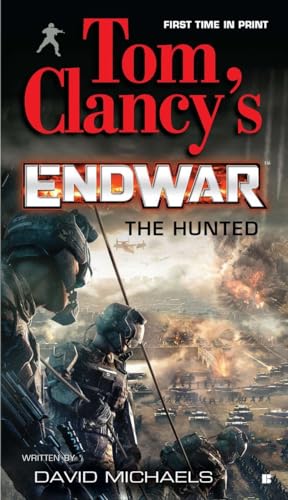
She's known as the Snow Maiden-an operative of a secret group dedicated to world domination. To get their hands on her, U.S. Special Forces Captain Alexander Brent and his team will have to outmaneuver a terrorist faction bent on wiping her off the face of the earth.
Die Inhaltsangabe kann sich auf eine andere Ausgabe dieses Titels beziehen.
Über die Autorin bzw. den Autor
Thirty years ago Tom Clancy was a Maryland insurance broker with a passion for naval history. Years before, he had been an English major at Baltimore’s Loyola College and had always dreamed of writing a novel. His first effort, The Hunt for Red October—the first of the phenomenally successful Jack Ryan novels—sold briskly as a result of rave reviews, then catapulted onto the New York Times bestseller list after President Reagan pronounced it “the perfect yarn.” From that day forward, Clancy established himself as an undisputed master at blending exceptional realism and authenticity, intricate plotting, and razor-sharp suspense. He passed away in October 2013.
David Michaels is the author of two Tom Clancy's Ghost Recon novels and several Tom Clancy's Splinter Cell novels.
Auszug. © Genehmigter Nachdruck. Alle Rechte vorbehalten.
ONE
Mumbai, Maharashtra, India
2021 (Present Day)
For five years after the nuclear exchange between Iran and Saudi Arabia that killed six million and crippled the world's oil supply, Manoj Chopra had been having a recurring dream:
He was five years old, dashing through the slums of Mumbai, and being chased by three men with long, metallic wings extending from their backs and glistening in the sun. They said they were angels, but their skin was translucent, with flickering flames coursing beneath. They seemed to smile, yet their heads were like fire-filled globes devoid of real expressions. They seemed unaware of the heat and flames.
Their voices came in silky whispers, and they said they wanted to save him, but he wasn't sure if he could trust them, and he understood that if he got too close, he'd be burned.
So he ran. And they chased him down the alleys, across the trenches, the sewers, the garbage heaps, and the crowded city streets choked by businesspeople, tourists, and beggars.
He would turn down another street, and suddenly one would take flight and swoop overhead, then drop in front of him, fold his arms over his chest, and with wings extending, say, "You are a good boy, Manoj. You will always do the right thing. So come with us now."
"I'm afraid."
"Don't be."
"I want to come with you, but I can't."
"Why?"
"Because I have to stay here."
Chopra charged past the fiery angel and ducked into a small house, the same house that appeared repeatedly in the dream.
About a dozen women and children sat on the bare floor, all of them making bidis by placing tobacco inside small tendu leaves, then tightly rolling them. They would secure each bidi with thread, then move on to the next one, hoping to make more than a thousand in a single day.
One of the women was Chopra's mother. The two teenaged girls who sat beside her were his sisters, and all three were deeply in debt to the bidi contractors who loaned money at ridiculous interest rates in order to keep them enslaved. This had been Chopra's fate. In his youth, he had rolled thousands of bidis himself.
"Go away," his mother said. "I still love you."
"I can't."
"You can't stay here. Is this the life you want? Your father would have wanted better."
Chopra's father had been killed in a construction accident, leaving his family with bills and no medical insurance.
Chopra shook his head at his mother. "He's gone. He will never know about me and what I do."
"Go with them."
Chopra glanced back. In the doorway, framed by the afternoon light, stood one of the angels. He glowed in silhouette and extended a hand. For a moment, Chopra thought the angel had his father's face. He tensed and turned away as now a woman strode from the back of the room, along with an impeccably groomed man in a dark suit.
"He has, we believe, an eidetic memory," said the woman, whose face came into the light and whose hands were covered in chalk. She was one of Chopra's teachers from senior secondary school (high school).
The man, Mr. Sanjay Deol, was a top executive with Axis Bank and one of Chopra's mentors who had helped send him to the Judge Business School in Cambridge. Because of his gifts, because of his "value" and talent, Chopra had been able to do something rare in his world: escape his destiny.
"Yes, we know all about him," answered Deol. "He is the most remarkable mathematician we've ever seen—and he's so young."
"But what about them?" Chopra asked. "Can you save my family?"
Deol shook his head and turned away, metallic wings sprouting from his back.
And at that moment, as always happened, Chopra snapped awake and lay there in a pool of sweat.
"The dream is simple to interpret," said one of the half dozen therapists Chopra had consulted over the years. "You're feeling guilty about the deaths of all the men who supported you. The men who turned your life around. The men who gave you a life, as it were. They were your angels, and they burned in the Middle East holocaust."
Chopra was forty-seven years old now, and he knew better than to dismiss the dream as simple guilt. Something much deeper was simmering in his subconscious, and he was determined to uncover it.
He'd heard the axiom that all great athletes are always running away from something. So what was it, really? Was he trying to run away from his meager roots?
Chopra leaned back in his office chair and glanced up through the panoramic windows of his penthouse suite. The city lay before him: the choked streets, the towering buildings—some old and weather-worn, others newly constructed. He was quite literally at the top of his world.
He wanted for nothing. He could never spend all the money he had earned and saved. His mother and sisters had been rescued—by him, not by those creatures from his dreams.
And yet at forty-seven he had never married. Could he blame that on his physical appearance? Not solely. He was not an ugly man, he thought, but his short stature and considerable girth would never earn him a starring role in the latest Bollywood production. That he couldn't tolerate contact lenses and wore thick spectacles didn't help matters, either. However, his unwavering commitment to his work had most often interfered with his personal life. Because he had been taken from such squalor and been trained, educated, and placed in an environment of such ultra wealth, he felt he owed his mentors a remarkable return on their investment.
In fact, for the past ten years, he had abandoned all thoughts of dating and had simply begun working more than ever. After the nuclear strike, his job became exceedingly more urgent and complicated.
Chopra leaned forward and studied the computer screen. At the moment he was making a large money transfer from a sovereign wealth fund bank account belonging to the former nation of Dubai. Although most of Iran and Saudi Arabia had been leveled in the blasts, Dubai's infrastructure had been partially spared, although what was left of the country had been evacuated and even now, some five years later, it was still unsafe to be there, unprotected, for more than eight hours at a time. Chopra was and continued to be the minister and custodian of Dubai's accounts, and this particular one was worth some ninety-two billion dollars.
How he had come to this position was yet another small miracle. After his mentors at Axis had financed his college education, he had graduated and gone to work for them, becoming one of their chief financial analysts by the time he was just twenty-six.
At thirty, he had been recruited by the Al Maktoum family of Dubai, who had ruled the country since 1833. They wanted him to manage their sovereign wealth fund and become one of the country's chief financial advisers. Chopra left Axis with his mentors' blessing because the bank continued to do much business with Dubai and other United Arab Emirates members. This was, as one of his American-raised mentors had put it, a marriage made in heaven.
Chopra found his work in Dubai both stimulating and rewarding. His employers treated him like royalty, paid him ridiculous sums of money, and encouraged him to be creative with their investments.
That creativity had continued—even after nuclear holocaust had effectively killed nearly all members of the family and left Chopra in a wasteland of grief.
With care and precision, he worked the computer's mouse and manipulated the funds. He was moving oil money into the green industry in an...
„Über diesen Titel“ kann sich auf eine andere Ausgabe dieses Titels beziehen.
Suchergebnisse für Tom Clancy's EndWar: The Hunted

Beispielbild für diese ISBN
Tom Clancys Endwar The Hunted
Anbieter: World of Books (was SecondSale), Montgomery, IL, USA
Verkäuferbewertung 5 von 5 Sternen

Zustand: Acceptable. Item in good condition. Textbooks may not include supplemental items i.e. CDs, access codes etc. Bestandsnummer des Verkäufers 00062008955
Gebraucht kaufen
EUR 3,41
Versand gratis
Versand innerhalb von USA
Versand innerhalb von USA
Anzahl: 5 verfügbar
Beispielbild für diese ISBN
Tom Clancys Endwar The Hunted
Anbieter: World of Books (was SecondSale), Montgomery, IL, USA
Verkäuferbewertung 5 von 5 Sternen
Zustand: Very Good. Item in very good condition! Textbooks may not include supplemental items i.e. CDs, access codes etc. Bestandsnummer des Verkäufers 00093683519
Gebraucht kaufen
EUR 3,41
Versand gratis
Versand innerhalb von USA
Versand innerhalb von USA
Anzahl: 4 verfügbar
Beispielbild für diese ISBN
Tom Clancys Endwar The Hunted
Anbieter: World of Books (was SecondSale), Montgomery, IL, USA
Verkäuferbewertung 5 von 5 Sternen
Zustand: Good. Item in good condition. Textbooks may not include supplemental items i.e. CDs, access codes etc. Bestandsnummer des Verkäufers 00093549384
Gebraucht kaufen
EUR 3,41
Versand gratis
Versand innerhalb von USA
Versand innerhalb von USA
Anzahl: 5 verfügbar
Beispielbild für diese ISBN
The Hunted (Tom Clancy's Endwar #2)
Anbieter: Orion Tech, Kingwood, TX, USA
Verkäuferbewertung 5 von 5 Sternen
Paperback. Zustand: Good. Bestandsnummer des Verkäufers 0425237710-3-18767063
Gebraucht kaufen
EUR 3,43
Versand gratis
Versand innerhalb von USA
Versand innerhalb von USA
Anzahl: 1 verfügbar
Beispielbild für diese ISBN
The Hunted (Tom Clancy's Endwar #2)
Anbieter: Your Online Bookstore, Houston, TX, USA
Verkäuferbewertung 5 von 5 Sternen
Paperback. Zustand: Good. Bestandsnummer des Verkäufers 0425237710-3-24579587
Gebraucht kaufen
EUR 3,43
Versand gratis
Versand innerhalb von USA
Versand innerhalb von USA
Anzahl: 1 verfügbar
Foto des Verkäufers
The Hunted (Tom Clancy's Endwar #2)
Anbieter: Goodwill of Colorado, COLORADO SPRINGS, CO, USA
Verkäuferbewertung 5 von 5 Sternen
Zustand: good. All pages and cover are intact. Dust jacket included if applicable, though it may be missing on hardcover editions. Spine and cover may show minor signs of wear including scuff marks, curls or bends to corners as well as cosmetic blemishes including stickers. Pages may contain limited notes or highlighting. "From the library of" labels may be present. Shrink wrap, dust covers, or boxed set packaging may be missing. Bundled media e.g., CDs, DVDs, access codes may not be included. Bestandsnummer des Verkäufers COLV.0425237710.G
Gebraucht kaufen
EUR 5,01
Versand gratis
Versand innerhalb von USA
Versand innerhalb von USA
Anzahl: 2 verfügbar
Beispielbild für diese ISBN
The Hunted (Tom Clancy's Endwar #2)
Anbieter: SustainableBooks.com, Amherst, NY, USA
Verkäuferbewertung 5 von 5 Sternen
Zustand: Fair. Book is in Used-Acceptable condition. Used items may not include supplementary materials such as CDs or access codes. Pages and cover may have wear, tears, and stickers. Pages are may contain notes and highlighting. Bestandsnummer des Verkäufers 0425237710-2-5
Gebraucht kaufen
EUR 5,08
Versand gratis
Versand innerhalb von USA
Versand innerhalb von USA
Anzahl: 1 verfügbar
Beispielbild für diese ISBN
The Hunted (Tom Clancy's Endwar #2)
Anbieter: Once Upon A Time Books, Siloam Springs, AR, USA
Verkäuferbewertung 4 von 5 Sternen

Paperback. Zustand: Acceptable. This is a used book. It may contain highlighting/underlining and/or the book may show heavier signs of wear . It may also be ex-library or without dustjacket. This is a used book. It may contain highlighting/underlining and/or the book may show heavier signs of wear . It may also be ex-library or without dustjacket. Bestandsnummer des Verkäufers mon0003408724
Gebraucht kaufen
EUR 1,69
EUR 3,40 shipping
Versand innerhalb von USA
Versand innerhalb von USA
Anzahl: 1 verfügbar
Beispielbild für diese ISBN
The Hunted (Tom Clancy's Endwar #2)
Anbieter: Once Upon A Time Books, Siloam Springs, AR, USA
Verkäuferbewertung 4 von 5 Sternen
Paperback. Zustand: Good. This is a used book in good condition and may show some signs of use or wear . This is a used book in good condition and may show some signs of use or wear . Bestandsnummer des Verkäufers mon0003193892
Gebraucht kaufen
EUR 1,69
EUR 3,40 shipping
Versand innerhalb von USA
Versand innerhalb von USA
Anzahl: 1 verfügbar
Beispielbild für diese ISBN
The Hunted (Tom Clancy's Endwar #2)
Anbieter: Giant Giant, Reston, VA, USA
Verkäuferbewertung 5 von 5 Sternen
paperback. Zustand: UsedGood. Good condition.No marking/highlighting.Cover and pages may show some wear.Not Satisfied? Contact us to get a refund. Bestandsnummer des Verkäufers BRG-14_2_281
Gebraucht kaufen
EUR 5,10
Versand gratis
Versand innerhalb von USA
Versand innerhalb von USA
Anzahl: 1 verfügbar