
Verwandte Artikel zu The Hunters (A Parson and Gold Novel, Band 6)
Inhaltsangabe
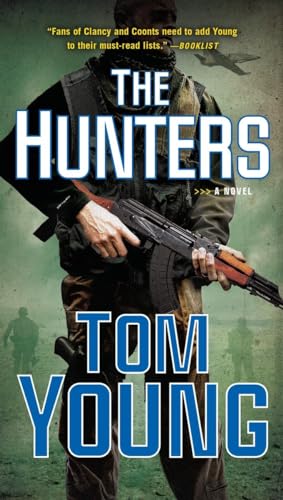
The extraordinary suspense novel from the highly acclaimed military writer drawing comparisons to Clancy, Coonts, Forsyth, and Dale Brown.
A perilous aid mission into Somalia. An Al Shabaab leader intent on stopping it. A Hollywood actress and activist arriving to make a documentary in one of the most dangerous places on earth. This isn’t going to end well.
Khatar. It is the Somali word for “dangerous,” and it is one that Colonel Michael Parson has heard all too often on his present mission. His friend Sophia Gold has talked him into taking leave from the Air Force to fly relief supplies into Somalia in an antique DC-3 cargo plane. But even Parson doesn’t know just how khatar this trip will turn out to be.
Die Inhaltsangabe kann sich auf eine andere Ausgabe dieses Titels beziehen.
Über die Autorin bzw. den Autor
Tom Young retired from the Air National Guard in 2013 at the rank of senior master sergeant. He served more than twenty years as a flight engineer on the C-130 Hercules and the C-5 Galaxy, logging nearly 5,000 hours of flight time. His career included service in Afghanistan, Iraq, Bosnia, Kosovo, the horn of Africa, and elsewhere. Military honors include the Meritorious Service Medal, three Air Medals, three Aerial Achievement Medals, and the Air Force Combat Action Medal.
Young holds degrees from the University of North Carolina at Chapel Hill, and studied writing there and at the Sewanee Writers’ Conference, among other places. Besides his five previous novels The Mullah’s Storm, Silent Enemy, The Renegades, The Warriors, and Sand and Fire, he is also the author of the Sand and Fire eBook special Phantom Fury, and the oral history The Speed of Heat: An Airlift Wing at War in Iraq and Afghanistan. Young also contributed to the anthology Operation Homecoming, edited by Andrew Carroll. He lives in Alexandria, Virginia.
Auszug. © Genehmigter Nachdruck. Alle Rechte vorbehalten.
CHAPTER ONE
Hunger. Rage.
Fourteen-year-old Hussein felt little else as he rode in the back of a Nissan pickup truck along a dirt road south of Mogadishu. Five fellow al-Shabaab fighters traveled with him in the truck bed. One manned a Kord 12.7-millimeter machine gun bolted near the tailgate, and the rest brandished AK-47s. Hussein’s entire worldly possessions consisted of his AK, his sandals, a dirty cotton shirt and trousers, and the machete hanging from a rope belt in a leather sheath.
For a promised piece of fruit every day, Hussein had become a soldier of God. The older men had yet to give him his daily tangerine; rewards would come later if he and his brothers in jihad performed this mission well. Along with the fruit, he hoped to get a bowl of onion and potato soup. Just like yesterday and the day before that.
His mouth still watered when he remembered that day last week when the men fed him fried goat meat. Such feasts came rarely for the young soldiers of God. Al-Shabaab, or “The Youth,” faced many hardships inflicted by the infidels. These gaalos, the unbelieving foreigners, brought hunger, the death of parents and friends, and so-called medicine that only made diseases worse.
But today, the unbelievers would feel God’s wrath.
The truck slowed and stopped at a crossroads. Dust kicked up by the Nissan’s tires rolled in clouds and stung Hussein’s eyes. Thorn scrub littered the dunes that stretched from the crossroads to the beach. Beyond the beach, the Indian Ocean sparkled blue to the horizon. Seagulls wheeled over the surf.
The new boss got out of the passenger side of the pickup. Hussein knew him only as “the Sheikh,” a man who spoke of many things Hussein did not understand. But the Sheikh led the struggle now, and God gave him his words just as the angels had bidden Mohammed to recite the holy book.
“Out of the truck, my pups,” the Sheikh said.
Hussein and four of his comrades scrambled over the tailgate and hopped to the ground. One stayed behind to man the machine gun. The driver got out of the truck and stood beside the Sheikh. Hussein knew the driver as Abdullahi. Abdullahi would beat you for laziness or for grabbing at food. He wore a black kerchief around his head and neck, which left only his eyes visible. The Sheikh wore plain clothes like Hussein, and mirrored sunglasses.
Another al-Shabaab truck arrived, carrying only the driver. The driver remained inside and kept the engine idling.
“A nest of vipers has installed itself in Mogadishu,” the Sheikh said. He gestured with his right hand, index finger extended, as he often did during his sermons. “They dare to call themselves a legitimate government, with their sham elections and unclean money from the Americans and the British and the United Nations. The only legitimate government is that of God, of the Islamic Emirate of Somalia.”
At the mention of the Islamic emirate, the fighters cheered. Hussein cheered with them, raised his weapon high into the air.
“At any moment,” the Sheikh continued, “a vehicle will come this way. It will probably be from Mogadishu. We will stop the vehicle and give the occupants a test. If they pass the test, they may proceed on their way. If they fail, you will administer God’s justice. We will stand firm here at this crossroads and test the fidelity of travelers for the rest of the day.”
Hussein did not know all of these words. He did not know “administer” or “occupant.” For that matter, he did not know what “emirate” meant. But he knew his duty, and he would carry it out with righteous conviction.
As the Sheikh predicted, in a few minutes a car approached. Two men rode in a Mazda with a dragging tailpipe and rusted-out fenders. As the Mazda neared the gun truck, the other truck pulled across the road behind the car and blocked escape back toward Mogadishu. The boy manning the machine gun fired a burst over the car. The three rapid-fire shots sounded like hammer blows, and the heavy brass casings clanged onto the truck bed as if someone had dropped three wrenches.
“Halt!” the Sheikh shouted, needlessly. The Mazda had already skidded to a stop. The driver and passenger sat frozen. Both looked like men in their thirties. Neither wore a beard.
“Out of the car,” the Sheikh ordered.
Slowly, the driver opened his door. Not fast enough for Abdullahi. Abdullahi tore open the car door, grabbed the driver by the shirt, and slammed him against the hood of the car. Another of the al-Shabaab fighters yanked out the passenger.
Hussein trembled with anticipation. These looked like kafirs, those who denied God’s truth. Kafir was a new word for Hussein, one the al-Shabaab men had taught him. Kafirs lurked all around, and they deserved no mercy. Hussein would show none.
He would not hesitate to carry out al-Shabaab’s bidding. In its ranks he had found belonging and importance. No longer rabble of the streets, now he was a man of weapons. God rewarded his ferocity with tangerines and plums.
Already the kafirs begged for their lives.
“Brothers, brothers, who are you?” the passenger asked. “We have done nothing to you.”
“We have only a little money,” the driver cried. “You can take it. Just let us go.”
Abdullahi slapped the driver.
“You came from the direction of Mogadishu,” the Sheikh said. “What were you doing there?”
Hussein had seen the Sheikh do this before—toy with his victims the way a cat plays with a mouse. The question made both travelers look even more frightened. The driver glanced at his passenger, then turned to the Sheikh with pleading eyes.
“We are fishermen,” the driver said. “We have been repairing our boat.”
They didn’t look like fishermen. They wore the shirts and slacks of the gaalos, and leather shoes instead of sandals.
Abdullahi slapped the man again.
“You lie,” Abdullahi said. “You have repaired nothing in these clean clothes. You have worked in the offices of the infidel, stealing from the people.”
“No, no,” the driver said. “We are good Muslims, just like you, brother.”
“We shall see if you are faithful,” the Sheikh said. “Tell me of the Prophet’s Night Journey, exactly as the Quran tells it.”
“What, brother?” the driver asked. “I do not understand.”
“Because I am generous and kind,” the Sheikh said, “I will give you a hint. Recite for me Surah 17.”
“Recite?” the passenger asked. “What?”
“Recite for us,” Abdullahi said through gritted teeth, “Surah 17.”
“What is this madness?” the driver asked.
The travelers did not know the section of the Quran the Sheikh wanted to hear. Hussein did not know it, either, because he could not read. Nor could most of the al-Shabaab fighters. This did not trouble Hussein. Hunger left little space in his mind for irony.
“Then I will tell you,” the Sheikh said. He began to recite from memory.
“Glory to Allah, who did take His Servant
For a journey by night from the Sacred Mosque to the Farthest Mosque,
Whose precincts we did bless—
In order that we might show him some of our signs: for He is the One
Who heareth and seeth all...
„Über diesen Titel“ kann sich auf eine andere Ausgabe dieses Titels beziehen.
Suchergebnisse für The Hunters (A Parson and Gold Novel, Band 6)

Foto des Verkäufers
The Hunters (A Parson and Gold Novel)
Anbieter: Greenworld Books, Arlington, TX, USA
Verkäuferbewertung 5 von 5 Sternen

Zustand: very_good. Fast Free Shipping â" Very Good condition book with a firm cover and clean pages. Shows normal use and some light wear or limited notes markings. A solid, nice copy to enjoy. Bestandsnummer des Verkäufers GWV.0425278948.VG
Gebraucht kaufen
EUR 4,78
Versand gratis
Versand innerhalb von USA
Versand innerhalb von USA
Anzahl: 1 verfügbar
Beispielbild für diese ISBN
The Hunters (A Parson and Gold Novel)
Anbieter: World of Books (was SecondSale), Montgomery, IL, USA
Verkäuferbewertung 5 von 5 Sternen
Zustand: Acceptable. Item in acceptable condition! Textbooks may not include supplemental items i.e. CDs, access codes etc. Bestandsnummer des Verkäufers 00101766908
Gebraucht kaufen
EUR 4,84
Versand gratis
Versand innerhalb von USA
Versand innerhalb von USA
Anzahl: 1 verfügbar
Beispielbild für diese ISBN
The Hunters (A Parson and Gold Novel)
Anbieter: World of Books (was SecondSale), Montgomery, IL, USA
Verkäuferbewertung 5 von 5 Sternen
Zustand: Very Good. Item in very good condition! Textbooks may not include supplemental items i.e. CDs, access codes etc. Bestandsnummer des Verkäufers 00102972304
Gebraucht kaufen
EUR 4,84
Versand gratis
Versand innerhalb von USA
Versand innerhalb von USA
Anzahl: 2 verfügbar
Beispielbild für diese ISBN
The Hunters (A Parson and Gold Novel)
Anbieter: HPB Inc., Dallas, TX, USA
Verkäuferbewertung 5 von 5 Sternen
Paperback. Zustand: Very Good. Connecting readers with great books since 1972! Used books may not include companion materials, and may have some shelf wear or limited writing. We ship orders daily and Customer Service is our top priority! Bestandsnummer des Verkäufers S_434206991
Gebraucht kaufen
EUR 2,33
EUR 3,27 Versand
Versand innerhalb von USA
Versand innerhalb von USA
Anzahl: 1 verfügbar
Beispielbild für diese ISBN
The Hunters (A Parson and Gold Novel)
Anbieter: HPB-Ruby, Dallas, TX, USA
Verkäuferbewertung 5 von 5 Sternen
Paperback. Zustand: Very Good. Connecting readers with great books since 1972! Used books may not include companion materials, and may have some shelf wear or limited writing. We ship orders daily and Customer Service is our top priority! Bestandsnummer des Verkäufers S_439664987
Gebraucht kaufen
EUR 2,33
EUR 3,27 Versand
Versand innerhalb von USA
Versand innerhalb von USA
Anzahl: 1 verfügbar
Beispielbild für diese ISBN
The Hunters (A Parson and Gold Novel)
Anbieter: Half Price Books Inc., Dallas, TX, USA
Verkäuferbewertung 5 von 5 Sternen
Paperback. Zustand: Very Good. Connecting readers with great books since 1972! Used books may not include companion materials, and may have some shelf wear or limited writing. We ship orders daily and Customer Service is our top priority! Bestandsnummer des Verkäufers S_470252876
Gebraucht kaufen
EUR 2,33
EUR 3,27 Versand
Versand innerhalb von USA
Versand innerhalb von USA
Anzahl: 1 verfügbar
Beispielbild für diese ISBN
The Hunters
Verlag:
Penguin Publishing Group, 2016
ISBN 10: 0425278948
ISBN 13: 9780425278949
Gebraucht
Softcover
Anbieter: Better World Books, Mishawaka, IN, USA
Verkäuferbewertung 5 von 5 Sternen
Zustand: Good. Reprint. Pages intact with minimal writing/highlighting. The binding may be loose and creased. Dust jackets/supplements are not included. Stock photo provided. Product includes identifying sticker. Better World Books: Buy Books. Do Good. Bestandsnummer des Verkäufers 12688061-6
Gebraucht kaufen
EUR 6,42
Versand gratis
Versand innerhalb von USA
Versand innerhalb von USA
Anzahl: 1 verfügbar
Beispielbild für diese ISBN
The Hunters
Verlag:
Penguin Publishing Group, 2016
ISBN 10: 0425278948
ISBN 13: 9780425278949
Gebraucht
Softcover
Anbieter: Better World Books, Mishawaka, IN, USA
Verkäuferbewertung 5 von 5 Sternen
Zustand: Good. Reprint. Former library copy. Pages intact with minimal writing/highlighting. The binding may be loose and creased. Dust jackets/supplements are not included. Includes library markings. Stock photo provided. Product includes identifying sticker. Better World Books: Buy Books. Do Good. Bestandsnummer des Verkäufers 11970866-6
Gebraucht kaufen
EUR 6,42
Versand gratis
Versand innerhalb von USA
Versand innerhalb von USA
Anzahl: 1 verfügbar
Beispielbild für diese ISBN
The Hunters
Anbieter: World of Books Inc, Montgomery, IL, USA
Verkäuferbewertung 4 von 5 Sternen

Paperback. Zustand: Fair. Khatar. It s a Somali word for dangerous, and it s one that Colonel Michael Parson has heard too often on his present mission. His friend Sophia Gold has talked him into using his leave from the Air Force to fly relief supplies into Somalia in an antique DC-3 cargo plane. Bestandsnummer des Verkäufers CIN0425278948A
Gebraucht kaufen
EUR 6,64
Versand gratis
Versand innerhalb von USA
Versand innerhalb von USA
Anzahl: 1 verfügbar
Beispielbild für diese ISBN
The Hunters
Anbieter: World of Books Inc, Montgomery, IL, USA
Verkäuferbewertung 4 von 5 Sternen
Paperback. Zustand: Very Good. Khatar. It s a Somali word for dangerous, and it s one that Colonel Michael Parson has heard too often on his present mission. His friend Sophia Gold has talked him into using his leave from the Air Force to fly relief supplies into Somalia in an antique DC-3 cargo plane. Bestandsnummer des Verkäufers CIN0425278948VG
Gebraucht kaufen
EUR 6,64
Versand gratis
Versand innerhalb von USA
Versand innerhalb von USA
Anzahl: 2 verfügbar