
Verwandte Artikel zu Guts: The True Stories Behind Hatchet and the Brian...
Inhaltsangabe
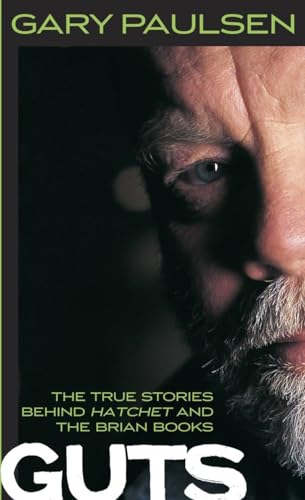
Guess what -- Gary Paulsen was being kind to Brian. In Guts, Gary tells the real stories behind the Brian books, the stories of the adventures that inspired him to write Brian Robeson's story: working as an emergency volunteer; the death that inspired the pilot's death in Hatchet; plane crashes he has seen and near-misses of his own. He describes how he made his own bows and arrows, and takes readers on his first hunting trips, showing the wonder and solace of nature along with his hilarious mishaps and mistakes. He shares special memories, such as the night he attracted every mosquito in the county, or how he met the moose with a sense of humor, and the moose who made it personal. There's a handy chapter on "Eating Eyeballs and Guts or Starving: The Fine Art of Wilderness Nutrition." Recipes included. Readers may wonder how Gary Paulsen survived to write all of his books -- well, it took guts.
Die Inhaltsangabe kann sich auf eine andere Ausgabe dieses Titels beziehen.
Über die Autorin bzw. den Autor
Gary Paulsen is a three-time Newbery Honor winner who has published more than 100 books. Among his best-known titles are Brian’s Winter and Soldier’s Heart.
Von der hinteren Coverseite
Guess what -- Gary Paulsen was being kind to Brian. In "Guts, Gary tells the real stories behind the Brian books, the stories of the adventures that inspired him to write Brian Robeson's story: working as an emergency volunteer; the death that inspired the pilot's death in "Hatchet; plane crashes he has seen and near-misses of his own. He describes how he made his own bows and arrows, and takes readers on his first hunting trips, showing the wonder and solace of nature along with his hilarious mishaps and mistakes. He shares special memories, such as the night he attracted every mosquito in the county, or how he met the moose with a sense of humor, and the moose who made it personal. There's a handy chapter on "Eating Eyeballs and Guts or Starving: The Fine Art of Wilderness Nutrition." Recipes included. Readers may wonder how Gary Paulsen survived to write all of his books -- well, it took guts.
"From the Hardcover edition.
Aus dem Klappentext
- Gary Paulsen was being kind to Brian. In Guts, Gary tells the real stories behind the Brian books, the stories of the adventures that inspired him to write Brian Robeson's story: working as an emergency volunteer; the death that inspired the pilot's death in Hatchet; plane crashes he has seen and near-misses of his own. He describes how he made his own bows and arrows, and takes readers on his first hunting trips, showing the wonder and solace of nature along with his hilarious mishaps and mistakes. He shares special memories, such as the night he attracted every mosquito in the county, or how he met the moose with a sense of humor, and the moose who made it personal. There's a handy chapter on "Eating Eyeballs and Guts or Starving: The Fine Art of Wilderness Nutrition." Recipes included. Readers may wonder how Gary Paulsen survived to write all of his books -- well, it took guts.
From the Hardcover edition.
Auszug. © Genehmigter Nachdruck. Alle Rechte vorbehalten.
I have spent an inordinate amount of time in wilderness woods, much of it in northern Minnesota, some in Canada and some in the Alaskan wilds. I have hunted and trapped and fished and have been exposed to almost all kinds of wilderness animals; I’ve had bear come at me, been stalked by a mountain lion, been bitten by snakes and punctured by porcupines and torn by foxes and once pecked by an attacking raven, but I have never seen anything rivaling the madness that seems to infect a large portion of the moose family.
I first witnessed this insanity when I was twelve, in northern Minnesota. I had just started hunting with a rifle. Back then there were none of today’s modern hunting weapons and I was, to put it mildly, financially disadvantaged. I worked hard at setting pins in a bowling alley, selling newspapers in bars at night and laboring on farms in the summer (hoeing sugar beets for eleven dollars an acre and picking potatoes for five cents a bushel) to make enough money to buy clothing and supplies for school. There was little left for fancy weapons, and after saving for a long time I finally managed to come up with enough money for a Remington single-shot .22 rifle. It was bolt action, with a twist safety on the rear of the bolt, and had to be loaded for each shot by opening the bolt, which extracted the empty shell if you had just fired. Then you put a new cartridge into the chamber by hand, closed the bolt and fired. It was a long process and the end result was that it forced the shooter to pay attention to his first shot and make certain it was accurately placed. It also made the hunter careful not to waste his shot. Withing a short time I was very accurate with this little rifle and was steadily bringing home rabbits and ruffed grouse, which I cleaned and cooked.
Just as they do today, game wardens had a great deal of say in how game laws were enforced, and if a family was poor or there were other special conditions, the wardens would sometimes overlook minor infractions. The legal hunting seasons were in fall and winter, but sometimes I hunted in spring as well, and it gave me food at times when my parents were on long drunks and didn’t keep the refrigerator filled. I would like to thank those game wardens who looked the other way now and then when they saw a scruffy kid come out of the woods with a not-quite-legal grouse or rabbit hanging on his belt.
Before I acquired that rifle, I had hunted a great deal with a bow, but on the day of my first moose incident I had been out with the rifle only a few times. It was early spring in the north woods of Minnesota, not far from the Canadian border and I had seen many rabbits but hadn’t shot any. I wanted grouse because I liked the taste of them fried in batter, especially in spring, when they have been living on frozen high-bush cranberries all winter and have a crisp taste they lose in summer.
There was still snow in patches, and I was studying a large plot of old snow filled with budding willows because grouse like to hide in willows, when I heard something that sounded like a train about to run me down.
There was a kind of bleeeeekkkk, hoarse and very loud, coming from directly behind me and accompanied by a crashing in the brush, and I turned, raising my rifle (about as useful as a BB gun in these circumstances but we use what we have), to see two glaring red eyes coming at me at what seemed like sixty or seventy miles an hour.
I had hunted in these woods for several years and I had never seen a moose or even a moose track. I had heard of them, of course, and seen pictures of them. But there were very few left in Minnesota because they had been hunted out, so I had always dreamed of hunting moose up in Canada.
At the first instant I didn’t realize that it was a large bull moose. He’s lost the previous year’s antlers and hadn’t grown new ones yet. I just saw brown. I saw big. I saw death coming at me, snorting and thundering. I think I may have thought of phantoms, wood spirits, wild monsters–I most certainly did not think of moose.
I wish I could say that with cool precision I raised my trusty little .22 rifle and deftly protected myself. The truth is (and I would never again do this when confronting a moose) that I closed my eyes and waited to get hit. It had come so fast, the snorting, the crashing, the huge whatever it was, that I couldn’t move, couldn’t do anything except close my eyes.
A second passed, then another, and I opened one eye to see him pass me not three feet away. He had to be nearly seven feet tall at the hump. This move would have done credit to a pass in a bullfight. I knew then what he was and I fell back away from him. But the truth was that (a) he was a moose and (b) he was therefore insane, so at this time he hadn’t the slightest interest in me. His target was something else.
Immediately behind me was a pine tree not more than six feet tall. It looked no different than other small pine trees, cute and well formed, like a little Christmas tree, but in that bull’s mind maybe the tree had done something to insult him, or gotten in his way, or called him out, because he absolutely destroyed that tree.
Meanwhile, I scrabbled away into the willows on my back and then re-aimed my rifle, just in case–as if it would have helped to stop him. But he couldn’t have cared less about me. He stomped and ripped and tore at that tree until it was broken off at the ground, and still he didn’t stop until he had used his front hooves to break it into pieces (a method a cow moose would later try to use on me) and then shattered those into little more than splinters. Then he snorted, urinated on his work and walked off into the trees, leaving me to gasp (I had been holding my breath the whole time) and feel a strange pity for the tree.
I have since read that there is a kind of parasite that moose can pick up from eating in the water (they love water-lily roots) that attacks the brain and can cause madness. I wouldn’t know about that, but not a year later I had another experience. I was sitting in a 1938 Ford truck with a farmer I was working for that summer. He had just stopped to roll a Bull Durham cigarette.
We had just passed through some woods that bordered a field where he wanted me to pick up rocks. Of all farm work, I hated this the most; every spring the frost pushed rocks up through the soil and they had to be gathered by hand and thrown on a skid behind a tractor, then dumped in a large pile in a fence corner. I dreaded the work but he was paying me the huge wage of five dollars a day plus room and board so I was glad of the job.
The road to the field was little more than an old logging trail through a thick stand of small poplars. The farmer had just finished rolling the cigarette and was snapping a match with his thumb to light it when a bull moose came out of the woods directly in front of us. He looked away, then at us, then raised all the hair on his hump (a signal I would later come to dread) and charged head-on into the truck.
“what in–“
I’m not certain what the farmer would have said next because he didn’t have time to finish the sentence. The truck slammed backward and the moose backed off, lowered his head and hit the truck again, and again, and again until we had been pushed back a good thirty feet. The grille was smashed into the radiator, which ruptured it and made the water boil out in a cloud of steam. The farmer used words I would not hear again until I enlisted in the army. Then the moose snorted and walked off and we had to walk four miles back to the farm and get a tractor to pull the truck home. It took weeks for us to repair it.
There seems to be a river of rage just below the surface in moose that has no basis in...
„Über diesen Titel“ kann sich auf eine andere Ausgabe dieses Titels beziehen.
Suchergebnisse für Guts: The True Stories Behind Hatchet and the Brian...

Beispielbild für diese ISBN
Guts
Verlag:
Bantam Doubleday Dell Publishing Group Inc, 2002
ISBN 10: 0440407125
ISBN 13: 9780440407126
Gebraucht
Softcover
Anbieter: World of Books (was SecondSale), Montgomery, IL, USA
Verkäuferbewertung 5 von 5 Sternen

Zustand: Good. Guess what -- Gary Paulsen was being kind to Brian. In Guts, Gary tells the real stories behind the Brian books, the stories of the adventures that inspired him to write Brian Robeson's story: working as an emergency volunteer; the death that inspired the pilot's death in Hatchet; plane crashes he has seen and near-misses of his own. He describes how he made his own bows and arrows, and takes readers on his first hunting trips, showing the wonder and solace of nature along with his hilarious mishaps and mistakes. He shares special memories, such as the night he attracted every mosquito in the county, or how he met the moose with a sense of humor, and the moose who made it personal. There's a handy chapter on Eating Eyeballs and Guts or Starving: The Fine Art of Wilderness Nutrition. Recipes included. Readers may wonder how Gary Paulsen survived to write all of his books -- well, it took guts. From the Hardcover edition. Bestandsnummer des Verkäufers 00106401954
Gebraucht kaufen
EUR 3,71
Versand gratis
Versand innerhalb von USA
Versand innerhalb von USA
Anzahl: 16 verfügbar
Beispielbild für diese ISBN
Guts
Verlag:
Bantam Doubleday Dell Publishing Group Inc, 2002
ISBN 10: 0440407125
ISBN 13: 9780440407126
Gebraucht
Softcover
Anbieter: World of Books (was SecondSale), Montgomery, IL, USA
Verkäuferbewertung 5 von 5 Sternen
Zustand: Fair. Guess what -- Gary Paulsen was being kind to Brian. In Guts, Gary tells the real stories behind the Brian books, the stories of the adventures that inspired him to write Brian Robeson's story: working as an emergency volunteer; the death that inspired the pilot's death in Hatchet; plane crashes he has seen and near-misses of his own. He describes how he made his own bows and arrows, and takes readers on his first hunting trips, showing the wonder and solace of nature along with his hilarious mishaps and mistakes. He shares special memories, such as the night he attracted every mosquito in the county, or how he met the moose with a sense of humor, and the moose who made it personal. There's a handy chapter on Eating Eyeballs and Guts or Starving: The Fine Art of Wilderness Nutrition. Recipes included. Readers may wonder how Gary Paulsen survived to write all of his books -- well, it took guts. From the Hardcover edition. Bestandsnummer des Verkäufers 00067664390
Gebraucht kaufen
EUR 3,71
Versand gratis
Versand innerhalb von USA
Versand innerhalb von USA
Anzahl: 18 verfügbar
Beispielbild für diese ISBN
Guts
Verlag:
Laurel Leaf, 2002
ISBN 10: 0440407125
ISBN 13: 9780440407126
Gebraucht
Mass Market Paperback
Anbieter: Your Online Bookstore, Houston, TX, USA
Verkäuferbewertung 5 von 5 Sternen
Mass Market Paperback. Zustand: Good. Bestandsnummer des Verkäufers 0440407125-3-20696810
Gebraucht kaufen
EUR 3,71
Versand gratis
Versand innerhalb von USA
Versand innerhalb von USA
Anzahl: 1 verfügbar
Beispielbild für diese ISBN
Guts
Verlag:
Laurel Leaf, 2002
ISBN 10: 0440407125
ISBN 13: 9780440407126
Gebraucht
Mass Market Paperback
Anbieter: Orion Tech, Kingwood, TX, USA
Verkäuferbewertung 5 von 5 Sternen
Mass Market Paperback. Zustand: Good. Bestandsnummer des Verkäufers 0440407125-3-18438476
Gebraucht kaufen
EUR 3,71
Versand gratis
Versand innerhalb von USA
Versand innerhalb von USA
Anzahl: 1 verfügbar
Foto des Verkäufers
Guts
Anbieter: Zoom Books East, Glendale Heights, IL, USA
Verkäuferbewertung 5 von 5 Sternen
Zustand: acceptable. Book is in acceptable condition and shows signs of wear. Book may also include underlining highlighting. The book can also include "From the library of" labels. May not contain miscellaneous items toys, dvds, etc. . We offer 100% money back guarantee and 24 7 customer service. Bestandsnummer des Verkäufers ZEV.0440407125.A
Gebraucht kaufen
EUR 4,04
Versand gratis
Versand innerhalb von USA
Versand innerhalb von USA
Anzahl: 1 verfügbar
Foto des Verkäufers
Guts
Anbieter: Zoom Books East, Glendale Heights, IL, USA
Verkäuferbewertung 5 von 5 Sternen
Zustand: very_good. Book is in very good condition and may include minimal underlining highlighting. The book can also include "From the library of" labels. May not contain miscellaneous items toys, dvds, etc. . We offer 100% money back guarantee and 24 7 customer service. Bestandsnummer des Verkäufers ZEV.0440407125.VG
Gebraucht kaufen
EUR 4,04
Versand gratis
Versand innerhalb von USA
Versand innerhalb von USA
Anzahl: 1 verfügbar
Foto des Verkäufers
Guts
Anbieter: Zoom Books East, Glendale Heights, IL, USA
Verkäuferbewertung 5 von 5 Sternen
Zustand: good. Book is in good condition and may include underlining highlighting and minimal wear. The book can also include "From the library of" labels. May not contain miscellaneous items toys, dvds, etc. . We offer 100% money back guarantee and 24 7 customer service. Bestandsnummer des Verkäufers ZEV.0440407125.G
Gebraucht kaufen
EUR 4,04
Versand gratis
Versand innerhalb von USA
Versand innerhalb von USA
Anzahl: 3 verfügbar
Foto des Verkäufers
Guts
Anbieter: Zoom Books Company, Lynden, WA, USA
Verkäuferbewertung 5 von 5 Sternen
Zustand: very_good. Book is in very good condition and may include minimal underlining highlighting. The book can also include "From the library of" labels. May not contain miscellaneous items toys, dvds, etc. . We offer 100% money back guarantee and 24 7 customer service. Bestandsnummer des Verkäufers ZBV.0440407125.VG
Gebraucht kaufen
EUR 4,21
Versand gratis
Versand innerhalb von USA
Versand innerhalb von USA
Anzahl: 2 verfügbar
Beispielbild für diese ISBN
Guts
Anbieter: More Than Words, Waltham, MA, USA
Verkäuferbewertung 5 von 5 Sternen
Zustand: Good. . . All orders guaranteed and ship within 24 hours. Before placing your order for please contact us for confirmation on the book's binding. Check out our other listings to add to your order for discounted shipping. Bestandsnummer des Verkäufers WAL-F-3g-002428
Gebraucht kaufen
EUR 0,92
EUR 3,55 Versand
Versand innerhalb von USA
Versand innerhalb von USA
Anzahl: 20 verfügbar
Foto des Verkäufers
Guts
Anbieter: Reliant Bookstore, El Dorado, KS, USA
Verkäuferbewertung 5 von 5 Sternen
Zustand: very_good. This book is in excellent condition. There may be minimal writing on the inside cover or cover page. Cover image on the book may vary from photo. Ships out quickly in a secure plastic mailer. Bestandsnummer des Verkäufers RDV.0440407125.VG
Gebraucht kaufen
EUR 4,49
Versand gratis
Versand innerhalb von USA
Versand innerhalb von USA
Anzahl: 2 verfügbar