
Verwandte Artikel zu OUT OF THE GARDEN: Women Writers on the Bible
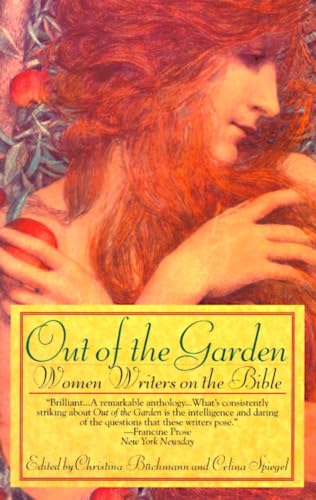
Inhaltsangabe
"Essays of considerable literary erudition and sophistication that... dislodge dull stereotypes to enable both women and men readers to see the Bible with fresh eyes."
--Los Angeles Times Book Review
As the one work that has held moral and religious sway over the Judeo-Christian tradition for thousands of years, the Bible is unsurpassed in world literature. For women, its meaning is particularly complex; traditionally, the Bible has been used to keep women in their place, but it has also been a book of enduring inspiration. Out of the Garden marks a new stage in women's relations to the Bible: this is the first collection of essays in which women read and respond to the Bible out of pleasure and curiosity--free to explore what is really relevant to women's lives.
Drawing on their own experiences and interests, Louise Erdrich, Cynthia Ozick, Fay Weldon, Phyllis Trible, Rebecca Goldstein, June Jordan, Ursula K. Le Guin, and twenty-one other writers boldly, imaginatively--and sometimes reproachfully--address the Old Testament stories, characters, and poetry that mean the most to them. Thoughtful, challenging, and playful, these beautifully written essays explore the Bible in fresh new ways. Out of the Garden reclaims the Bible for women and shows readers that the Bible is a source we can return to again and again.
"A many-splendored achievement...This grand collection is a bold revitalization of our relation to our tradition. It offers the reader the gorgeously varied company of strongly delineated temperaments as they take on the compelling, threatening figures of our imaginative forebears."
--Harold Bloom
Author of The Book of J and The Western Canon
Die Inhaltsangabe kann sich auf eine andere Ausgabe dieses Titels beziehen.
Von der hinteren Coverseite
"Essays of considerable literary erudition and sophistication that... dislodge dull stereotypes to enable both women and men readers to see the Bible with fresh eyes."
--Los Angeles Times Book Review
As the one work that has held moral and religious sway over the Judeo-Christian tradition for thousands of years, the Bible is unsurpassed in world literature. For women, its meaning is particularly complex; traditionally, the Bible has been used to keep women in their place, but it has also been a book of enduring inspiration. Out of the Garden marks a new stage in women's relations to the Bible: this is the first collection of essays in which women read and respond to the Bible out of pleasure and curiosity--free to explore what is really relevant to women's lives.
Drawing on their own experiences and interests, Louise Erdrich, Cynthia Ozick, Fay Weldon, Phyllis Trible, Rebecca Goldstein, June Jordan, Ursula K. Le Guin, and twenty-one other writers boldly, imaginatively--and sometimes reproachfully--address the Old Testament stories, characters, and poetry that mean the most to them. Thoughtful, challenging, and playful, these beautifully written essays explore the Bible in fresh new ways. Out of the Garden reclaims the Bible for women and shows readers that the Bible is a source we can return to again and again.
"A many-splendored achievement...This grand collection is a bold revitalization of our relation to our tradition. It offers the reader the gorgeously varied company of strongly delineated temperaments as they take on the compelling, threatening figures of our imaginative forebears."
--Harold Bloom
Author of The Book of J and The Western Canon
Aus dem Klappentext
of considerable literary erudition and sophistication that... dislodge dull stereotypes to enable both women and men readers to see the Bible with fresh eyes."
--Los Angeles Times Book Review
As the one work that has held moral and religious sway over the Judeo-Christian tradition for thousands of years, the Bible is unsurpassed in world literature. For women, its meaning is particularly complex; traditionally, the Bible has been used to keep women in their place, but it has also been a book of enduring inspiration. Out of the Garden marks a new stage in women's relations to the Bible: this is the first collection of essays in which women read and respond to the Bible out of pleasure and curiosity--free to explore what is really relevant to women's lives.
Drawing on their own experiences and interests, Louise Erdrich, Cynthia Ozick, Fay Weldon, Phyllis Trible, Rebecca Goldstein, June Jordan, Ursula K. Le Guin, and twenty-one other writers boldly, imaginatively--and sometimes re
Auszug. © Genehmigter Nachdruck. Alle Rechte vorbehalten.
INTRODUCTION
The sentimental feelings we all have for those things we were educated to believe sacred, do not readily yield to pure reason. I distinctly remember the shudder that passed over me on seeing a mother take our family Bible to make a high seat for her child at table. It seemed such a desecration. I was tempted to protest against its use for such a purpose, and this, too, long after my reason had repudiated its divine authority.
—ELIZABETH CADY STANTON, The Woman’s Bible
Almost one hundred years ago, Elizabeth Cady Stanton compiled The Woman’s Bible, an irreverent and unabashedly earthy feminist commentary written by a group of educated women intent on exposing the Bible’s—and its traditional interpreters’—unfair treatment of women. Stanton and her contemporaries wrote against the religious and social authority the Bible had held over women for centuries, while at the same time fighting its influence in the political arena.
Much has changed in the past one hundred years. No longer is the Bible uncritically accepted as the word of God, nor Genesis upheld as the factual account of the beginning of the world and human society. Still, many of us today might be as shocked as Stanton at seeing a Bible put to use as a high chair. Rather than fighting the Bible’s power over women, however, many women today are attempting to reclaim the book that has helped to shape the ways they think and live.
How, then, do contemporary women read the Bible? For this collection, we approached women writers, both Christians and Jews, whose work had in some way been influenced by the Bible. We asked each of them to choose a story, figure, or theme from the Old Testament and interpret it with this question in mind. Out of the Garden contains twenty-eight imaginative responses that address what it means to read the Bible as a woman today.
Most of us first encountered the Bible as children at Sunday school, in church, or in synagogue. The matriarchs and patriarchs who peopled its pages loomed like the desert mountains they were always ascending, and they seemed just as distant. It is difficult to shake one’s initial impression of any book, especially a book that has had such staying power. Even if some of us have never read the Bible but are familiar with its stories (and who of us isn’t?), it has most likely influenced our thinking and our imaginations—even our identities as women. Yet as an adult woman—believer or nonbeliever—whose own life experience cannot but have been at odds with this ancient book, how does one read the Bible today?
It is only recently that many of us have come to find the Bible interesting, no longer experiencing its claims to authority as so overwhelming as to demand mere assent and respectful attention. It takes a strong identity, and perhaps life in a predominantly secular culture, to counterbalance the Bible’s weighty historical presence. In fact, one wonders whether it will ever be possible to read the Bible as one would any other book, simply for pleasure or to satisfy curiosity. Just thinking about the Bible makes many of us feel small or guilty. For women, especially, the Bible may be impossible to read independent of its authoritative claims, as its power over women has been twofold: religious and social.
For centuries, two short passages shaped almost every statement about women’s character and proper place: the creation of Eve from Adam’s rib, and Eve’s transgression and God’s subsequent curse on her. The first of these passages presents Eve and womankind as an afterthought.
And the Lord God said, It is not good that the man should be alone; I will make a help mate for him.… And the rib, which the Lord God had taken from man, made he a woman, and brought her unto the man. (Gen. 2:18–23)
The second passage specifies Eve’s effect on the world: God made it a paradise, and woman made it the imperfect place we all know.
Unto woman he said, I will greatly multiply thy sorrow and thy conception; in sorrow thou shalt bring forth children; and thy desire shall be to thy husband, and he shall rule over thee. (Gen. 3:16)
War, pestilence, famine, and every sin were the price all humanity paid for Eve’s disobedience.
Ironically, while these passages were invoked by men to keep women subordinate, from the Middle Ages on the Bible provided most women with their only opportunity to engage in ideas. In her history of feminist thought, Gerda Lerner has pointed out that it was often the only book available to women,2 and therefore a natural focus not only for protest but for all kinds of self-expression: interpretation and elaboration, devotional works (some orthodox and some not), poetry, and fiction.
But however much women’s relations to the Bible have changed through the centuries, the experience of reading the Bible remains as varied and rich as ever. Some of its figures are easy to feel for, while others are sketched with so few lines that we have to fill in almost every detail—and yet a number of these are among the most vivid and memorable of all. Many of the women in the Bible are especially sketchy figures, surfacing for a moment or two to perform a significant action, then sinking back under the text, leaving us to guess at the larger story. In this collection, Rebecca Goldstein’s essay on Lot’s wife and Norma Rosen’s treatment of Rebecca and Hagar, for example, address such memorable women and their untold lives.
Sometimes the Bible reads like a novel, as in the story of Joseph, or the long, emotionally complex tale of David and the people in his court. Or it can be resigned and philosophical—our days are as grass, we are born to trouble as the sparks fly upward. At times the Bible offers poetry of praise for God and his world, as in a number of the Psalms; at other times it is a call for justice. It is alternately down-to-earth, visionary, dated, and relevant as it cries out against corruption, hypocrisy, and empty religion.
Poetry, history, law—the Bible is certainly no single thing. Not in its style, not in its subject matter, and not in the time of its composition. But that only partly explains why it has looked so different, at different times, to its readers and listeners. The Bible has been used to defend, abolish, and endure slavery; it has been used to keep women subordinate even while it exhorts its readers to practice justice and equality. The Bible reflects the inconsistencies in the world, and its accounts of women are as various as its treatments of most subjects.
One of the most common ways of reading as a woman is to focus on women characters. Out of the Garden offers essays on Eve, Rachel, the Queen of Sheba, Delilah, Jezebel, and Esther, on “good” women and “bad”; and it takes up the question of how one decides who is good and who is bad—as in Anne Dailey’s piece on the good and bad mothers in the story of Solomon’s judgment, or Rachel Brownstein’s piece on Vashti and Esther. Phyllis Trible and Fay Weldon, using quite different methods, write defenses for proverbially wicked women, Jezebel and Delilah respectively. Other essays, like Alicia Ostriker’s poetic interpretation of Moses as the “nursing father” of his people, enlarge our traditional understanding of male figures by reading them from a feminist perspective, while Ilana Pardes explores the limits for a heroine in a patriarchal narrative.
Other contributors see themselves in the Bible’s male heroes. Margaret Anne Doody, for example, identifies with the...
„Über diesen Titel“ kann sich auf eine andere Ausgabe dieses Titels beziehen.
Suchergebnisse für OUT OF THE GARDEN: Women Writers on the Bible

Foto des Verkäufers
Out of the Garden: Women Writers on the Bible
Verlag:
Random House Publishing Group, 1995
ISBN 10: 0449910172
ISBN 13: 9780449910177
Gebraucht
Softcover
Anbieter: Zoom Books Company, Lynden, WA, USA
Verkäuferbewertung 5 von 5 Sternen

Zustand: very_good. Book is in very good condition and may include minimal underlining highlighting. The book can also include "From the library of" labels. May not contain miscellaneous items toys, dvds, etc. . We offer 100% money back guarantee and 24 7 customer service. Bestandsnummer des Verkäufers ZBV.0449910172.VG
Gebraucht kaufen
EUR 4,06
Versand gratis
Versand innerhalb von USA
Versand innerhalb von USA
Anzahl: 1 verfügbar
Foto des Verkäufers
Out of the Garden: Women Writers on the Bible
Verlag:
Random House Publishing Group, 1995
ISBN 10: 0449910172
ISBN 13: 9780449910177
Gebraucht
Softcover
Anbieter: Zoom Books East, Glendale Heights, IL, USA
Verkäuferbewertung 5 von 5 Sternen
Zustand: good. Book is in good condition and may include underlining highlighting and minimal wear. The book can also include "From the library of" labels. May not contain miscellaneous items toys, dvds, etc. . We offer 100% money back guarantee and 24 7 customer service. Bestandsnummer des Verkäufers ZEV.0449910172.G
Gebraucht kaufen
EUR 4,06
Versand gratis
Versand innerhalb von USA
Versand innerhalb von USA
Anzahl: 1 verfügbar
Foto des Verkäufers
Out of the Garden: Women Writers on the Bible
Verlag:
Random House Publishing Group, 1995
ISBN 10: 0449910172
ISBN 13: 9780449910177
Gebraucht
Softcover
Anbieter: Zoom Books Company, Lynden, WA, USA
Verkäuferbewertung 5 von 5 Sternen
Zustand: like_new. Bestandsnummer des Verkäufers ZBV.0449910172.LN
Gebraucht kaufen
EUR 4,17
Versand gratis
Versand innerhalb von USA
Versand innerhalb von USA
Anzahl: 1 verfügbar
Foto des Verkäufers
Out of the Garden: Women Writers on the Bible
Verlag:
Random House Publishing Group, 1995
ISBN 10: 0449910172
ISBN 13: 9780449910177
Gebraucht
Softcover
Anbieter: Greenworld Books, Arlington, TX, USA
Verkäuferbewertung 5 von 5 Sternen
Zustand: good. Fast Free Shipping â" Good condition. It may show normal signs of use, such as light writing, highlighting, or library markings, but all pages are intact and the book is fully readable. A solid, complete copy that's ready to enjoy. Bestandsnummer des Verkäufers GWV.0449910172.G
Gebraucht kaufen
EUR 4,53
Versand gratis
Versand innerhalb von USA
Versand innerhalb von USA
Anzahl: 1 verfügbar
Beispielbild für diese ISBN
Out of the Garden: Women Writers on the Bible
Verlag:
Random House Publishing Group, 1995
ISBN 10: 0449910172
ISBN 13: 9780449910177
Gebraucht
Softcover
Anbieter: World of Books (was SecondSale), Montgomery, IL, USA
Verkäuferbewertung 5 von 5 Sternen
Zustand: Very Good. Item in very good condition! Textbooks may not include supplemental items i.e. CDs, access codes etc. Bestandsnummer des Verkäufers 00108346368
Gebraucht kaufen
EUR 4,54
Versand gratis
Versand innerhalb von USA
Versand innerhalb von USA
Anzahl: 1 verfügbar
Beispielbild für diese ISBN
Out of the Garden: Women Writers on the Bible
Verlag:
Random House Publishing Group, 1995
ISBN 10: 0449910172
ISBN 13: 9780449910177
Gebraucht
Softcover
Anbieter: World of Books (was SecondSale), Montgomery, IL, USA
Verkäuferbewertung 5 von 5 Sternen
Zustand: Good. Item in good condition. Textbooks may not include supplemental items i.e. CDs, access codes etc. Bestandsnummer des Verkäufers 00106320398
Gebraucht kaufen
EUR 4,54
Versand gratis
Versand innerhalb von USA
Versand innerhalb von USA
Anzahl: 6 verfügbar
Beispielbild für diese ISBN
Out of the Garden: Women Writers on the Bible
Verlag:
Random House Publishing Group (edition Reprint), 1995
ISBN 10: 0449910172
ISBN 13: 9780449910177
Gebraucht
Paperback
Anbieter: BooksRun, Philadelphia, PA, USA
Verkäuferbewertung 5 von 5 Sternen
Paperback. Zustand: Very Good. Reprint. It's a well-cared-for item that has seen limited use. The item may show minor signs of wear. All the text is legible, with all pages included. It may have slight markings and/or highlighting. Bestandsnummer des Verkäufers 0449910172-11-1
Gebraucht kaufen
EUR 4,82
Versand gratis
Versand innerhalb von USA
Versand innerhalb von USA
Anzahl: 1 verfügbar
Beispielbild für diese ISBN
Out of the Garden: Women Writers on the Bible
Verlag:
Random House Publishing Group, 1995
ISBN 10: 0449910172
ISBN 13: 9780449910177
Gebraucht
paperback
Anbieter: Evergreen Goodwill, Seattle, WA, USA
Verkäuferbewertung 5 von 5 Sternen
paperback. Zustand: Good. Bestandsnummer des Verkäufers mon0000766605
Gebraucht kaufen
EUR 1,46
EUR 3,56 Versand
Versand innerhalb von USA
Versand innerhalb von USA
Anzahl: 1 verfügbar
Beispielbild für diese ISBN
Out of the Garden: Women Writers on the Bible
Verlag:
Random House Publishing Group, 1995
ISBN 10: 0449910172
ISBN 13: 9780449910177
Gebraucht
Paperback
Anbieter: ThriftBooks-Dallas, Dallas, TX, USA
Verkäuferbewertung 5 von 5 Sternen
Paperback. Zustand: Very Good. No Jacket. May have limited writing in cover pages. Pages are unmarked. ~ ThriftBooks: Read More, Spend Less. Bestandsnummer des Verkäufers G0449910172I4N00
Gebraucht kaufen
EUR 6,09
Versand gratis
Versand innerhalb von USA
Versand innerhalb von USA
Anzahl: 1 verfügbar
Beispielbild für diese ISBN
Out of the Garden: Women Writers on the Bible
Verlag:
Random House Publishing Group, 1995
ISBN 10: 0449910172
ISBN 13: 9780449910177
Gebraucht
Paperback
Anbieter: ThriftBooks-Atlanta, AUSTELL, GA, USA
Verkäuferbewertung 5 von 5 Sternen
Paperback. Zustand: Very Good. No Jacket. Former library book; May have limited writing in cover pages. Pages are unmarked. ~ ThriftBooks: Read More, Spend Less. Bestandsnummer des Verkäufers G0449910172I4N10
Gebraucht kaufen
EUR 6,09
Versand gratis
Versand innerhalb von USA
Versand innerhalb von USA
Anzahl: 1 verfügbar