
Verwandte Artikel zu The Messenger (Gabriel Allon, Band 6)
Inhaltsangabe
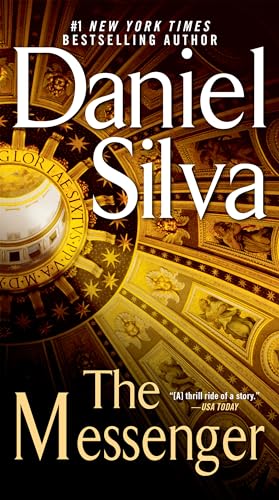
On the trail of a deadly al-Qaeda operative, Gabriel Allon returns in a spellbinding story of deception, power, and revenge by the #1 New York Times bestselling "world-class practitioner of spy fiction" (Washington Post).
Gabriel Allon—art restorer and spy—is about to face the greatest challenge of his life. An al-Qaeda suspect is killed in London, and photographs are found on his computer—photographs that lead Israeli intelligence to suspect that al-Qaeda is planning one of its most audacious attacks ever, aimed straight at the heart of the Vatican.
Allon and his colleagues soon find themselves in a deadly duel of wits against one of the most dangerous men in the world—a hunt that will take them across Europe to the Caribbean and back. But for them, there may not be enough of anything: enough time, enough facts, enough luck.
All Allon can do is set his trap—and hope that he is not the one caught in it.
Die Inhaltsangabe kann sich auf eine andere Ausgabe dieses Titels beziehen.
Über die Autorin bzw. den Autor
Daniel Silva is the #1 New York Times bestselling author of The Unlikely Spy, The Mark of the Assassin, The Marching Season, and the Gabriel Allon series, including The Kill Artist, The English Assassin, The Confessor, A Death in Vienna, Prince of Fire, The Messenger, The Secret Servant, Moscow Rules, The Defector, The Rembrandt Affair, Portrait of a Spy, The Fallen Angel, The English Girl, The Heist, The English Spy, The Black Widow, and House of Spies. His books are published in more than thirty countries and are bestsellers around the world.
Auszug. © Genehmigter Nachdruck. Alle Rechte vorbehalten.
Chapter 1
London
IT WAS ALI MASSOUDI who unwittingly roused Gabriel Allon from his brief and restless retirement: Massoudi, the great Europhile intellectual and freethinker, who, in a moment of blind panic, forgot that the English drive on the left side of the road.
The backdrop for his demise was a rain-swept October evening in Bloomsbury. The occasion was the final session of the first annual Policy Forum for Peace and Security in Palestine, Iraq, and Beyond. The conference had been launched early that morning amid great hope and fanfare, but by day’s end it had taken on the quality of a traveling production of a mediocre play. Even the demonstrators who came in hope of sharing some of the flickering spotlight seemed to realize they were reading from the same tired script. The American president was burned in effigy at ten. The Israeli prime minister was put to the purifying flame at eleven. At lunchtime, amid a deluge that briefly turned Russell Square into a pond, there had been a folly having something to do with the rights of women in Saudi Arabia. At eight-thirty, as the gavel came down on the final panel, the two dozen stoics who had stayed to the end filed numbly toward the exits. Organizers of the affair detected little appetite for a return engagement next autumn.
A stagehand stole forward and removed a placard from the rostrum that read: GAZA IS LIBERATED—WHAT NOW? The first panelist on his feet was Sayyid of the London School of Economics, defender of the suicide bombers, apologist for al-Qaeda. Next was the austere Chamberlain of Cambridge, who spoke of Palestine and the Jews as though they were still the quandary of gray-suited men from the Foreign Office. Throughout the discussion the aging Chamberlain had served as a sort of Separation Fence between the incendiary Sayyid and a poor soul from the Israeli embassy named Rachel who had drawn hoots and whistles of disapproval each time she’d opened her mouth. Chamberlain tried to play the role of peacekeeper now as Sayyid pursued Rachel to the door with taunts that her days as a colonizer were drawing to an end.
Ali Massoudi, graduate professor of global governance and social theory at the University of Bremen, was the last to rise. Hardly surprising, his jealous colleagues might have said, for among the incestuous world of Middle Eastern studies, Massoudi had the reputation of one who never willingly relinquished a stage. Palestinian by birth, Jordanian by passport, and European by upbringing and education, Professor Massoudi appeared to all the world like a man of moderation. The shining future of Arabia, they called him. The very face of progress. He was known to be distrustful of religion in general and militant Islam in particular. In newspaper editorials, in lecture halls, and on television, he could always be counted on to lament the dysfunction of the Arab world. Its failure to properly educate its people. Its tendency to blame the Americans and the Zionists for all its ailments. His last book had amounted to a clarion call for an Islamic Reformation. The jihadists had denounced him as a heretic. The moderates had proclaimed he had the courage of Martin Luther. That afternoon he had argued, much to Sayyid’s dismay, that the ball was now squarely in the Palestinian court. Until the Palestinians part company with the culture of terror, Massoudi had said, the Israelis could never be expected to cede an inch of the West Bank. Nor should they. Sacrilege, Sayyid had cried. Apostasy.
Professor Massoudi was tall, a bit over six feet in height, and far too good looking for a man who worked in close proximity to impressionable young women. His hair was dark and curly, his cheekbones wide and strong, and his square chin had a deep notch in the center. The eyes were brown and deeply set and lent his face an air of profound and reassuring intelligence. Dressed as he was now, in a cashmere sport jacket and cream-colored rollneck sweater, he seemed the very archetype of the European intellectual. It was an image he worked hard to convey. Naturally deliberate of movement, he packed his papers and pens methodically into his well-traveled briefcase, then descended the steps from the stage and headed up the center aisle toward the exit.
Several members of the audience were loitering in the foyer. Standing to one side, a stormy island in an otherwise tranquil sea, was the girl. She wore faded jeans, a leather jacket, and a checkered Palestinian kaffiyeh round her neck. Her black hair shone like a raven’s wing. Her eyes were nearly black, too, but shone with something else. Her name was Hamida al-Tatari. A refugee, she had said. Born in Amman, raised in Hamburg, now a citizen of Canada residing in North London. Massoudi had met her that afternoon at a reception in the student union. Over coffee she had fervently accused him of insufficient outrage over the crimes of the Americans and Jews. Massoudi had liked what he had seen. They were planning to have drinks that evening at the wine bar next to the theater in Sloane Square. His intentions weren’t romantic. It wasn’t Hamida’s body he wanted. It was her zeal and her clean face. Her perfect English and Canadian passport.
She gave him a furtive glance as he crossed the foyer but made no attempt to speak to him. Keep your distance after the symposium, he had instructed her that afternoon. A man in my position has to be careful about who he’s seen with. Outside he sheltered for a moment beneath the portico and gazed at the traffic moving sluggishly along the wet street. He felt someone brush against his elbow, then watched as Hamida plunged wordlessly into the cloudburst. He waited until she was gone, then hung his briefcase from his shoulder and set out in the opposite direction, toward his hotel in Russell Square.
The change came over him—the same change that always occurred whenever he moved from one life to the other. The quickening of the pulse, the sharpening of the senses, the sudden fondness for small details. Such as the balding young man, walking toward him beneath the shelter of an umbrella, whose gaze seemed to linger on Massoudi’s face an instant too long. Or the newsagent who stared brazenly into Massoudi’s eyes as he purchased a copy of the Evening Standard. Or the taxi driver who watched him, thirty seconds later, as he dropped the same newspaper into a rubbish bin in Upper Woburn Place.
A London bus overtook him. As it churned slowly past, Massoudi peered through the fogged windows and saw a dozen tired-looking faces, nearly all of them black or brown. The new Londoners, he thought, and for a moment the professor of global governance and social theory wrestled with the implications of this. How many secretly sympathized with his cause? How many would sign on the dotted line if he laid before them a contract of death?
In the wake of the bus, on the opposite pavement, was a single pedestrian: oilskin raincoat, stubby ponytail, two straight lines for eyebrows. Massoudi recognized him instantly. The young man had been at the conference—same row as Hamida but on the opposite side of the auditorium. He’d been sitting in the same seat earlier that morning, when Massoudi had been the lone dissenting voice during a panel discussion on the virtue of barring Israeli academics from European shores.
Massoudi lowered his gaze and kept walking, while his left hand went involuntarily to the shoulder strap of his briefcase. Was he being followed? If so, by whom? MI5 was the most likely explanation. The most likely, he reminded himself, but not the only one. Perhaps the German BND had followed him to London from Bremen. Or perhaps he was under CIA surveillance.
But it was the fourth possibility that made Massoudi’s heart bang suddenly...
„Über diesen Titel“ kann sich auf eine andere Ausgabe dieses Titels beziehen.
Suchergebnisse für The Messenger (Gabriel Allon, Band 6)

Beispielbild für diese ISBN
The Messenger
Anbieter: World of Books (was SecondSale), Montgomery, IL, USA
Verkäuferbewertung 5 von 5 Sternen

Paperback. Zustand: Very Good. On the trail of a deadly al-Qaeda operative, Gabriel Allon returns in a spellbinding story of deception, power, and revenge by the #1 New York Times bestselling "world-class practitioner of spy fiction" (Washington Post). Gabriel Allon--art restorer and spy--is about to face the greatest challenge of his life. An al-Qaeda suspect is killed in London, and photographs are found on his computer--photographs that lead Israeli intelligence to suspect that al-Qaeda is planning one of its most audacious attacks ever, aimed straight at the heart of the Vatican. Allon and his colleagues soon find themselves in a deadly duel of wits against one of the most dangerous men in the world--a hunt that will take them across Europe to the Caribbean and back. But for them, there may not be enough of anything: enough time, enough facts, enough luck. All Allon can do is set his trap--and hope that he is not the one caught in it. Bestandsnummer des Verkäufers 00107413974
Gebraucht kaufen
EUR 3,71
Versand gratis
Versand innerhalb von USA
Versand innerhalb von USA
Anzahl: 11 verfügbar
Beispielbild für diese ISBN
The Messenger 6 Gabriel Allon
Anbieter: World of Books (was SecondSale), Montgomery, IL, USA
Verkäuferbewertung 5 von 5 Sternen
Zustand: Good. Item in good condition. Textbooks may not include supplemental items i.e. CDs, access codes etc. Bestandsnummer des Verkäufers 00088248905
Gebraucht kaufen
EUR 3,71
Versand gratis
Versand innerhalb von USA
Versand innerhalb von USA
Anzahl: Mehr als 20 verfügbar
Beispielbild für diese ISBN
The Messenger 6 Gabriel Allon
Anbieter: World of Books (was SecondSale), Montgomery, IL, USA
Verkäuferbewertung 5 von 5 Sternen
Zustand: Acceptable. Item in acceptable condition! Textbooks may not include supplemental items i.e. CDs, access codes etc. Bestandsnummer des Verkäufers 00105927584
Gebraucht kaufen
EUR 3,71
Versand gratis
Versand innerhalb von USA
Versand innerhalb von USA
Anzahl: Mehr als 20 verfügbar
Foto des Verkäufers
The Messenger (Gabriel Allon)
Anbieter: 3Brothers Bookstore, Egg harbor township, NJ, USA
Verkäuferbewertung 5 von 5 Sternen
Zustand: good. Books may contain some notes and highlighting. Supplements such as Access Codes, Cd's Dust Jackets, etc. are not guaranteed with used book purchases. Bestandsnummer des Verkäufers EVV.0451221729.G
Gebraucht kaufen
EUR 3,96
Versand gratis
Versand innerhalb von USA
Versand innerhalb von USA
Anzahl: 1 verfügbar
Foto des Verkäufers
The Messenger (Gabriel Allon)
Anbieter: Zoom Books East, Glendale Heights, IL, USA
Verkäuferbewertung 5 von 5 Sternen
Zustand: good. Book is in good condition and may include underlining highlighting and minimal wear. The book can also include "From the library of" labels. May not contain miscellaneous items toys, dvds, etc. . We offer 100% money back guarantee and 24 7 customer service. Bestandsnummer des Verkäufers ZEV.0451221729.G
Gebraucht kaufen
EUR 4,00
Versand gratis
Versand innerhalb von USA
Versand innerhalb von USA
Anzahl: 4 verfügbar
Foto des Verkäufers
The Messenger (Gabriel Allon)
Anbieter: Zoom Books Company, Lynden, WA, USA
Verkäuferbewertung 5 von 5 Sternen
Zustand: very_good. Book is in very good condition and may include minimal underlining highlighting. The book can also include "From the library of" labels. May not contain miscellaneous items toys, dvds, etc. . We offer 100% money back guarantee and 24 7 customer service. Bestandsnummer des Verkäufers ZBV.0451221729.VG
Gebraucht kaufen
EUR 4,00
Versand gratis
Versand innerhalb von USA
Versand innerhalb von USA
Anzahl: 8 verfügbar
Foto des Verkäufers
The Messenger (Gabriel Allon)
Anbieter: Zoom Books East, Glendale Heights, IL, USA
Verkäuferbewertung 5 von 5 Sternen
Zustand: very_good. Book is in very good condition and may include minimal underlining highlighting. The book can also include "From the library of" labels. May not contain miscellaneous items toys, dvds, etc. . We offer 100% money back guarantee and 24 7 customer service. Bestandsnummer des Verkäufers ZEV.0451221729.VG
Gebraucht kaufen
EUR 4,00
Versand gratis
Versand innerhalb von USA
Versand innerhalb von USA
Anzahl: 4 verfügbar
Foto des Verkäufers
The Messenger (Gabriel Allon)
Anbieter: 3Brothers Bookstore, Egg harbor township, NJ, USA
Verkäuferbewertung 5 von 5 Sternen
Zustand: very_good. Cover may have light wear, pages in very good condition and binding is sturdy; may have other light shelf wear or creases. May have notes or highlighting. Bestandsnummer des Verkäufers EVV.0451221729.VG
Gebraucht kaufen
EUR 4,15
Versand gratis
Versand innerhalb von USA
Versand innerhalb von USA
Anzahl: 1 verfügbar
Foto des Verkäufers
The Messenger (Gabriel Allon)
Anbieter: 2nd Life Books, Burlington, NJ, USA
Verkäuferbewertung 5 von 5 Sternen
Zustand: very_good. Used book in very good condition. May have some minor wear. May NOT include discs, or access code or other supplemental material. Ships directly from Amazon and is eligible for Prime or super saver FREE shipping. We ship Monday-Saturday and respond to inquiries within 24 hours. Bestandsnummer des Verkäufers BXM.CG5A
Gebraucht kaufen
EUR 0,88
EUR 3,51 Versand
Versand innerhalb von USA
Versand innerhalb von USA
Anzahl: 1 verfügbar
Foto des Verkäufers
The Messenger (Gabriel Allon)
Anbieter: 2nd Life Books, Burlington, NJ, USA
Verkäuferbewertung 5 von 5 Sternen
Zustand: good. Used book in good condition. May have some wear to binding, spine, cover, and pages. Some light highlighting markings writing may be present. May have some stickers and or sticker residue present. May be Ex-lib. copy. May NOT include discs, or access code or other supplemental material. We ship Monday-Saturday and respond to inquiries within 24 hours. Bestandsnummer des Verkäufers BXM.C1BX
Gebraucht kaufen
EUR 0,88
EUR 3,51 Versand
Versand innerhalb von USA
Versand innerhalb von USA
Anzahl: 1 verfügbar