
Verwandte Artikel zu Much Ado About Nothing (Signet Classic Shakespeare)
Inhaltsangabe
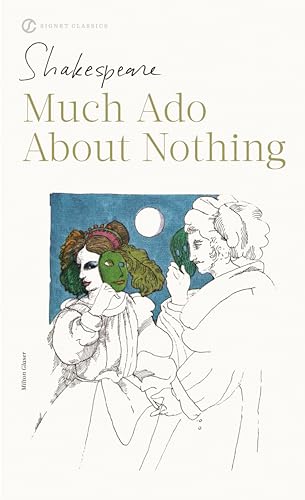
The Signet Classics edition of William Shakespeare's grand romantic comedy.
Much Ado About Nothing casts the lovers Benedick and Beatrice in a witty war of words while the young Claudio is tricked into believing his love Hero has been unfaithful in this play that combines robust humor with explorations on honor and shame.
This revised Signet Classics edition includes unique features such as:
• An overview of Shakespeare's life, world, and theater
• A special introduction to the play by the editor, David L. Stevenson
• A note on the sources from which Shakespeare derived Much Ado About Nothing
• Dramatic criticism from Charles Gildon, Lewis Carroll, George Bernard Shaw, and others
• A comprehensive stage and screen history of notable actors, directors, and productions
• Text, notes, and commentaries printed in the clearest, most readable text
• And more...
Die Inhaltsangabe kann sich auf eine andere Ausgabe dieses Titels beziehen.
Über die Autorin bzw. den Autor
William Shakespeare (1564–1616) was a poet, playwright, and actor who is widely regarded as one of the most influential writers in the history of the English language. Often referred to as the Bard of Avon, Shakespeare's vast body of work includes comedic, tragic, and historical plays; poems; and 154 sonnets. His dramatic works have been translated into every major language and are performed more often than those of any other playwright.
„Über diesen Titel“ kann sich auf eine andere Ausgabe dieses Titels beziehen.
Suchergebnisse für Much Ado About Nothing (Signet Classic Shakespeare)

Beispielbild für diese ISBN
Much Ado About Nothing (Signet Classics)
Anbieter: Gulf Coast Books, Cypress, TX, USA
Verkäuferbewertung 5 von 5 Sternen

Mass Market Paperback. Zustand: Very Good. Bestandsnummer des Verkäufers 0451526813-2-21042881
Gebraucht kaufen
EUR 3,74
Versand gratis
Versand innerhalb von USA
Versand innerhalb von USA
Anzahl: 1 verfügbar
Beispielbild für diese ISBN
Much Ado About Nothing (Signet Classics)
Anbieter: Gulf Coast Books, Cypress, TX, USA
Verkäuferbewertung 5 von 5 Sternen
Mass Market Paperback. Zustand: Fair. Bestandsnummer des Verkäufers 0451526813-4-21703316
Gebraucht kaufen
EUR 3,74
Versand gratis
Versand innerhalb von USA
Versand innerhalb von USA
Anzahl: 1 verfügbar
Beispielbild für diese ISBN
Much Ado About Nothing
Anbieter: World of Books (was SecondSale), Montgomery, IL, USA
Verkäuferbewertung 5 von 5 Sternen
Zustand: Good. Much Ado About Nothing of the Ratna Sagar Shakespeare Series is enriched with complete text of the original play, plenty of short notes that explain and interpret the text, summary of each scene, as well as useful commentary on the life and times of Shakespeare, Elizabethan theatre, sources and genre, characters, plot, themes, and motifs, literary devices and figures of speech. A comedy of errors, the title of the play is justified by the utter confusion in the plot that arises out of nothing. Replete with sparkling dialogues, the play has also been described as a comedy of wit. This edition of Much Ado About Nothing is enriched with exhaustive annotations and notes.This enriched edition of Much Ado About Nothing has exhaustive annotations and notes. As suggested by its title, the play is a comedy of errors in which a lot of fuss and confusion is created over nothing. The title also plays on the word 'nothing', pronounced as 'noting' in Elizabethan English. 'Noting' refers to the manner in which people note or eavesdrop, and pass on information. The action over the course of the play largely arises because of noting and deceit, as the characters are directly or indirectly affected by eavesdropping and gossip. Claudio and Hero's relationship suffers due to the malicious misinformation of Don John and Borachio. On the other hand, Benedick and Beatrice's relationship develops as a result of the well-intended deceit and gossip of Don Pedro, Claudio, Leonato, Hero, and Ursula. Set in Messina, Italy, the action of the play mostly takes place in and around the house of Leonato, the Governor of Messina, who lives with his daughter, Hero, and his witty niece, Beatrice. The play commences with Don Pedro, the Prince of Arragon, and his followers Benedick and Claudio visiting Leonato with the prince's illegitimate brother Don John, who had rebelled against him but is now reconciled. It is revealed that Claudio loves Hero and wishes to propose to her. While the Claudio-Hero relationship forms the main plot of the play, the sub-plot is provided by the love-hate relationship between Benedick and Beatrice, whose interactions oscillate between fondness and witty sarcasm from the very beginning. In the initial part of the play, there is a masked dance in which Don Pedro pretends to be Claudio, woos Hero on his behalf, and asks Leonato for Hero's hand in marriage to Claudio. As all is settled for the prospective marriage of Claudio and Hero within a week, the bitter and sullen Don John concocts a plan with his underling Borachio to spoil the happiness of Claudio, the 'young start-up' who 'hath all the glory of my overthrow'. As a game of deceit and manipulation begins, Don John and Borachio execute their plan to lead Claudio into believing Hero's infidelity. An enraged Claudio shames and rejects Hero in front of the wedding congregation the next day. Leonato is devastated, and Hero faints, at which Claudio and Don Pedro leave her for dead. Friar Francis believes in Hero's innocence, and devises the plan to publish the report of her death so as to convert the slander against her into pity, and make Claudio realize her worth and repent for disgracing her. Meanwhile, the scene shifts to the members of the Watch, with the head constable Dogberry, his partner Verges, and two watchmen. Although they are the comedians of the play, these farcical detectives are the ones who finally uncover the truth of Don John's villainy. Once Don John's plot is revealed, Don Pedro and Claudio repent for their action and apologize to Leonato, who asks Claudio to hang an epitaph on Hero's 'tomb', and then marry his 'niece', who is 'the copy of my child that's dead', as penance. Claudio agrees, and on the day of the wedding the lady is revealed to be none other than Hero herself. With the resolution of the Claudio-Hero relationship, Benedick and Beatrice too confess their love for each other, but not without the customary bout of wit. A messenger arrives to inform all that Don John has been captured while trying to flee. With poetic justice served and all conflicts resolved, the play ends with a celebratory dance. Bestandsnummer des Verkäufers 00081614777
Gebraucht kaufen
EUR 3,75
Versand gratis
Versand innerhalb von USA
Versand innerhalb von USA
Anzahl: Mehr als 20 verfügbar
Beispielbild für diese ISBN
Much Ado About Nothing
Anbieter: World of Books (was SecondSale), Montgomery, IL, USA
Verkäuferbewertung 5 von 5 Sternen
Zustand: Fair. Much Ado About Nothing of the Ratna Sagar Shakespeare Series is enriched with complete text of the original play, plenty of short notes that explain and interpret the text, summary of each scene, as well as useful commentary on the life and times of Shakespeare, Elizabethan theatre, sources and genre, characters, plot, themes, and motifs, literary devices and figures of speech. A comedy of errors, the title of the play is justified by the utter confusion in the plot that arises out of nothing. Replete with sparkling dialogues, the play has also been described as a comedy of wit. This edition of Much Ado About Nothing is enriched with exhaustive annotations and notes.This enriched edition of Much Ado About Nothing has exhaustive annotations and notes. As suggested by its title, the play is a comedy of errors in which a lot of fuss and confusion is created over nothing. The title also plays on the word 'nothing', pronounced as 'noting' in Elizabethan English. 'Noting' refers to the manner in which people note or eavesdrop, and pass on information. The action over the course of the play largely arises because of noting and deceit, as the characters are directly or indirectly affected by eavesdropping and gossip. Claudio and Hero's relationship suffers due to the malicious misinformation of Don John and Borachio. On the other hand, Benedick and Beatrice's relationship develops as a result of the well-intended deceit and gossip of Don Pedro, Claudio, Leonato, Hero, and Ursula. Set in Messina, Italy, the action of the play mostly takes place in and around the house of Leonato, the Governor of Messina, who lives with his daughter, Hero, and his witty niece, Beatrice. The play commences with Don Pedro, the Prince of Arragon, and his followers Benedick and Claudio visiting Leonato with the prince's illegitimate brother Don John, who had rebelled against him but is now reconciled. It is revealed that Claudio loves Hero and wishes to propose to her. While the Claudio-Hero relationship forms the main plot of the play, the sub-plot is provided by the love-hate relationship between Benedick and Beatrice, whose interactions oscillate between fondness and witty sarcasm from the very beginning. In the initial part of the play, there is a masked dance in which Don Pedro pretends to be Claudio, woos Hero on his behalf, and asks Leonato for Hero's hand in marriage to Claudio. As all is settled for the prospective marriage of Claudio and Hero within a week, the bitter and sullen Don John concocts a plan with his underling Borachio to spoil the happiness of Claudio, the 'young start-up' who 'hath all the glory of my overthrow'. As a game of deceit and manipulation begins, Don John and Borachio execute their plan to lead Claudio into believing Hero's infidelity. An enraged Claudio shames and rejects Hero in front of the wedding congregation the next day. Leonato is devastated, and Hero faints, at which Claudio and Don Pedro leave her for dead. Friar Francis believes in Hero's innocence, and devises the plan to publish the report of her death so as to convert the slander against her into pity, and make Claudio realize her worth and repent for disgracing her. Meanwhile, the scene shifts to the members of the Watch, with the head constable Dogberry, his partner Verges, and two watchmen. Although they are the comedians of the play, these farcical detectives are the ones who finally uncover the truth of Don John's villainy. Once Don John's plot is revealed, Don Pedro and Claudio repent for their action and apologize to Leonato, who asks Claudio to hang an epitaph on Hero's 'tomb', and then marry his 'niece', who is 'the copy of my child that's dead', as penance. Claudio agrees, and on the day of the wedding the lady is revealed to be none other than Hero herself. With the resolution of the Claudio-Hero relationship, Benedick and Beatrice too confess their love for each other, but not without the customary bout of wit. A messenger arrives to inform all that Don John has been captured while trying to flee. With poetic justice served and all conflicts resolved, the play ends with a celebratory dance. Bestandsnummer des Verkäufers 00093184186
Gebraucht kaufen
EUR 3,75
Versand gratis
Versand innerhalb von USA
Versand innerhalb von USA
Anzahl: 17 verfügbar
Beispielbild für diese ISBN
Much Ado About Nothing (Signet Classics)
Anbieter: Your Online Bookstore, Houston, TX, USA
Verkäuferbewertung 5 von 5 Sternen
Mass Market Paperback. Zustand: Fair. Bestandsnummer des Verkäufers 0451526813-4-22315681
Gebraucht kaufen
EUR 3,76
Versand gratis
Versand innerhalb von USA
Versand innerhalb von USA
Anzahl: 1 verfügbar
Foto des Verkäufers
Much Ado About Nothing (Signet Classics)
Anbieter: Used Book Company, Egg Harbor Township, NJ, USA
Verkäuferbewertung 5 von 5 Sternen
Zustand: Good. Shows moderate signs of wear and previous use. Can include notes/highlighting. A portion of your purchase benefits nonprofits! - Note: Edition & format may differ from what is shown in stock photo & item details. May not include supplementary material such as toys, access code, dvds, etc. Bestandsnummer des Verkäufers UBCV.0451526813.G
Gebraucht kaufen
EUR 3,92
Versand gratis
Versand innerhalb von USA
Versand innerhalb von USA
Anzahl: 1 verfügbar
Beispielbild für diese ISBN
Much Ado About Nothing (Signet Classics)
Verlag:
Signet (edition New - Revised), 1998
ISBN 10: 0451526813
ISBN 13: 9780451526816
Gebraucht
Mass Market Paperback
Anbieter: BooksRun, Philadelphia, PA, USA
Verkäuferbewertung 5 von 5 Sternen
Mass Market Paperback. Zustand: Very Good. New - Revised. It's a well-cared-for item that has seen limited use. The item may show minor signs of wear. All the text is legible, with all pages included. It may have slight markings and/or highlighting. Bestandsnummer des Verkäufers 0451526813-11-1
Gebraucht kaufen
EUR 4,40
Versand gratis
Versand innerhalb von USA
Versand innerhalb von USA
Anzahl: 1 verfügbar
Foto des Verkäufers
Much Ado About Nothing (Signet Classics)
Anbieter: Greenworld Books, Arlington, TX, USA
Verkäuferbewertung 5 von 5 Sternen
Zustand: very_good. Fast Free Shipping â" Very Good condition book with a firm cover and clean pages. Shows normal use and some light wear or limited notes markings. A solid, nice copy to enjoy. Bestandsnummer des Verkäufers GWV.0451526813.VG
Gebraucht kaufen
EUR 4,81
Versand gratis
Versand innerhalb von USA
Versand innerhalb von USA
Anzahl: 1 verfügbar
Foto des Verkäufers
Much Ado About Nothing (Signet Classics)
Anbieter: Greenworld Books, Arlington, TX, USA
Verkäuferbewertung 5 von 5 Sternen
Zustand: good. Fast Free Shipping â" Good condition. It may show normal signs of use, such as light writing, highlighting, or library markings, but all pages are intact and the book is fully readable. A solid, complete copy that's ready to enjoy. Bestandsnummer des Verkäufers GWV.0451526813.G
Gebraucht kaufen
EUR 5,38
Versand gratis
Versand innerhalb von USA
Versand innerhalb von USA
Anzahl: 1 verfügbar
Beispielbild für diese ISBN
Much Ado About Nothing
Anbieter: World of Books Inc, Montgomery, IL, USA
Verkäuferbewertung 4 von 5 Sternen

Zustand: Good. Much Ado About Nothing of the Ratna Sagar Shakespeare Series is enriched with complete text of the original play, plenty of short notes that explain and interpret the text, summary of each scene, as well as useful commentary on the life and times of Shakespeare, Elizabethan theatre, sources and genre, characters, plot, themes, and motifs, literary devices and figures of speech. A comedy of errors, the title of the play is justified by the utter confusion in the plot that arises out of nothing. Replete with sparkling dialogues, the play has also been described as a comedy of wit. This edition of Much Ado About Nothing is enriched with exhaustive annotations and notes.This enriched edition of Much Ado About Nothing has exhaustive annotations and notes. As suggested by its title, the play is a comedy of errors in which a lot of fuss and confusion is created over nothing. The title also plays on the word 'nothing', pronounced as 'noting' in Elizabethan English. 'Noting' refers to the manner in which people note or eavesdrop, and pass on information. The action over the course of the play largely arises because of noting and deceit, as the characters are directly or indirectly affected by eavesdropping and gossip. Claudio and Hero's relationship suffers due to the malicious misinformation of Don John and Borachio. On the other hand, Benedick and Beatrice's relationship develops as a result of the well-intended deceit and gossip of Don Pedro, Claudio, Leonato, Hero, and Ursula. Set in Messina, Italy, the action of the play mostly takes place in and around the house of Leonato, the Governor of Messina, who lives with his daughter, Hero, and his witty niece, Beatrice. The play commences with Don Pedro, the Prince of Arragon, and his followers Benedick and Claudio visiting Leonato with the prince's illegitimate brother Don John, who had rebelled against him but is now reconciled. It is revealed that Claudio loves Hero and wishes to propose to her. While the Claudio-Hero relationship forms the main plot of the play, the sub-plot is provided by the love-hate relationship between Benedick and Beatrice, whose interactions oscillate between fondness and witty sarcasm from the very beginning. In the initial part of the play, there is a masked dance in which Don Pedro pretends to be Claudio, woos Hero on his behalf, and asks Leonato for Hero's hand in marriage to Claudio. As all is settled for the prospective marriage of Claudio and Hero within a week, the bitter and sullen Don John concocts a plan with his underling Borachio to spoil the happiness of Claudio, the 'young start-up' who 'hath all the glory of my overthrow'. As a game of deceit and manipulation begins, Don John and Borachio execute their plan to lead Claudio into believing Hero's infidelity. An enraged Claudio shames and rejects Hero in front of the wedding congregation the next day. Leonato is devastated, and Hero faints, at which Claudio and Don Pedro leave her for dead. Friar Francis believes in Hero's innocence, and devises the plan to publish the report of her death so as to convert the slander against her into pity, and make Claudio realize her worth and repent for disgracing her. Meanwhile, the scene shifts to the members of the Watch, with the head constable Dogberry, his partner Verges, and two watchmen. Although they are the comedians of the play, these farcical detectives are the ones who finally uncover the truth of Don John's villainy. Once Don John's plot is revealed, Don Pedro and Claudio repent for their action and apologize to Leonato, who asks Claudio to hang an epitaph on Hero's 'tomb', and then marry his 'niece', who is 'the copy of my child that's dead', as penance. Claudio agrees, and on the day of the wedding the lady is revealed to be none other than Hero herself. With the resolution of the Claudio-Hero relationship, Benedick and Beatrice too confess their love for each other, but not without the customary bout of wit. A messenger arrives to inform all that Don John has been captured while trying to flee. With poetic justice served and all conflicts resolved, the play ends with a celebratory dance. Bestandsnummer des Verkäufers CIN0451526813G
Gebraucht kaufen
EUR 5,59
Versand gratis
Versand innerhalb von USA
Versand innerhalb von USA
Anzahl: Mehr als 20 verfügbar