
Inhaltsangabe
"I recommend that you read and use the information in this book to provide your athletes with the best chances of performing at their best"
from the foreword by Sir Clive Woodward, Olympic Performance Director, British Olympic Association
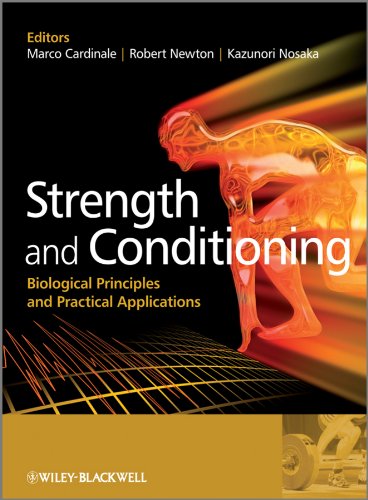
This book provides the latest scientific and practical information in the field of strength and conditioning.
The text is presented in four sections, the first of which covers the biological aspects of the subject, laying the foundation for a better understanding of the second on the biological responses to strength and conditioning programs. Section three deals with the most effective monitoring strategies for evaluating a training program and establishing guidelines for writing a successful strength and conditioning program. The final section examines the role of strength and conditioning as a rehabilitation tool and as applied to those with disabilities.
This book is an invaluable textbook and reference both for academic programs and for the continuing education of sports professionals.
- Integrates the latest research on physiological, anatomical and biomechanical aspects of strength and conditioning
- Offers numerous practical examples of applications
- Provides guidelines for writing and monitoring effective strength training programs
Die Inhaltsangabe kann sich auf eine andere Ausgabe dieses Titels beziehen.
Über die Autorin bzw. den Autor
Dr. Marco Cardinale is the Head of Sports Physiology at Aspire Academy in Qatar. He was the former Head of Sports Science and Research of the British Olympic Association.
Robert Newton is the editor of Strength and Conditioning: Biological Principles and Practical Applications, published by Wiley.
Kazunori Nosaka is the editor of Strength and Conditioning: Biological Principles and Practical Applications, published by Wiley.
Von der hinteren Coverseite
Strength and Conditioning: Biological Principles and Practical Applications provides the latest scientific and practical information in the field of strength and conditioning.
The book is presented in four sections, the first of which covers the biological aspects of the subject, laying the foundation for a better understanding of the second on the biological responses to strength and conditioning programs. Section three deals with the most effective monitoring strategies for evaluating a training program and establishing guidelines for writing a successful strength and conditioning program. The final section examines the role of strength and conditioning as a rehabilitation tool and as applied to those with disabilities.
Strength and Conditioning: Biological Principles and Practical Applications is an invaluable textbook and reference both for academic programs and for the continuing education of sports professionals.
- Integrates the latest research on physiological, anatomical and biomechanical aspects of strength and conditioning
- Offers numerous practical examples of applications
- Provides guidelines for writing and monitoring effective strength training programs
"I recommend that you read and use the information in this book to provide your athletes with the best chances of performing at their best"
from the foreword by Sir Clive Woodward, Olympic Performance Director, British Olympic Association
Aus dem Klappentext
Strength and Conditioning: Biological Principles and Practical Applications provides the latest scientific and practical information in the field of strength and conditioning.
The book is presented in four sections, the first of which covers the biological aspects of the subject, laying the foundation for a better understanding of the second on the biological responses to strength and conditioning programs. Section three deals with the most effective monitoring strategies for evaluating a training program and establishing guidelines for writing a successful strength and conditioning program. The final section examines the role of strength and conditioning as a rehabilitation tool and as applied to those with disabilities.
Strength and Conditioning: Biological Principles and Practical Applications is an invaluable textbook and reference both for academic programs and for the continuing education of sports professionals.
- Integrates the latest research on physiological, anatomical and biomechanical aspects of strength and conditioning
- Offers numerous practical examples of applications
- Provides guidelines for writing and monitoring effective strength training programs
"I recommend that you read and use the information in this book to provide your athletes with the best chances of performing at their best"
from the foreword by Sir Clive Woodward, Olympic Performance Director, British Olympic Association
Auszug. © Genehmigter Nachdruck. Alle Rechte vorbehalten.
Strength and Conditioning
Biological Principles and Practical ApplicationsBy Marco Cardinale Robert Newton Kazunori NosakaJohn Wiley & Sons
Copyright © 2011 John Wiley & Sons, LtdAll right reserved.
ISBN: 978-0-470-01918-4
Chapter One
Section 1 Strength and Conditioning Biology
1.1 Skeletal Muscle Physiology
Valmor Tricoli, University of São Paulo, Department of Sport, School of Physical Education and Sport, São Paulo, Brazil
1.1.1 INTRODUCTION
The skeletal muscle is the human body's most abundant tissue. There are over 660 muscles in the body corresponding to approximately 40-45% of its total mass (Brooks, Fahey and Baldwin, 2005; McArdle, Katch and Katch, 2007). It is estimated that 75% of skeletal muscle mass is water, 20% is protein, and the remaining 5% is substances such as salts, enzymes, minerals, carbohydrates, fats, amino acids, and high-energy phosphates. Myosin, actin, troponin and tropomyosin are the most important proteins.
Skeletal muscles play a vital role in locomotion, heat production, support of soft tissues, and overall metabolism. They have a remarkable ability to adapt to a variety of environmental stimuli, including regular physical training (e.g. endurance or strength exercise) (Aagaard and Andersen, 1998; Andersen et al., 2005; Holm et al., 2008; Parcell et al., 2005), substrate availability (Bohé et al., 2003; Kraemer et al., 2009; Phillips, 2009; Tipton et al., 2009), and unloading conditions (Alkner and Tesch, 2004; Berg, Larsson and Tesch, 1997; Caiozzo et al., 2009; Lemoine et al., 2009; Trappe et al., 2009).
This chapter will describe skeletal muscle's basic structure and function, contraction mechanism, fibre types and hypertrophy. Its integration with the neural system will be the focus of the next chapter.
1.1.2 SKELETAL MUSCLE MACROSTRUCTURE
Skeletal muscles are essentially composed of specialized contracting cells organized in a hierarchical fashion supported by a connective tissue framework. The entire muscle is surrounded by a layer of connective tissue called fascia. Underneath the fascia is a thinner layer of connective tissue called epimysium which encloses the whole muscle. Right below is the perimysium, which wraps a bundle of muscle fibres called fascicle (or fasciculus), thus; a muscle is formed by several fasciculi. Lastly, each muscle fibre is covered by a thin sheath of collagenous connective tissue called endomysium (Figure 1.1.1).
Directly beneath the endomysium lies the sarcolemma, an elastic membrane which contains a plasma membrane and a basement membrane (also called basal lamina). Sometimes, the term sarcolemma is used as a synonym for muscle-cell plasma membrane. Among other functions, the sarcolemma is responsible for conducting the action potential that leads to muscle contraction. Between the plasma membrane and basement membrane the satellite cells are located (Figure 1.1.2). Their regenerative function and possible role in muscle hypertrophy will be discussed later in this chapter.
All these layers of connective tissue maintain the skeletal muscle hierarchical structure and they combine together to form the tendons at each end of the muscle. The tendons attach muscles to the bones and transmit the force they generate to the skeletal system, ultimately producing movement.
1.1.3 SKELETAL MUSCLE MICROSTRUCTURE
Muscle fibres, also called muscle cells or myofibres, are long, cylindrical cells 1–100µm in diameter and up to 30–40cm in length. They are made primarily of smaller units called myofibrils which lie in parallel inside the muscle cells (Figure 1.1.3). Myofibrils are contractile structures made of myofilaments named actin and myosin. These two proteins are responsible for muscle contraction and are found organized within sarcomeres (Figure 1.1.3). During skeletal muscle hypertrophy, myofibrils increase in number, enlarging cell size.
A unique characteristic of muscle fibres is that they are multinucleated (i.e. have several nuclei). Unlike most body cells, which are mononucleated, a muscle fibre may have 250–300 myonuclei per millimetre (Brooks, Fahey and Baldwin, 2005; McArdle, Katch and Katch 2007). This is the result of the fusion of several individual mononucleated myoblasts (muscle's progenitor cells) during the human body's development. Together they form a myotube, which later differentiates into a myofibre. The plasma membrane of a muscle cell is often called sarcolemma and the sarcoplasm is equivalent to its cytoplasm. Some sarcoplasmic organelles such as the sarcoplasmic reticulum and the transverse tubules are specific to muscle cells.
1.1.3.1 Sarcomere and myofilaments
A sarcomere is the smallest functional unit of a myofibre and is described as a structure limited by two Z disks or Z lines (Figure 1.1.3). Each sarcomere contains two types of myofilament: one thick filament called myosin and one thin filament called actin. The striated appearance of the skeletal muscle is the result of the positioning of myosin and actin filaments inside each sarcomere. A lighter area named the I band is alternated with a darker A band. The absence of filament overlap confers a lighter appearance to the I band, which contains only actin filaments, while overlap of myosin and actin gives a darker appearance to the A band. The Z line divides the I band in two equal halves; thus a sarcomere consists of one A band and two half-I bands, one at each side of the sarcomere. The middle of the A band contains the H zone, which is divided in two by the M line. As with the I band, there is no overlap between thick and thin filaments in the H zone. The M line comprises a number of structural proteins which are responsible for anchoring each myosin filament in the correct position at the centre of the sarcomere.
On average, a sarcomere that is between 2.0 and 2.25µm long shows optimal overlap between myosin and actin filaments, providing ideal conditions for force production. At lengths shorter or larger than this optimum, force production is compromised (Figure 1.1.4).
The actin filament is formed by two intertwined strands (i.e. F-actin) of polymerized globular actin monomers (G-actin). This filament extends inward from each Z line toward the centre of the sarcomere. Attached to the actin filament are two regulatory proteins named troponin (Tn) and tropomyosin (Tm) which control the interaction between actin and myosin. Troponin is a protein complex positioned at regular intervals (every seven actin monomers) along the thin filament and plays a vital role in calcium ion (Ca++) reception. This regulatory protein complex includes three components: troponin C (TnC), which binds Ca++, troponin T (TnT), which binds tropomyosin, and troponin I (TnI), which is the inhibitory subunit. These subunits are in charge of moving tropomyosin away from the myosin binding site on the actin filament during the contraction process. Tropomyosin is distributed along the length of the actin filament in the groove formed by two F-actin strands and its main function is to inhibit the coupling between actin and myosin filaments from blocking active actin binding sites (Figure 1.1.5).
The thick filament is made mostly of myosin protein. A myosin molecule is composed of two heavy chains (MHCs) and two pairs of light chains (MLCs). It is the MHCs that determines muscle fibre...
„Über diesen Titel“ kann sich auf eine andere Ausgabe dieses Titels beziehen.
Weitere beliebte Ausgaben desselben Titels

Suchergebnisse für Strength and Conditioning: Biological Principles and...

Beispielbild für diese ISBN
Strength and Conditioning Biological Principles and Practical Applications [] inale, Marco Newton, Robert and Nosaka, Kazunori
Anbieter: College Campus, North Fort Myers, FL, USA
Verkäuferbewertung 4 von 5 Sternen

Zustand: Good. Used Item. Does not include New Access Codes , Cd's or one time use items that come when New. This item is Used. Bestandsnummer des Verkäufers 047001919013122-KEPA-200726
Gebraucht kaufen
EUR 113,61
Versand gratis
Versand innerhalb von USA
Versand innerhalb von USA
Anzahl: 2 verfügbar