
Verwandte Artikel zu Investigative Psychology: Offender Profiling and the...
Inhaltsangabe
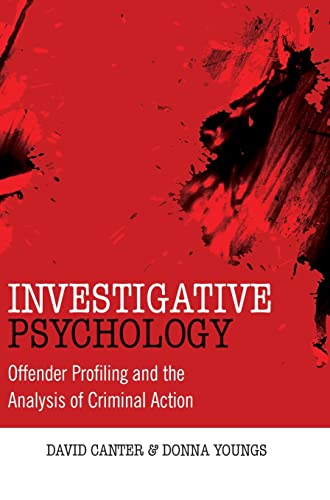
Investigative Psychology is the first academic text for this new strand of psychological science. Throughout, the book is structured according to the operational challenges the research informs. Topics include questions about suspects, linking offences to a common offender, locating an offenders likely home base, and predicting where and when the next offence will be committed. It also provides a comprehensive commentary on the processes central to the effective investigation and successful prosecution of crime.
Die Inhaltsangabe kann sich auf eine andere Ausgabe dieses Titels beziehen.
Über die Autorin bzw. den Autor
Professor David Canter is founding editor of the Wiley Journal of Investigative Psychology and Offender Profiling. He also founded and edited for a number of years Journal of Environmental Psychology for Academic Press. He is a fellow of the BPS and APA. He has worked with police forces all over the world on 'profiling', which led to the emergence of Investigative Psychology. He is author of Criminal Shadows, Harper Collins, a popular book about the topic.
Donna Youngs is Lecturer in Investigative Psychology at the University of Liverpool. She has published journal articles and book chapters and her work has been presented at national and international conferences.
Von der hinteren Coverseite
Until the development of Investigative Psychology, ‘profiling’ was based on little more than the informed personal expertise of experienced detectives. Spearheaded by David Canter and his associates, the new discipline of Investigative Psychology has emerged out of a quarter century of research and involvement in many actual cases.
This ground-breaking text is the first to provide a detailed overview of the field, from the earliest work through to recent studies, including descriptions of previously unpublished internal reports. Crucially it provides a framework for students to explore this exciting terrain, combining Narrative Theory and an Action Systems framework. It includes empirically tested models for Offender Profiling and guidance for investigations, as well as an agenda for research in Investigative Psychology.
Investigative Psychology features:
- The full range of crimes from fraud to terrorism, including burglary, serial killing, arson, rape, and organised crime.
- Important methodologies including multi-dimensional scaling and the Radex approach as well as Social Network Analysis.
- Geographical Offender Profiling, supported by detailed analysis of the underlying psychological processes that make this such a valuable investigative decision support tool.
- The full range of investigative activities, including effective information collection, detecting deception and the development of decision support systems.
In effect, this text introduces an exciting new paradigm for a wide range of psychological contributions to all forms of investigation within and outside of law enforcement. Each chapter has actual cases and quotations from offenders and ends with questions for discussion and research, making this a valuable text for undergraduate and postgraduate courses in Applied and Forensic Psychology, Criminology, Socio-Legal Studies and related disciplines.
Visit the companion website at www.wileyeurope.com/college/canter for teaching resources and student resources on research methodologies linked to the book.
Aus dem Klappentext
Until the development of Investigative Psychology, ‘profiling’ was based on little more than the informed personal expertise of experienced detectives. Spearheaded by David Canter and his associates, the new discipline of Investigative Psychology has emerged out of a quarter century of research and involvement in many actual cases.
This ground-breaking text is the first to provide a detailed overview of the field, from the earliest work through to recent studies, including descriptions of previously unpublished internal reports. Crucially it provides a framework for students to explore this exciting terrain, combining Narrative Theory and an Action Systems framework. It includes empirically tested models for Offender Profiling and guidance for investigations, as well as an agenda for research in Investigative Psychology.
Investigative Psychology features:
- The full range of crimes from fraud to terrorism, including burglary, serial killing, arson, rape, and organised crime.
- Important methodologies including multi-dimensional scaling and the Radex approach as well as Social Network Analysis.
- Geographical Offender Profiling, supported by detailed analysis of the underlying psychological processes that make this such a valuable investigative decision support tool.
- The full range of investigative activities, including effective information collection, detecting deception and the development of decision support systems.
In effect, this text introduces an exciting new paradigm for a wide range of psychological contributions to all forms of investigation within and outside of law enforcement. Each chapter has actual cases and quotations from offenders and ends with questions for discussion and research, making this a valuable text for undergraduate and postgraduate courses in Applied and Forensic Psychology, Criminology, Socio-Legal Studies and related disciplines.
Visit the companion website at www.wileyeurope.com/college/canter for teaching resources and student resources on research methodologies linked to the book.
„Über diesen Titel“ kann sich auf eine andere Ausgabe dieses Titels beziehen.
Suchergebnisse für Investigative Psychology: Offender Profiling and the...

Beispielbild für diese ISBN
Investigative Psychology - Offender Profiling and the Analysis of Criminal Action (eng)
Anbieter: Brook Bookstore On Demand, Napoli, NA, Italien
Verkäuferbewertung 5 von 5 Sternen

Zustand: new. Bestandsnummer des Verkäufers 6cf28d65001235be3a1ad18c5104f64f
Neu kaufen
EUR 196,10
EUR 8,00 Versand
Versand von Italien nach USA
Versand von Italien nach USA
Anzahl: Mehr als 20 verfügbar
Beispielbild für diese ISBN
Investigative Psychology
Anbieter: PBShop.store UK, Fairford, GLOS, Vereinigtes Königreich
Verkäuferbewertung 5 von 5 Sternen
HRD. Zustand: New. New Book. Shipped from UK. Established seller since 2000. Bestandsnummer des Verkäufers FW-9780470023969
Neu kaufen
EUR 212,12
EUR 8,07 Versand
Versand von Vereinigtes Königreich nach USA
Versand von Vereinigtes Königreich nach USA
Anzahl: 15 verfügbar
Beispielbild für diese ISBN
Investigative Psychology
Anbieter: Buchpark, Trebbin, Deutschland
Verkäuferbewertung 5 von 5 Sternen
Zustand: Sehr gut. Zustand: Sehr gut | Seiten: 488 | Sprache: Englisch | Produktart: Bücher | Keine Beschreibung verfügbar. Bestandsnummer des Verkäufers 3881586/2
Gebraucht kaufen
EUR 128,69
EUR 105,00 Versand
Versand von Deutschland nach USA
Versand von Deutschland nach USA
Anzahl: 1 verfügbar
Beispielbild für diese ISBN
Investigative Psychology - Offender Profiling and the Analysis of Criminal Action
Anbieter: Chiron Media, Wallingford, Vereinigtes Königreich
Verkäuferbewertung 5 von 5 Sternen
Hardcover. Zustand: New. Brand new book, sourced directly from publisher. Dispatch time is 3-4 days from our warehouse. Book will be sent in robust, secure packaging to ensure it reaches you securely. Bestandsnummer des Verkäufers 6666-WLY-9780470023969
Neu kaufen
EUR 239,03
EUR 7,75 Versand
Versand von Vereinigtes Königreich nach USA
Versand von Vereinigtes Königreich nach USA
Anzahl: 20 verfügbar
Beispielbild für diese ISBN
Investigative Psychology: Offender Profiling and the Analysis of Criminal Action
Verlag:
John Wiley & Sons Inc, 2009
ISBN 10: 0470023961
ISBN 13: 9780470023969
Neu
Hardcover
Erstausgabe
Anbieter: Kennys Bookshop and Art Galleries Ltd., Galway, GY, Irland
Verkäuferbewertung 5 von 5 Sternen
Zustand: New. Investigative Psychology is the first academic text for this new strand of psychological science. Drawing upon twenty years of research studies, professional reports, and unpublished material, the book has been structured according to the operational challenges presented by research. Num Pages: 484 pages, Illustrations. BIC Classification: JKVQ; JM. Category: (P) Professional & Vocational. Dimension: 250 x 172 x 31. Weight in Grams: 946. . 2009. 1st Edition. Hardcover. . . . . Bestandsnummer des Verkäufers V9780470023969
Neu kaufen
EUR 243,00
EUR 9,50 Versand
Versand von Irland nach USA
Versand von Irland nach USA
Anzahl: Mehr als 20 verfügbar
Foto des Verkäufers
Investigative Psychology
Anbieter: moluna, Greven, Deutschland
Verkäuferbewertung 5 von 5 Sternen
Zustand: New. Until the development of Investigative Psychology, profiling was based on little more than the informed personal expertise of experienced detectives. Spearheaded by David Canter and his associates, the new discipline of Investigative Psychology has emerge. Bestandsnummer des Verkäufers 446911288
Neu kaufen
EUR 211,75
EUR 48,99 Versand
Versand von Deutschland nach USA
Versand von Deutschland nach USA
Anzahl: Mehr als 20 verfügbar
Beispielbild für diese ISBN
Investigative Psychology
Anbieter: Majestic Books, Hounslow, Vereinigtes Königreich
Verkäuferbewertung 4 von 5 Sternen

Zustand: New. pp. 484. Bestandsnummer des Verkäufers 8151945
Neu kaufen
EUR 264,46
EUR 7,76 Versand
Versand von Vereinigtes Königreich nach USA
Versand von Vereinigtes Königreich nach USA
Anzahl: 3 verfügbar
Beispielbild für diese ISBN
Investigative Psychology: Offender Profiling and the Analysis of Criminal Action
Anbieter: Ria Christie Collections, Uxbridge, Vereinigtes Königreich
Verkäuferbewertung 5 von 5 Sternen
Zustand: New. In English. Bestandsnummer des Verkäufers ria9780470023969_new
Neu kaufen
EUR 262,96
EUR 17,84 Versand
Versand von Vereinigtes Königreich nach USA
Versand von Vereinigtes Königreich nach USA
Anzahl: Mehr als 20 verfügbar
Beispielbild für diese ISBN
Investigative Psychology
Anbieter: Books Puddle, Woodside, NY, USA
Verkäuferbewertung 4 von 5 Sternen
Zustand: New. pp. 484 1st Edition. Bestandsnummer des Verkäufers 26777302
Neu kaufen
EUR 282,71
EUR 3,56 Versand
Versand innerhalb von USA
Versand innerhalb von USA
Anzahl: 3 verfügbar
Beispielbild für diese ISBN
Investigative Psychology Offender Profiling and the Analysis of Criminal Action
Anbieter: Revaluation Books, Exeter, Vereinigtes Königreich
Verkäuferbewertung 5 von 5 Sternen
Hardcover. Zustand: Brand New. 1st edition. 484 pages. 9.76x6.54x1.26 inches. In Stock. Bestandsnummer des Verkäufers __0470023961
Neu kaufen
EUR 286,29
EUR 14,93 Versand
Versand von Vereinigtes Königreich nach USA
Versand von Vereinigtes Königreich nach USA
Anzahl: 2 verfügbar