
Verwandte Artikel zu The Data Model Resource Book: Volume 3: Universal Patterns...
Inhaltsangabe
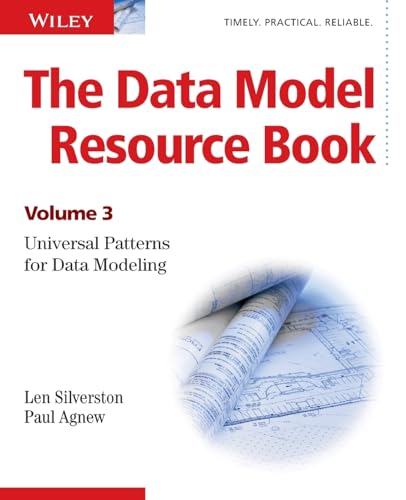
This third volume of the best-selling "Data Model Resource Book" series revolutionizes the data modeling discipline by answering the question "How can you save significant time while improving the quality of any type of data modeling effort?" In contrast to the first two volumes, this new volume focuses on the fundamental, underlying patterns that affect over 50 percent of most data modeling efforts. These patterns can be used to considerably reduce modeling time and cost, to jump-start data modeling efforts, as standards and guidelines to increase data model consistency and quality, and as an objective source against which an enterprise can evaluate data models.
Die Inhaltsangabe kann sich auf eine andere Ausgabe dieses Titels beziehen.
Über die Autorin bzw. den Autor
Len Silverston is the best-selling author of The Data Model Resource Book (Volumes 1 and 2), a speaker and data management consultant with more than 25 years of experience helping organizations integrate their information and systems. He is the owner and president of Universal Data Models, LLC.
Paul Agnew is an author and consultant with more than 17 years of experience in the data management field in many different industries. He is an expert in data modeling, architecture, and integration. He is a senior partner at Universal Data Models, LLC (www.universaldatamodels.com).
Von der hinteren Coverseite
"Universal Patterns for Data Modeling is essential reading for anyone undertaking commercial data modeling. The Data Model Resource Book series represents the most important contribution to the data modeling discipline in the last decade."
Dr. Graeme Simsion, author of Data Modeling Essentials and Data Modeling Theory and Practice
This third volume of the bestselling Data Model Resource Book series revolutionizes the data modeling discipline by answering the question "How can you save significant time while improving the quality of any type of data modeling effort?" In contrast to the first two volumes, this new volume focuses on the fundamental, underlying patterns that affect over 50 percent of most data modeling efforts. These patterns can be used to considerably reduce modeling time and cost, to jump-start data modeling efforts, as standards and guidelines to increase data model consistency and quality, and as an objective source against which an enterprise can evaluate data models.
For each pattern, numerous alternatives are provided, ranging from very specific to very generalized ways of modeling. Len Silverston and Paul Agnew point out the pros and cons of these alternatives and provide guidelines to help you make appropriate decisions depending on the set of circumstances faced. In developing and documenting these patterns, the authors share an invaluable set of foundational tools for anyone involved in data modeling, from the novice to the expert. The authors show you how to:
-
Model the most prevalent data modeling constructs such as ways to model roles, hierarchies, classifications, statuses, contact information, and business rules
-
Re-use a powerful library of core patterns for data modeling
-
Model at different levels of generalization
-
Evaluate the pros and cons of specific versus generalized models
-
Apply the patterns in many types of data modeling efforts, such as prototypes, applications, enterprise data models, data warehouses, and master data management efforts
-
Gain buy-in regarding the use of patterns and/or standardizing on these patterns
Aus dem Klappentext
"Universal Patterns for Data Modeling is essential reading for anyone undertaking commercial data modeling. The Data Model Resource Book series represents the most important contribution to the data modeling discipline in the last decade."
—Dr. Graeme Simsion, author of Data Modeling Essentials and Data Modeling Theory and Practice
This third volume of the bestselling Data Model Resource Book series revolutionizes the data modeling discipline by answering the question "How can you save significant time while improving the quality of any type of data modeling effort?" In contrast to the first two volumes, this new volume focuses on the fundamental, underlying patterns that affect over 50 percent of most data modeling efforts. These patterns can be used to considerably reduce modeling time and cost, to jump-start data modeling efforts, as standards and guidelines to increase data model consistency and quality, and as an objective source against which an enterprise can evaluate data models.
For each pattern, numerous alternatives are provided, ranging from very specific to very generalized ways of modeling. Len Silverston and Paul Agnew point out the pros and cons of these alternatives and provide guidelines to help you make appropriate decisions depending on the set of circumstances faced. In developing and documenting these patterns, the authors share an invaluable set of foundational tools for anyone involved in data modeling, from the novice to the expert. The authors show you how to:
-
Model the most prevalent data modeling constructs such as ways to model roles, hierarchies, classifications, statuses, contact information, and business rules
-
Re-use a powerful library of core patterns for data modeling
-
Model at different levels of generalization
-
Evaluate the pros and cons of specific versus generalized models
-
Apply the patterns in many types of data modeling efforts, such as prototypes, applications, enterprise data models, data warehouses, and master data management efforts
-
Gain buy-in regarding the use of patterns and/or standardizing on these patterns
„Über diesen Titel“ kann sich auf eine andere Ausgabe dieses Titels beziehen.
Suchergebnisse für The Data Model Resource Book: Volume 3: Universal Patterns...

Foto des Verkäufers
The Data Model Resource Book: Volume 3: Universal Patterns for Data Modeling
Anbieter: Dream Books Co., Denver, CO, USA
Verkäuferbewertung 5 von 5 Sternen

Zustand: acceptable. This copy has clearly been enjoyedâ"expect noticeable shelf wear and some minor creases to the cover. Binding is strong, and all pages are legible. May contain previous library markings or stamps. Bestandsnummer des Verkäufers 4EKTGN002E58_ns
Gebraucht kaufen
EUR 17,12
Versand gratis
Versand innerhalb von USA
Versand innerhalb von USA
Anzahl: 1 verfügbar
Beispielbild für diese ISBN
The Data Model Resource Book: Volume 3: Universal Patterns for Data Modeling
Anbieter: A1AMedia, Saint Augustine, FL, USA
Verkäuferbewertung 5 von 5 Sternen
paperback. Zustand: Fair. Noticeable cover & edge wear, HILITES THROUGHOUT. still functional for reading use D7. Bestandsnummer des Verkäufers 182622
Gebraucht kaufen
EUR 15,52
EUR 3,51 Versand
Versand innerhalb von USA
Versand innerhalb von USA
Anzahl: 1 verfügbar
Beispielbild für diese ISBN
The Data Model Resource Book: Volume 3: Universal Patterns for Data Modeling
Anbieter: GCCebooks, Salinas, CA, USA
Verkäuferbewertung 4 von 5 Sternen

Paperback. Zustand: Acceptable. 1. The cover and pages show excessive wear and/or damage. Book edges have stains. The cover is damaged. The book has a curled and creased cover. Books spine shows some sort of damage. Bestandsnummer des Verkäufers 3UAP3I002LAA
Gebraucht kaufen
EUR 19,19
EUR 3,51 Versand
Versand innerhalb von USA
Versand innerhalb von USA
Anzahl: 1 verfügbar
Beispielbild für diese ISBN
The Data Model Resource Book: Volume 3: Universal Patterns for Data Modeling
Anbieter: World of Books (was SecondSale), Montgomery, IL, USA
Verkäuferbewertung 5 von 5 Sternen
Paperback. Zustand: Good. Learn how to customize existing data models and create new data models with the information in The Data Model Resource Book: Universal Patterns for Data Modeling, Volume 3, a guide to universal data patterns that are applicable across a wide variety of organizations. Bestandsnummer des Verkäufers 00105268692
Gebraucht kaufen
EUR 27,44
Versand gratis
Versand innerhalb von USA
Versand innerhalb von USA
Anzahl: 3 verfügbar
Beispielbild für diese ISBN
The Data Model Resource Book: Volume 3: Universal Patterns for Data Modeling
Anbieter: BooksRun, Philadelphia, PA, USA
Verkäuferbewertung 5 von 5 Sternen
Paperback. Zustand: Very Good. 1. It's a well-cared-for item that has seen limited use. The item may show minor signs of wear. All the text is legible, with all pages included. It may have slight markings and/or highlighting. Bestandsnummer des Verkäufers 0470178450-11-1
Gebraucht kaufen
EUR 28,81
Versand gratis
Versand innerhalb von USA
Versand innerhalb von USA
Anzahl: 2 verfügbar
Foto des Verkäufers
The Data Model Resource Book: Volume 3: Universal Patterns for Data Modeling
Anbieter: MERS Goodwill, Saint Louis, MO, USA
Verkäuferbewertung 5 von 5 Sternen
Zustand: acceptable. Used - Acceptable: All pages and the cover are intact, but shrink wrap, dust covers, or boxed set case may be missing. Pages may include limited notes, highlighting, or minor water damage but the text is readable. Pages may include limited notes and highlighting, but the text cannot be obscured or unreadable. Any access codes or passwords originally included with the book may be expired, used or no longer valid. Image is stock photo and cover art edition may be different than pictured. Bestandsnummer des Verkäufers MERV.0470178450.A
Gebraucht kaufen
EUR 25,35
EUR 3,52 Versand
Versand innerhalb von USA
Versand innerhalb von USA
Anzahl: 1 verfügbar
Beispielbild für diese ISBN
The Data Model Resource Book: Volume 3: Universal Patterns for Data Modeling
Anbieter: World of Books Inc, Montgomery, IL, USA
Verkäuferbewertung 4 von 5 Sternen
Paperback. Zustand: Good. Learn how to customize existing data models and create new data models with the information in The Data Model Resource Book: Universal Patterns for Data Modeling, Volume 3, a guide to universal data patterns that are applicable across a wide variety of organizations. Bestandsnummer des Verkäufers CIN0470178450G
Gebraucht kaufen
EUR 29,25
Versand gratis
Versand innerhalb von USA
Versand innerhalb von USA
Anzahl: 3 verfügbar
Beispielbild für diese ISBN
The Data Model Resource Book: Volume 3: Universal Patterns for Data Modeling
Anbieter: GoldBooks, Denver, CO, USA
Verkäuferbewertung 5 von 5 Sternen
Paperback. Zustand: new. New Copy. Customer Service Guaranteed. Bestandsnummer des Verkäufers 62R56_79_0470178450
Neu kaufen
EUR 55,87
EUR 4,84 Versand
Versand innerhalb von USA
Versand innerhalb von USA
Anzahl: 1 verfügbar
Foto des Verkäufers
Data Model Resource Book : Universal Patterns for Data Modeling
Anbieter: GreatBookPrices, Columbia, MD, USA
Verkäuferbewertung 5 von 5 Sternen
Zustand: New. Bestandsnummer des Verkäufers 5150483-n
Neu kaufen
EUR 58,46
EUR 2,32 Versand
Versand innerhalb von USA
Versand innerhalb von USA
Anzahl: Mehr als 20 verfügbar
Foto des Verkäufers
Data Model Resource Book : Universal Patterns for Data Modeling
Anbieter: GreatBookPrices, Columbia, MD, USA
Verkäuferbewertung 5 von 5 Sternen
Zustand: As New. Unread book in perfect condition. Bestandsnummer des Verkäufers 5150483
Gebraucht kaufen
EUR 68,33
EUR 2,32 Versand
Versand innerhalb von USA
Versand innerhalb von USA
Anzahl: Mehr als 20 verfügbar