
Verwandte Artikel zu Human Brain Evolution: The Influence of Freshwater...
Inhaltsangabe
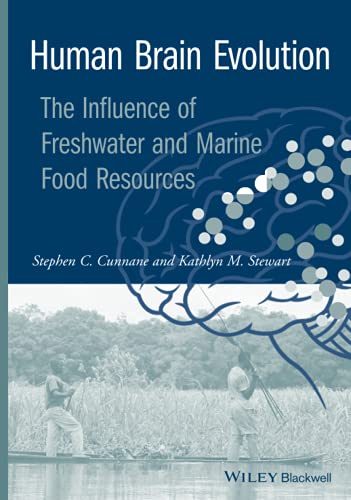
The evolution of the human brain and cognitive ability is one of the central themes of physical/biological anthropology. This book discusses the emergence of human cognition at a conceptual level, describing it as a process of long adaptive stasis interrupted by short periods of cognitive advance. These advances were not linear and directed, but were acquired indirectly as part of changing human behaviors, in other words through the process of exaptation (acquisition of a function for which it was not originally selected). Based on studies of the modem human brain, certain prerequisites were needed for the development of the early brain and associated cognitive advances. This book documents the energy and nutrient constraints of the modern brain, highlighting the significant role of long-chain polyunsaturated fatty acids (LC-PUFA) in brain development and maintenance. Crawford provides further emphasis for the role of essential fatty acids, in particular DHA, in brain development, by discussing the evolution of the eye and neural systems.
This is an ideal book for Graduate students, post docs, research scientists in Physical/Biological Anthropology, Human Biology, Archaeology, Nutrition, Cognitive Science, Neurosciences. It is also an excellent selection for a grad student discussion seminar.
Die Inhaltsangabe kann sich auf eine andere Ausgabe dieses Titels beziehen.
Über die Autorin bzw. den Autor
Stephen C. Cunnane, Ph.D., holds the Canada Research Chair in Brain Metabolism and Aging and is the Director of the Research Centre on Aging at Sherbrooke University Geriatric Institute. He sits on the editorial boards of iiuinerous journals, including Nutrition, British Journal of Nutrition and Journal of Nutritional and Environmental Medicine.
Kathlyn M. Stewart, Ph.D. is a Research Scientist in Paleobiology and former Head of Paleobiology at the Canadian Museum of Nature. Specializing in environmental change and human adaptation, she has extensive field experience in Africa.
Von der hinteren Coverseite
A multidisciplinary treatment of the importance of aquatic foods in human brain evolution
The evolution of the human brain and cognitive ability is one of the central themes of physical/biological anthropology. Based on studies of the modern human brain, certain prerequisites were needed for the development of the early brain and associated cognitive advances. Important prerequisites included polyunsaturated fatty acids and other brain selective nutrients, which are found in highest quantity in fish and shellfish. Early hominins were able to access these foods when frequenting wetlands, particularly lake and river margins. Increased consumption of this high-quality diet over time exaptively diverted energy to the brain, and was a catalyst for brain growth. The later exploitation of marine shellfish and fish is roughly correlated with the emergence of Homo sapiens, and cognitive advance associated with changing human behaviors.
Human Brain Evolution: The Influence of Freshwater and Marine Food Resources documents the energy and nutrient constraints of the modern brain, highlighting the significant role of brain selective nutrients in brain development and the evolution of neural systems. There is a particular focus on two long-chain polyunsaturated fatty acids (LC-PUFA) in brain development and maintenance docosahexaenoic acid (DHA) and arachidonic acid (AA). These nutrients are found in the highest quantity in fish and shellfish, and this volume further discusses fossil, morphological, and isotopic evidence for hominin consumption of these foods over time.
The contributors to this volume come from several fields paleoanthropology, nutrition, neurochemistry, archaeology, and paleobiology providing a multidisciplinary approach to the complex and challenging topic of the evolution of the brain. The first half of this volume focuses specifically on the biochemical and nutritional requirements of encephalization of the human brain, best acquired opportunistically (exaptively) through consumption of fish and/or shellfish. The second half provides multidisciplinary evidence on the exploitation of initially, freshwater and later, marine fish and shellfish, by successive hominin taxa. These persuasive, thought-provoking discussions and arguments provide the basis for a new perspective and help the reader understand the vital role freshwater and marine foods have in human brain function and, hence, evolution.
Human Brain Evolution is essential reading for graduate students, postdoctoral students, and research scientists in physical/biological anthropology, human biology, archaeology, nutrition, cognitive science, and the neurosciences. It is also an excellent supplemental text for biological anthropology or a graduate student discussion seminar.
Aus dem Klappentext
A multidisciplinary treatment of the importance of aquatic foods in human brain evolution
The evolution of the human brain and cognitive ability is one of the central themes of physical/biological anthropology. Based on studies of the modern human brain, certain prerequisites were needed for the development of the early brain and associated cognitive advances. Important prerequisites included polyunsaturated fatty acids and other brain selective nutrients, which are found in highest quantity in fish and shellfish. Early hominins were able to access these foods when frequenting wetlands, particularly lake and river margins. Increased consumption of this high-quality diet over time exaptively diverted energy to the brain, and was a catalyst for brain growth. The later exploitation of marine shellfish and fish is roughly correlated with the emergence of Homo sapiens, and cognitive advance associated with changing human behaviors.
Human Brain Evolution: The Influence of Freshwater and Marine Food Resources documents the energy and nutrient constraints of the modern brain, highlighting the significant role of brain selective nutrients in brain development and the evolution of neural systems. There is a particular focus on two long-chain polyunsaturated fatty acids (LC-PUFA) in brain development and maintenance—docosahexaenoic acid (DHA) and arachidonic acid (AA). These nutrients are found in the highest quantity in fish and shellfish, and this volume further discusses fossil, morphological, and isotopic evidence for hominin consumption of these foods over time.
The contributors to this volume come from several fields—paleoanthropology, nutrition, neurochemistry, archaeology, and paleobiology—providing a multidisciplinary approach to the complex and challenging topic of the evolution of the brain. The first half of this volume focuses specifically on the biochemical and nutritional requirements of encephalization of the human brain, best acquired opportunistically (exaptively) through consumption of fish and/or shellfish. The second half provides multidisciplinary evidence on the exploitation of initially, freshwater and later, marine fish and shellfish, by successive hominin taxa. These persuasive, thought-provoking discussions and arguments provide the basis for a new perspective and help the reader understand the vital role freshwater and marine foods have in human brain function and, hence, evolution.
Human Brain Evolution is essential reading for graduate students, postdoctoral students, and research scientists in physical/biological anthropology, human biology, archaeology, nutrition, cognitive science, and the neurosciences. It is also an excellent supplemental text for biological anthropology or a graduate student discussion seminar.
„Über diesen Titel“ kann sich auf eine andere Ausgabe dieses Titels beziehen.
Suchergebnisse für Human Brain Evolution: The Influence of Freshwater...

Beispielbild für diese ISBN
Human Brain Evolution
Anbieter: Mispah books, Redhill, SURRE, Vereinigtes Königreich
Verkäuferbewertung 4 von 5 Sternen

Hardcover. Zustand: New. NEW. SHIPS FROM MULTIPLE LOCATIONS. book. Bestandsnummer des Verkäufers ERICA82904704526846
Neu kaufen
EUR 389,40
EUR 29,54 Versand
Versand von Vereinigtes Königreich nach USA
Versand von Vereinigtes Königreich nach USA
Anzahl: 1 verfügbar