
Verwandte Artikel zu Computational Strategies for Spectroscopy: from Small...
Inhaltsangabe
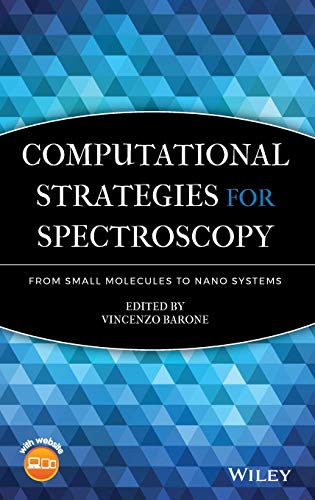
Computational spectroscopy is a rapidly evolving field that is becoming a versatile and widespread tool for the assignment of experimental spectra and their interpretation as related to chemical physical effects. This book is devoted to the most significant methodological contributions in the field, and to the computation of IR, UV-VIS, NMR and EPR spectral parameters with reference to the underlying vibronic and environmental effects. Each section starts with a chapter written by an experimental spectroscopist dealing with present challenges in the different fields; comprehensive coverage of conventional and advanced spectroscopic techniques is provided by means of dedicated chapters written by experts. Computational chemists, analytical chemists and spectroscopists, physicists, materials scientists, and graduate students will benefit from this thorough resource.
Die Inhaltsangabe kann sich auf eine andere Ausgabe dieses Titels beziehen.
Über die Autorin bzw. den Autor
Vincenzo Barone is a Full Professor of Theoretical and Computational Chemistry at the Scuola Normale Superiore in Pisa. He is President of the Italian Chemical Society and a Fellow of the International Academy of Quantum Molecular Sciences. He is the author of nearly 500 publications in international journals, with more than 20,000 citations, and has given about 150 invited lectures in Italian and foreign institutions.
Von der hinteren Coverseite
Brings experimental data in alignment with sound theory in computational spectroscopy
Computational spectroscopy is a rapidly evolving field that is becoming a versatile and widespread tool for the assignment of experimental spectra and their interpretation as related to chemical physical effects. Edited by a well-known researcher in the field, Computational Strategies for Spectroscopy: From Small Molecules to Nano Systems closes the gap between published computational results and sound theory to help scientists make accurate predictions and model more effectively in any application.
This book responds to the fact that the development of sophisticated experimental techniques poses correspondingly stringent requirements on the quality of the models employed to interpret spectroscopic results, and on the accuracy of the underlying chemical-physical descriptions. In such a complex scenario, theoretical studies can be extremely helpful.
Making modern computational strategies easily accessible to non-specialists as well as specialists, Computational Strategies for Spectroscopy presents a thorough overview of modern computational strategies for rotational. vibrational, electronic, and resonance spectroscopies covering a large interval of the electromagnetic spectrum, ranging from radiofrequencies to soft X-rays. The two sections of the book are devoted to:
- Transitions between electronic and spin states within a static framework
- Time-independent and time-dependent approaches to nuclear motions, with special reference to rotational, vibrational, and electronic spectroscopies
Dedicated chapters written by experts in the field give the reader a complete picture of the various spectroscopies from the general theoretical background to current challenges in the different fields. The stereo-electronic, vibrational, vibronic, and environmental effects on the overall spectral phenomena are analyzed for molecular systems ranging from small molecules to nano systems. Examples clearly illustrate the advantages and limitations of specific computational methods and models.
Providing the reader with a broad overview of the available computational approaches and their applicability, this carefully assembled resource will prove invaluable to computational chemists, analytical chemists and spectroscopists, physicists, materials scientists, and graduate students alike.
Aus dem Klappentext
Brings experimental data in alignment with sound theory in computational spectroscopy
Computational spectroscopy is a rapidly evolving field that is becoming a versatile and widespread tool for the assignment of experimental spectra and their interpretation as related to chemical physical effects. Edited by a well-known researcher in the field, Computational Strategies for Spectroscopy: From Small Molecules to Nano Systems closes the gap between published computational results and sound theory to help scientists make accurate predictions and model more effectively in any application.
This book responds to the fact that the development of sophisticated experimental techniques poses correspondingly stringent requirements on the quality of the models employed to interpret spectroscopic results, and on the accuracy of the underlying chemical-physical descriptions. In such a complex scenario, theoretical studies can be extremely helpful.
Making modern computational strategies easily accessible to non-specialists as well as specialists, Computational Strategies for Spectroscopy presents a thorough overview of modern computational strategies for rotational. vibrational, electronic, and resonance spectroscopies covering a large interval of the electromagnetic spectrum, ranging from radiofrequencies to soft X-rays. The two sections of the book are devoted to:
* Transitions between electronic and spin states within a static framework
* Time-independent and time-dependent approaches to nuclear motions, with special reference to rotational, vibrational, and electronic spectroscopies
Dedicated chapters written by experts in the field give the reader a complete picture of the various spectroscopies from the general theoretical background to current challenges in the different fields. The stereo-electronic, vibrational, vibronic, and environmental effects on the overall spectral phenomena are analyzed for molecular systems ranging from small molecules to nano systems. Examples clearly illustrate the advantages and limitations of specific computational methods and models.
Providing the reader with a broad overview of the available computational approaches and their applicability, this carefully assembled resource will prove invaluable to computational chemists, analytical chemists and spectroscopists, physicists, materials scientists, and graduate students alike.
„Über diesen Titel“ kann sich auf eine andere Ausgabe dieses Titels beziehen.
Suchergebnisse für Computational Strategies for Spectroscopy: from Small...

Beispielbild für diese ISBN
Computational Strategies for Spectroscopy: from Small Molecules to Nano Systems (eng)
Anbieter: Brook Bookstore On Demand, Napoli, NA, Italien
Verkäuferbewertung 5 von 5 Sternen

Zustand: new. Bestandsnummer des Verkäufers 581bc9abe32c250ef9e54f6b7740a1e3
Neu kaufen
EUR 132,39
EUR 11,00 Versand
Versand von Italien nach USA
Versand von Italien nach USA
Anzahl: Mehr als 20 verfügbar
Beispielbild für diese ISBN
Computational Strategies for Spectroscopy
Anbieter: PBShop.store UK, Fairford, GLOS, Vereinigtes Königreich
Verkäuferbewertung 5 von 5 Sternen
HRD. Zustand: New. New Book. Shipped from UK. Established seller since 2000. Bestandsnummer des Verkäufers FW-9780470470176
Neu kaufen
EUR 135,85
EUR 8,00 Versand
Versand von Vereinigtes Königreich nach USA
Versand von Vereinigtes Königreich nach USA
Anzahl: 15 verfügbar
Foto des Verkäufers
Computational Strategies for Spectroscopy : From Small Molecules to Nano Systems
Anbieter: GreatBookPrices, Columbia, MD, USA
Verkäuferbewertung 5 von 5 Sternen
Zustand: New. Bestandsnummer des Verkäufers 5868884-n
Neu kaufen
EUR 145,20
EUR 2,36 Versand
Versand innerhalb von USA
Versand innerhalb von USA
Anzahl: Mehr als 20 verfügbar
Foto des Verkäufers
Computational Strategies for Spectroscopy : From Small Molecules to Nano Systems
Anbieter: GreatBookPrices, Columbia, MD, USA
Verkäuferbewertung 5 von 5 Sternen
Zustand: As New. Unread book in perfect condition. Bestandsnummer des Verkäufers 5868884
Gebraucht kaufen
EUR 147,79
EUR 2,36 Versand
Versand innerhalb von USA
Versand innerhalb von USA
Anzahl: Mehr als 20 verfügbar
Foto des Verkäufers
Computational Strategies for Spectroscopy : From Small Molecules to Nano Systems
Anbieter: GreatBookPricesUK, Woodford Green, Vereinigtes Königreich
Verkäuferbewertung 5 von 5 Sternen
Zustand: New. Bestandsnummer des Verkäufers 5868884-n
Neu kaufen
EUR 135,84
EUR 17,75 Versand
Versand von Vereinigtes Königreich nach USA
Versand von Vereinigtes Königreich nach USA
Anzahl: Mehr als 20 verfügbar
Beispielbild für diese ISBN
Computational Strategies for Spectroscopy : From Small Molecules to Nano Systems
Anbieter: GreatBookPricesUK, Woodford Green, Vereinigtes Königreich
Verkäuferbewertung 5 von 5 Sternen
Zustand: As New. Unread book in perfect condition. Bestandsnummer des Verkäufers 5868884
Gebraucht kaufen
EUR 147,23
EUR 17,75 Versand
Versand von Vereinigtes Königreich nach USA
Versand von Vereinigtes Königreich nach USA
Anzahl: Mehr als 20 verfügbar
Beispielbild für diese ISBN
Computational Strategies for Spectroscopy: from Small Molecules to Nano Systems
Anbieter: California Books, Miami, FL, USA
Verkäuferbewertung 5 von 5 Sternen
Zustand: New. Bestandsnummer des Verkäufers I-9780470470176
Neu kaufen
EUR 169,20
Versand gratis
Versand innerhalb von USA
Versand innerhalb von USA
Anzahl: Mehr als 20 verfügbar
Beispielbild für diese ISBN
Computational Strategies for Spectroscopy: from Small Molecules to Nano Systems
Anbieter: THE SAINT BOOKSTORE, Southport, Vereinigtes Königreich
Verkäuferbewertung 5 von 5 Sternen
Hardback. Zustand: New. New copy - Usually dispatched within 4 working days. Bestandsnummer des Verkäufers B9780470470176
Neu kaufen
EUR 159,53
EUR 25,01 Versand
Versand von Vereinigtes Königreich nach USA
Versand von Vereinigtes Königreich nach USA
Anzahl: Mehr als 20 verfügbar
Beispielbild für diese ISBN
Computational Strategies for Spectroscopy: from Small Molecules to Nano Systems
Verlag:
John Wiley & Sons Inc, 2011
ISBN 10: 0470470178
ISBN 13: 9780470470176
Neu
Hardcover
Erstausgabe
Anbieter: Kennys Bookshop and Art Galleries Ltd., Galway, GY, Irland
Verkäuferbewertung 5 von 5 Sternen
Zustand: New. Computational spectroscopy is a rapidly evolving field that is becoming a versatile and widespread tool for the assignment of experimental spectra and their interpretation as related to chemical physical effects. Editor(s): Barone, Vincenzo. Num Pages: 608 pages, Illustrations. BIC Classification: PHJ; PN. Category: (P) Professional & Vocational. Dimension: 236 x 164 x 34. Weight in Grams: 1002. . 2011. 1st Edition. Hardcover. . . . . Bestandsnummer des Verkäufers V9780470470176
Neu kaufen
EUR 177,71
EUR 9,50 Versand
Versand von Irland nach USA
Versand von Irland nach USA
Anzahl: Mehr als 20 verfügbar
Beispielbild für diese ISBN
Computational Strategies for Spectroscopy
Anbieter: Majestic Books, Hounslow, Vereinigtes Königreich
Verkäuferbewertung 4 von 5 Sternen

Zustand: New. pp. 608. Bestandsnummer des Verkäufers 6267652
Neu kaufen
EUR 179,63
EUR 7,69 Versand
Versand von Vereinigtes Königreich nach USA
Versand von Vereinigtes Königreich nach USA
Anzahl: 3 verfügbar