
Verwandte Artikel zu Harry Potter and History (Wiley Pop Culture and History)
Harry Potter and History (Wiley Pop Culture and History) - Softcover
Buch 1 von 6: Wiley Pop Culture and History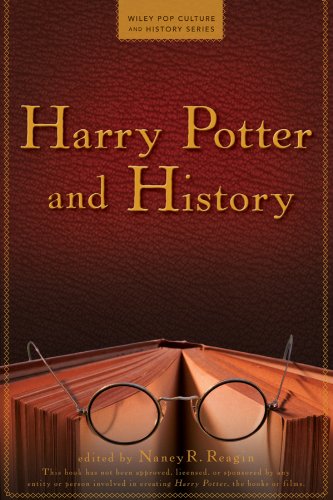
Inhaltsangabe
A guide to the history behind the world of Harry Potter--just in time for the last Harry Potter movie, Harry Potter and the Deathly Hallows (Part II)
Harry Potter lives in a world that is both magical and historical. Hogwarts pupils ride an old-fashioned steam train to school, notes are taken on parchment with quill pens, and Muggle legends come to life in the form of werewolves, witches, and magical spells. This book is the first to explore the real history in which Harry's world is rooted.
Did you know that bezoars and mandrakes were fashionable luxury items for centuries? Find out how Europeans first developed the potions, spells, and charms taught at Hogwarts, from Avada Kedavra to love charms. Learn how the European prosecution of witches led to the Statute of Secrecy, meet the real Nicholas Flamel, see how the Malfoys stack up against Muggle English aristocrats, and compare the history of the wizarding world to real-life history.
* Gives you the historical backdrop to Harry Potter's world
* Covers topics ranging from how real British boarding schools compare to Hogwarts to how parchment, quills, and scrolls used in the wizarding world were made
* Includes a timeline comparing the history of the wizarding world to Muggle "real" history
Filled with fascinating facts and background, Harry Potter and History is an essential companion for every Harry Potter fan.
Die Inhaltsangabe kann sich auf eine andere Ausgabe dieses Titels beziehen.
Über die Autorin bzw. den Autor
Nancy R. Reagin is a professor of history and women's and gender studies at Pace University, who has published several books in modern European history. She's also an active fan who has worked on fan archives and websites, and she has helped build fan organizations. She is appalled by Professor Binns's teaching methods and would enjoy using pensieves, Veritaserum, and Time-Turners in her own research.
Von der hinteren Coverseite
Were Voldemort and the Death Eaters similar to the Nazis?
How did Muggles use mandrakes, bezoars, cauldrons, and love potions?
Would a woman have more rights as a witch or a Muggle?
How do the Malfoys compare to Muggle English aristocrats?
Who was the real Nicolas Flamel?
You'll find the answers and more inside this book, the first to explore the real history behind the world of Harry Potter. From Dementors to the Dark Mark, from Hogwarts to house-elves, Harry Potter and History takes a revealing look at the historical backdrop of J. K. Rowling's novels, with a timeline comparing the key events of the wizarding world to actual human history.
You'll learn how real British boarding schools compare to Hogwarts, where the Wizengamot and the Ministry of Magic came from, how the magical books and quills used by Harry and his friends were made, and the history of werewolves before Professor Lupin and Fenrir Greyback. You'll also discover the historical origins of the spells, charms, and lessons Hogwarts students learn, from Avada Kedavra to Levicorpus. This book takes every Harry Potter fan even deeper within the series, describing the rich historical background of the characters and their wizarding world.
Auszug. © Genehmigter Nachdruck. Alle Rechte vorbehalten.
Harry Potter and History
By Nancy ReaginJohn Wiley & Sons
Copyright © 2011 John Wiley & Sons, LtdAll right reserved.
ISBN: 978-0-470-57472-0
Chapter One
Magic for Daily Use and Profit Mandrakes, Charms, Bezoars, and Love Potions in the Muggle and Wizarding WorldsBirgit Wiedl
When someone harms people or brings them trouble by magic, one should punish them with death, and one should use the punishment of death by fire. When, however, someone uses magic and yet does no one any harm with it, he should be punished otherwise, according to the custom of the case. —Constitutio Criminalis Carolina, 1532
"I'm a what?" gasped Harry. —Sorcerer's Stone, 51
When eleven-year-old Harry Potter learns from Rubeus Hagrid about his magical abilities, he is completely stunned and incredulous, despite the signs of magic he had already shown earlier in his life before anyone had taught him how to perform magic. The question of whether magical abilities are inherited through the wizarding family or are a spontaneous occurrence in an otherwise Muggle family notwithstanding, a person in the wizarding world either has magical abilities or doesn't; no school could ever teach magical skills to a Muggle (or a Squib) and succeed. This concept is the exact opposite of what the Muggle world of the Middle Ages and Early Modern Times believed magic to be: those cultures thought that magic was something that could be acquired by studying or passed down in oral tradition. Unlike the wizards of Harry's world, Muggles in medieval and Early Modern Europe thus believed that anyone who chose to be a sorcerer, a magician, a warlock, or a witch could become so, provided that he or she got the right education and training.
Examining the practice of magic in earlier times poses, first and foremost, the problem of how we define magic: while to Severus Snape, Lucius Malfoy, Albus Dumbledore, and their lot, it is quite self-explanatory as to what magic is (or is it?), the fields of ancient, medieval, and Early Modern magic were categories that varied and changed from one time and place to another. Usually defined by authorities who often took either a condescending or even hostile stance—and narrowed down to concrete examples of specific practices only when accusations were made—magic was (from a historical perspective) seldom categorized as such by those who, allegedly or not, performed it. Indeed, many who performed what others perceive as magic would not have labeled it as such. Magic could be found everywhere and was practiced by a broad spectrum of people from all parts of the social strata, from the stereotypical village witch or the itinerant soothsayer performing at fairs, to the magician at a nobleman's court or the highly educated Renaissance magi, to the practitioner of the occult sciences. All sorts of people performed magic in earlier centuries, in other words.
Yet any attempt to strictly separate "elite" or "learned" magic from popular magical practices inevitably leads to similar problems when differentiating between "pagan" (from whichever roots) and Christian magic, particularly as far as the early and high Middle Ages are concerned. Although ancient and Christian authorities defined magic quite differently, the incorporation of pagan magical beliefs, rites, and practices into the early medieval church practices and rituals was, even if some church authorities perceived it as pagan, often inevitable. Sometimes, this kind of "magical transfer" was accepted quite deliberately and even encouraged to avoid clashes with existing traditions and to make it easier for the local population to connect with the new faith, leading to fusions of Christianity with older belief systems on a broad scale.
Pagan charms can be found scribbled in local languages in the margins of medieval manuscripts that were devoted to Latin liturgical prayers. When we track down the roots of these charms to their pre-Christian origins, they are drawn from a broad array of pre-Christian sources, including Egyptian, Graeco-Roman, Celtic, Slavic, Jewish, and Germanic, perhaps with some later Arabic influences as well. Yet the medieval understanding of magic did not depend on the original sources of the charms so much as it did on the intermingling and adaptation of a variety of both practices and concepts of magic.
Particularly the use of spells and charms, bordering closely on prayer, and the administration of herbal treatments might not have been regarded as magical by those who performed them perhaps on an almost daily basis. Magic is, after all, in the eyes of the beholder: what some might call magic another might call religion. The blessings, the invocations of the saints, and the transformation of bread and wine into the body and blood of Christ in the Eucharist performed by a barely literate parish priest might have seemed to the common people quite similar in their "magical" qualities to the ointments that someone else in their village brewed using herbs, plants, and roots that merely needed a quick spell to work properly. Similarly, a pagan priest would not perceive his (or her) actions as "magical," but instead as religious, and would only appear as a "sorcerer," rather than as a "priest," to Christian authorities. By the same token, the actions of, and stories about, Jesus came across as extremely "magical" to non-Christians, and the cross itself was often associated with malevolent magic in Roman tradition. As in the wizarding world, practical magic was used on an everyday scale in the ancient and medieval worlds.
Even Augustinus of Hippo (St. Augustine), who denounced magic and superstition, relied on the aid of the soothsayer and sorcerer Albicerius at Carthage to find a spoon he had lost. Magic was always a controversial issue within the Christian church, and the discussion of complex theories of magic was important enough to medieval theologians that some church councils (for example, the Council of Basel, held between 1431 and 1449) engaged in quite heated discussions about magic; even church authorities weren't always sure about where religion ended and magic began.
"One Who Is Said to Carry a Brass Cauldron in which Witches Brew": Severus Strioportius Snape, or What the Potions Master and Professor Sprout Are Really Enthusiastic About
And shrieks like mandrakes' torn out of the earth, That living mortals, hearing them, run mad. —William Shakespeare, Romeo and Juliet, act IV, scene iii
"To bottle fame, brew glory, even stopper death": with the correct administration of Severus Snape's potions, so it seems, everything can be achieved (SS, 137). In his cauldron, potions are brewed that indeed have a broad range of effects on both mind and body: potions that make people think more clearly (Wit-Sharpening Potion); the huge assortment of antidotes and healing potions (such as Skele-Gro and Wound-Healing Potion, both administered to Harry); potions that befuddle the mind of the one who drinks them, persuading them into loving, hating, or being the best friend of the one who gave the potion; potions with self-explanatory names such as Veritaserum or Wolfsbane; potions that have a comical effect (a specialty of the Weasley twins) or a cosmetic use, such as Hermione Granger's Sleekeazy's Hair Potion; and...
„Über diesen Titel“ kann sich auf eine andere Ausgabe dieses Titels beziehen.
Suchergebnisse für Harry Potter and History (Wiley Pop Culture and History)

Beispielbild für diese ISBN
Harry Potter and History
Verlag:
Turner Publishing Company, 2011
ISBN 10: 0470574720
ISBN 13: 9780470574720
Gebraucht
Paperback
Anbieter: World of Books (was SecondSale), Montgomery, IL, USA
Verkäuferbewertung 5 von 5 Sternen

Paperback. Zustand: Good. A guide to the history behind the world of Harry Potter--just in time for the last Harry Potter movie, Harry Potter and the Deathly Hallows (Part II)Harry Potter lives in a world that is both magical and historical. Hogwarts pupils ride an old-fashioned steam train to school, notes are taken on parchment with quill pens, and Muggle legends come to life in the form of werewolves, witches, and magical spells. This book is the first to explore the real history in which Harry's world is rooted.Did you know that bezoars and mandrakes were fashionable luxury items for centuries? Find out how Europeans first developed the potions, spells, and charms taught at Hogwarts, from Avada Kedavra to love charms. Learn how the European prosecution of witches led to the Statute of Secrecy, meet the real Nicholas Flamel, see how the Malfoys stack up against Muggle English aristocrats, and compare the history of the wizarding world to real-life history.Gives you the historical backdrop to Harry Potter's worldCovers topics ranging from how real British boarding schools compare to Hogwarts to how parchment, quills, and scrolls used in the wizarding world were madeIncludes a timeline comparing the history of the wizarding world to Muggle real historyFilled with fascinating facts and background, Harry Potter and History is an essential companion for every Harry Potter fan. Bestandsnummer des Verkäufers 00101927777
Gebraucht kaufen
EUR 4,60
Versand gratis
Versand innerhalb von USA
Versand innerhalb von USA
Anzahl: 1 verfügbar
Beispielbild für diese ISBN
Harry Potter and History (Wiley Pop Culture and History Series, 1)
Anbieter: Your Online Bookstore, Houston, TX, USA
Verkäuferbewertung 5 von 5 Sternen
paperback. Zustand: Very Good. Bestandsnummer des Verkäufers 0470574720-2-37774393
Gebraucht kaufen
EUR 4,61
Versand gratis
Versand innerhalb von USA
Versand innerhalb von USA
Anzahl: 1 verfügbar
Foto des Verkäufers
Harry Potter and History (Wiley Pop Culture and History Series, 1)
Anbieter: Greenworld Books, Arlington, TX, USA
Verkäuferbewertung 5 von 5 Sternen
Zustand: good. Fast Free Shipping â" Good condition. It may show normal signs of use, such as light writing, highlighting, or library markings, but all pages are intact and the book is fully readable. A solid, complete copy that's ready to enjoy. Bestandsnummer des Verkäufers GWV.0470574720.G
Gebraucht kaufen
EUR 4,69
Versand gratis
Versand innerhalb von USA
Versand innerhalb von USA
Anzahl: 1 verfügbar
Foto des Verkäufers
Harry Potter and History (Wiley Pop Culture and History Series, 1)
Anbieter: Greenworld Books, Arlington, TX, USA
Verkäuferbewertung 5 von 5 Sternen
Zustand: very_good. Fast Free Shipping â" Very Good condition book with a firm cover and clean pages. Shows normal use and some light wear or limited notes markings. A solid, nice copy to enjoy. Bestandsnummer des Verkäufers GWV.0470574720.VG
Gebraucht kaufen
EUR 4,69
Versand gratis
Versand innerhalb von USA
Versand innerhalb von USA
Anzahl: 1 verfügbar
Beispielbild für diese ISBN
Harry Potter and History (Wiley Pop Culture and History Series, 1)
Anbieter: More Than Words, Waltham, MA, USA
Verkäuferbewertung 5 von 5 Sternen
Zustand: Very Good. A bright, square, and overall a nice copy. Bestandsnummer des Verkäufers BOS-P-10j-01502
Gebraucht kaufen
EUR 1,16
EUR 3,56 Versand
Versand innerhalb von USA
Versand innerhalb von USA
Anzahl: 1 verfügbar
Beispielbild für diese ISBN
Harry Potter and History (Wiley Pop Culture and History Series, 1)
Verlag:
Trade Paper Press (edition 1), 2011
ISBN 10: 0470574720
ISBN 13: 9780470574720
Gebraucht
Paperback
Anbieter: BooksRun, Philadelphia, PA, USA
Verkäuferbewertung 5 von 5 Sternen
Paperback. Zustand: Very Good. 1. It's a well-cared-for item that has seen limited use. The item may show minor signs of wear. All the text is legible, with all pages included. It may have slight markings and/or highlighting. Bestandsnummer des Verkäufers 0470574720-11-6
Gebraucht kaufen
EUR 5,43
Versand gratis
Versand innerhalb von USA
Versand innerhalb von USA
Anzahl: 1 verfügbar
Beispielbild für diese ISBN
Harry Potter and History
Verlag:
Turner Publishing Company, 2011
ISBN 10: 0470574720
ISBN 13: 9780470574720
Gebraucht
Paperback
Anbieter: World of Books Inc, Montgomery, IL, USA
Verkäuferbewertung 4 von 5 Sternen

Paperback. Zustand: Good. A guide to the history behind the world of Harry Potter--just in time for the last Harry Potter movie, Harry Potter and the Deathly Hallows (Part II)Harry Potter lives in a world that is both magical and historical. Hogwarts pupils ride an old-fashioned steam train to school, notes are taken on parchment with quill pens, and Muggle legends come to life in the form of werewolves, witches, and magical spells. This book is the first to explore the real history in which Harry's world is rooted.Did you know that bezoars and mandrakes were fashionable luxury items for centuries? Find out how Europeans first developed the potions, spells, and charms taught at Hogwarts, from Avada Kedavra to love charms. Learn how the European prosecution of witches led to the Statute of Secrecy, meet the real Nicholas Flamel, see how the Malfoys stack up against Muggle English aristocrats, and compare the history of the wizarding world to real-life history.Gives you the historical backdrop to Harry Potter's worldCovers topics ranging from how real British boarding schools compare to Hogwarts to how parchment, quills, and scrolls used in the wizarding world were madeIncludes a timeline comparing the history of the wizarding world to Muggle real historyFilled with fascinating facts and background, Harry Potter and History is an essential companion for every Harry Potter fan. Bestandsnummer des Verkäufers CIN0470574720G
Gebraucht kaufen
EUR 6,43
Versand gratis
Versand innerhalb von USA
Versand innerhalb von USA
Anzahl: 1 verfügbar
Beispielbild für diese ISBN
Harry Potter and History (Wiley Pop Culture and History Series, 1)
Anbieter: Wonder Book, Frederick, MD, USA
Verkäuferbewertung 5 von 5 Sternen
Zustand: As New. Like New condition. A near perfect copy that may have very minor cosmetic defects. Bestandsnummer des Verkäufers C12A-02791
Gebraucht kaufen
EUR 6,45
Versand gratis
Versand innerhalb von USA
Versand innerhalb von USA
Anzahl: 1 verfügbar
Beispielbild für diese ISBN
Harry Potter and History (Wiley Pop Culture and History Series, 1)
Anbieter: Wonder Book, Frederick, MD, USA
Verkäuferbewertung 5 von 5 Sternen
Zustand: Good. Good condition. A copy that has been read but remains intact. May contain markings such as bookplates, stamps, limited notes and highlighting, or a few light stains. Bestandsnummer des Verkäufers K04A-04490
Gebraucht kaufen
EUR 6,45
Versand gratis
Versand innerhalb von USA
Versand innerhalb von USA
Anzahl: 1 verfügbar
Beispielbild für diese ISBN
Harry Potter and History
Verlag:
Wiley & Sons Canada, Limited, John, 2011
ISBN 10: 0470574720
ISBN 13: 9780470574720
Gebraucht
Softcover
Erstausgabe
Anbieter: Better World Books, Mishawaka, IN, USA
Verkäuferbewertung 5 von 5 Sternen
Zustand: Good. 1st Edition. Pages intact with minimal writing/highlighting. The binding may be loose and creased. Dust jackets/supplements are not included. Stock photo provided. Product includes identifying sticker. Better World Books: Buy Books. Do Good. Bestandsnummer des Verkäufers 577350-6
Gebraucht kaufen
EUR 6,74
Versand gratis
Versand innerhalb von USA
Versand innerhalb von USA
Anzahl: 2 verfügbar