
Verwandte Artikel zu Wealth Building: Investment Strategies for Retirement...
Inhaltsangabe
As seen on CNBC, ABC, PBS, CNN, and Bloomberg
"The personal orientation to financial affairs described in [WealthBuilding] should appeal to the prospective investor who may otherwise be hesitant to traverse this daunting landscape." --Estate Planning magazine
"Written by two veteran financial planners, this 'don't-do-it-yourself' book is designed to empower the reader by explaining when (and why) professional advice is necessary." --Working Money magazine
"Reiser and DiColo have hit the nail right on the head. A 'don't-do-it-yourself' book that will guide professionals and novice investors on the path to wealth creation." --Dr. Robert Goodman, Managing Director and Senior Economic Advisor, Putnam Investments
REAL-LIFE FINANCIAL STRATEGIES FOR TRUE WEALTH
WealthBuilding is the book for everyone who dreams of having what they want, whether it be a secure retirement with the standard of living they are accustomed to or a vacation home large enough to accommodate all the grandchildren. This book features real-life wealth stories of 31 investors ranging from young, single professionals to middle-aged job-hoppers to retired seniors and shows how they are planning and managing their wealth successfully and intelligently. WealthBuilding will empower individual investors by offering innovative investment strategies and showing people how to pick financial advisors and form effective partnerships with these professionals.
Die Inhaltsangabe kann sich auf eine andere Ausgabe dieses Titels beziehen.
Von der hinteren Coverseite
As seen on CNBC, ABC, PBS, CNN, and Bloomberg
"The personal orientation to financial affairs described in [WealthBuilding] should appeal to the prospective investor who may otherwise be hesitant to traverse this daunting landscape." —Estate Planning magazine
"Written by two veteran financial planners, this 'don't-do-it-yourself' book is designed to empower the reader by explaining when (and why) professional advice is necessary." —Working Money magazine
"Reiser and DiColo have hit the nail right on the head. A 'don't-do-it-yourself' book that will guide professionals and novice investors on the path to wealth creation." —Dr. Robert Goodman, Managing Director and Senior Economic Advisor, Putnam Investments
REAL-LIFE FINANCIAL STRATEGIES FOR TRUE WEALTH
WealthBuilding is the book for everyone who dreams of having what they want, whether it be a secure retirement with the standard of living they are accustomed to or a vacation home large enough to accommodate all the grandchildren. This book features real-life wealth stories of 31 investors?ranging from young, single professionals to middle-aged job-hoppers to retired seniors?and shows how they are planning and managing their wealth successfully and intelligently. WealthBuilding will empower individual investors by offering innovative investment strategies and showing people how to pick financial advisors and form effective partnerships with these professionals.
Auszug. © Genehmigter Nachdruck. Alle Rechte vorbehalten.
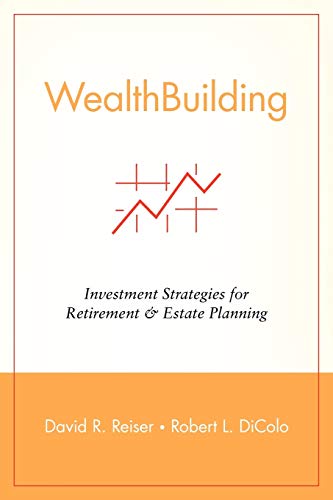
WealthBuilding
Investment Strategies for Retirement & Estate PlanningBy David R. Reiser Robert L. DiColoJohn Wiley & Sons
ISBN: 0-471-21543-0Chapter One
Achieving WealthHow to Pick the Right Chief Operating Officer
"It requires a great deal of boldness and a great deal of caution to make a great fortune, and when you have it, it requires ten times as much skill to keep it." -Ralph Waldo Emerson
Getting to the Chief Operating Officer Point
For the reasons explained in the Introduction, investors who have saved $100,000 or more should seek a Chief Operating Officer (COO) for their virtual company. But how do you get to this $100,000 point? The simplest way is to participate fully in your company's 401(k) plan or similar retirement or savings program. If your company offers this benefit, enroll immediately and save, save, save! If you aren't eligible to participate in a company-sponsored retirement savings program-or, better yet, as a supplement to your existing 401(k) plan-select a conservative mutual fund with a good three-, five-, and ten-year performance record and be religious about making monthly deposits. These conservative mutual funds typically contain a diversity of blue-chip stocks and other fixed-income instruments such as U.S. Treasury bonds.
Once you reach the point where you need a COO for your virtual company, hiring that person will be the most important decision you will make in securing your financial future. Yet, believe it or not, many people spend more time and energy, and do more research before selecting a new car than they do before identifying a person to help manage everything they own.
Who Makes a Good Financial Advisor?
Whether the financial advisor is the COO or a specialized team member of You, Inc., the advisor should work for a major national or international investment firm. This is not because large firms have a monopoly on intelligence or experience; they don't. The reason to select a national investment firm is its resources. No single person or small group can read everything or know everything. Investment advisors at large firms have staff economists, investment strategists, and technical analysts who constantly feed them relevant information. Investment advisors at large firms have business relationships, service offices, and access to the leading money managers nationwide. These firms hold their top performers to strict standards of ethics and provide a level of oversight that, we believe, small firms cannot match. In other words, we are convinced that the large firms offer an assurance and an insurance-safety-that small, independent firms do not.
Good financial advisors operate on the basis of a soundly researched view of U.S. and global investment markets for the coming five years. They constantly update that understanding and check it against market activity every year. The financial planner's global view takes into account corporate earnings, interest rates, inflation, budget and trade surpluses and deficits, and the overall health of the U.S. and global economy.
Choosing a financial advisor from a large national or international investment firm ensures a global view that is not only the financial advisor's personal opinion. Rather, it should reflect the intelligence and analysis of the firm as well.
In addition, you and the prospective financial advisor need to be candid and thorough in exchanging information at your first meeting. We have detailed the information that both parties should bring to an introductory meeting in Appendices A, B, and C.
But I'm a Person, Not a Company!
Encouraging investors to regard themselves as virtual companies is not meant to dehumanize them-in fact, the intent is just the opposite. We urge our clients to plan their futures and take the necessary actions to fulfill their dreams with the organization, analysis, and dispassionate allocation of resources that CEOs use to drive successful corporations. We urge our clients to view themselves as the CEO, who sets the goals and the timetables. Many times we then become the COO who helps make it all happen.
We help our clients achieve their life goals-wealth as they define it.
* * *
Harry and Janice Greenberg, Inc.
Harry and Janice Greenberg were earning an excellent income (more than $100,000 per year) and using the advice of several financial professionals-a stockbroker, an insurance agent, an accountant, and a lawyer. Yet, they were setting themselves up for financial worry, strain, and deprivation in what should have been their leisure years. Why? Because they were not viewing their family finances like a business, had no long-range plan, and had no single, trusted financial professional (no COO) to oversee their earning, saving, spending, and investing.
The Greenbergs' stockbroker would call periodically with hot tips-stocks he said were bound to gain substantial value soon. Occasionally, he was right; more often he was wrong. The accountant prepared their tax returns. The insurance agent made sure Janice was provided for should Harry die prematurely, and the lawyer had drawn up and executed a standard will.
Yet while most of these professionals had delivered their particular service acceptably, none of them had taken a comprehensive look at the Greenbergs' goals, assets, and spending patterns. In 1989, tired of losing money and with Harry's sixtieth birthday approaching, the Greenbergs assessed their financial situation. They quickly realized that without having saved prudently and purposefully during the previous 30 years, they were in no position to retire within the foreseeable future. They took control of their situation, formed Harry and Janice Greenberg, Inc., and hired us as COO.
At that time, they had saved about $200,000 for retirement and had been looking forward to Harry's ending his career as a structural engineering consultant at age 62. They thought of $200,000 as a lot of money, which it was, but they did not realize that it would not sustain their customary lifestyle after Harry stopped working. As stated earlier, a family should save 10 times its highest annual income for retirement. Basic arithmetic shows that the Greenbergs had amassed about one-fifth of the $1 million necessary for the retirement they sought.
As COO, it was our unpleasant task to deliver a bitter pill: Harry would have to work full time until at least age 65-and part-time until at least age 70-so he and Janice could live on his income, not draw down from the $200,000, and allow compound interest rates to build the $200,000. We showed Harry and Janice a long-range plan built on this foundation that would provide the needed $1 million by the time they reached age 70. Even though the plan called for Harry's complete retirement eight to ten years later than they had hoped for, the Greenbergs were enthusiastic. For the first time, they had a specific financial and lifestyle goal and a plan to reach it.
We immediately consolidated the Greenbergs' $200,000, which was scattered over dozens of stocks, many of which were declining in value and a few of which were in free fall. We reinvested the savings in a combination of private money manager accounts and tax-deferred annuities. Since Harry was working full time, placing him in the highest income tax bracket, the tax deferral was important. Because of health, age difference, and the life expectancy of women versus men,...
„Über diesen Titel“ kann sich auf eine andere Ausgabe dieses Titels beziehen.
Suchergebnisse für Wealth Building: Investment Strategies for Retirement...

Foto des Verkäufers
Wealth Building
Verlag:
John Wiley & Sons, Inc., 2002
ISBN 10: 0471215430
ISBN 13: 9780471215431
Gebraucht
Softcover
Anbieter: -OnTimeBooks-, Phoenix, AZ, USA
Verkäuferbewertung 5 von 5 Sternen

Zustand: good. A copy that has been read, remains in good condition. All pages are intact, and the cover is intact. The spine and cover show signs of wear. Pages can include notes and highlighting and show signs of wear, and the copy can include "From the library of" labels or previous owner inscriptions. 100% GUARANTEE! Shipped with delivery confirmation, if you're not satisfied with purchase please return item! Ships via media mail. Bestandsnummer des Verkäufers OTV.0471215430.G
Gebraucht kaufen
EUR 10,09
Versand gratis
Versand innerhalb von USA
Versand innerhalb von USA
Anzahl: 2 verfügbar
Beispielbild für diese ISBN
WealthBuilding: Investment Strategies for Retirement & Estate Planning
Verlag:
Wiley, John & Sons, Incorporated, 2002
ISBN 10: 0471215430
ISBN 13: 9780471215431
Gebraucht
paperback
Anbieter: The Book Cellar, LLC, Nashua, NH, USA
Verkäuferbewertung 4 von 5 Sternen

paperback. Zustand: Very Good. Has moderate shelf and/or corner wear. Great used condition. A portion of your purchase of this book will be donated to non-profit organizations.Over 1,000,000 satisfied customers since 1997! Choose expedited shipping (if available) for much faster delivery. Delivery confirmation on all US orders. Bestandsnummer des Verkäufers 10853733
Gebraucht kaufen
EUR 3,71
EUR 8,93 Versand
Versand innerhalb von USA
Versand innerhalb von USA
Anzahl: 1 verfügbar
Beispielbild für diese ISBN
WealthBuilding : Investment Strategies for Retirement and Estate Planning
Verlag:
Wiley & Sons, Incorporated, John, 2002
ISBN 10: 0471215430
ISBN 13: 9780471215431
Gebraucht
Softcover
Anbieter: Better World Books, Mishawaka, IN, USA
Verkäuferbewertung 5 von 5 Sternen
Zustand: Very Good. New Ed. Pages intact with possible writing/highlighting. Binding strong with minor wear. Dust jackets/supplements may not be included. Stock photo provided. Product includes identifying sticker. Better World Books: Buy Books. Do Good. Bestandsnummer des Verkäufers 2023087-6
Gebraucht kaufen
EUR 13,30
Versand gratis
Versand innerhalb von USA
Versand innerhalb von USA
Anzahl: 1 verfügbar
Beispielbild für diese ISBN
WealthBuilding : Investment Strategies for Retirement and Estate Planning
Verlag:
Wiley & Sons, Incorporated, John, 2002
ISBN 10: 0471215430
ISBN 13: 9780471215431
Gebraucht
Softcover
Anbieter: Better World Books, Mishawaka, IN, USA
Verkäuferbewertung 5 von 5 Sternen
Zustand: Good. New Ed. Pages intact with minimal writing/highlighting. The binding may be loose and creased. Dust jackets/supplements are not included. Stock photo provided. Product includes identifying sticker. Better World Books: Buy Books. Do Good. Bestandsnummer des Verkäufers 2023086-6
Gebraucht kaufen
EUR 13,30
Versand gratis
Versand innerhalb von USA
Versand innerhalb von USA
Anzahl: 1 verfügbar
Beispielbild für diese ISBN
Wealth Building
Verlag:
John Wiley & Sons, Inc., 2002
ISBN 10: 0471215430
ISBN 13: 9780471215431
Gebraucht
paperback
Anbieter: YESIBOOKSTORE, MIAMI, FL, USA
Verkäuferbewertung 5 von 5 Sternen
paperback. Zustand: As New. Bestandsnummer des Verkäufers 0471215430-VB
Gebraucht kaufen
EUR 69,68
Versand gratis
Versand innerhalb von USA
Versand innerhalb von USA
Anzahl: 1 verfügbar