
Verwandte Artikel zu Orchestrazione (Ingl.). Nachschlagewerk. (Dover Books...
Inhaltsangabe
Ein Musicbuch von Dover
Die Inhaltsangabe kann sich auf eine andere Ausgabe dieses Titels beziehen.
Von der hinteren Coverseite
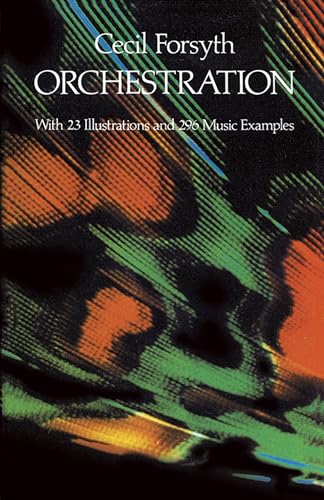
"For its time the most comprehensive treatment of the subject."--New Grove Dictionary of Music and Musicians
Before the 17th century, composers seldom indicated in their music whether the composition was to be performed by a particular combination of voices or instruments. Then in 1607 Monteverdi made a well-known suggestion for the orchestration of his opera Orfeo. And as the Baroque era unfolded, the concept of orchestrations began to evolve, achieving a notable clarity and the acceptance of a keyboard instrument as an integral part of the ensemble.
Toward the middle of the 18th century, stylistic changes in instrumental music, e.g. styles that emphasized a single melodic line, directly affected methods of orchestration; while in the 19th century, orchestrations became an ever more vital factor in the composer's technique, a stylistic determinant that places a wealth of possibilities at his disposal. Finally, in the early 18th century, increasing awareness of the importance of internal balance, certain ideals of blended sound, and firmly established instrumental characteristics enabled orchestration to take its place as an academic discipline beside harmony and counterpoint.
In this classic manual, a noted English composer describes 57 orchestral instruments (ca. 1914) tracing their origins, development, and status at the beginning of World War I. Not only are the history and evolution of each instrument fully discussed, the author also explores the techniques of each instrument, as well as players' impressions about what they must play. The result is an unparalleled insight into the inner working of an orchestra--a vivid impression of what it is like to be a violinist, clarinetist, trombonist, or other orchestral player.
While there have been numerous developments in instrumental technique on an individual basis since the book's first publication, most of what Forsyth says is still valid. Writing with wit, grace, and good sense, Forsyth created a formidably thorough, comprehensive, and informative text that has instructed and influenced generations of composers, conductors, musicians, and musicologists.
„Über diesen Titel“ kann sich auf eine andere Ausgabe dieses Titels beziehen.
Suchergebnisse für Orchestrazione (Ingl.). Nachschlagewerk. (Dover Books...

Beispielbild für diese ISBN
Orchestrazione (Ingl.)
Verlag:
Dover Publications Inc., 1982
ISBN 10: 0486243834
ISBN 13: 9780486243832
Gebraucht
Softcover
Anbieter: World of Books (was SecondSale), Montgomery, IL, USA
Verkäuferbewertung 5 von 5 Sternen

Zustand: Good. For its time the most comprehensive treatment of the subject. -- New Grove Dictionary of Music and MusiciansBefore the 17th century, composers seldom indicated in their music whether the composition was to be performed by a particular combination of voices or instruments. Then in 1607 Monteverdi made a well-known suggestion for the orchestration of his opera Orfeo. And as the Baroque era unfolded, the concept of orchestrations began to evolve, achieving a notable clarity and the acceptance of a keyboard instrument as an integral part of the ensemble.Toward the middle of the 18th century, stylistic changes in instrumental music, e.g. styles that emphasized a single melodic line, directly affected methods of orchestration; while in the 19th century, orchestrations became an ever more vital factor in the composer's technique, a stylistic determinant that places a wealth of possibilities at his disposal. Finally, in the early 18th century, increasing awareness of the importance of internal balance, certain ideals of blended sound, and firmly established instrumental characteristics enabled orchestration to take its place as an academic discipline beside harmony and counterpoint.In this classic manual, a noted English composer describes 57 orchestral instruments (ca. 1914) tracing their origins, development, and status at the beginning of World War I. Not only are the history and evolution of each instrument fully discussed, the author also explores the techniques of each instrument, as well as players' impressions about what they must play. The result is an unparalleled insight into the inner working of an orchestra -- a vivid impression of what it is like to be a violinist, clarinetist, trombonist, or other orchestral player.While there have been numerous developments in instrumental technique on an individual basis since the book's first publication, most of what Forsyth says is still valid. Writing with wit, grace, and good sense, Forsyth created a formidably thorough, comprehensive, and informative text that has instructed and influenced generations of composers, conductors, musicians, and musicologists. Bestandsnummer des Verkäufers 00094739194
Gebraucht kaufen
EUR 3,91
Versand gratis
Versand innerhalb von USA
Versand innerhalb von USA
Anzahl: 4 verfügbar
Beispielbild für diese ISBN
Orchestrazione (Ingl.)
Verlag:
Dover Publications Inc., 1982
ISBN 10: 0486243834
ISBN 13: 9780486243832
Gebraucht
Softcover
Anbieter: World of Books (was SecondSale), Montgomery, IL, USA
Verkäuferbewertung 5 von 5 Sternen
Zustand: Fair. For its time the most comprehensive treatment of the subject. -- New Grove Dictionary of Music and MusiciansBefore the 17th century, composers seldom indicated in their music whether the composition was to be performed by a particular combination of voices or instruments. Then in 1607 Monteverdi made a well-known suggestion for the orchestration of his opera Orfeo. And as the Baroque era unfolded, the concept of orchestrations began to evolve, achieving a notable clarity and the acceptance of a keyboard instrument as an integral part of the ensemble.Toward the middle of the 18th century, stylistic changes in instrumental music, e.g. styles that emphasized a single melodic line, directly affected methods of orchestration; while in the 19th century, orchestrations became an ever more vital factor in the composer's technique, a stylistic determinant that places a wealth of possibilities at his disposal. Finally, in the early 18th century, increasing awareness of the importance of internal balance, certain ideals of blended sound, and firmly established instrumental characteristics enabled orchestration to take its place as an academic discipline beside harmony and counterpoint.In this classic manual, a noted English composer describes 57 orchestral instruments (ca. 1914) tracing their origins, development, and status at the beginning of World War I. Not only are the history and evolution of each instrument fully discussed, the author also explores the techniques of each instrument, as well as players' impressions about what they must play. The result is an unparalleled insight into the inner working of an orchestra -- a vivid impression of what it is like to be a violinist, clarinetist, trombonist, or other orchestral player.While there have been numerous developments in instrumental technique on an individual basis since the book's first publication, most of what Forsyth says is still valid. Writing with wit, grace, and good sense, Forsyth created a formidably thorough, comprehensive, and informative text that has instructed and influenced generations of composers, conductors, musicians, and musicologists. Bestandsnummer des Verkäufers 00100549740
Gebraucht kaufen
EUR 3,91
Versand gratis
Versand innerhalb von USA
Versand innerhalb von USA
Anzahl: 1 verfügbar
Beispielbild für diese ISBN
Orchestrazione (Ingl.)
Verlag:
Dover Publications Inc., 1982
ISBN 10: 0486243834
ISBN 13: 9780486243832
Gebraucht
Softcover
Anbieter: World of Books (was SecondSale), Montgomery, IL, USA
Verkäuferbewertung 5 von 5 Sternen
Zustand: Very Good. For its time the most comprehensive treatment of the subject. -- New Grove Dictionary of Music and MusiciansBefore the 17th century, composers seldom indicated in their music whether the composition was to be performed by a particular combination of voices or instruments. Then in 1607 Monteverdi made a well-known suggestion for the orchestration of his opera Orfeo. And as the Baroque era unfolded, the concept of orchestrations began to evolve, achieving a notable clarity and the acceptance of a keyboard instrument as an integral part of the ensemble.Toward the middle of the 18th century, stylistic changes in instrumental music, e.g. styles that emphasized a single melodic line, directly affected methods of orchestration; while in the 19th century, orchestrations became an ever more vital factor in the composer's technique, a stylistic determinant that places a wealth of possibilities at his disposal. Finally, in the early 18th century, increasing awareness of the importance of internal balance, certain ideals of blended sound, and firmly established instrumental characteristics enabled orchestration to take its place as an academic discipline beside harmony and counterpoint.In this classic manual, a noted English composer describes 57 orchestral instruments (ca. 1914) tracing their origins, development, and status at the beginning of World War I. Not only are the history and evolution of each instrument fully discussed, the author also explores the techniques of each instrument, as well as players' impressions about what they must play. The result is an unparalleled insight into the inner working of an orchestra -- a vivid impression of what it is like to be a violinist, clarinetist, trombonist, or other orchestral player.While there have been numerous developments in instrumental technique on an individual basis since the book's first publication, most of what Forsyth says is still valid. Writing with wit, grace, and good sense, Forsyth created a formidably thorough, comprehensive, and informative text that has instructed and influenced generations of composers, conductors, musicians, and musicologists. Bestandsnummer des Verkäufers CIN0486243834VG
Gebraucht kaufen
EUR 3,91
Versand gratis
Versand innerhalb von USA
Versand innerhalb von USA
Anzahl: 1 verfügbar
Foto des Verkäufers
Orchestration (Dover Books On Music: Analysis)
Anbieter: Dream Books Co., Denver, CO, USA
Verkäuferbewertung 5 von 5 Sternen
Zustand: acceptable. This copy has clearly been enjoyedâ"expect noticeable shelf wear and some minor creases to the cover. Binding is strong, and all pages are legible. May contain previous library markings or stamps. Bestandsnummer des Verkäufers DBV.0486243834.A
Gebraucht kaufen
EUR 3,92
Versand gratis
Versand innerhalb von USA
Versand innerhalb von USA
Anzahl: 1 verfügbar
Foto des Verkäufers
Orchestration (Dover Books On Music: Analysis)
Anbieter: 2nd Life Books, Burlington, NJ, USA
Verkäuferbewertung 5 von 5 Sternen
Zustand: very_good. Fast Free Shipping â" Very Good condition book with a firm cover and clean pages. Shows normal use and some light wear or limited notes markings. A solid, nice copy to enjoy. Bestandsnummer des Verkäufers BXM.D75Z
Gebraucht kaufen
EUR 1,02
EUR 3,59 Versand
Versand innerhalb von USA
Versand innerhalb von USA
Anzahl: 1 verfügbar
Foto des Verkäufers
Orchestration (Dover Books On Music: Analysis)
Anbieter: Greenworld Books, Arlington, TX, USA
Verkäuferbewertung 5 von 5 Sternen
Zustand: very_good. Fast Free Shipping â" Very Good condition book with a firm cover and clean pages. Shows normal use and some light wear or limited notes markings. A solid, nice copy to enjoy. Bestandsnummer des Verkäufers GWV.0486243834.VG
Gebraucht kaufen
EUR 5,03
Versand gratis
Versand innerhalb von USA
Versand innerhalb von USA
Anzahl: 1 verfügbar
Beispielbild für diese ISBN
Orchestrazione (Ingl.)
Verlag:
Dover Publications Inc., 1982
ISBN 10: 0486243834
ISBN 13: 9780486243832
Gebraucht
Softcover
Anbieter: World of Books Inc, Montgomery, IL, USA
Verkäuferbewertung 4 von 5 Sternen

Zustand: Fair. For its time the most comprehensive treatment of the subject. -- New Grove Dictionary of Music and MusiciansBefore the 17th century, composers seldom indicated in their music whether the composition was to be performed by a particular combination of voices or instruments. Then in 1607 Monteverdi made a well-known suggestion for the orchestration of his opera Orfeo. And as the Baroque era unfolded, the concept of orchestrations began to evolve, achieving a notable clarity and the acceptance of a keyboard instrument as an integral part of the ensemble.Toward the middle of the 18th century, stylistic changes in instrumental music, e.g. styles that emphasized a single melodic line, directly affected methods of orchestration; while in the 19th century, orchestrations became an ever more vital factor in the composer's technique, a stylistic determinant that places a wealth of possibilities at his disposal. Finally, in the early 18th century, increasing awareness of the importance of internal balance, certain ideals of blended sound, and firmly established instrumental characteristics enabled orchestration to take its place as an academic discipline beside harmony and counterpoint.In this classic manual, a noted English composer describes 57 orchestral instruments (ca. 1914) tracing their origins, development, and status at the beginning of World War I. Not only are the history and evolution of each instrument fully discussed, the author also explores the techniques of each instrument, as well as players' impressions about what they must play. The result is an unparalleled insight into the inner working of an orchestra -- a vivid impression of what it is like to be a violinist, clarinetist, trombonist, or other orchestral player.While there have been numerous developments in instrumental technique on an individual basis since the book's first publication, most of what Forsyth says is still valid. Writing with wit, grace, and good sense, Forsyth created a formidably thorough, comprehensive, and informative text that has instructed and influenced generations of composers, conductors, musicians, and musicologists. Bestandsnummer des Verkäufers CIN0486243834A
Gebraucht kaufen
EUR 5,75
Versand gratis
Versand innerhalb von USA
Versand innerhalb von USA
Anzahl: 1 verfügbar
Beispielbild für diese ISBN
Orchestrazione (Ingl.)
Verlag:
Dover Publications Inc., 1982
ISBN 10: 0486243834
ISBN 13: 9780486243832
Gebraucht
Softcover
Anbieter: World of Books Inc, Montgomery, IL, USA
Verkäuferbewertung 4 von 5 Sternen
Zustand: Good. For its time the most comprehensive treatment of the subject. -- New Grove Dictionary of Music and MusiciansBefore the 17th century, composers seldom indicated in their music whether the composition was to be performed by a particular combination of voices or instruments. Then in 1607 Monteverdi made a well-known suggestion for the orchestration of his opera Orfeo. And as the Baroque era unfolded, the concept of orchestrations began to evolve, achieving a notable clarity and the acceptance of a keyboard instrument as an integral part of the ensemble.Toward the middle of the 18th century, stylistic changes in instrumental music, e.g. styles that emphasized a single melodic line, directly affected methods of orchestration; while in the 19th century, orchestrations became an ever more vital factor in the composer's technique, a stylistic determinant that places a wealth of possibilities at his disposal. Finally, in the early 18th century, increasing awareness of the importance of internal balance, certain ideals of blended sound, and firmly established instrumental characteristics enabled orchestration to take its place as an academic discipline beside harmony and counterpoint.In this classic manual, a noted English composer describes 57 orchestral instruments (ca. 1914) tracing their origins, development, and status at the beginning of World War I. Not only are the history and evolution of each instrument fully discussed, the author also explores the techniques of each instrument, as well as players' impressions about what they must play. The result is an unparalleled insight into the inner working of an orchestra -- a vivid impression of what it is like to be a violinist, clarinetist, trombonist, or other orchestral player.While there have been numerous developments in instrumental technique on an individual basis since the book's first publication, most of what Forsyth says is still valid. Writing with wit, grace, and good sense, Forsyth created a formidably thorough, comprehensive, and informative text that has instructed and influenced generations of composers, conductors, musicians, and musicologists. Bestandsnummer des Verkäufers CIN0486243834G
Gebraucht kaufen
EUR 5,75
Versand gratis
Versand innerhalb von USA
Versand innerhalb von USA
Anzahl: 4 verfügbar
Beispielbild für diese ISBN
Orchestrazione (Ingl.)
Verlag:
Dover Publications Inc., 1982
ISBN 10: 0486243834
ISBN 13: 9780486243832
Gebraucht
Softcover
Anbieter: World of Books Inc, Montgomery, IL, USA
Verkäuferbewertung 4 von 5 Sternen
Zustand: Very Good. For its time the most comprehensive treatment of the subject. -- New Grove Dictionary of Music and MusiciansBefore the 17th century, composers seldom indicated in their music whether the composition was to be performed by a particular combination of voices or instruments. Then in 1607 Monteverdi made a well-known suggestion for the orchestration of his opera Orfeo. And as the Baroque era unfolded, the concept of orchestrations began to evolve, achieving a notable clarity and the acceptance of a keyboard instrument as an integral part of the ensemble.Toward the middle of the 18th century, stylistic changes in instrumental music, e.g. styles that emphasized a single melodic line, directly affected methods of orchestration; while in the 19th century, orchestrations became an ever more vital factor in the composer's technique, a stylistic determinant that places a wealth of possibilities at his disposal. Finally, in the early 18th century, increasing awareness of the importance of internal balance, certain ideals of blended sound, and firmly established instrumental characteristics enabled orchestration to take its place as an academic discipline beside harmony and counterpoint.In this classic manual, a noted English composer describes 57 orchestral instruments (ca. 1914) tracing their origins, development, and status at the beginning of World War I. Not only are the history and evolution of each instrument fully discussed, the author also explores the techniques of each instrument, as well as players' impressions about what they must play. The result is an unparalleled insight into the inner working of an orchestra -- a vivid impression of what it is like to be a violinist, clarinetist, trombonist, or other orchestral player.While there have been numerous developments in instrumental technique on an individual basis since the book's first publication, most of what Forsyth says is still valid. Writing with wit, grace, and good sense, Forsyth created a formidably thorough, comprehensive, and informative text that has instructed and influenced generations of composers, conductors, musicians, and musicologists. Bestandsnummer des Verkäufers CIN0486243834VG
Gebraucht kaufen
EUR 5,75
Versand gratis
Versand innerhalb von USA
Versand innerhalb von USA
Anzahl: 1 verfügbar
Beispielbild für diese ISBN
Orchestration
Anbieter: ThriftBooks-Dallas, Dallas, TX, USA
Verkäuferbewertung 5 von 5 Sternen
Paperback. Zustand: Good. No Jacket. Pages can have notes/highlighting. Spine may show signs of wear. ~ ThriftBooks: Read More, Spend Less. Bestandsnummer des Verkäufers G0486243834I3N00
Gebraucht kaufen
EUR 5,99
Versand gratis
Versand innerhalb von USA
Versand innerhalb von USA
Anzahl: 1 verfügbar