
Verwandte Artikel zu The Scientific Renaissance: 1450-1630
Inhaltsangabe
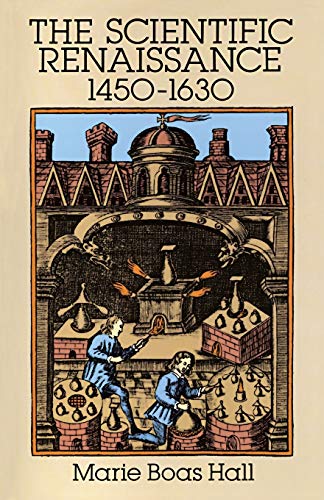
While scientific inquiry has its roots in both Far Eastern and Indo-European cultures, the revolutionary ideas that made modern scientific achievements possible occurred initially in Europe. This stimulating, illuminating, and thoughtfully presented work explores the early stages of this scientific revolution, beginning with the rediscovery of Greek ideas in the mid-15th century and culminating with Galileo's brilliant Dialogue on the Two Chief Systems of the World in 1630. Noted historian of science Marie Boas Hall first gives a general account of scientific thought in the mid-1400s, then examines the Copernican revolution and the anatomical work of Vesalius and his contemporaries, the impact of chemical medicine and the efforts of the Swiss physician and alchemist Paracelsus. Also here are insightful discussions of Harvey's discovery of the circulatory system, the work of Kepler, the effects of Galileo's telescopic discoveries, and other topics. A series of accompanying illustrations - among them a Ptolemaic map, examples of Renaissance engineering, and portraits of Francis Bacon, Tycho Brahe, Vesalius, Kepler, and Galileo - enhance this scholarly and informative work. A valuable reference book for students of the history of science, The Scientific Renaissance 1450-1630 is "good, sound, academic stuff . . . interesting even to those for whom it is not required reading". - New Statesman.
Die Inhaltsangabe kann sich auf eine andere Ausgabe dieses Titels beziehen.
Über die Autorin bzw. den Autor
Historian Marie Boas Hall (1919-2009) was a pioneer in the study of the history of science in the 16th and 17th centuries, the so-called Scientific Revolution. In 1981 she and her husband were awarded the George Sarton Medal, the History of Science Society's most prestigious award, and in 1994 she was elected a Fellow of the British Academy.
„Über diesen Titel“ kann sich auf eine andere Ausgabe dieses Titels beziehen.
Suchergebnisse für The Scientific Renaissance: 1450-1630

Beispielbild für diese ISBN
The Scientific Renaissance, 1450-1630
Verlag:
Dover Publications Inc., 2008
ISBN 10: 0486281159
ISBN 13: 9780486281155
Gebraucht
Paperback
Anbieter: World of Books (was SecondSale), Montgomery, IL, USA
Verkäuferbewertung 5 von 5 Sternen

Paperback. Zustand: Good. While scientific inquiry has its roots in both Far Eastern and Indo-European cultures, the revolutionary ideas that made modern scientific achievements possible occurred initially in Europe. This stimulating, illuminating, and thoughtfully presented work explores the early stages of this scientific revolution, beginning with the rediscovery of Greek ideas in the mid-15th century and culminating with Galileo's brilliant Dialogue on the Two Chief Systems of the World in 1630. Noted historian of science Marie Boas Hall first gives a general account of scientific thought in the mid-1400s, then examines the Copernican revolution and the anatomical work of Vesalius and his contemporaries, the impact of chemical medicine and the efforts of the Swiss physician and alchemist Paracelsus. Also here are insightful discussions of Harvey's discovery of the circulatory system, the work of Kepler, the effects of Galileo's telescopic discoveries, and other topics. A series of accompanying illustrations -- among them a Ptolemaic map, examples of Renaissance engineering, and portraits of Francis Bacon, Tycho Brahe, Vesalius, Kepler, and Galileo -- enhance this scholarly and informative work. A valuable reference book for students of the history of science, The Scientific Renaissance 1450-1630 is good, sound, academic stuff . . . interesting even to those for whom it is not required reading. -- New Statesman. Bestandsnummer des Verkäufers 00100121565
Gebraucht kaufen
EUR 10,74
Versand gratis
Versand innerhalb von USA
Versand innerhalb von USA
Anzahl: 2 verfügbar
Beispielbild für diese ISBN
Scientific Renaissance, 1450-1630
Verlag:
Dover Publications, Incorporated, 1994
ISBN 10: 0486281159
ISBN 13: 9780486281155
Gebraucht
Softcover
Anbieter: Better World Books, Mishawaka, IN, USA
Verkäuferbewertung 5 von 5 Sternen
Zustand: Very Good. Reprint. Pages intact with possible writing/highlighting. Binding strong with minor wear. Dust jackets/supplements may not be included. Stock photo provided. Product includes identifying sticker. Better World Books: Buy Books. Do Good. Bestandsnummer des Verkäufers 8102175-6
Gebraucht kaufen
EUR 10,75
Versand gratis
Versand innerhalb von USA
Versand innerhalb von USA
Anzahl: 1 verfügbar
Beispielbild für diese ISBN
Scientific Renaissance, 1450-1630
Verlag:
Dover Publications, Incorporated, 1994
ISBN 10: 0486281159
ISBN 13: 9780486281155
Gebraucht
Softcover
Anbieter: Better World Books, Mishawaka, IN, USA
Verkäuferbewertung 5 von 5 Sternen
Zustand: Good. Reprint. Former library copy. Pages intact with minimal writing/highlighting. The binding may be loose and creased. Dust jackets/supplements are not included. Includes library markings. Stock photo provided. Product includes identifying sticker. Better World Books: Buy Books. Do Good. Bestandsnummer des Verkäufers GRP21074373
Gebraucht kaufen
EUR 10,75
Versand gratis
Versand innerhalb von USA
Versand innerhalb von USA
Anzahl: 1 verfügbar
Beispielbild für diese ISBN
Scientific Renaissance 1450-1630
Anbieter: ThriftBooks-Dallas, Dallas, TX, USA
Verkäuferbewertung 5 von 5 Sternen
Paperback. Zustand: Fair. No Jacket. Readable copy. Pages may have considerable notes/highlighting. ~ ThriftBooks: Read More, Spend Less. Bestandsnummer des Verkäufers G0486281159I5N00
Gebraucht kaufen
EUR 11,52
Versand gratis
Versand innerhalb von USA
Versand innerhalb von USA
Anzahl: 1 verfügbar
Beispielbild für diese ISBN
Scientific Renaissance 1450-1630
Anbieter: ThriftBooks-Atlanta, AUSTELL, GA, USA
Verkäuferbewertung 5 von 5 Sternen
Paperback. Zustand: Fair. No Jacket. Readable copy. Pages may have considerable notes/highlighting. ~ ThriftBooks: Read More, Spend Less. Bestandsnummer des Verkäufers G0486281159I5N00
Gebraucht kaufen
EUR 11,52
Versand gratis
Versand innerhalb von USA
Versand innerhalb von USA
Anzahl: 1 verfügbar
Beispielbild für diese ISBN
Scientific Renaissance 1450-1630
Anbieter: ThriftBooks-Dallas, Dallas, TX, USA
Verkäuferbewertung 5 von 5 Sternen
Paperback. Zustand: Very Good. No Jacket. May have limited writing in cover pages. Pages are unmarked. ~ ThriftBooks: Read More, Spend Less. Bestandsnummer des Verkäufers G0486281159I4N00
Gebraucht kaufen
EUR 11,52
Versand gratis
Versand innerhalb von USA
Versand innerhalb von USA
Anzahl: 1 verfügbar
Foto des Verkäufers
The Scientific Renaissance: 1450-1630 (The Rise of Modern Science)
Anbieter: Coas Books, Las Cruces, NM, USA
Verkäuferbewertung 5 von 5 Sternen
Zustand: acceptable. Item has staining. Cover is worn. Paperback. Bestandsnummer des Verkäufers 55GSJ1001EJE_ns
Gebraucht kaufen
EUR 8,08
EUR 3,59 Versand
Versand innerhalb von USA
Versand innerhalb von USA
Anzahl: 1 verfügbar
Beispielbild für diese ISBN
The Scientific Renaissance: 1450-1630 (The Rise of Modern Science)
Anbieter: More Than Words, Waltham, MA, USA
Verkäuferbewertung 5 von 5 Sternen
Zustand: Good. A sound copy with only light wear. Overall a solid copy at a great price! Bestandsnummer des Verkäufers BOS-X-10i-01533
Gebraucht kaufen
EUR 8,09
EUR 3,59 Versand
Versand innerhalb von USA
Versand innerhalb von USA
Anzahl: 1 verfügbar
Beispielbild für diese ISBN
The Scientific Renaissance, 1450-1630
Verlag:
Dover Publications Inc., 2008
ISBN 10: 0486281159
ISBN 13: 9780486281155
Gebraucht
Paperback
Anbieter: World of Books Inc, Montgomery, IL, USA
Verkäuferbewertung 4 von 5 Sternen

Paperback. Zustand: Good. While scientific inquiry has its roots in both Far Eastern and Indo-European cultures, the revolutionary ideas that made modern scientific achievements possible occurred initially in Europe. This stimulating, illuminating, and thoughtfully presented work explores the early stages of this scientific revolution, beginning with the rediscovery of Greek ideas in the mid-15th century and culminating with Galileo's brilliant Dialogue on the Two Chief Systems of the World in 1630. Noted historian of science Marie Boas Hall first gives a general account of scientific thought in the mid-1400s, then examines the Copernican revolution and the anatomical work of Vesalius and his contemporaries, the impact of chemical medicine and the efforts of the Swiss physician and alchemist Paracelsus. Also here are insightful discussions of Harvey's discovery of the circulatory system, the work of Kepler, the effects of Galileo's telescopic discoveries, and other topics. A series of accompanying illustrations -- among them a Ptolemaic map, examples of Renaissance engineering, and portraits of Francis Bacon, Tycho Brahe, Vesalius, Kepler, and Galileo -- enhance this scholarly and informative work. A valuable reference book for students of the history of science, The Scientific Renaissance 1450-1630 is good, sound, academic stuff . . . interesting even to those for whom it is not required reading. -- New Statesman. Bestandsnummer des Verkäufers CIN0486281159G
Gebraucht kaufen
EUR 12,59
Versand gratis
Versand innerhalb von USA
Versand innerhalb von USA
Anzahl: 2 verfügbar
Foto des Verkäufers
The Scientific Renaissance: 1450-1630 (The Rise of Modern Science)
Anbieter: Book House in Dinkytown, IOBA, Minneapolis, MN, USA
Verkäuferbewertung 5 von 5 Sternen
Paperback. Zustand: Very Good. Very good paperback. Spine is uncreased, binding tight and sturdy; text also good. Some light shelfwear. Ships from Dinkytown in Minneapolis, Minnesota. Bestandsnummer des Verkäufers 307055
Gebraucht kaufen
EUR 9,26
EUR 5,84 Versand
Versand innerhalb von USA
Versand innerhalb von USA
Anzahl: 1 verfügbar