
Verwandte Artikel zu Brewing Justice: Fair Trade Coffee, Sustainability,...
Inhaltsangabe
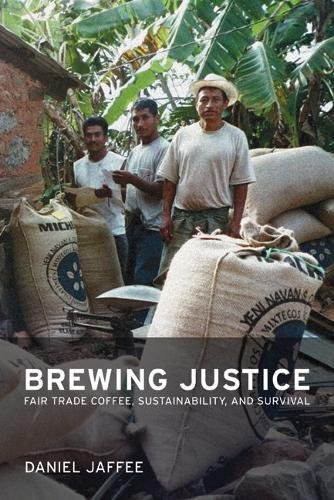
Fair trade is a fast-growing alternative market intended to bring better prices and greater social justice to small farmers around the world. But is it working? This vivid study of coffee farmers in Mexico offers the first thorough investigation of the social, economic, and environmental benefits of fair trade. Based on extensive research in Zapotec indigenous communities in the state of Oaxaca, Brewing Justice follows the members of the cooperative Michiza, whose organic coffee is sold on the international fair trade market. It compares these families to conventional farming families in the same region, who depend on local middlemen and are vulnerable to the fluctuations of the world coffee market. Written in a clear and accessible style, the book carries readers into the lives of these coffee producer households and their communities, offering a nuanced analysis of both the effects of fair trade on everyday life and the limits of its impact. Brewing Justice paints a clear picture of the complex dynamics of the fair trade market and its relationship to the global economy. Drawing on interviews with dozens of fair trade leaders, the book also explores the changing politics of this international movement, including the challenges posed by the entry of transnational corporations into the fair trade system. It concludes by offering recommendations for strengthening and protecting the integrity of fair trade.
Die Inhaltsangabe kann sich auf eine andere Ausgabe dieses Titels beziehen.
Über die Autorin bzw. den Autor
Daniel Jaffee is Assistant Professor of Sociology at Portland State University.
Von der hinteren Coverseite
"The idea of fair trade in a global economy is central to contemporary debates over neoliberalism, globalization and the rule of the free market. But what are the coordinates of the fair trade moment; what sort of alternative does it offer for producers and consumers? Daniel Jaffee is at once a fierce proponent of fair trade but also a critical voice. How, he asks, can fair trade coffee be in and against the market? With one foot in the Central American coffee fincas and the other in the intellectual world of Karl Polanyi and his disciples, Daniel Jaffee has on offer a very heady brew. Brewing Justice is a pioneering study of the variety of fair trade movements; a prospectus for a more radical vision of fair trade—an alternative sort of market; and a vital contribution to contemporary debates over free trade, the global agro-food system and the so-called 'movement of movements'. A tour de force."—Michael Watts, University of California, Berkeley
“Daniel Jaffee has done the Fair Trade movement a real service in his meticulous research into the actual effect of Fair Trade on coffee farmers in a group of villages in Oaxaca, Mexico. Up till now the claims of Fair Trade benefits for the producers have been largely based on brief visits and anecdotes, but now there is hard evidence. In analysing the market for Fair Trade he distinguishes clearly between those who wish to break the market, those who would reform the market and those who simply want access to a growing market. But his book will be of great value not only in his conclusions about how Fair Trade can be made fairer, but in extending our understanding of the overwhelming power of the giant corporations in international trade, even seeking to improve their image by cooptation and dilution of the standards when faced by the challenge of Fair Trade.” —Michael Barratt Brown, author of Fair Trade: Reform and Realities in the International Trading System
"It is possible to establish a global economy that is just, humane, and sustainable. But it will not be easy. The forces favoring injustice, inhumanity, and exploitation are powerful and entrenched. And, for too long, they have been supported by academics and researchers who have not bothered to examine the real costs of globalization on a standard free-trade model, let alone the real opportunities of globalization on an enlightened fair-trade model. Daniel Jaffee breaks new ground with Brewing Justice. His scholarship is stellar. His conclusions are at once realistic and inspiring. In these pages, it is possible to find the roadmap to a new and better global economy. Read them closely, embrace them, and then get to work on building a fair-trade future."—John Nichols, The Nation
"Brewing Justice is an impressive account of the relationships and ethics embedded in fair trade coffee. Engaging the reader in a comparative global ethnography of fair and free trade coffee production, the author evaluates the gains and losses of fair trade for Mexican peasants. Jaffee's unique accomplishment is to show the consuming public how fair trade can be realized through improving the tenuous existence of producers."—Philip McMichael, author of Development and Social Change
"Brewing Justice is at once a sobering account of what the fair trade movement has achieved, and an optimistic statement that only by deepening movements like this one, will society advance in the direction of economic democracy and justice."—Gerardo Otero, professor of sociology and Latin American Studies, Simon Fraser University
"Brewing Justice is not just a study of fair trade coffee. It also provides alternatives to the unfair rules of trade imposed by the WTO. And it shows that we can all play a role in shaping the economy. Drinking coffee is a political act."—Vandana Shiva, author of Earth Democracy
“Daniel Jaffee has done the Fair Trade movement a real service in his meticulous research into the actual effect of Fair Trade on coffee farmers in a group of villages in Oaxaca, Mexico. Up till now the claims of Fair Trade benefits for the producers have been largely based on brief visits and anecdotes, but now there is hard evidence. In analysing the market for Fair Trade he distinguishes clearly between those who wish to break the market, those who would reform the market and those who simply want access to a growing market. But his book will be of great value not only in his conclusions about how Fair Trade can be made fairer, but in extending our understanding of the overwhelming power of the giant corporations in international trade, even seeking to improve their image by cooptation and dilution of the standards when faced by the challenge of Fair Trade.” —Michael Barratt Brown, author of Fair Trade: Reform and Realities in the International Trading System
"It is possible to establish a global economy that is just, humane, and sustainable. But it will not be easy. The forces favoring injustice, inhumanity, and exploitation are powerful and entrenched. And, for too long, they have been supported by academics and researchers who have not bothered to examine the real costs of globalization on a standard free-trade model, let alone the real opportunities of globalization on an enlightened fair-trade model. Daniel Jaffee breaks new ground with Brewing Justice. His scholarship is stellar. His conclusions are at once realistic and inspiring. In these pages, it is possible to find the roadmap to a new and better global economy. Read them closely, embrace them, and then get to work on building a fair-trade future."—John Nichols, The Nation
"Brewing Justice is an impressive account of the relationships and ethics embedded in fair trade coffee. Engaging the reader in a comparative global ethnography of fair and free trade coffee production, the author evaluates the gains and losses of fair trade for Mexican peasants. Jaffee's unique accomplishment is to show the consuming public how fair trade can be realized through improving the tenuous existence of producers."—Philip McMichael, author of Development and Social Change
"Brewing Justice is at once a sobering account of what the fair trade movement has achieved, and an optimistic statement that only by deepening movements like this one, will society advance in the direction of economic democracy and justice."—Gerardo Otero, professor of sociology and Latin American Studies, Simon Fraser University
"Brewing Justice is not just a study of fair trade coffee. It also provides alternatives to the unfair rules of trade imposed by the WTO. And it shows that we can all play a role in shaping the economy. Drinking coffee is a political act."—Vandana Shiva, author of Earth Democracy
Aus dem Klappentext
"The idea of fair trade in a global economy is central to contemporary debates over neoliberalism, globalization and the rule of the free market. But what are the coordinates of the fair trade moment; what sort of alternative does it offer for producers and consumers? Daniel Jaffee is at once a fierce proponent of fair trade but also a critical voice. How, he asks, can fair trade coffee be in and against the market? With one foot in the Central American coffee fincas and the other in the intellectual world of Karl Polanyi and his disciples, Daniel Jaffee has on offer a very heady brew.Brewing Justice is a pioneering study of the variety of fair trade movements; a prospectus for a more radical vision of fair tradean alternative sort of market; and a vital contribution to contemporary debates over free trade, the global agro-food system and the so-called 'movement of movements'. A tour de force."Michael Watts, University of California, Berkeley
Daniel Jaffee has done the Fair Trade movement a real service in his meticulous research into the actual effect of Fair Trade on coffee farmers in a group of villages in Oaxaca, Mexico. Up till now the claims of Fair Trade benefits for the producers have been largely based on brief visits and anecdotes, but now there is hard evidence. In analysing the market for Fair Trade he distinguishes clearly between those who wish to break the market, those who would reform the market and those who simply want access to a growing market. But his book will be of great value not only in his conclusions about how Fair Trade can be made fairer, but in extending our understanding of the overwhelming power of the giant corporations in international trade, even seeking to improve their image by cooptation and dilution of the standards when faced by the challenge of Fair Trade. Michael Barratt Brown, author ofFair Trade: Reform and Realities in the International Trading System
"It is possible to establish a global economy that is just, humane, and sustainable. But it will not be easy. The forces favoring injustice, inhumanity, and exploitation are powerful and entrenched. And, for too long, they have been supported by academics and researchers who have not bothered to examine the real costs of globalization on a standard free-trade model, let alone the real opportunities of globalization on an enlightened fair-trade model. Daniel Jaffee breaks new ground with Brewing Justice. His scholarship is stellar. His conclusions are at once realistic and inspiring. In these pages, it is possible to find the roadmap to a new and better global economy. Read them closely, embrace them, and then get to work on building a fair-trade future."John Nichols,The Nation
"Brewing Justice is an impressive account of the relationships and ethics embedded in fair trade coffee. Engaging the reader in a comparative global ethnography of fair and free trade coffee production, the author evaluates the gains and losses of fair trade for Mexican peasants. Jaffee's unique accomplishment is to show the consuming public how fair trade can be realized through improving the tenuous existence of producers."Philip McMichael, author ofDevelopment and Social Change
"Brewing Justice is at once a sobering account of what the fair trade movement has achieved, and an optimistic statement that only by deepening movements like this one, will society advance in the direction of economic democracy and justice."Gerardo Otero, professor of sociology and Latin American Studies, Simon Fraser University
"Brewing Justice is not just a study of fair trade coffee. It also provides alternatives to the unfair rules of trade imposed by the WTO. And it shows that we can all play a role in shaping the economy. Drinking coffee is a political act."Vandana Shiva, author of Earth Democracy
Daniel Jaffee has done the Fair Trade movement a real service in his meticulous research into the actual effect of Fair Trade on coffee farmers in a group of villages in Oaxaca, Mexico. Up till now the claims of Fair Trade benefits for the producers have been largely based on brief visits and anecdotes, but now there is hard evidence. In analysing the market for Fair Trade he distinguishes clearly between those who wish to break the market, those who would reform the market and those who simply want access to a growing market. But his book will be of great value not only in his conclusions about how Fair Trade can be made fairer, but in extending our understanding of the overwhelming power of the giant corporations in international trade, even seeking to improve their image by cooptation and dilution of the standards when faced by the challenge of Fair Trade. Michael Barratt Brown, author ofFair Trade: Reform and Realities in the International Trading System
"It is possible to establish a global economy that is just, humane, and sustainable. But it will not be easy. The forces favoring injustice, inhumanity, and exploitation are powerful and entrenched. And, for too long, they have been supported by academics and researchers who have not bothered to examine the real costs of globalization on a standard free-trade model, let alone the real opportunities of globalization on an enlightened fair-trade model. Daniel Jaffee breaks new ground with Brewing Justice. His scholarship is stellar. His conclusions are at once realistic and inspiring. In these pages, it is possible to find the roadmap to a new and better global economy. Read them closely, embrace them, and then get to work on building a fair-trade future."John Nichols,The Nation
"Brewing Justice is an impressive account of the relationships and ethics embedded in fair trade coffee. Engaging the reader in a comparative global ethnography of fair and free trade coffee production, the author evaluates the gains and losses of fair trade for Mexican peasants. Jaffee's unique accomplishment is to show the consuming public how fair trade can be realized through improving the tenuous existence of producers."Philip McMichael, author ofDevelopment and Social Change
"Brewing Justice is at once a sobering account of what the fair trade movement has achieved, and an optimistic statement that only by deepening movements like this one, will society advance in the direction of economic democracy and justice."Gerardo Otero, professor of sociology and Latin American Studies, Simon Fraser University
"Brewing Justice is not just a study of fair trade coffee. It also provides alternatives to the unfair rules of trade imposed by the WTO. And it shows that we can all play a role in shaping the economy. Drinking coffee is a political act."Vandana Shiva, author of Earth Democracy
Auszug. © Genehmigter Nachdruck. Alle Rechte vorbehalten.
Brewing Justice
Fair Trade Coffee, Sustainability, and SurvivalBy Daniel JaffeeUniversity of California Press
Copyright © 2007 The Regents of the University of CaliforniaAll right reserved.
ISBN: 978-0-520-24959-2
Contents
List of Figures..................................................................................viiList of Tables...................................................................................ixPreface..........................................................................................xiIntroduction.....................................................................................11. A Movement or a Market?.......................................................................112. Coffee, Commodities, Crisis...................................................................363. One Region, Two Markets.......................................................................584. The Difference a Market Makes: Livelihoods and Labor..........................................935. A Sustainable Cup? Fair Trade, Shade-Grown Coffee, and Organic Production.....................1336. Eating and Staying on the Land: Food Security and Migration...................................1657. Dancing with the Devil?.......................................................................1998. "Mejor, Pero No Muy Bien Que Digamos": The Limits of Fair Trade...............................2329. Strengthening Fair Trade......................................................................247Conclusion.......................................................................................259Acknowledgments..................................................................................267Appendix: Research Methods.......................................................................271Notes............................................................................................289Bibliography.....................................................................................307Index............................................................................................319
Chapter One
A Movement or a Market?
There are collective and qualitative needs which cannot be satisfied by market mechanisms. There are important human needs which escape its logic. There are goods which by their very nature cannot and must not be bought or sold.... These mechanisms carry the risk of an "idolatry" of the market, an idolatry which ignores the existence of goods which by their nature are not and cannot be mere commodities. Pope John Paul II, Centesimus Annus, 1991
The market has no brain It doesn't love it's not God. All it knows is the price of lunch. Bruce Cockburn, "You've Never Seen Everything"
The unfairness of international trade has for centuries troubled many people who have witnessed its human and environmental effects. The terms of trade between North and South-the low prices paid for agricultural products relative to the cost of imports (on a national level) or the cost of living (on a household level)-have long been unequal, but they have worsened significantly for the global South since the 1970s. Such "unequal exchange" has a number of harmful effects: for example, subsistence farmers are displaced and hunger increases as land is converted to export crops and cheap-usually subsidized-agricultural imports undermine small producers' viability. Fair trade constitutes one attempt to address this structural injustice.
A SHORT HISTORY OF FAIR TRADE
The roots of the fair-trade movement, ironically, go back to the same postwar moment when the Bretton Woods institutions (the World Bank and the International Monetary Fund) and the General Agreement on Tariffs and Trade, or GATT-the precursor to today's WTO-were being created. From its inception, the movement has contained at least two distinct (though sometimes overlapping) currents-a "development" strain and a "solidarity" strain.
In the "development trade" approach, charities in the United States and Europe, usually linked to churches, began trying to create markets for the products of impoverished and displaced people. The Mennonite Central Committee established trading links in the late 1940s with poor communities in the Southern United States to generate employment and income. An increasing number of these efforts, later known as Alternative Trading Organizations or ATOs, began to emerge in the 1960s and 1970s. Some initiatives developed networks of church-based sales and stores, such as Ten Thousand Villages, which grew out of the Mennonite effort, and SERRV, an initiative of the Church of the Brethren. Another facet of this approach came from large development and religious agencies working in the global South, such as Oxfam, Bread for the World, Caritas, and others. These groups helped found partner cooperatives and associations in Southern nations that organized disadvantaged groups to export their products, principally handicrafts. The ATOs in Europe framed their work as "alternative trade." They established a network of "world shops" in many cities to sell these craft products, as well as some coffee and tea. While the total volume of this trade was negligible, sales did grow rapidly, and the profile of alternative trade increased to the point where it began to take on movement status.
However, many new trading groups, especially in Europe, were associated with secular activist movements on the political Left, and this solidarity focus has also been fundamental in shaping fair trade's identity. Twin Trading in Britain was founded in the 1970s to generate markets for products from socialist countries such as Mozambique, Cuba, North Vietnam, and later Nicaragua, whose access to consumers in the rich countries was partly or entirely blocked. Oxfam Wereldwinkels in Belgium and Stichting Ideele Import in the Netherlands emerged from the same tradition. In the early 1980s, U.S. groups opposing the government's policies in Central America sold "Caf Nica" in violation of the official embargo on Nicaraguan imports. The cry of this nascent movement was "trade, not aid"-an attempt to differentiate its philosophy of local development and empowerment through trade from the paternalism of charity and the inefficiency and corruption of foreign aid by (and to) governments. These solidarity groups viewed the creation of alternative trade networks as part of a much larger critique of capitalism and the global economic system. Pauline Tiffen, a fair-trade pioneer formerly with Twin in London, recalled what was likely the first use of the phrase "fair trade": "We organized a conference, 'Who Cares about Fair Trade?' And in that case I think the choice of fair was a deliberate decision to broaden a concept that was for us quite anticapitalist. Like alternative as in alternative system, a parallel system to the market, a challenge to the capitalist system."
In 1988 came a watershed event for fair trade-the creation of the Max Havelaar label. Indigenous Mexican coffee farmers from the UCIRI cooperative in Oaxaca had approached the Dutch development aid organization Solidaridad two years earlier with an unprecedented proposal. After several years of selling small amounts of coffee through world shops, UCIRI (which was led by a Dutch liberation-theology priest, Franz Vanderhoff Boersma) wanted access, on equitable terms and in larger quantities, to European consumer markets. Essentially, the cooperative was asking the European alternative trade movement to go beyond its...
„Über diesen Titel“ kann sich auf eine andere Ausgabe dieses Titels beziehen.
Suchergebnisse für Brewing Justice: Fair Trade Coffee, Sustainability,...

Beispielbild für diese ISBN
Brewing Justice: Fair Trade Coffee, Sustainability, and Survival
Verlag:
University of California Press, 2007
ISBN 10: 0520249593
ISBN 13: 9780520249592
Gebraucht
Softcover
Anbieter: World of Books (was SecondSale), Montgomery, IL, USA
Verkäuferbewertung 5 von 5 Sternen

Zustand: Acceptable. Item in acceptable condition! Textbooks may not include supplemental items i.e. CDs, access codes etc. Bestandsnummer des Verkäufers 00108197620
Gebraucht kaufen
EUR 5,39
Versand gratis
Versand innerhalb von USA
Versand innerhalb von USA
Anzahl: 1 verfügbar
Beispielbild für diese ISBN
Brewing Justice: Fair Trade Coffee, Sustainability, and Survival
Verlag:
University of California Press, 2007
ISBN 10: 0520249593
ISBN 13: 9780520249592
Gebraucht
paperback
Anbieter: Evergreen Goodwill, Seattle, WA, USA
Verkäuferbewertung 5 von 5 Sternen
paperback. Zustand: Good. Bestandsnummer des Verkäufers mon0000816562
Gebraucht kaufen
EUR 2,17
EUR 3,49 Versand
Versand innerhalb von USA
Versand innerhalb von USA
Anzahl: 1 verfügbar
Beispielbild für diese ISBN
Brewing Justice: Fair Trade Coffee, Sustainability, and Survival
Verlag:
University of California Press (edition First Edition), 2007
ISBN 10: 0520249593
ISBN 13: 9780520249592
Gebraucht
Paperback
Erstausgabe
Anbieter: BooksRun, Philadelphia, PA, USA
Verkäuferbewertung 5 von 5 Sternen
Paperback. Zustand: Very Good. First Edition. It's a well-cared-for item that has seen limited use. The item may show minor signs of wear. All the text is legible, with all pages included. It may have slight markings and/or highlighting. Bestandsnummer des Verkäufers 0520249593-11-1
Gebraucht kaufen
EUR 5,77
Versand gratis
Versand innerhalb von USA
Versand innerhalb von USA
Anzahl: 1 verfügbar
Beispielbild für diese ISBN
Brewing Justice: Fair Trade Coffee, Sustainability, and Survival
Anbieter: ThriftBooks-Reno, Reno, NV, USA
Verkäuferbewertung 5 von 5 Sternen
Paperback. Zustand: Good. No Jacket. Pages can have notes/highlighting. Spine may show signs of wear. ~ ThriftBooks: Read More, Spend Less. Bestandsnummer des Verkäufers G0520249593I3N00
Gebraucht kaufen
EUR 6,00
Versand gratis
Versand innerhalb von USA
Versand innerhalb von USA
Anzahl: 1 verfügbar
Beispielbild für diese ISBN
Brewing Justice: Fair Trade Coffee, Sustainability, and Survival
Anbieter: ThriftBooks-Dallas, Dallas, TX, USA
Verkäuferbewertung 5 von 5 Sternen
Paperback. Zustand: Good. No Jacket. Pages can have notes/highlighting. Spine may show signs of wear. ~ ThriftBooks: Read More, Spend Less. Bestandsnummer des Verkäufers G0520249593I3N00
Gebraucht kaufen
EUR 6,00
Versand gratis
Versand innerhalb von USA
Versand innerhalb von USA
Anzahl: 1 verfügbar
Beispielbild für diese ISBN
Brewing Justice: Fair Trade Coffee, Sustainability, and Survival
Anbieter: ThriftBooks-Atlanta, AUSTELL, GA, USA
Verkäuferbewertung 5 von 5 Sternen
Paperback. Zustand: Very Good. No Jacket. May have limited writing in cover pages. Pages are unmarked. ~ ThriftBooks: Read More, Spend Less. Bestandsnummer des Verkäufers G0520249593I4N00
Gebraucht kaufen
EUR 6,00
Versand gratis
Versand innerhalb von USA
Versand innerhalb von USA
Anzahl: 1 verfügbar
Beispielbild für diese ISBN
Brewing Justice: Fair Trade Coffee, Sustainability, and Survival
Anbieter: ThriftBooks-Atlanta, AUSTELL, GA, USA
Verkäuferbewertung 5 von 5 Sternen
Paperback. Zustand: Good. No Jacket. Pages can have notes/highlighting. Spine may show signs of wear. ~ ThriftBooks: Read More, Spend Less. Bestandsnummer des Verkäufers G0520249593I3N00
Gebraucht kaufen
EUR 6,00
Versand gratis
Versand innerhalb von USA
Versand innerhalb von USA
Anzahl: 1 verfügbar
Beispielbild für diese ISBN
Brewing Justice: Fair Trade Coffee, Sustainability, and Survival
Verlag:
University of California Press, 2007
ISBN 10: 0520249593
ISBN 13: 9780520249592
Gebraucht
Softcover
Anbieter: Wonder Book, Frederick, MD, USA
Verkäuferbewertung 5 von 5 Sternen
Zustand: Very Good. Very Good condition. A copy that may have a few cosmetic defects. May also contain light spine creasing or a few markings such as an owner's name, short gifter's inscription or light stamp. Bestandsnummer des Verkäufers I13A-02750
Gebraucht kaufen
EUR 6,29
Versand gratis
Versand innerhalb von USA
Versand innerhalb von USA
Anzahl: 2 verfügbar
Beispielbild für diese ISBN
Brewing Justice: Fair Trade Coffee, Sustainability, and Survival
Verlag:
University of California Press, 2007
ISBN 10: 0520249593
ISBN 13: 9780520249592
Gebraucht
Softcover
Anbieter: Wonder Book, Frederick, MD, USA
Verkäuferbewertung 5 von 5 Sternen
Zustand: Good. Good condition. A copy that has been read but remains intact. May contain markings such as bookplates, stamps, limited notes and highlighting, or a few light stains. Bestandsnummer des Verkäufers F23A-03713
Gebraucht kaufen
EUR 6,29
Versand gratis
Versand innerhalb von USA
Versand innerhalb von USA
Anzahl: 1 verfügbar
Beispielbild für diese ISBN
Brewing Justice : Fair Trade Coffee, Sustainability, and Survival
Verlag:
University of California Press, 2007
ISBN 10: 0520249593
ISBN 13: 9780520249592
Gebraucht
Softcover
Erstausgabe
Anbieter: Better World Books, Mishawaka, IN, USA
Verkäuferbewertung 5 von 5 Sternen
Zustand: Very Good. 1st Edition. Former library copy. Pages intact with possible writing/highlighting. Binding strong with minor wear. Dust jackets/supplements may not be included. Includes library markings. Stock photo provided. Product includes identifying sticker. Better World Books: Buy Books. Do Good. Bestandsnummer des Verkäufers 5474007-75
Gebraucht kaufen
EUR 7,04
Versand gratis
Versand innerhalb von USA
Versand innerhalb von USA
Anzahl: 1 verfügbar